Paragraph Writing
Paragraph on Should School Cafeterias Serve Only Healthy Food?

School cafeterias should serve only healthy food because it keeps students strong, focused, and energetic. Nutritious meals help in growth, learning, and developing lifelong healthy eating habits. Sharpen your paragraph-writing skills by practicing ‘Should School Cafeterias Serve Only Healthy Food?’ in four styles—Expository, Persuasive, Descriptive, and Narrative—and clearly organize your ideas using structures like PEEL, TEEL, TEXAS, and the Hamburger Model.
Different Styles of Paragraphs on ‘Should School Cafeterias Serve Only Healthy Food?’
1. Expository Paragraph on Should School Cafeterias Serve Only Healthy Food? (Explains with Facts)

School cafeterias should serve healthy food because it helps students grow strong and stay active. Healthy meals, including fruits, vegetables, whole grains, and proteins, provide essential nutrients for energy, focus, and overall health. Students who eat balanced meals are more likely to concentrate in class, perform better in school, and avoid illnesses caused by unhealthy food. Serving only healthy options also teaches children good eating habits from a young age, helping them make better food choices in the future. While some students may miss sweets or fried snacks, schools can provide occasional treats in moderation without compromising nutrition. Cafeterias that serve nutritious food create an environment that encourages healthy lifestyles, reduces childhood obesity, and improves mental and physical well-being. In this way, students learn that eating well is important, making schools a place that supports both learning and good health.
2. Persuasive Paragraph on Should School Cafeterias Serve Only Healthy Food? (Tries to Convince You)
School cafeterias must serve only healthy food because students’ health and learning depend on it. Eating nutritious meals gives children energy, improves concentration, and helps them grow strong. Foods high in sugar or fat can cause tiredness, poor focus, and health problems like obesity. By providing fruits, vegetables, whole grains, and proteins, schools encourage better eating habits and teach students the importance of nutrition. Healthy meals also reduce sickness, allowing children to attend school regularly and participate in activities. While treats can be enjoyed occasionally, cafeterias should focus on balanced meals to support learning and well-being. Schools have the responsibility to promote healthy lifestyles, and serving nutritious food is an easy and effective way to do so. Making healthy food the standard choice ensures students stay active, alert, and ready to learn every day.
3. Descriptive Paragraph on Should School Cafeterias Serve Only Healthy Food? (Paints a Picture with Words)
Imagine walking into a school cafeteria filled with colorful fruits, fresh vegetables, and warm whole-grain dishes. Students carry trays with apples, sandwiches, salads, and yogurt, while bright posters remind everyone about the benefits of healthy eating. The aroma of baked food fills the air, and children chat excitedly as they try new dishes. Everyone looks happy and energized, ready to focus on lessons after lunch. The cafeteria feels lively yet peaceful, a place where students learn the value of nutritious food while enjoying meals together. Eating balanced meals makes students feel strong, active, and ready for the day’s challenges. This shows that a cafeteria serving only healthy food not only nourishes the body but also creates a positive and caring environment that encourages good habits and learning.
4. Narrative Paragraph on Should School Cafeterias Serve Only Healthy Food? (Tells a Story)
Last week, our school cafeteria started serving only healthy food. I was curious to see how it would feel. At lunch, I picked a tray with a sandwich, fresh fruit, and some yogurt. At first, I missed chips and chocolate, but after eating, I felt full and energetic. My friends also tried different salads and fruits, and we all enjoyed tasting new foods together. During afternoon sports, I noticed I had more energy and could focus better in class. The teachers explained how healthy food helps our bodies grow strong and keeps our minds sharp. By the end of the week, many students preferred the nutritious meals over junk food. This experience taught me that school cafeterias serving only healthy food can improve students’ health, energy, and learning, making school a happier and more productive place for everyone.
‘Should School Cafeterias Serve Only Healthy Food?’ Paragraphs in Different Structured Methods
1. Should School Cafeterias Serve Only Healthy Food? Paragraph Writing with PEEL Method
PEEL Method (Point, Evidence, Explanation, Link)
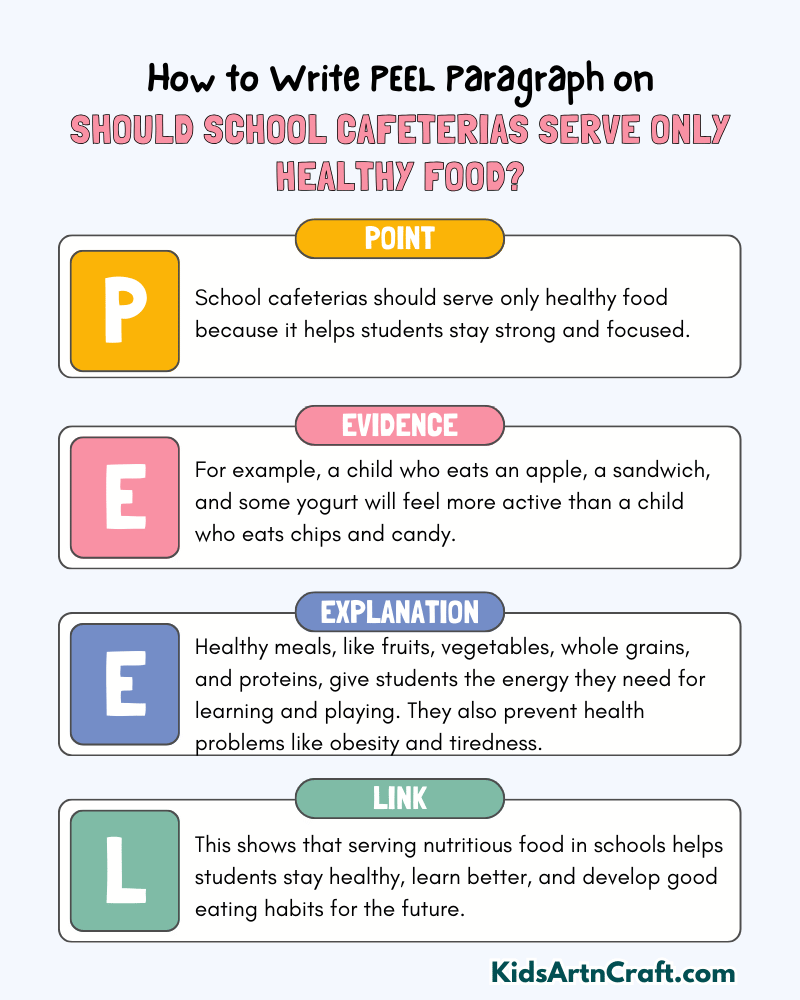

Point: School cafeterias should serve only healthy food because it helps students stay strong and focused.
Evidence: For example, a child who eats an apple, a sandwich, and some yogurt will feel more active than a child who eats chips and candy.
Explanation: Healthy meals, like fruits, vegetables, whole grains, and proteins, give students the energy they need for learning and playing. They also prevent health problems like obesity and tiredness.
Link: This shows that serving nutritious food in schools helps students stay healthy, learn better, and develop good eating habits for the future.
2. Should School Cafeterias Serve Only Healthy Food? Paragraph Writing with TEEL Method
TEEL Method (Topic, Evidence, Explanation, Link)
Topic: Healthy food is important in school cafeterias.
Evidence: For instance, students who eat balanced meals can focus better in class and participate actively in sports or activities.
Explanation: It provides energy, improves concentration, and helps children grow strong.
Link: Therefore, schools should serve only healthy food to support learning, health, and overall well-being.
3. Should School Cafeterias Serve Only Healthy Food? Paragraph Writing with TEXAS Method
TEXAS Method (Topic, Example, Explanation, Analysis, Summary/Significance)
Topic: Schools should serve healthy food in cafeterias.
Example: For example, eating fruits, vegetables, and sandwiches helps students feel active and ready to learn.
Explanation: Nutritious meals give students energy and improve their focus.
Analysis: Healthy food also teaches children good habits and reduces health problems.
Summary: That is why school cafeterias should focus on serving only healthy food for the benefit of all students.
4. Should School Cafeterias Serve Only Healthy Food? Paragraph Writing with Hamburger Method
Hamburger Method (Top Bun, The Fillings, Bottom Bun)
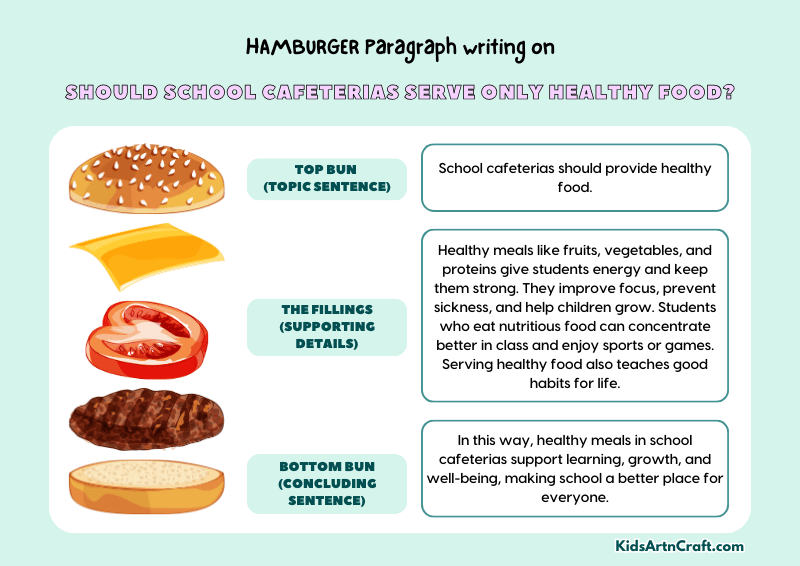

Top Bun (Topic Sentence):
School cafeterias should provide healthy food.
The Fillings (Supporting Details):
Healthy meals like fruits, vegetables, and proteins give students energy and keep them strong. They improve focus, prevent sickness, and help children grow. Students who eat nutritious food can concentrate better in class and enjoy sports or games. Serving healthy food also teaches good habits for life.
Bottom Bun (Concluding Sentence):
In this way, healthy meals in school cafeterias support learning, growth, and well-being, making school a better place for everyone.
Hope you liked these paragraphs on ‘Should School Cafeterias Serve Only Healthy Food?’. Don’t forget to join the Telegram group for FREE Printables.
Check this article to write a paragraph on healthy food.