Science Experiments
Easy Rainwater Harvesting Model for Students with Working Explanation

This project shows how rainwater harvesting works. Rainwater harvesting means collecting and storing rainwater so we can use it later instead of letting it go to waste.
In this model, rain falls on a house roof, flows through a pipe, goes to a filter plant, and then is stored in a well or tank. The stored water can be used for farms, lakes, and daily activities.
It is a great way to learn how we can save water and protect our environment.

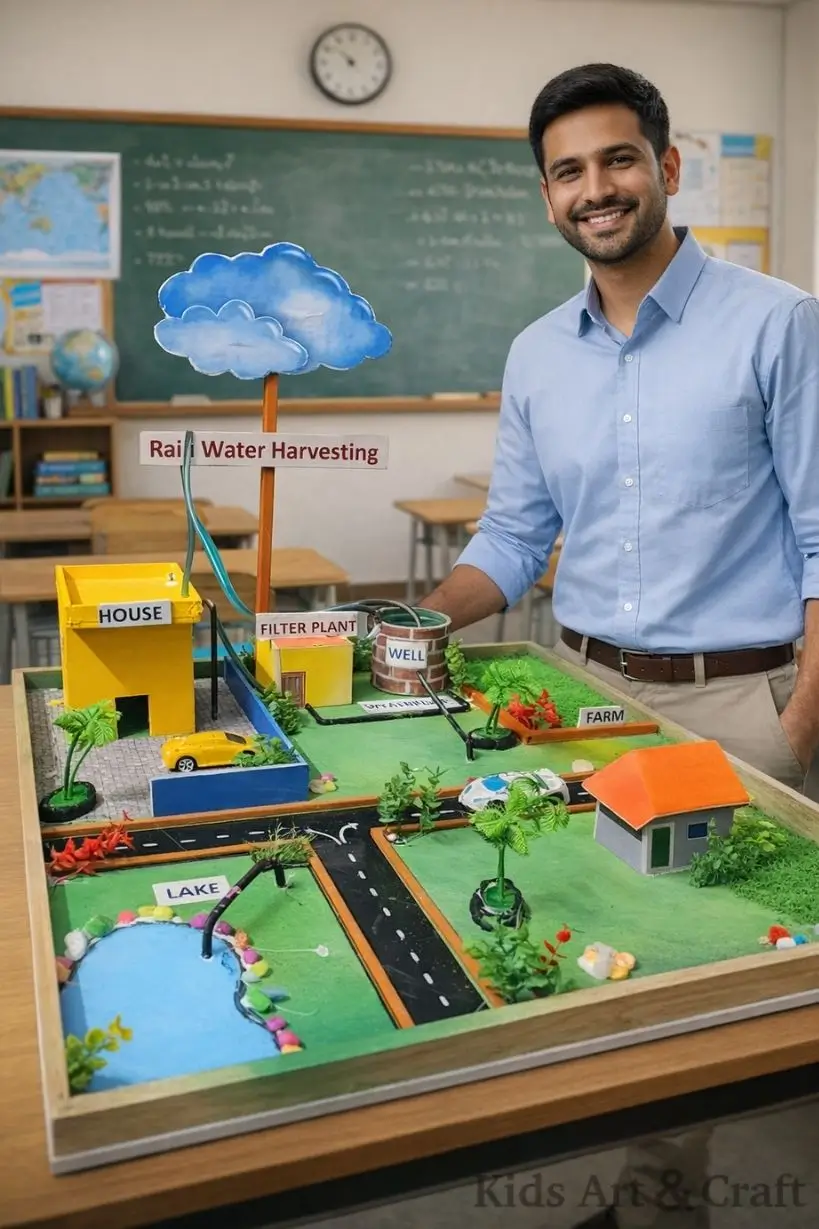
Step-by-step rainwater harvesting project demonstrating water conservation methods for students.
Science Concept Behind It
Rainwater harvesting is based on a simple idea:
Collect → Filter → Store → Use
- Collect: Rain falls on rooftops or land surfaces.
- Filter: The water passes through filters that remove dirt and leaves.
- Store: Clean water is stored in tanks, wells, or underground reservoirs.
- Use: The stored water can be used for plants, cleaning, or even drinking after proper treatment.
This helps increase groundwater levels and save fresh water.
Materials Required
- Cardboard or thermocol base
- Small cardboard boxes (for house, filter plant, well)
- Plastic pipe or straw (for water flow)
- Colored paper or foam sheets
- Blue paper or paint (for lake/water)
- Toy trees, plants, and vehicles (optional)
- Glue and scissors
- Markers for labeling
- Cotton or chart paper (for clouds)
Step-by-Step Process
Step 1: Rainfall
- The cloud represents rain falling onto the roof of the house.
Step 2: Water Collection
- Rainwater flows from the roof through a pipe or channel.
Step 3: Filtering
- The water moves into a filter plant where dirt and particles are removed.
Step 4: Storage
- Clean water is stored in a well or underground tank.
Step 5: Usage
The stored water can be used for:
- Farm irrigation
- Filling lakes
- Household needs
This model shows how water can move through different stages and be reused.
What Kids Learn
- Importance of saving water
- How rainwater harvesting systems work
- Basic idea of water filtration
- How water reaches farms and storage wells
- Environmental awareness and sustainability
Real-Life Applications
Rainwater harvesting is used in:
- Homes and buildings
- Schools and offices
- Farms for irrigation
- Villages with low water supply
- Cities to recharge groundwater
Many countries encourage rainwater harvesting to solve water shortages.
Safety Guidelines
- Use scissors carefully while making the model.
- Ask an adult for help with cutting or hot glue.
- Keep water away from electrical devices.
Why Kids Love This Project
- Easy and fun to build
- Teaches environmental responsibility
- Encourages STEM learning
- Improves creativity and problem-solving
- Helps kids understand real-world water problems
Extension Ideas
- Working Water Flow Model: Add a small bottle and pour water from the cloud to see it flow through the pipes.
- Underground Tank System: Add a transparent container to show how water is stored underground.
- Pollution vs Clean Water Experiment: Show how dirty water becomes cleaner after passing through filters like sand and gravel.
Rainwater harvesting is a smart, sustainable solution for water conservation, reducing water bills, preventing groundwater depletion, and supporting eco-friendly living. Adopting rainwater harvesting systems today helps secure clean water resources for future generations while promoting environmental responsibility and sustainability goals. Join our Telegram group for regular updates, and follow us on YouTube & Facebook for fun art and craft tutorials and more!