


Paragraph Writing
Paragraph on Diwali – Festival of Lights


Diwali, the Festival of Lights, is celebrated with joy and enthusiasm across India. People decorate their homes with lamps, burst fireworks, exchange sweets, and pray for happiness and prosperity. It is a time for family, togetherness, and spreading light over darkness. This lesson focuses on writing paragraphs about the “Diwali – Festival of Lights” in four styles—Expository, Persuasive, Descriptive, and Narrative—and shows how to structure your ideas using PEEL, TEEL, TEXAS, and the Hamburger Model.
Read This Article in Other Languages
- दीवाली (रोशनी का त्योहार) पर अनुच्छेद (Hindi / हिंदी)
- Párrafo sobre Diwali (el festival de las luces) (Spanish / Español)
- Paragraphe sur Diwali (le festival des lumières) (French / Français)
- Absatz über Diwali (das Lichterfest) (German / Deutsch)
- فقرة عن ديوالي (مهرجان الأضواء) (Arabic / العربية)
- দীপাবলি (আলো উৎসব) সম্পর্কে অনুচ্ছেদ (Bengali / বাংলা)
- தீபாவளி (ஒளி திருவிழா) பற்றி பத்தி (Tamil / தமிழ்)
- దీపావళి (లైట్లు పండుగ) గురించి పేరాగ్రాఫ్ (Telugu / తెలుగు)
- ദീപാവലി (വെളിച്ചത്തിന്റെ ഉത്സവം) സംബന്ധിച്ച പാരഗ്രാഫ് (Malayalam / മലയാളം)
- دیوالی (روشنیوں کا تہوار) پر پیراگراف (Urdu / اردو)
- Parágrafo sobre Diwali (o festival das luzes) (Portuguese / Português)
Translation Disclaimer: These links use Google Translate, an automated translation service. Translations may vary in accuracy and are provided for convenience only.
Different Styles of Paragraphs on ‘Diwali – Festival of Lights’
1. Expository Paragraph on Diwali – Festival of Lights (Explains with Facts)
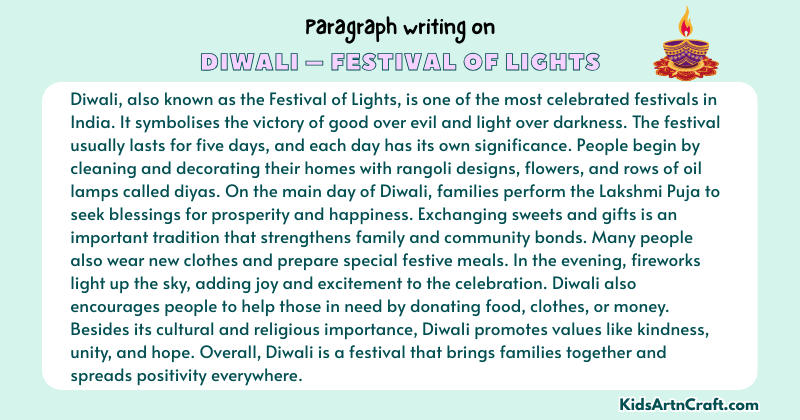
Diwali, also known as the Festival of Lights, is one of the most celebrated festivals in India. It symbolises the victory of good over evil and light over darkness. The festival usually lasts for five days, and each day has its own significance. People begin by cleaning and decorating their homes with rangoli designs, flowers, and rows of oil lamps called diyas. On the main day of Diwali, families perform the Lakshmi Puja to seek blessings for prosperity and happiness. Exchanging sweets and gifts is an important tradition that strengthens family and community bonds. Many people also wear new clothes and prepare special festive meals. In the evening, fireworks light up the sky, adding joy and excitement to the celebration. Diwali also encourages people to help those in need by donating food, clothes, or money. Besides its cultural and religious importance, Diwali promotes values like kindness, unity, and hope. Overall, Diwali is a festival that brings families together and spreads positivity everywhere.
2. Persuasive Paragraph on Diwali – Festival of Lights (Tries to Convince You)
Diwali, the Festival of Lights, is a celebration that everyone should experience because it promotes joy, unity, and meaningful traditions. In today’s fast and busy world, festivals like Diwali remind us of the importance of family, gratitude, and togetherness. When homes are decorated with glowing diyas and colourful rangoli, they create an atmosphere of warmth and happiness. Participating in traditions such as Lakshmi Puja helps us reflect on our blessings and encourages us to begin new journeys with positivity. By exchanging sweets and gifts, we strengthen our relationships and show appreciation for one another. Diwali also offers an opportunity to engage in acts of kindness, such as helping the poor, donating to charities, or sharing food with neighbours. These actions spread light in the lives of others, making the festival truly meaningful. Moreover, choosing eco-friendly celebrations—like using clay lamps instead of firecrackers—helps protect the environment while preserving the beauty of the festival. Celebrating Diwali is not just about fun; it is about embracing values that bring harmony, love, and hope into our lives. This is why Diwali is a festival everyone should cherish and celebrate wholeheartedly.
3. Descriptive Paragraph on Diwali – Festival of Lights (Paints a Picture with Words)
Diwali, the Festival of Lights, fills the atmosphere with sparkling beauty and festive charm. As evening falls, rows of glowing diyas line doorsteps, flickering gently in the cool breeze. Houses shine with colourful lights, and beautiful rangoli patterns decorate the entrances, made carefully with vibrant powders and flower petals. The sweet smell of freshly made ladoos, jalebi, and other festive treats drifts through the air, making the celebration even more delightful. Children run around excitedly, dressed in bright new clothes, while families gather to perform the Lakshmi Puja surrounded by the warm glow of lamps. The sound of prayers, laughter, and occasional firecrackers adds to the lively atmosphere of the night. Markets are crowded with people buying gifts, sweets, and decorative items, creating a scene full of colour and cheer. Everywhere you look, there is a sense of joy, hope, and togetherness. Diwali transforms ordinary nights into magical moments filled with light, colour, and celebration. It is a festival that touches the heart with its beauty and spreads happiness all around.
4. Narrative Paragraph on Diwali – Festival of Lights (Tells a Story)
Last Diwali was one of the most memorable celebrations I have experienced. As the sun set, our home came alive with colourful lights and sparkling diyas that my family and I carefully placed around the house. I helped my mother design a bright rangoli at the entrance, and the patterns of pink, blue, and yellow instantly made our home look festive. After getting dressed in new clothes, we gathered in the living room for Lakshmi Puja. The soft sound of the bell and the fragrance of incense filled the room, creating a peaceful atmosphere. Later, my cousins and I exchanged gifts and enjoyed delicious sweets like barfi and gulab jamun. The highlight of the evening was stepping outside to watch the neighbourhood glow with lights. Children laughed and played, and the sky lit up with colourful fireworks. Although we avoided loud crackers, we enjoyed sparklers and spent time talking and clicking photos. That night, surrounded by family and happiness, I felt the true spirit of Diwali—light, joy, and togetherness. It was a celebration I will always cherish.
‘Diwali – Festival of Lights‘ Paragraphs in Different Structured Methods
1. Diwali – Festival of Lights Paragraph Writing with PEEL Method
PEEL Method (Point, Evidence, Explanation, Link)
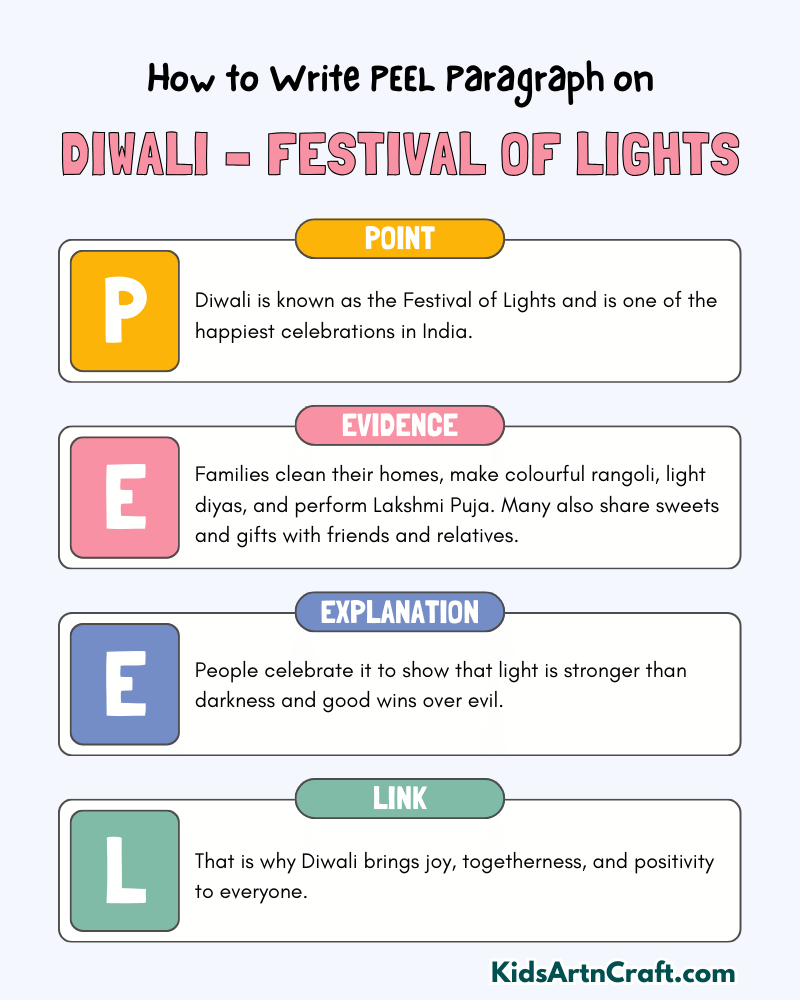
Point: Diwali is known as the Festival of Lights and is one of the happiest celebrations in India.
Evidence: Families clean their homes, make colourful rangoli, light diyas, and perform Lakshmi Puja. Many also share sweets and gifts with friends and relatives.
Explanation: People celebrate it to show that light is stronger than darkness and good wins over evil.
Link: That is why Diwali brings joy, togetherness, and positivity to everyone.
2. Diwali – Festival of Lights Paragraph Writing with TEEL Method
TEEL Method (Topic, Evidence, Explanation, Link)
Topic: Diwali is a special festival that fills everyone’s home with light and happiness.
Evidence: For example, families light rows of diyas, make rangoli designs, and enjoy tasty sweets like laddoos and barfi. Children love bursting safe crackers or playing with sparklers.
Explanation: During this festival, people decorate their houses and wear new clothes to welcome good luck.
Link: All these activities make Diwali a bright and joyful celebration for families and communities.
3. Diwali – Festival of Lights Paragraph Writing with the TEXAS Method
TEXAS Method (Topic, Example, Explanation, Analysis, Summary/Significance)
Topic: Diwali is an exciting festival celebrated with lights, colours, and joy.
Example: People perform puja, light diyas, share sweets, and decorate their homes beautifully.
Explanation: It teaches us to spread kindness and celebrate with loved ones.
Analysis: These traditions help families come together, forget worries, and enjoy moments of happiness.
Summary: Because of its beautiful customs, Diwali becomes a festival that fills hearts with warmth and hope.
4. Diwali – Festival of Lights Paragraph Writing with Hamburger Method
Hamburger Method (Top Bun, The Fillings, Bottom Bun)
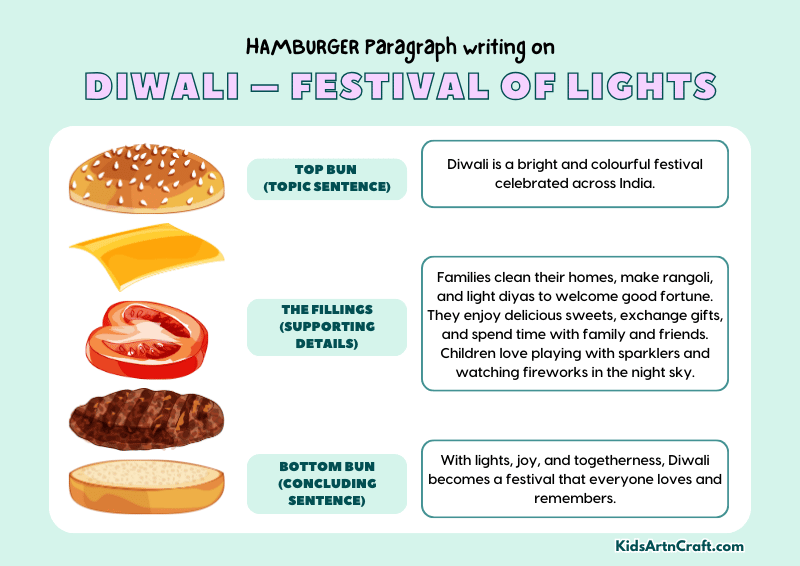
Top Bun (Topic Sentence):
Diwali is a bright and colourful festival celebrated across India.
The Fillings (Supporting Details):
Families clean their homes, make rangoli, and light diyas to welcome good fortune. They enjoy delicious sweets, exchange gifts, and spend time with family and friends. Children love playing with sparklers and watching fireworks in the night sky.
Bottom Bun (Concluding Sentence):
With lights, joy, and togetherness, Diwali becomes a festival that everyone loves and remembers.
Significance of Diwali
- Diwali, also called Deepavali, celebrates the victory of light over darkness and good over evil. [Source: Britannica]
- It is celebrated by Hindus, Jains, Sikhs, and some Buddhists, showing its cultural significance. [Source: Britannica]
- The festival is linked to stories like Lord Rama’s return to Ayodhya and worship of Goddess Lakshmi. [Source: Britannica]
Traditions and Cultural Practices
- Lighting clay lamps (diyas) and decorating homes with rangoli symbolize hope and prosperity. [Source: National Geographic]
- Diwali is recognised by UNESCO as an Intangible Cultural Heritage of Humanity. [Source: UNESCO]
- The festival involves family gatherings, gift exchanges, festive lights, and feasts. [Source: National Geographic]
Hope you liked these paragraphs on ‘Diwali – Festival of Lights’. Don’t forget to join the Telegram group for FREE Printables.
Check this article for amazing Rangoli Making Ideas For Diwali