

Paragraph Writing
Paragraph on Panda


A panda is a gentle bear with black and white fur, living in bamboo forests in China, eating mostly bamboo, and loved for its cute and calm nature. Learn effective paragraph writing by exploring four styles—Expository, Persuasive, Descriptive, and Narrative—using structures like PEEL, TEEL, TEXAS, and the Hamburger Model.
Read This Article in Other Languages
- पांडा पर अनुच्छेद (Hindi / हिंदी)
- Párrafo sobre el panda (Spanish / Español)
- Paragraphe sur le panda (French / Français)
- Absatz über den Panda (German / Deutsch)
- فقرة عن الباندا (Arabic / العربية)
- পাণ্ডা সম্পর্কে অনুচ্ছেদ (Bengali / বাংলা)
- பாண்டா பற்றிய பத்தி (Tamil / தமிழ்)
- పాండా పై పేరాగ్రాఫ్ (Telugu / తెలుగు)
- പാണ്ടയെക്കുറിച്ചുള്ള പാരഗ്രാഫ് (Malayalam / മലയാളം)
- پانڈا پر پیراگراف (Urdu / اردو)
- Parágrafo sobre o panda (Portuguese / Português)
Translation Disclaimer: These links use Google Translate, an automated translation service. Translations may vary in accuracy and are provided for convenience only.
Different Styles of Paragraphs on ‘Panda’
1. Expository Paragraph on Panda (Explains with Facts)
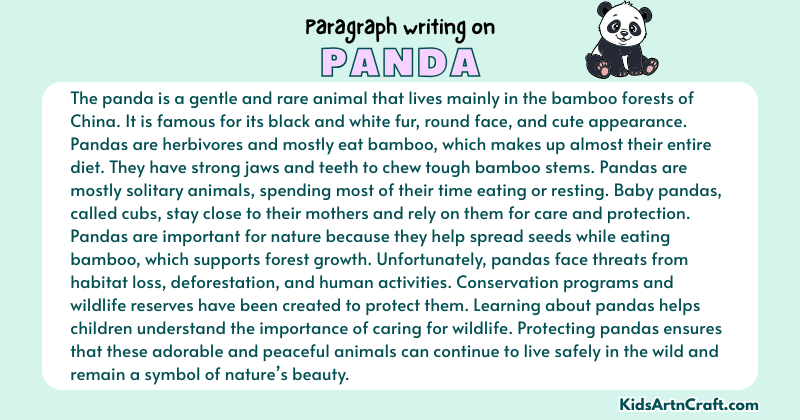
The panda is a gentle and rare animal that lives mainly in the bamboo forests of China. It is famous for its black and white fur, round face, and cute appearance. Pandas are herbivores and mostly eat bamboo, which makes up almost their entire diet. They have strong jaws and teeth to chew tough bamboo stems. Pandas are mostly solitary animals, spending most of their time eating or resting. Baby pandas, called cubs, stay close to their mothers and rely on them for care and protection. Pandas are important for nature because they help spread seeds while eating bamboo, which supports forest growth. Unfortunately, pandas face threats from habitat loss, deforestation, and human activities. Conservation programs and wildlife reserves have been created to protect them. Learning about pandas helps children understand the importance of caring for wildlife. Protecting pandas ensures that these adorable and peaceful animals can continue to live safely in the wild and remain a symbol of nature’s beauty.
2. Persuasive Paragraph on Panda (Tries to Convince You)
We should protect pandas because they are rare, gentle, and important for forests. Pandas eat bamboo and help spread seeds, which allows forests to grow and stay healthy. Their black and white fur, round face, and playful behavior make them one of the most loved animals in the world. Sadly, pandas are losing their homes because of deforestation and human activity. Governments, wildlife organizations, and communities must work together to protect forests and create safe habitats for pandas. Children can also help by learning about pandas and sharing their knowledge with friends and family. Protecting pandas is not just about saving animals—it is about preserving forests, plants, and the balance of nature. If we protect pandas today, future generations will also have the chance to see them in the wild. Saving pandas helps maintain forests, wildlife, and the beauty of nature, making our planet healthier and happier for everyone.
3. Descriptive Paragraph on Panda (Paints a Picture with Words)
The panda is a large and gentle animal with soft black and white fur that makes it look very cute. Its round face, small ears, and big eyes make it one of the most lovable animals in the world. Pandas have strong teeth and jaws to chew bamboo, which is their main food. They move slowly and gracefully, spending most of the day eating bamboo or resting. Baby pandas, called cubs, are small, fluffy, and playful, staying close to their mothers for safety. Pandas live in the bamboo forests of China, where they are mostly alone, except during mating season. Watching a panda munch on bamboo or play in the forest is a peaceful and delightful sight. Their black and white fur blends beautifully with the forest shadows, making them look even more magical. Pandas are symbols of peace and nature’s wonder, and protecting them ensures that these amazing creatures continue to thrive in their natural homes.
4. Narrative Paragraph on Panda (Tells a Story)
Last year, Maya visited a panda reserve in China with her family. As she walked through the bamboo forest, she saw a large panda sitting quietly and eating bamboo. Its black and white fur made it look soft and round, and its big eyes looked very gentle. Nearby, a baby panda, called a cub, played with its mother, climbing small branches and rolling on the ground. Maya watched in awe as the panda chewed bamboo carefully and occasionally looked around with curiosity. The guide explained that pandas are mostly solitary animals, eat mostly bamboo, and are very important for the forest because they help spread seeds. Maya felt happy and inspired to protect wildlife after seeing the pandas up close. On the way home, she promised to tell her friends about pandas and teach them why these gentle, peaceful animals must be protected. Seeing the pandas that day taught Maya lessons about care, patience, and the beauty of nature.
‘Panda’ Paragraphs in Different Structured Methods
1. Panda Paragraph Writing with PEEL Method
PEEL Method (Point, Evidence, Explanation, Link)
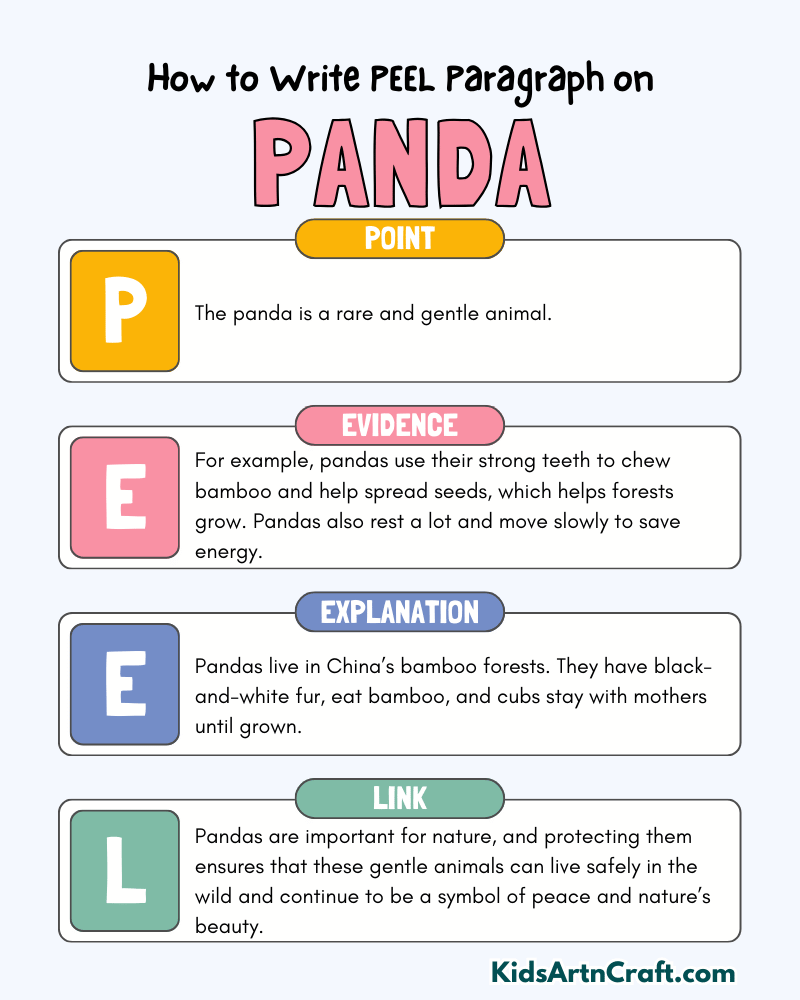
Point: The panda is a rare and gentle animal.
Evidence: For example, pandas use their strong teeth to chew bamboo and help spread seeds, which helps forests grow. Pandas also rest a lot and move slowly to save energy.
Explanation: Pandas live in China’s bamboo forests. They have black-and-white fur, eat bamboo, and cubs stay with mothers until grown.
Link: Pandas are important for nature, and protecting them ensures that these gentle animals can live safely in the wild and continue to be a symbol of peace and nature’s beauty.
2. Panda Paragraph Writing with TEEL Method
TEEL Method (Topic, Evidence, Explanation, Link)
Topic: The panda is a gentle and interesting animal.
Evidence: Pandas eat bamboo, live mostly alone, and care for their babies in pouches called cubs. They help spread seeds in forests while eating.
Explanation: It has soft black and white fur, a round face, and strong teeth for eating bamboo.
Link: Pandas are important for forests and nature. Protecting them helps keep wildlife safe and ecosystems healthy.
3. Panda Paragraph Writing with TEXAS Method
TEXAS Method (Topic, Example, Explanation, Analysis, Summary/Significance)
Topic: The panda is a rare and peaceful animal.
Example: Pandas rest, play, and take care of their babies called cubs. They also help forests grow by spreading seeds.
Explanation: It lives in bamboo forests and eats bamboo almost all the time.
Analysis: Their gentle nature and important role in forests make them very special.
Summary: In short, pandas are amazing animals that need protection to live safely in the wild.
4. Panda Paragraph Writing with Hamburger Method
Hamburger Method (Top Bun, The Fillings, Bottom Bun)
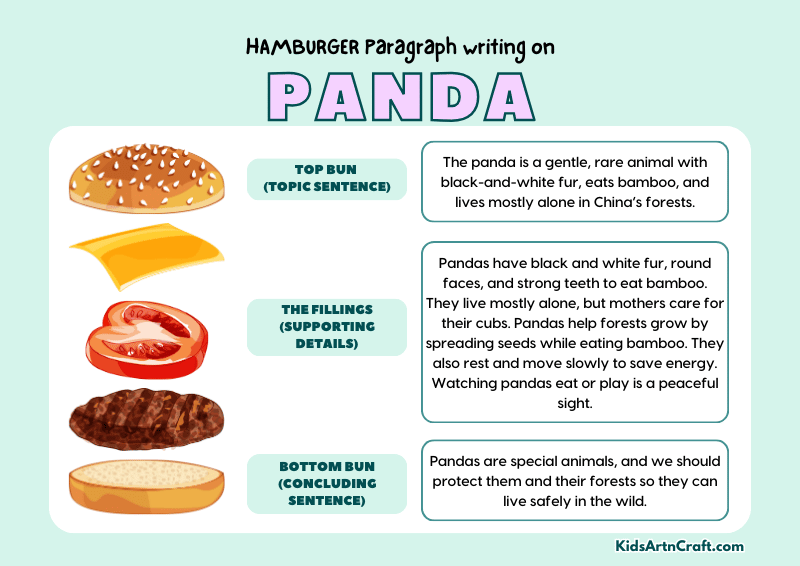
Top Bun (Topic Sentence):
The panda is a gentle, rare animal with black-and-white fur, eats bamboo, and lives mostly alone in China’s forests.
The Fillings (Supporting Details):
Pandas have black and white fur, round faces, and strong teeth to eat bamboo. They live mostly alone, but mothers care for their cubs. Pandas help forests grow by spreading seeds while eating bamboo. They also rest and move slowly to save energy. Watching pandas eat or play is a peaceful sight.
Bottom Bun (Concluding Sentence):
Pandas are special animals, and we should protect them and their forests so they can live safely in the wild.
Importance of Giant Pandas
- Giant pandas are a global symbol of wildlife conservation and play a key role in forest ecosystems. [Source: World Wildlife Fund]
- Their diet mainly consists of bamboo, and they live in the mountain ranges of central China. [Source: National Geographic]
Additional Facts about Giant Pandas
- Pandas were downgraded from “Endangered” to “Vulnerable” due to successful conservation programs, though habitat loss remains a concern. [Source: IUCN Red List]
- Low reproduction rates make breeding programs essential to maintain population growth. [Source: Save the Rhino / Panda Conservation]
- Pandas help maintain forest health by spreading seeds and supporting biodiversity. [Source: ResearchGate]
Hope you liked these paragraphs on ‘Panda’. Don’t forget to join the Telegram group for FREE Printables.