Science Experiments
DIY Carbon Air Purifier Science Project for Kids


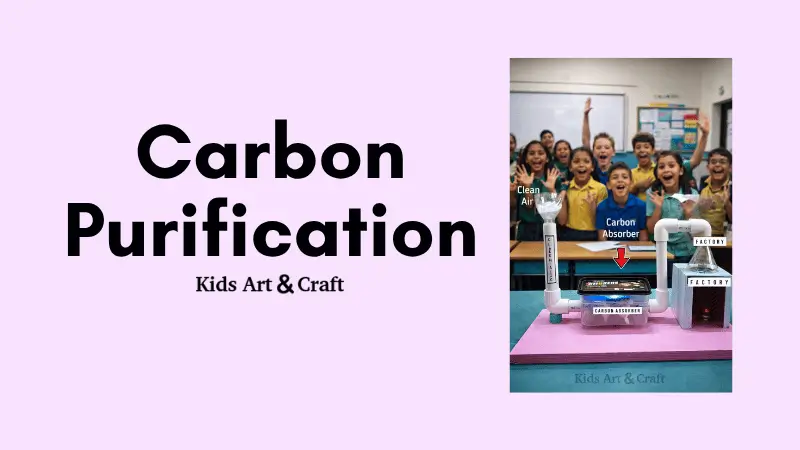
This fun science project shows how air pollution can be cleaned using carbon. In the model, a small “factory” releases smoky air that travels through pipes into a carbon absorber box. The carbon helps trap impurities, and the air that comes out on the other side is much cleaner.
It’s a great way for kids to understand how air purifiers and pollution filters work in real life!
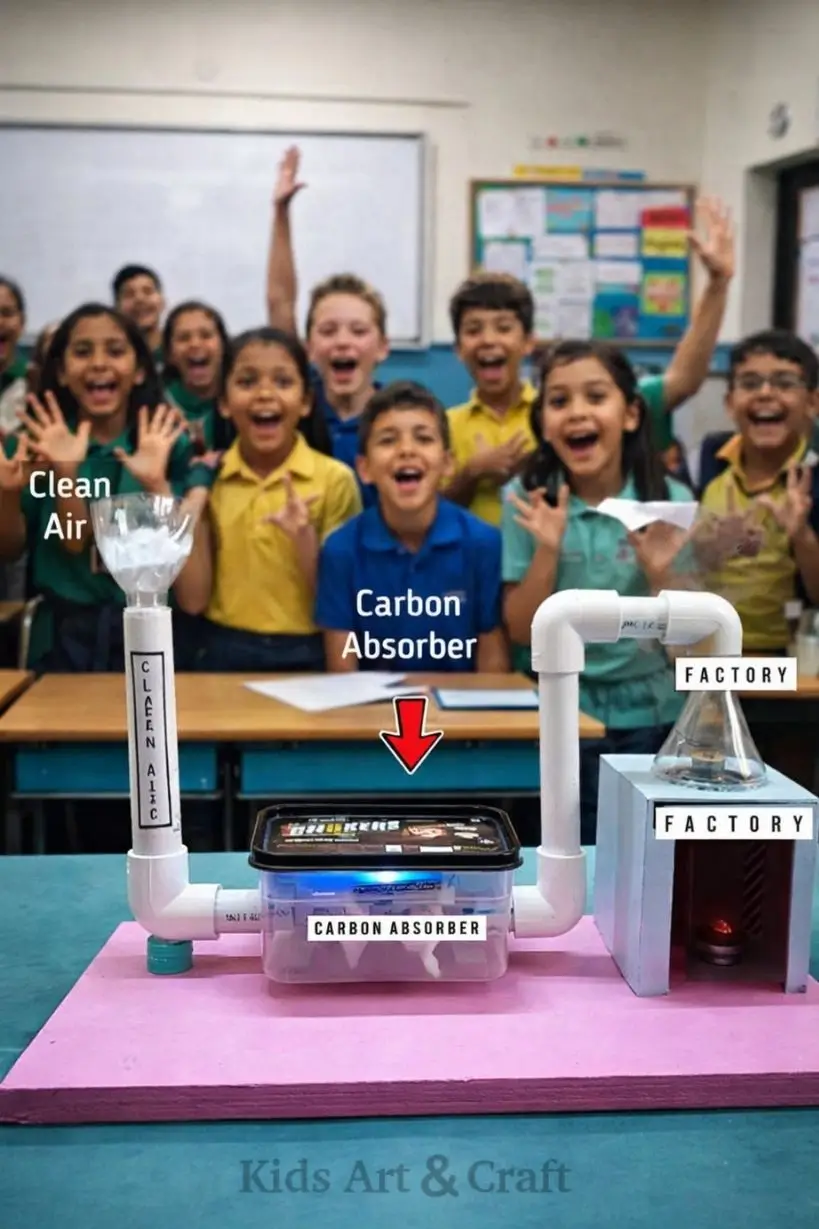
Innovative model showing the carbon absorption and air purification system working principle
Carbon Air Filtration Science Concept
The key idea is absorption and filtration.
- Carbon (especially charcoal) has tiny holes that trap harmful particles and gases.
- When polluted air passes through carbon, many impurities stick to the carbon surface.
- This process helps clean the air before it is released back into the environment.
Think of carbon like a tiny sponge for pollution!
Materials for Carbon Air Purifier Project
- Small cardboard box (for the factory model)
- Plastic container with lid (carbon absorber box)
- PVC pipes or plastic tubes
- Activated charcoal or crushed charcoal
- Cotton or filter paper
- Small incense stick or smoke source
- Glue or tape
- Marker labels (optional)
- Cutter/scissors (adult help recommended)
Step-by-Step Working Explanation
Step 1: Build the Factory
- Make a small cardboard box and label it “Factory”.
- Place a small incense stick inside to produce smoke.
Step 2: Connect the Pipes
- Attach a PVC pipe or tube from the factory to the carbon absorber box.
- This pipe represents the factory chimney carrying polluted air.
Step 3: Prepare the Carbon Absorber
- Fill the plastic container with activated charcoal or crushed charcoal.
- Add cotton layers to help filter the smoke.
Step 4: Add the Clean Air Outlet
- Connect another pipe from the carbon box to a vertical pipe labeled “Clean Air”.
Step 5: Run the Experiment
- Light the incense stick inside the factory.
- Smoke travels through the pipe into the carbon absorber.
- As it passes through the charcoal and cotton, many particles get trapped.
- The air coming out from the top looks much cleaner.
What Kids Learn
- How air pollution happens
- How carbon filters clean air
- The idea of filtration and absorption
- How factories can reduce pollution
- Basic STEM engineering skills
Real-Life Applications
This concept is used in many real systems:
- Air purifiers at home
- Industrial smoke filters
- Water purification systems
- Gas masks
- Car cabin air filters
Activated carbon filters are widely used to remove harmful gases and odors.
Safety Tips
- Always ask an adult to help when lighting incense.
- Use scissors or cutters carefully.
- Experiment in a well-ventilated area.
- Do not inhale smoke directly.
Benefits of the Carbon Air Purifier Project for Kids
- Easy and inexpensive materials
- Demonstrates a real environmental problem
- Hands-on learning with science and engineering
- Great for science fairs and school projects
- Helps kids think about protecting the environment
Extension Ideas
- Compare Different Filters: Try sand, cotton, and charcoal separately to see which cleans air better.
- Add a Small Fan: Use a tiny fan to simulate strong factory exhaust systems.
- Pollution Detector Idea: Place white paper at the outlet to see how much soot is trapped.
Carbon purification is essential for cleaner water, safer air, and sustainable industries. Advanced carbon filtration methods improve quality, reduce contaminants, and support environmental protection. Investing in effective carbon purification solutions helps businesses and households achieve healthier, more eco-friendly living today. Stay informed—join our Telegram group today and follow us on YouTube & Facebook for creative art tutorials!