Science Experiments
How to Build a Bicycle Dynamo Generator – Simple Project for Students


Have you ever wondered if riding a bicycle could produce electricity? In this fun STEM project, a spinning bicycle wheel turns a motor, and the motor produces electric power. This electricity can charge a battery or power small devices.
It’s a cool way to learn how movement can be turned into electricity!
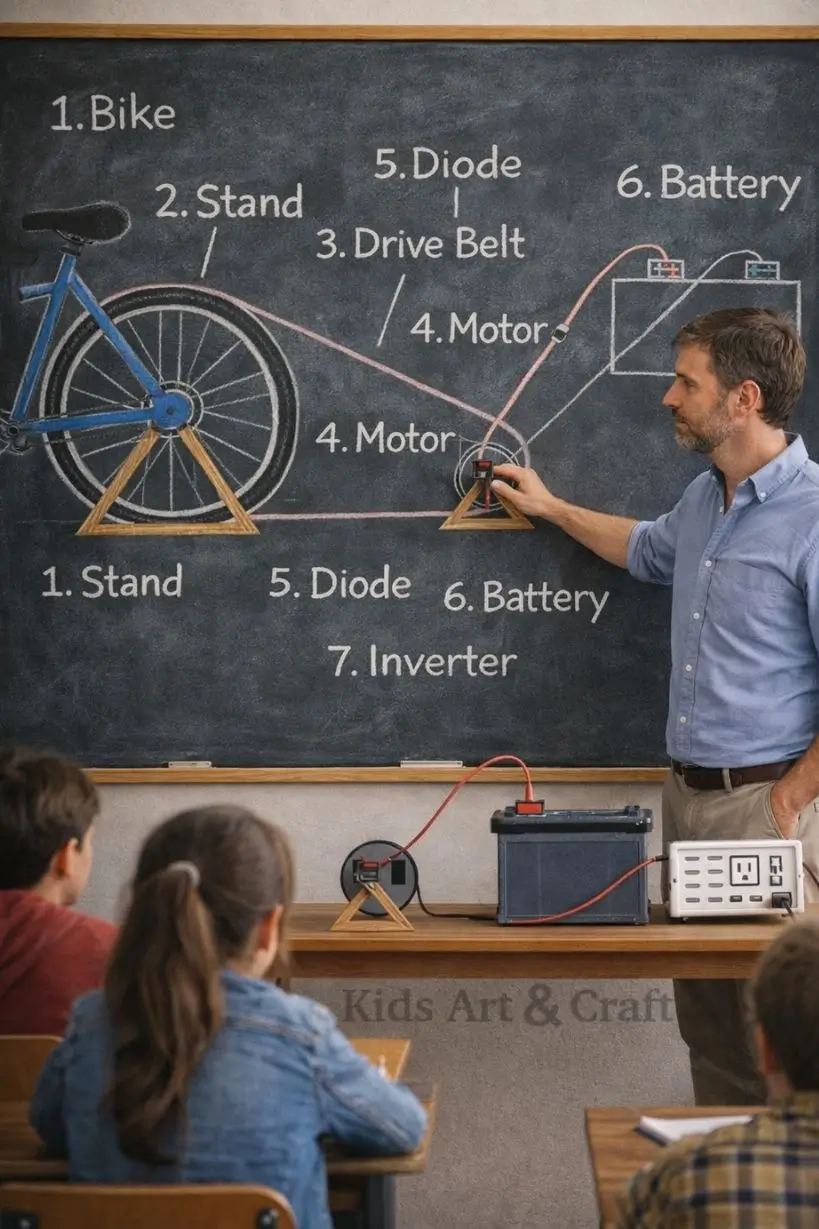
Pedaling motion generates electricity stored and converted for practical use.
Science Concept Behind It
- This experiment works because of energy conversion.
- When you pedal the bicycle, the wheel spins. The spinning wheel moves a belt, which turns a motor.
- A motor can also work in reverse and act like a generator. When it spins, it produces electricity.
- So the energy changes like this:
- Pedaling Energy → Spinning Motion → Electrical Energy
- The diode helps control the direction of electricity, and the battery stores the power.
Materials Needed for Bicycle Power Generator Science Project
- A bicycle with a wheel that can spin freely
- Small DC motor
- Rubber belt or strong elastic band (drive belt)
- Diode
- Rechargeable battery
- Inverter (optional, for powering small devices)
- Wires
- Stand to lift the bicycle wheel
- Tape or clips to hold parts in place
Step-by-Step Guide to Build a Bicycle Electricity Generator
Step 1: Place the Bicycle on a Stand
Lift the back wheel so it can spin freely without touching the ground.
Step 2: Attach the Motor
Fix the motor near the wheel.
Step 3: Connect the Drive Belt
Wrap the belt around the bicycle wheel and the motor shaft.
Step 4: Spin the Wheel
When someone pedals the bicycle, the wheel spins and turns the motor through the belt.
Step 5: Motor Generates Electricity
As the motor spins, it produces electrical energy.
Step 6: Electricity Flows Through the Diode
The diode ensures electricity flows in the correct direction.
Step 7: Store Energy in the Battery
The electricity charges the battery.
Step 8: Use the Stored Power
The inverter can convert the battery power so it can run small devices like lights or chargers.
What Kids Learn
- How motion can create electricity
- Basics of energy conversion
- How generators work
- The role of diodes and batteries
- Simple mechanical systems like belts and wheels
Real-Life Applications
- Hydroelectric dams (spinning turbines generate electricity)
- Wind turbines
- Pedal-powered generators for emergencies
- Exercise bikes that produce electricity
- Renewable energy systems
Safety Tips
- Keep fingers away from the spinning belt and wheel
- Make sure wires are properly connected
- Do not use very high speeds
- Use adult supervision when connecting electrical parts
Why This Project Is Great for Kids
- Combines science, engineering, and creativity
- Shows renewable energy in action
- Easy to build with common materials
- Encourages hands-on learning
- Makes science fun and interactive
Extension Ideas
- Add an LED Light: Connect an LED to see it glow when you pedal.
- Charge a Phone Power Bank: Try storing pedal power in a larger rechargeable battery.
- Measure Your Power: Use a small voltmeter to see how much electricity you generate at different pedaling speeds.
A bicycle dynamo power generator offers an eco-friendly way to produce electricity while riding. It reduces battery dependence, supports sustainable commuting, and powers lights efficiently. Investing in a reliable bicycle dynamo improves safety, saves energy, and promotes greener transportation today. Stay updated with fresh posts by joining our Telegram group. Follow us on YouTube & Facebook for art and craft tutorials and much more.