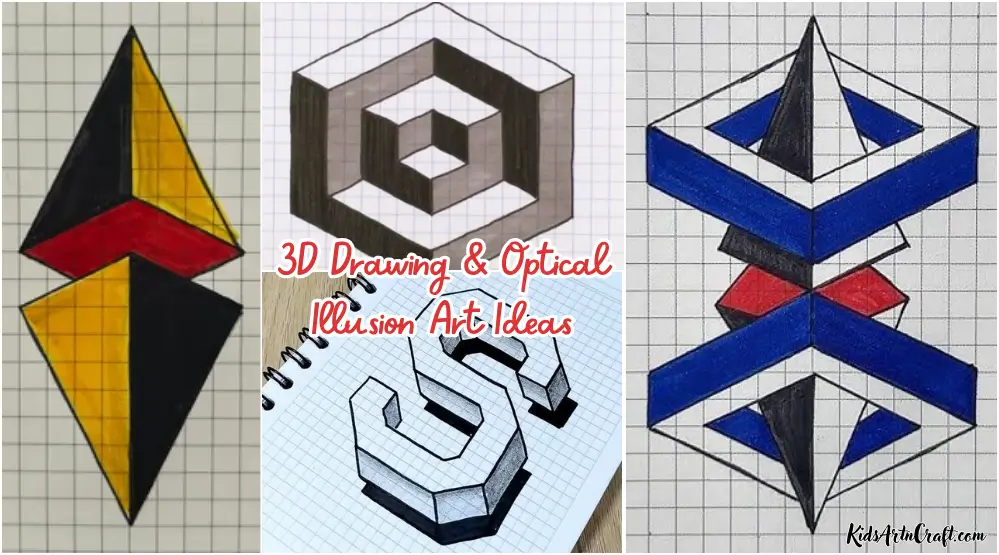
3D drawing and optical illusion art are exciting ways for kids to explore depth, perspective, shapes, and creative visual effects. Unlike flat drawings, 3D artwork can make objects appear raised, recessed, or as though they are coming off the page.
These drawing activities are suitable for beginners, school projects, and children who want to experiment with creative drawing techniques.
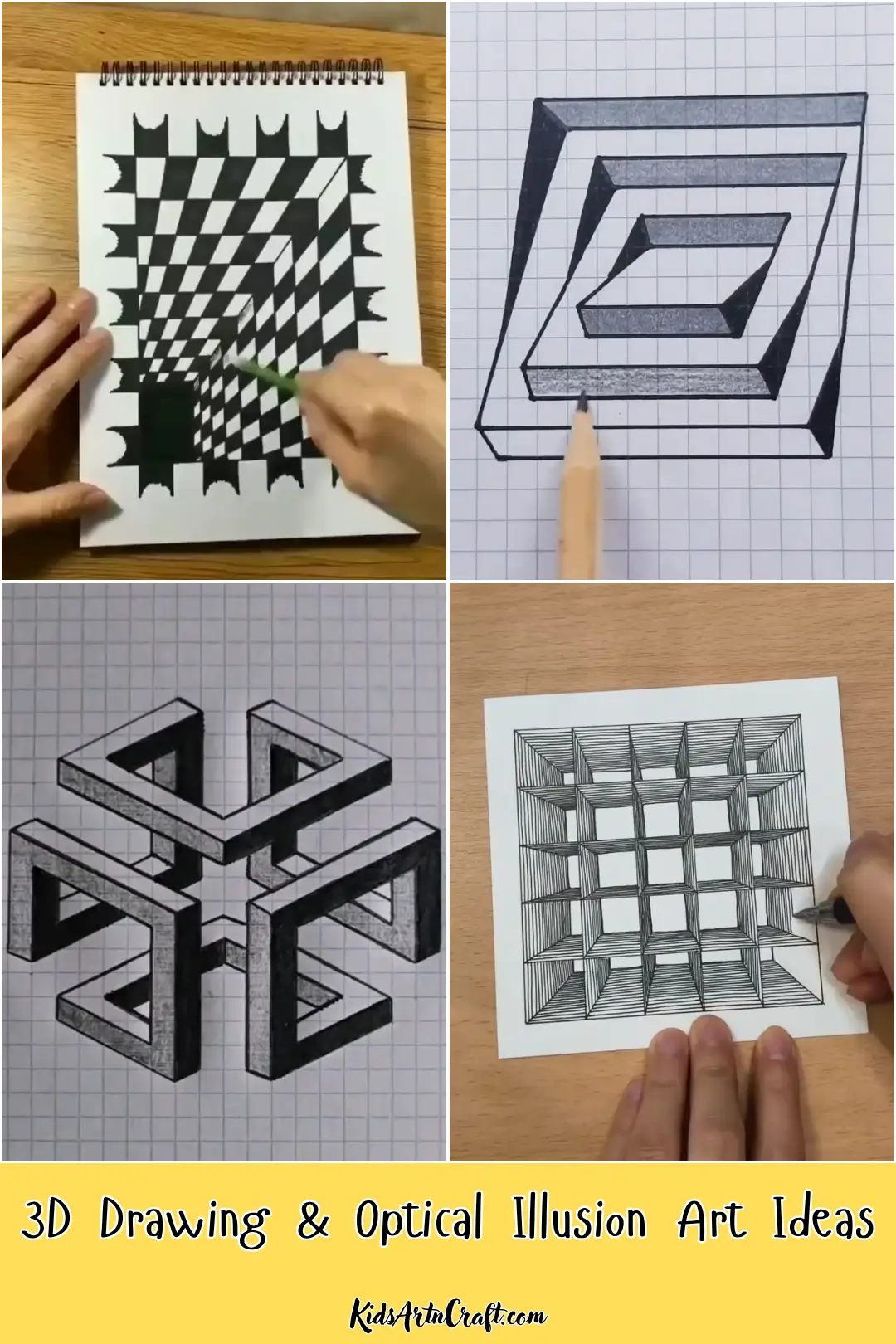
Creative 3D drawing ideas showcasing geometric patterns, impossible shapes, layered designs, and optical illusions.
Easy 3D Drawing on Paper
Creating a 3D effect can start with simple shapes and lines. Children can practice drawing objects that appear to have height, width, and depth.
Try this easy-to-draw 3D drawing on paper tutorial for a beginner-friendly introduction to three-dimensional drawing.
Start with simple objects such as cubes, boxes, stars, letters, or basic geometric shapes before moving on to more detailed designs.
Simple 3D Drawing Art
Once children understand basic perspective, they can experiment with lines and shading to create stronger depth effects.
Explore this simple drawing 3D art tutorial for creative ideas that introduce children to three-dimensional artwork.
Shading plays an important role in 3D drawing. Adding lighter and darker areas can make a flat shape appear more realistic and dimensional.
How to Learn 3D Drawing for Kids
Learning 3D drawing gradually makes the technique easier for young artists. Begin with basic shapes before attempting objects with more complex perspectives.
Follow this how to learn 3D drawing paper tutorial for kids for guided practice.
A simple learning process can include:
- Draw a basic shape.
- Add perspective lines.
- Extend the sides to create depth.
- Add outlines and details.
- Use shading to create light and shadow.
- Add colors to complete the drawing.
Easy 3D Drawing Tricks
Small changes in line direction, size, spacing, and shading can make a drawing appear three-dimensional.
Try these easy-to-draw 3D drawing tricks tutorial to explore simple techniques that can make ordinary drawings look more realistic.
Children can practice these tricks with letters, numbers, shapes, stars, boxes, and other familiar objects.
Optical Illusion Drawing
Optical illusion drawings use lines, patterns, shapes, and perspective to create visual effects that can make the artwork appear to move, change, or have unusual depth.
Explore this optical illusion drawing art tutorial for creative illusion-based drawing ideas.
Simple optical illusion activities can include repeating geometric patterns, curved lines, tunnel effects, or designs that appear to move when viewed from different angles.
Final Thoughts
3D drawing and optical illusions offer children an engaging way to experiment with perspective and visual effects. Starting with simple shapes, then adding depth, shading, and perspective lines, makes three-dimensional drawing easier for beginners.
From easy 3D drawings on paper to optical illusion artwork, these projects can provide creative practice for children while helping them develop new drawing techniques.