

Paragraph Writing
Paragraph on Dia de los Muertos


Día de los Muertos, or Day of the Dead, is a Mexican festival that honors deceased loved ones. People decorate altars, offer food, and celebrate with music and dance, remembering and cherishing family traditions. This lesson focuses on writing paragraphs about the “Dia de los Muertos” in four styles—Expository, Persuasive, Descriptive, and Narrative—and shows how to structure your ideas using PEEL, TEEL, TEXAS, and the Hamburger Model.
Read This Article in Other Languages
- डिया डे लॉस मुएर्टोस पर अनुच्छेद (Hindi / हिंदी)
- Párrafo sobre Día de los Muertos (Spanish / Español)
- Paragraphe sur Día de los Muertos (French / Français)
- Absatz über Día de los Muertos (German / Deutsch)
- فقرة عن ديا دي لوس مويرتوس (Arabic / العربية)
- ডিয়া ডে লস মুয়ের্টোস সম্পর্কে অনুচ্ছেদ (Bengali / বাংলা)
- டியா டெ லோஸ் முஏர்டோஸ் பற்றிய பத்தி (Tamil / தமிழ்)
- డియా డి లాస్ మuertోస్ గురించి పేరా (Telugu / తెలుగు)
- ഡിയാ ഡെ ലോസ് മ്യുവേർടോസ് സംബന്ധിച്ച പാരഗ്രാഫ് (Malayalam / മലയാളം)
- ڈیا ڈی لاس موئیرٹوس پر پیراگراف (Urdu / اردو)
- Parágrafo sobre Dia de Los Muertos (Portuguese / Português)
Translation Disclaimer: These links use Google Translate, an automated translation service. Translations may vary in accuracy and are provided for convenience only.
Different Styles of Paragraphs on ‘Dia de los Muertos’
1. Expository Paragraph on Dia de los Muertos (Explains with Facts)
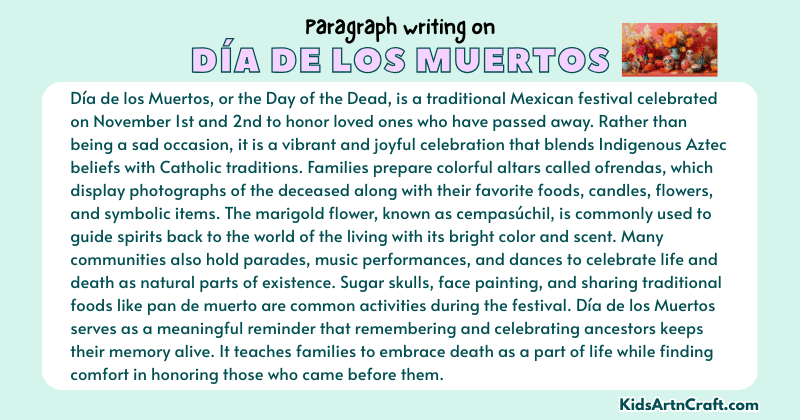
Día de los Muertos, or the Day of the Dead, is a traditional Mexican festival celebrated on November 1st and 2nd to honor loved ones who have passed away. Rather than being a sad occasion, it is a vibrant and joyful celebration that blends Indigenous Aztec beliefs with Catholic traditions. Families prepare colorful altars called ofrendas, which display photographs of the deceased along with their favorite foods, candles, flowers, and symbolic items. The marigold flower, known as cempasúchil, is commonly used to guide spirits back to the world of the living with its bright color and scent. Many communities also hold parades, music performances, and dances to celebrate life and death as natural parts of existence. Sugar skulls, face painting, and sharing traditional foods like pan de muerto are common activities during the festival. Día de los Muertos serves as a meaningful reminder that remembering and celebrating ancestors keeps their memory alive. It teaches families to embrace death as a part of life while finding comfort in honoring those who came before them.
2. Persuasive Paragraph on Día de los Muertos (Tries to Convince You)
Día de los Muertos is a celebration that everyone should learn about and appreciate because it offers a beautiful and meaningful way to remember loved ones. Unlike many traditions that focus on mourning, this festival encourages people to honor the dead with joy, color, and gratitude. Learning about this tradition helps us understand that remembering those who have passed away can be comforting rather than painful. The vibrant altars, or ofrendas, inspire families to share stories, revisit memories, and stay connected to their roots. By embracing this festival, people can strengthen family bonds, develop cultural awareness, and build respect for global traditions. The symbolic elements—marigold flowers, sugar skulls, candles, and favorite foods—show how love can transcend time. Celebrating Día de los Muertos teaches us not to fear death but to view it as a natural part of life. In a world where many people struggle with loss, this tradition offers a positive, healing perspective. Understanding and appreciating Día de los Muertos can enrich our lives and remind us to keep the memory of our loved ones alive with joy and celebration.
3. Descriptive Paragraph on Día de los Muertos (Paints a Picture with Words)
Día de los Muertos bursts with color, warmth, and emotion as families transform their homes and streets into vibrant spaces of remembrance. Bright orange marigolds line pathways, their petals glowing like golden lights guiding spirits home. Altars, or ofrendas, stand proudly in living rooms, layered with photographs, flickering candles, and plates of favorite foods that fill the air with comforting aromas. Sugar skulls, decorated with swirling patterns of pink, blue, and yellow, add a playful touch to the scene. The sound of laughter mixes with the soft hum of traditional music as families share stories of their ancestors. Outside, colorful papel picado banners flutter in the breeze, filling the sky with cheerful patterns. The atmosphere is both festive and reflective, blending joy and nostalgia. Children with painted faces run around dressed as cheerful skeletons, and the scent of freshly baked pan de muerto drifts through the streets. Every corner seems alive with memories, love, and tradition. Día de los Muertos feels like a heartfelt festival where the past gently returns to embrace the present.
4. Narrative Paragraph on Día de los Muertos (Tells a Story)
Last year, I experienced Día de los Muertos with my friend’s family, and it became one of the most unforgettable celebrations of my life. Early in the morning, we gathered around the kitchen table to bake pan de muerto, the warm aroma filling the house. Later, we created an ofrenda in the living room, placing photographs, candles, and colorful marigolds around a framed picture of my friend’s grandmother. As evening approached, the soft glow of candles lit up the room, and everyone shared stories—funny, emotional, and inspiring—about the loved ones they were honoring. We then joined a lively parade in the town square, where people danced, laughed, and painted their faces with bright skull designs. Children handed out sugar skulls, and musicians played cheerful tunes that echoed through the night. Even though it was a festival for the dead, the atmosphere was full of life. For the first time, I understood how celebrating memories could bring joy instead of sadness. That night, I felt connected not only to the tradition but also to the beautiful idea of honoring those who live on in our hearts.
‘Día de los Muertos’ Paragraphs in Different Structured Methods
1. Día de los Muertos Paragraph Writing with PEEL Method
PEEL Method (Point, Evidence, Explanation, Link)
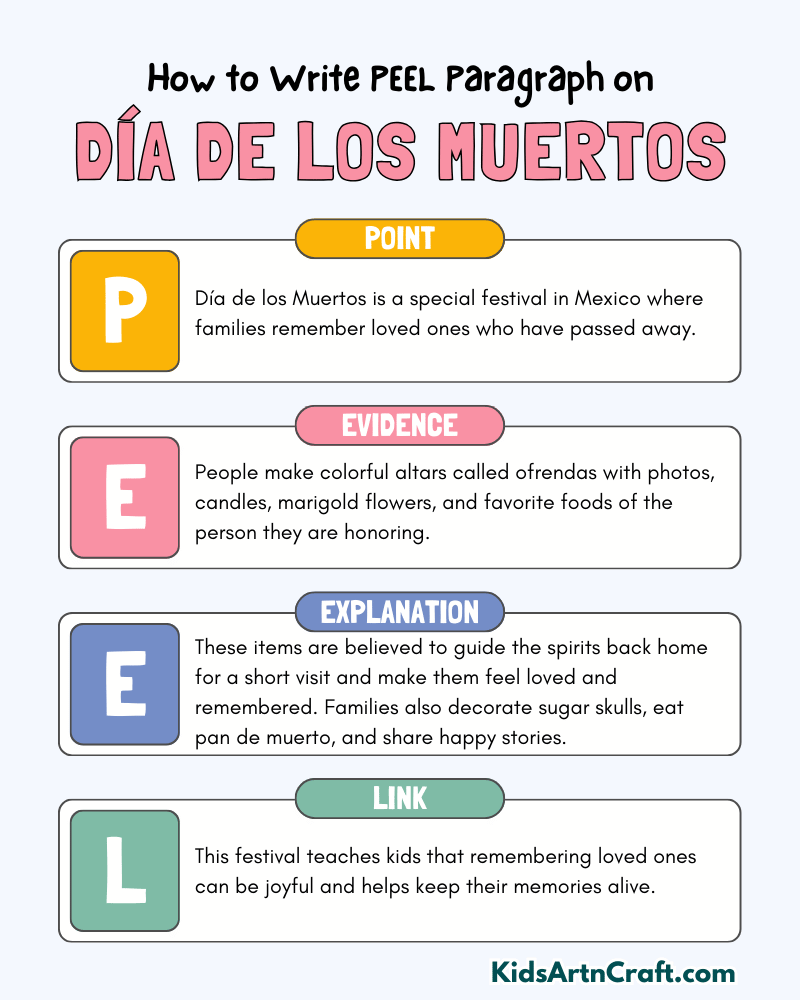
Point: Día de los Muertos is a special festival in Mexico where families remember loved ones who have passed away.
Evidence: People make colorful altars called ofrendas with photos, candles, marigold flowers, and favorite foods of the person they are honoring.
Explanation: These items are believed to guide the spirits back home for a short visit and make them feel loved and remembered. Families also decorate sugar skulls, eat pan de muerto, and share happy stories.
Link: This festival teaches kids that remembering loved ones can be joyful and helps keep their memories alive.
2. Día de los Muertos Paragraph Writing with TEEL Method
TEEL Method (Topic, Evidence, Explanation, Link)
Topic: Día de los Muertos is a joyful celebration that honors family members who are no longer alive.
Evidence: They build ofrendas filled with marigolds, candles, sugar skulls, and the favorite snacks of their loved ones. They also join parades and paint their faces like cheerful skeletons.
Explanation: Instead of being sad, families celebrate with bright colors, music, food, and decorations.
Link: By celebrating this way, children learn that love lasts forever and that remembering someone can bring comfort and happiness.
3. Día de los Muertos Paragraph Writing with the TEXAS Method
TEXAS Method (Topic, Example, Explanation, Analysis, Summary/Significance)
Topic: Día de los Muertos is an important Mexican festival that celebrates the memory of loved ones.
Example: They set up ofrendas with photos, flowers, candles, and treats like pan de muerto. Many people wear colorful costumes and enjoy music and dancing.
Explanation: Families believe that spirits visit them during this time, so they prepare special decorations.
Analysis: These activities show that the festival is about love, respect, and keeping memories alive in a happy way.
Summary: Día de los Muertos helps children understand that remembering loved ones can be a warm and meaningful tradition.
4. Día de los Muertos Paragraph Writing with Hamburger Method
Hamburger Method (Top Bun, The Fillings, Bottom Bun)
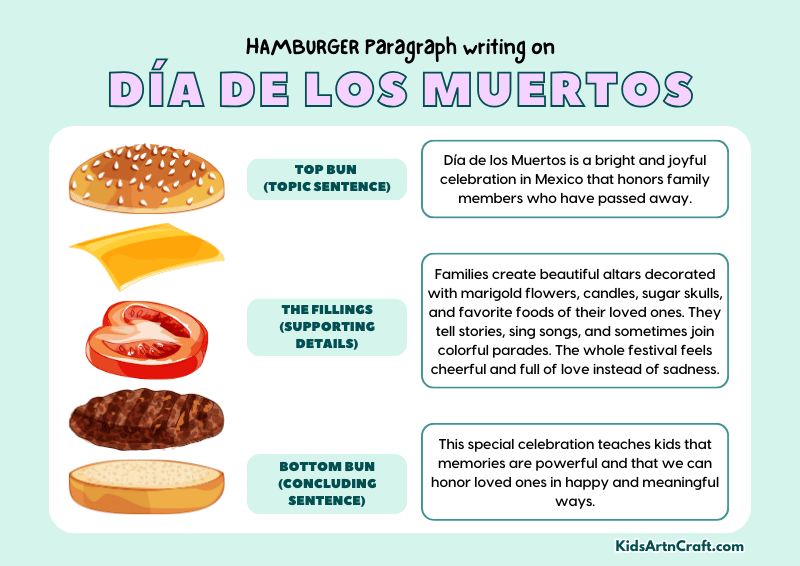
Top Bun (Topic Sentence):
Día de los Muertos is a bright and joyful celebration in Mexico that honors family members who have passed away.
The Fillings (Supporting Details):
Families create beautiful altars decorated with marigold flowers, candles, sugar skulls, and favorite foods of their loved ones. They tell stories, sing songs, and sometimes join colorful parades. The whole festival feels cheerful and full of love instead of sadness.
Bottom Bun (Concluding Sentence):
This special celebration teaches kids that memories are powerful and that we can honor loved ones in happy and meaningful ways.
Importance of Día de los Muertos
- Día de los Muertos is a Mexican holiday celebrating and honoring deceased loved ones, viewing death as a continuation of life. [Source: Britannica]
- The festival blends indigenous rituals and Catholic traditions, preserving Mexico’s rich cultural heritage . [Source: National Geographic]
Additional Facts about Día de los Muertos
- Families build ofrendas (altars) with photos, candles, flowers, and favorite foods to welcome the spirits of the departed. [Source: Wikipedia – Ofrenda]
- Colorful calaveras (sugar skulls) symbolize life and death, often placed on altars or shared among families. [Source: Wikipedia – Calavera de alfeñique]
- UNESCO recognizes Día de los Muertos as intangible cultural heritage, highlighting its cultural and social significance. [Source: UNESCO Intangible Heritage]
Hope you liked these paragraphs on ‘Día de los Muertos’. Don’t forget to join the Telegram group for FREE Printables.