




Paragraph Writing
Paragraph on How Good Habits Are Formed


Good habits are formed through practice, consistency, and patience. By repeating positive actions like studying regularly, staying organized, and being kind, they become part of our daily routine and character. Build stronger paragraphs by practicing ‘How Good Habits Are Formed’ in four styles—Expository, Persuasive, Descriptive, and Narrative—and structure your ideas using structures with PEEL, TEEL, TEXAS, and the Hamburger Model.
Read This Article in Other Languages
- अच्छी आदतें कैसे बनती हैं पर अनुच्छेद (Hindi / हिंदी)
- Párrafo sobre cómo se forman los buenos hábitos (Spanish / Español)
- Paragraphe sur la formation des bonnes habitudes (French / Français)
- Absatz darüber, wie gute Gewohnheiten entstehen (German / Deutsch)
- فقرة عن كيفية تكوّن العادات الجيدة (Arabic / العربية)
- ভালো অভ্যাস কীভাবে গড়ে ওঠে সম্পর্কে অনুচ্ছেদ (Bengali / বাংলা)
- நல்ல பழக்கங்கள் எப்படி உருவாகுகின்றன என்பதைக் குறித்து பத்தி (Tamil / தமிழ்)
- మంచి అలవాట్లు ఎలా ఏర్పడతాయో గురించి పేరా (Telugu / తెలుగు)
- നല്ല ശീലങ്ങൾ എങ്ങനെ രൂപപ്പെടുന്നു എന്ന പാരഗ്രാഫ് (Malayalam / മലയാളം)
- اچھی عادات کیسے بنتی ہیں پر پیراگراف (Urdu / اردو)
- Parágrafo sobre como se formam bons hábitos (Portuguese / Português)
Translation Disclaimer: These links use Google Translate, an automated translation service. Translations may not be fully accurate and are provided for convenience only.
Different Styles of Paragraphs on ‘How Good Habits Are Formed’
1. Expository Paragraph on How Good Habits Are Formed (Explains with Facts)
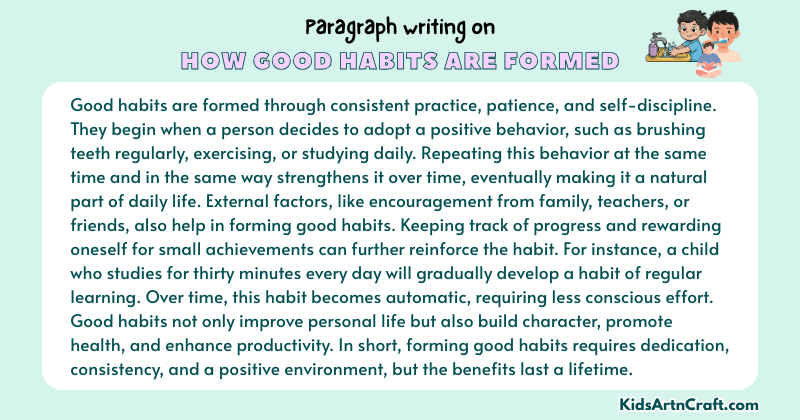
Good habits are formed through consistent practice, patience, and self-discipline. They begin when a person decides to adopt a positive behaviour, such as brushing teeth regularly, exercising, or studying daily. Repeating this behavior at the same time and in the same way strengthens it over time, eventually making it a natural part of daily life. External factors, like encouragement from family, teachers, or friends, also help in forming good habits. Keeping track of progress and rewarding oneself for small achievements can further reinforce the habit. For instance, a child who studies for thirty minutes every day will gradually develop a habit of regular learning. Over time, this habit becomes automatic, requiring less conscious effort. Good habits not only improve personal life but also build character, promote health, and enhance productivity. In short, forming good habits requires dedication, consistency, and a positive environment, but the benefits last a lifetime.
2. Persuasive Paragraph on How Good Habits Are Formed (Tries to Convince You)
Everyone should focus on forming good habits because they improve life and build character. Developing a habit, such as reading daily, exercising, or helping others, starts with small, consistent steps. People should set clear goals, repeat the behavior regularly, and stay patient, even when it feels challenging. Encouragement from family and friends can make the process easier. For example, children who brush their teeth every morning and night eventually do it without reminders, keeping their teeth healthy. Good habits also create discipline, responsibility, and confidence, which help in school, work, and personal life. By practicing small positive actions daily, anyone can develop habits that become part of their lifestyle. Therefore, everyone should make an effort to form good habits because they lead to long-term success, happiness, and a healthier, more productive life.
3. Descriptive Paragraph on How Good Habits Are Formed (Paints a Picture with Words)
Forming good habits is like planting seeds in a garden. At first, the habit is small and fragile, like a tiny seed. Repeating the behavior regularly, such as waking up early, reading a book, or exercising, is like watering and caring for the seed. Gradually, the habit grows stronger, becoming a part of daily life. Support from parents, teachers, or friends acts like sunlight, helping the habit flourish. Rewards and achievements make the process enjoyable, like flowers blooming in the garden. Over time, what once required effort becomes automatic, like a tree standing tall without constant care. Good habits create a sense of pride, discipline, and satisfaction. Just as a well-tended garden brings beauty and joy, consistent effort in forming good habits brings personal growth, health, and success, making life smoother and more rewarding.
4. Narrative Paragraph on How Good Habits Are Formed (Tells a Story)
When I decided to wake up early every day, I realised how good habits are formed. At first, it was difficult; my bed felt warm and comfortable, and I often wanted to stay longer. But I set an alarm, reminded myself of the benefits, and made a plan to get up on time. My parents encouraged me, and I rewarded myself when I succeeded. Slowly, waking up early became easier, and I began to feel more energetic and focused throughout the day. I noticed that other good habits followed naturally, like studying regularly, exercising, and keeping my room tidy. This experience taught me that good habits are formed through patience, consistency, and support. Repeating a positive action every day eventually makes it automatic, and the effort turns into long-term benefits for life, health, and happiness.
‘How Good Habits Are Formed’ Paragraphs in Different Structured Methods
1. How Good Habits Are Formed Paragraph Writing with PEEL Method
PEEL Method (Point, Evidence, Explanation, Link)
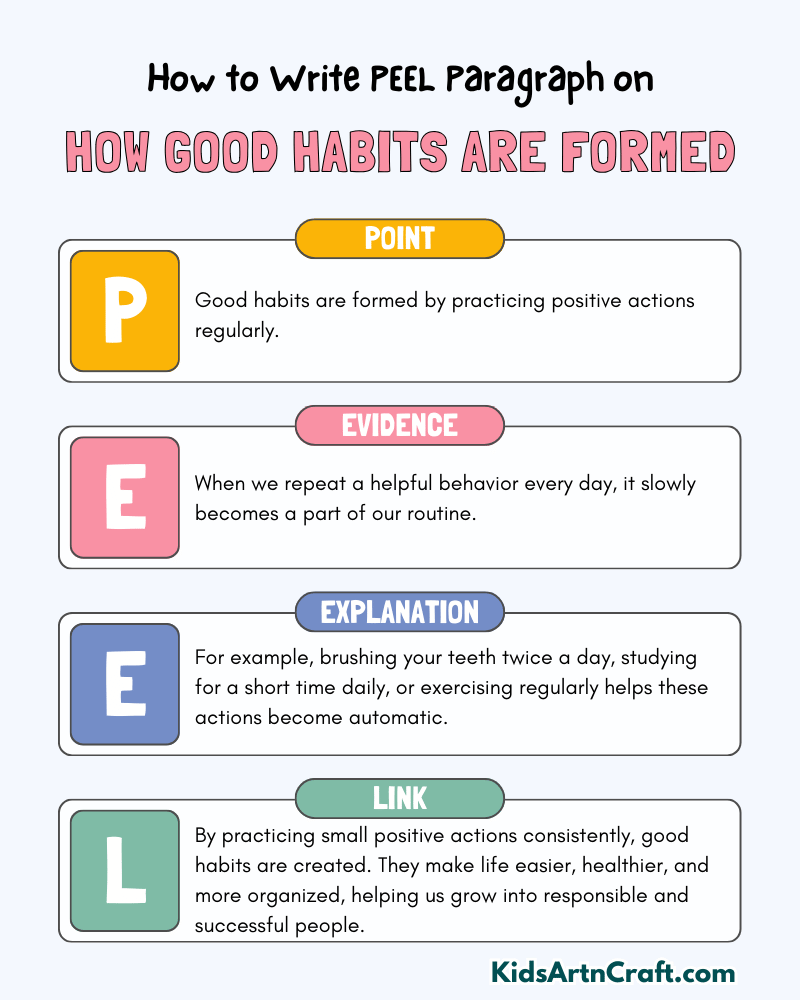
Point: Good habits are formed by practicing positive actions regularly.
Evidence: For example, brushing your teeth twice a day, studying for a short time daily, or exercising regularly helps these actions become automatic.
Explanation: When we repeat a helpful behavior every day, it slowly becomes a part of our routine.
Link: By practicing small positive actions consistently, good habits are created. They make life easier, healthier, and more organized, helping us grow into responsible and successful people.
2. How Good Habits Are Formed Paragraph Writing with TEEL Method
TEEL Method (Topic, Evidence, Explanation, Link)
Topic: Forming good habits is important for everyone.
Evidence: For instance, children who read for twenty minutes daily or wash their hands before meals soon do it without reminders.
Explanation: Good habits start when we decide to do something positive and repeat it regularly.
Link: So, by practicing positive actions consistently, anyone can develop good habits that make life healthier, happier, and more organized.
3. How Good Habits Are Formed Paragraph Writing with TEXAS Method
TEXAS Method (Topic, Example, Explanation, Analysis, Summary/Significance)
Topic: Good habits are formed through practice.
Example: For example, exercising, reading, or keeping your room clean can become habits if done regularly.
Explanation: Repeating positive actions daily helps them become part of your routine.
Analysis: Practicing small actions consistently builds discipline and makes the habit automatic.
Summary: That is why forming good habits is important—they help you grow responsible, healthy, and successful.
4. How Good Habits Are Formed Paragraph Writing with Hamburger Method
Hamburger Method (Top Bun, The Fillings, Bottom Bun)
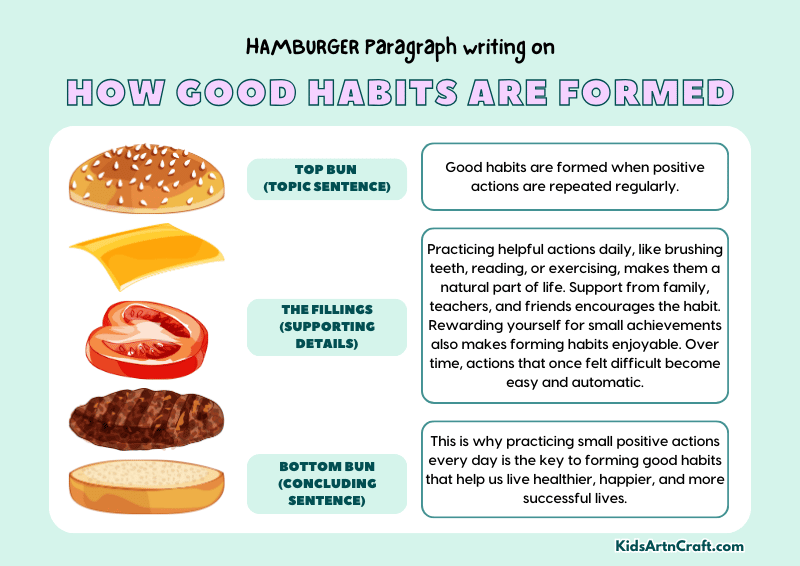
Top Bun (Topic Sentence):
Good habits are formed when positive actions are repeated regularly.
The Fillings (Supporting Details):
Practicing helpful actions daily, like brushing teeth, reading, or exercising, makes them a natural part of life. Support from family, teachers, and friends encourages the habit. Rewarding yourself for small achievements also makes forming habits enjoyable. Over time, actions that once felt difficult become easy and automatic.
Bottom Bun (Concluding Sentence):
This is why practicing small positive actions every day is the key to forming good habits that help us live healthier, happier, and more successful lives.
Importance of Good Habits
- Good habits are formed through regular practice and repetition, strengthening brain pathways. [Source: NIH]
- Starting with small, manageable habits increases the chance of long-term success. [Source: James Clear]
Additional Facts of Good Habits
- Environment and cues influence habit formation, helping or hindering behavior. [Source: American Psychological Association]
- Tracking progress or sharing goals improves habit consistency. [Source: ResearchGate]
- Mindfulness increases awareness and self-control, supporting good habit maintenance. [Source: NIH]
Hope you liked these paragraphs on ‘How Good Habits Are Formed’. Don’t forget to join the Telegram group for FREE Printables.
Check this article to write a paragraph on good habits.