



Paragraph Writing
Paragraph on Indigenous Cultures


Indigenous cultures are rich in traditions, languages, and knowledge. They connect people to their land, history, and community, teaching respect, heritage, and the value of cultural diversity. Learn practical ways to write paragraphs on “Indigenous Cultures” in four styles—Expository, Persuasive, Descriptive, and Narrative—while organizing your ideas effectively using structures with PEEL, TEEL, TEXAS, and the Hamburger Model.
Read This Article in Other Languages
- अदिवासी संस्कृति पर अनुच्छेद (Hindi / हिंदी)
- Párrafo sobre culturas indígenas (Spanish / Español)
- Paragraphe sur les cultures autochtones (French / Français)
- Absatz über indigene Kulturen (German / Deutsch)
- فقرة عن الثقافات الأصلية (Arabic / العربية)
- আদিবাসী সংস্কৃতি সম্পর্কে অনুচ্ছেদ (Bengali / বাংলা)
- உள்நாட்டுச் கலாச்சாரங்கள் பற்றி பத்தி (Tamil / தமிழ்)
- స్థానిక సంస్కృతుల గురించి పేరా (Telugu / తెలుగు)
- ആദിവാസി സംസ്കാരങ്ങളെക്കുറിച്ചുള്ള പാരഗ്രാഫ് (Malayalam / മലയാളം)
- دیسی ثقافتوں پر پیراگراف (Urdu / اردو)
- Parágrafo sobre culturas indígenas (Portuguese / Português)
Translation Disclaimer: These links use Google Translate, an automated translation service. Translations may vary in accuracy and are provided for convenience only.
Different Styles of Paragraphs on ‘Indigenous Cultures’
1. Expository Paragraph on Indigenous Cultures (Explains with Facts)
Indigenous cultures are some of the oldest and most diverse in the world, offering insight into human history and a close relationship with nature. These cultures include distinct languages, traditions, beliefs, and lifestyles passed down through generations. Many Indigenous communities value living in balance with the environment and using natural resources wisely. Their stories, art, dances, and ceremonies preserve their identity and teach younger members about their heritage. Indigenous knowledge also provides important ideas about biodiversity, farming, and sustainable living. Despite this, many communities have faced challenges such as discrimination, loss of land, and fading traditions due to modernization. Today, efforts like cultural education, celebrations, and legal protection aim to preserve these traditions. Learning about Indigenous cultures builds respect for diversity and highlights the need to protect these valuable heritages.
2. Persuasive Paragraph on Indigenous Cultures (Tries to Convince You)
Indigenous cultures must be actively protected and celebrated because they hold knowledge and traditions that are invaluable to our shared human heritage. These cultures teach us to respect nature, live sustainably, and maintain strong community bonds—lessons that are more important than ever in today’s rapidly changing world. If we fail to protect Indigenous languages, stories, and traditions, we risk losing entire histories that cannot be replaced. Governments, schools, and communities should invest in programs that preserve Indigenous knowledge, support cultural education, and protect land rights. Indigenous people deserve recognition, respect, and the freedom to practice their traditions without discrimination. By supporting their rights and learning from their wisdom, we not only honor their past but also build a more inclusive future. Every individual has a role to play—whether by learning about Indigenous history, respecting cultural practices, or standing against injustices faced by Indigenous communities. Protecting these cultures is not just an act of kindness; it is a responsibility we all share to preserve the world’s cultural diversity.
3. Descriptive Paragraph on Indigenous Cultures (Paints a Picture with Words)
Indigenous cultures are rich tapestries woven with vibrant colors, rhythmic songs, and ancient traditions. In many communities, elders gather around glowing fires to share stories that echo across generations, carrying wisdom about the land, animals, and ancestors. The scent of traditional foods, cooked slowly with care, fills the air during festivals, while the beat of drums creates a steady heartbeat that binds the community together. Handcrafted jewelry, beadwork, carvings, and woven fabrics display intricate patterns that reflect spiritual beliefs and natural elements. Sacred dances, performed with graceful steps and colorful clothing, honor the spirits of nature and celebrate important events. Indigenous homes—whether built of wood, clay, or natural fibers—reflect a deep understanding of the environment. Each part of life, from art to daily activities, demonstrates a profound respect for nature and community. The landscapes where Indigenous people live—dense forests, open plains, mountains, or deserts—shape their unique ways of life. Through their traditions, languages, and rituals, Indigenous cultures paint a vivid picture of resilience, beauty, and harmony with the world.
4. Narrative Paragraph on Indigenous Cultures (Tells a Story)
As the sun began to rise over the quiet forest, Maya followed her grandmother along the narrow path leading to the sacred river. This was the day she would learn one of the oldest traditions of their Indigenous community. The cool morning air carried the smell of wet earth and wildflowers. Her grandmother’s soft voice told stories of their ancestors who had walked the same path for generations. When they reached the river, Maya watched as her grandmother knelt and whispered a prayer of gratitude to the water. She taught Maya how every part of nature—the river, the trees, the sky—was a living relative that deserved respect. Together, they collected small stones used in a traditional ceremony, each representing a promise to honor the land. As they walked back, Maya felt a growing sense of pride. She understood that these traditions were not just rituals; they were threads connecting her to her past and guiding her future. In that moment, she felt deeply rooted in her culture, ready to carry its stories forward.
‘Indigenous Cultures’ Paragraphs in Different Structured Methods
1. Indigenous Cultures Paragraph Writing with PEEL Method
PEEL Method (Point, Evidence, Explanation, Link)
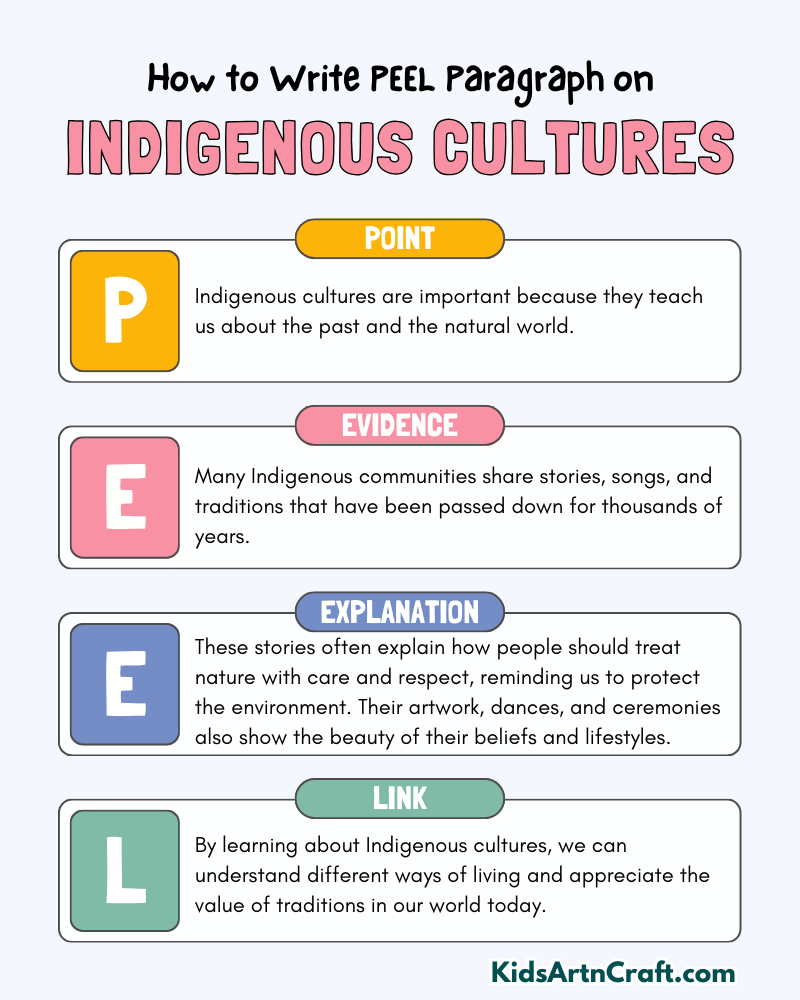
Point: Indigenous cultures are important because they teach us about the past and the natural world.
Evidence: Many Indigenous communities share stories, songs, and traditions that have been passed down for thousands of years.
Explanation: These stories often explain how people should treat nature with care and respect, reminding us to protect the environment. Their artwork, dances, and ceremonies also show the beauty of their beliefs and lifestyles.
Link: By learning about Indigenous cultures, we can understand different ways of living and appreciate the value of traditions in our world today.
2. Indigenous Cultures Paragraph Writing with TEEL Method
TEEL Method (Topic, Evidence, Explanation, Link)
Topic: Indigenous cultures are a special part of our world’s history.
Evidence: For example, many Indigenous people know how to use plants for food and medicine and have stories that explain the land’s importance.
Explanation: They include unique languages, traditions, and ways of living that teach us about nature and community.
Link: When kids learn about Indigenous cultures, they gain respect for others and understand how different communities make our world more colorful and meaningful.
3. Indigenous Cultures Paragraph Writing with the TEXAS Method
TEXAS Method (Topic, Example, Explanation, Analysis, Summary/Significance)
Topic: Indigenous cultures help us understand how people lived long ago.
Example: For instance, some Indigenous groups use traditional ways to hunt, build homes, and celebrate festivals.
Explanation: They teach skills like using natural resources wisely and living in harmony with the environment.
Analysis: These practices show their deep connection to nature and their strong sense of community.
Summary: Learning about Indigenous cultures helps kids appreciate history, respect nature, and value different traditions.
4. Indigenous Cultures Paragraph Writing with Hamburger Method
Hamburger Method (Top Bun, The Fillings, Bottom Bun)
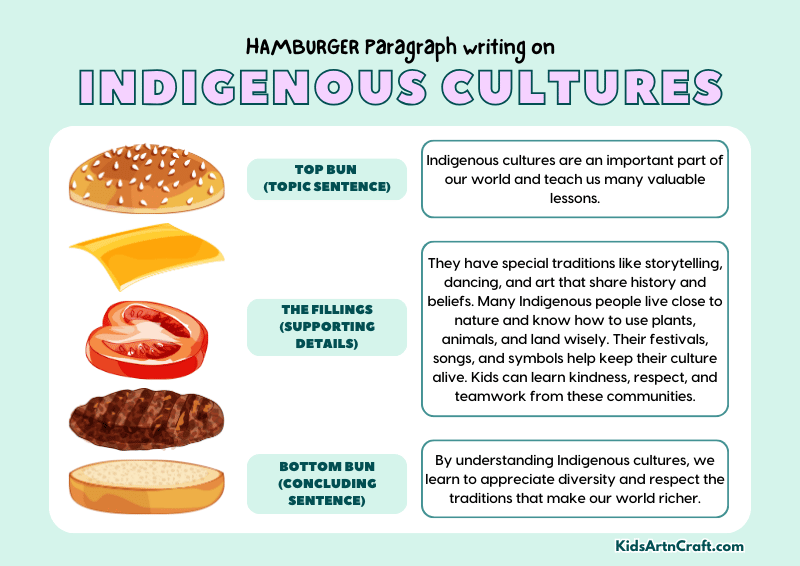
Top Bun (Topic Sentence):
Indigenous cultures are an important part of our world and teach us many valuable lessons.
The Fillings (Supporting Details):
They have special traditions like storytelling, dancing, and art that share history and beliefs. Many Indigenous people live close to nature and know how to use plants, animals, and land wisely. Their festivals, songs, and symbols help keep their culture alive. Kids can learn kindness, respect, and teamwork from these communities.
Bottom Bun (Concluding Sentence):
By understanding Indigenous cultures, we learn to appreciate diversity and respect the traditions that make our world richer.
Importance of Indigenous Cultures
- Indigenous peoples have unique languages, customs, and traditions that connect them to their history. [Source: UNESCO]
- Their cultures help preserve global diversity and keep old traditions alive. [Source: UNESCO]
Additional Facts of Indigenous Cultures
- Indigenous knowledge supports protecting the environment and natural resources. [Source: UNESCO]
- Many indigenous languages are endangered, so protecting them preserves culture. [Source: United Nations]
- Global agreements protect indigenous rights to maintain their culture and traditions. [Source: Wikipedia]
- UNESCO and international programs help preserve indigenous heritage worldwide. [Source: UNESCO]
Hope you liked these paragraphs on ‘Indigenous Cultures’. Don’t forget to join the Telegram group for FREE Printables.
Check this article to write a paragraph on why different cultures make the world beautiful.