



Paragraph Writing
Paragraph on Why Racism Damages Society


Racism damages society by creating inequality, fear, and hatred. It divides communities, prevents people from working together, and stops everyone from enjoying fairness, respect, and equal opportunities. Build stronger paragraphs by studying in four styles—Expository, Persuasive, Descriptive, and Narrative—using structures like PEEL, TEEL, TEXAS, and the Hamburger Model.
Read This Article in Other Languages
- जातिवाद समाज को कैसे नुकसान पहुंचाता है (Hindi / हिंदी)
- Por qué el racismo daña a la sociedad (Spanish / Español)
- Pourquoi le racisme nuit à la société (French / Français)
- Warum Rassismus der Gesellschaft schadet (German / Deutsch)
- لماذا يضر العنصرية بالمجتمع (Arabic / العربية)
- বর্ণবাদ সমাজকে কীভাবে ক্ষতিগ্রস্ত করে (Bengali / বাংলা)
- பண்பின்மைகள் சமூகத்தை எப்படி சேதப்படுத்துகின்றன (Tamil / தமிழ்)
- వర్ణాభిమానత సమాజాన్ని ఎలా నష్టపరుస్తుంది (Telugu / తెలుగు)
- വർണഭേദം സമൂഹത്തിനെ എങ്ങനെയാണ് ബൊധിക്കുന്നതെന്ന് (Malayalam / മലയാളം)
- نسلی تعصب معاشرے کو کیسے نقصان پہنچاتا ہے (Urdu / اردو)
- Por que o racismo prejudica a sociedade (Portuguese / Português)
Translation Disclaimer: These links use Google Translate, an automated translation service. Translations may vary in accuracy and are provided for convenience only.
Different Styles of Paragraphs on ‘Why Racism Damages Society’
1. Expository Paragraph on Why Racism Damages Society (Explains with Facts)
Racism harms society by treating people unfairly based on skin color, culture, or background. Schools teach that everyone deserves respect, regardless of appearance. Racism creates divisions, conflict, and hurt feelings. For instance, a student teased or excluded due to race may feel sad, lonely, or scared. Discrimination also blocks opportunities in education, work, and leadership, preventing talented individuals from contributing fully. It affects mental health, confidence, and belonging. Societies that allow racism often face inequality, violence, and tension. Schools show that fairness, empathy, and kindness build stronger communities. By valuing differences and practicing inclusion, everyone can help create a safer, happier, and more productive society where all have the chance to succeed.
2. Persuasive Paragraph on Why Racism Damages Society (Tries to Convince You)
Racism is harmful and should be stopped because it damages society. School has taught me that treating people unfairly because of their skin color, language, or culture is wrong. Racism makes people feel sad, scared, or left out and prevents them from achieving their potential. For example, if someone is denied a chance to join a team or a class project because of their race, they lose opportunities to learn and grow. Society becomes divided when racism exists, leading to tension, mistrust, and conflict. We should practice fairness, kindness, and inclusion to build stronger communities. Schools show that respecting differences and valuing everyone’s abilities helps everyone succeed together. By speaking against discrimination, helping others, and treating people equally, we can reduce the harmful effects of racism. Stopping racism makes society happier, safer, and fairer. Every person deserves respect, and teaching children this lesson ensures a better future for everyone.
3. Descriptive Paragraph on Why Racism Damages Society (Paints a Picture with Words)
Imagine a school playground where some children are laughed at, excluded, or teased because of their skin color. School has taught me that racism can make people feel small, lonely, and sad. The hurtful words, the judging looks, and the feeling of being left out create tension and fear. Children affected by racism may avoid activities, stay quiet in class, or feel hopeless. Racism also stops people from sharing their ideas, learning, and helping society grow. In classrooms and communities where equality and kindness are practiced, students smile, work together, and feel included. Respect, empathy, and understanding replace fear and sadness. Schools teach that valuing everyone equally makes life brighter and communities stronger. When we stand against racism, we create safe and friendly places for all. Seeing children play, laugh, and learn together shows why fairness and inclusion are important. Racism damages society, but kindness and respect can build trust, happiness, and unity.
4. Narrative Paragraph on Why Racism Damages Society (Tells a Story)
Last year, our class read about discrimination and racism, and it made me think of a student named Amina in our school. Some children ignored her or made hurtful comments about her culture. She looked sad and hesitant to participate in group activities. School had taught me that racism damages society, and I decided to act kindly. I invited her to join our group for a project, and soon others followed. Gradually, Amina smiled, contributed ideas, and felt included. I realized that racism not only hurts individuals but also divides communities and blocks talents. When children are treated unfairly, they feel lonely, scared, and discouraged. Schools teach us that fairness, empathy, and inclusion can prevent these problems. By standing against discrimination and respecting everyone, we can make our classrooms and society stronger, happier, and safer. Amina’s story showed me that small acts of kindness and equality can fight the harm caused by racism and create a world where everyone feels valued and supported.
‘Why Racism Damages Society’ Paragraphs in Different Structured Methods
1. Why Racism Damages Society Paragraph Writing with PEEL Method
PEEL Method (Point, Evidence, Explanation, Link)
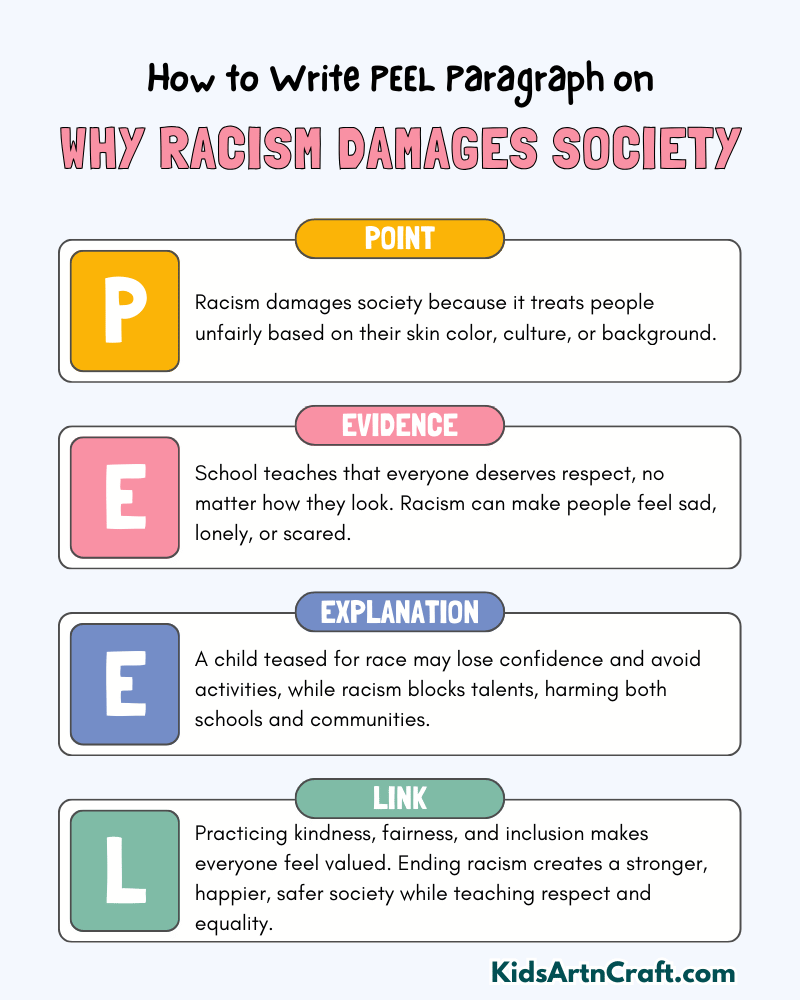
Point: Racism damages society because it treats people unfairly based on their skin color, culture, or background.
Evidence: School teaches that everyone deserves respect, no matter how they look. Racism can make people feel sad, lonely, or scared.
Explanation: A child teased for race may lose confidence and avoid activities, while racism blocks talents, harming both schools and communities.
Link: Practicing kindness, fairness, and inclusion makes everyone feel valued. Ending racism creates a stronger, happier, safer society while teaching respect and equality.
2. Why Racism Damages Society Paragraph Writing with TEEL Method
TEEL Method (Topic, Evidence, Explanation, Link)
Topic: Racism is harmful because it makes people feel unfairly treated.
Evidence: For example, a student who is excluded from a team or group project may feel left out and sad.
Explanation: Discrimination based on skin color, language, or culture can hurt feelings and block opportunities to learn and grow.
Link: School teaches that respecting everyone and treating all students equally makes learning fun and communities safe. When children practice fairness, society becomes more united, happy, and productive.
3. Why Racism Damages Society Paragraph Writing with TEXAS Method
TEXAS Method (Topic, Example, Explanation, Analysis, Summary/Significance)
Topic: Racism harms society.
Example: For instance, a child excluded from class activities because of skin color may lose confidence and avoid learning.
Explain: People judged by race or culture feel sad and left out.
Analysis: Racism also stops talented people from contributing to schools and communities, creating unfairness and division.
Summary: School teaches that respecting everyone and practicing equality makes society stronger, happier, and safer.
4. Why Racism Damages Society Paragraph Writing with Hamburger Method
Hamburger Method (Top Bun, The Fillings, Bottom Bun)
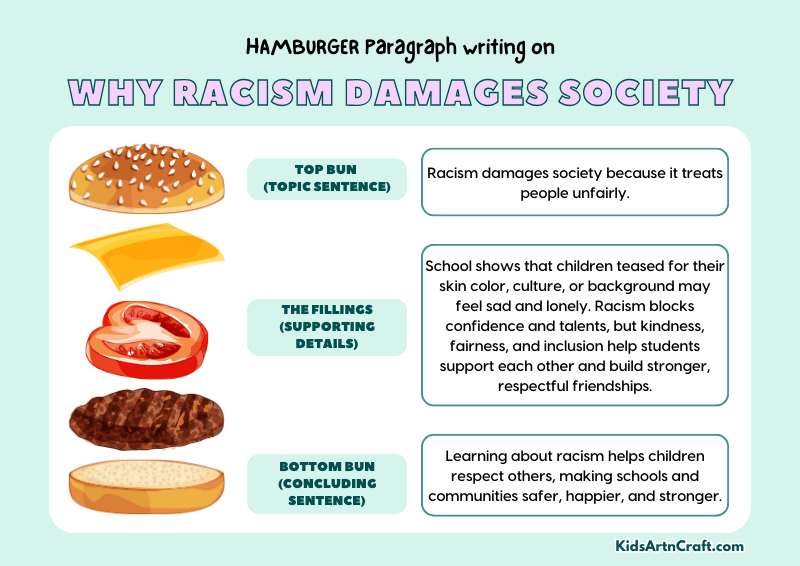
Top Bun (Topic Sentence):
Racism damages society because it treats people unfairly.
The Fillings (Supporting Details):
School shows that children teased for their skin color, culture, or background may feel sad and lonely. Racism blocks confidence and talents, but kindness, fairness, and inclusion help students support each other and build stronger, respectful friendships.
Bottom Bun (Concluding Sentence):
Learning about racism helps children respect others, making schools and communities safer, happier, and stronger.
Importance of Fighting Racism
- Racism harms people’s health and causes stress-related illnesses. [Source: PubMed – Racism’s Health Effects]
- Racism limits access to healthcare, housing, and income for affected groups. [Source: Race Equality Foundation]
Additional Facts About Racism
- Structural racism creates social and economic inequalities in education, jobs, and communities. [Source: BMJ – Structural Racism]
- Racism weakens trust and harmony in communities. [Source: UNESCO]
- Discrimination reduces economic opportunities and growth. [Source: Axios]
- Racism causes social isolation and harms overall community well-being. [Source: INAR]
Hope you liked these paragraphs on ‘Why Racism Damages Society’. Don’t forget to join the Telegram group for FREE Printables.