
Paragraph Writing
Paragraph on Non-Flowering Plants


Non-flowering plants are plants that do not produce flowers. They reproduce using spores or cones, like ferns and mosses, and are important for soil health and the environment. Take your paragraph-writing skills to the next level by exploring four styles—Expository, Persuasive, Descriptive, and Narrative—while using structures like PEEL, TEEL, TEXAS, and the Hamburger Model.
Different Styles of Paragraphs on ‘Non-Flowering Plants’
1. Expository Paragraph on Non-Flowering Plants (Explains with Facts)
Non-flowering plants are plants that do not produce flowers but still play an important role in nature. These plants reproduce through spores, seeds, or other methods instead of flowers. Examples of non-flowering plants include ferns, mosses, algae, and conifers like pine trees. Ferns and mosses often grow in forests, gardens, and wet areas, helping to prevent soil erosion and maintain moisture. Coniferous trees provide timber, paper, and homes for many animals. Algae in water bodies produce oxygen and form the base of the aquatic food chain. Non-flowering plants are also used in medicine and food. Though they do not bloom like flowers, they provide shade, beauty, and important ecological functions. By protecting non-flowering plants, we can maintain soil fertility, clean air, and healthy ecosystems. They are as valuable as flowering plants and are essential for keeping the Earth green, balanced, and full of life.
2. Persuasive Paragraph on Non-Flowering Plants (Tries to Convince You)
We should protect and grow non-flowering plants because they are important for life on Earth. Plants like ferns, mosses, algae, and pine trees prevent soil erosion, provide oxygen, and give homes to animals. Algae support life in rivers, lakes, and oceans, while pine trees provide wood and shelter. Non-flowering plants are also used in medicines and help keep the environment healthy. Even though they do not have flowers, they are very useful. Planting and protecting non-flowering plants ensures clean air, fertile soil, and balanced ecosystems for humans, animals, and future generations. Everyone should take part in caring for these plants and preserving their habitats. By doing this, we can maintain the Earth’s beauty and health while enjoying the many benefits that non-flowering plants provide.
3. Descriptive Paragraph on Non-Flowering Plants (Paints a Picture with Words)
Non-flowering plants are quiet but important members of nature. Ferns grow in green, shady forests with feathery leaves that spread across the ground. Mosses cover rocks and soil like soft green carpets, holding water and protecting the land. Pine trees stand tall with needle-like leaves and cones, giving homes to birds and squirrels. Algae float in rivers and ponds, producing oxygen and feeding tiny aquatic animals. Although these plants do not bloom with flowers, they are full of life and beauty. Their shapes, colors, and textures make forests, gardens, and water bodies look lively and healthy. Non-flowering plants help clean the air, store water, and prevent soil erosion. Walking among ferns, moss, and pine trees shows how nature works together, and it reminds us to protect these amazing plants for a green and healthy world.
4. Narrative Paragraph on Non-Flowering Plants (Tells a Story)
Last summer, I visited a forest filled with ferns, moss, and tall pine trees. I noticed how these non-flowering plants covered the ground and held the soil together. The moss felt soft under my feet, and ferns spread their green leaves everywhere. The guide told us that these plants do not have flowers but are very important. Pine trees provide wood, mosses hold water, and algae in nearby ponds make oxygen for fish. I saw squirrels and birds living in the trees and realized how non-flowering plants support wildlife. Walking through the forest, I promised to plant ferns and moss in my garden and protect the pine trees nearby. I understood that even though these plants do not bloom, they are essential for the environment, for animals, and for humans. Saving non-flowering plants helps keep the Earth green and healthy for everyone.
‘Non-Flowering Plants’ Paragraphs in Different Structured Methods
1. Non-Flowering Plants Paragraph Writing with PEEL Method
PEEL Method (Point, Evidence, Explanation, Link)
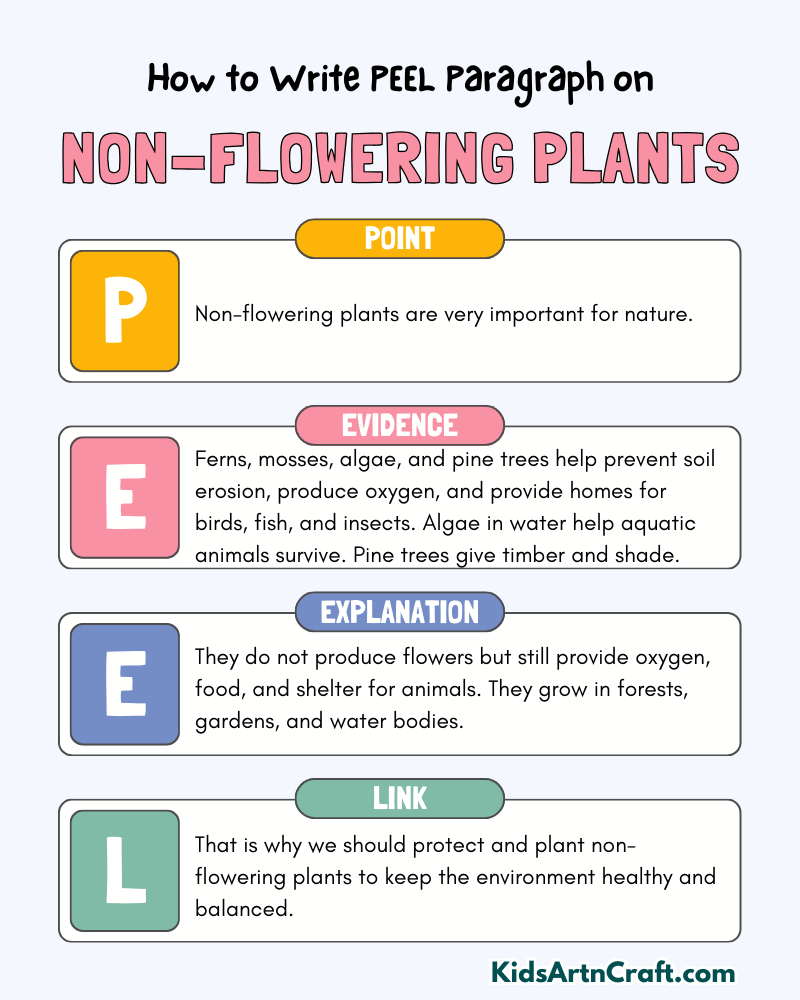
Point: Non-flowering plants are very important for nature.
Evidence: Ferns, mosses, algae, and pine trees help prevent soil erosion, produce oxygen, and provide homes for birds, fish, and insects. Algae in water help aquatic animals survive. Pine trees give timber and shade.
Explanation: They do not produce flowers but still provide oxygen, food, and shelter for animals. They grow in forests, gardens, and water bodies.
Link: That is why we should protect and plant non-flowering plants to keep the environment healthy and balanced.
2. Non-Flowering Plants Paragraph Writing with TEEL Method
TEEL Method (Topic, Evidence, Explanation, Link)
Topic: Non-flowering plants are useful and important for life on Earth.
Evidence: Ferns, mosses, algae, and pine trees grow in forests, gardens, and water. They provide food, shelter, and clean air.
Explanation: They do not bloom like flowers but provide oxygen, prevent soil erosion, and support animals.
Link: By planting and caring for non-flowering plants, we can protect the environment and ensure a green and healthy planet for humans and animals.
3. Non-Flowering Plants Paragraph Writing with TEXAS Method
TEXAS Method (Topic, Example, Explanation, Analysis, Summary/Significance)
Topic: Non-flowering plants are important for the environment.
Example: Moss covers rocks, ferns grow in forests, algae live in water, and pine trees give timber.
Explanation: They provide oxygen, prevent soil erosion, and give homes to animals.
Analysis: These plants keep the air, soil, and water healthy.
Summary: Planting and protecting non-flowering plants helps humans, animals, and nature stay safe and healthy.
4. Non-Flowering Plants Paragraph Writing with Hamburger Method
Hamburger Method (Top Bun, The Fillings, Bottom Bun)
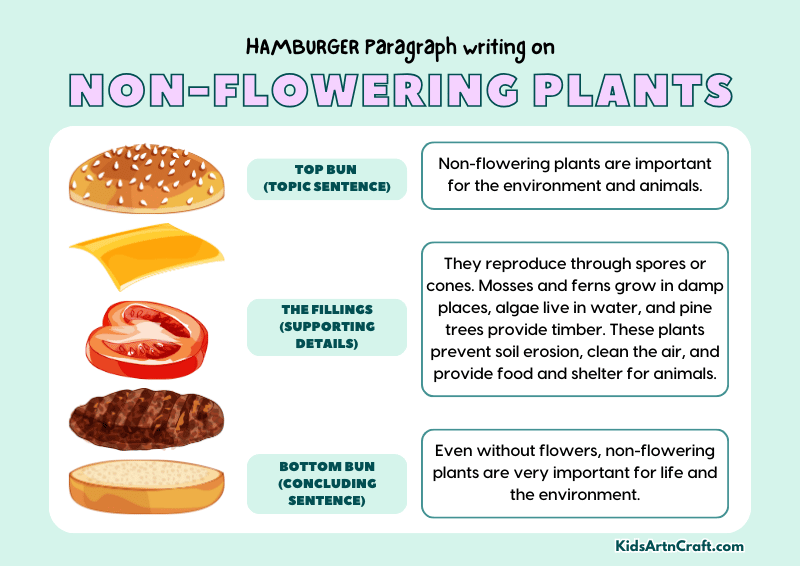
Top Bun (Topic Sentence):
Non-flowering plants are important for the environment and animals.
The Fillings (Supporting Details):
They reproduce through spores or cones. Mosses and ferns grow in damp places, algae live in water, and pine trees provide timber. These plants prevent soil erosion, clean the air, and provide food and shelter for animals.
Bottom Bun (Concluding Sentence):
Even without flowers, non-flowering plants are very important for life and the environment.
Hope you liked these paragraphs on ‘Non-Flowering Plants’. Don’t forget to join the Telegram group for FREE Printables.