Keeping children’s toys organized can be challenging, especially when toys are spread across the living room, playroom, bedrooms, and outdoor areas. A practical toy storage system helps reduce clutter, makes toys easier to find, and encourages children to put things away after playing. With the right combination of baskets, shelves, storage boxes, and multipurpose furniture, you can create a tidy home without limiting your child’s playtime.
Whether you live in a small apartment or have a dedicated playroom, there are plenty of ways to organize toys according to their size, type, and location. From hidden storage solutions for shared living spaces to sturdy outdoor boxes for garden toys, these toy organization ideas can help you make better use of the space you already have.
Toy Storage Ideas for Indoor Living Spaces
Indoor toy storage should make everyday play convenient while keeping rooms comfortable and organized. The best solution depends on how much space you have, which toys your children use most often, and whether you want the toys to remain visible or tucked away when playtime ends.
1. Toy Storage Ideas for the Living Room
The living room often serves as a shared space for family relaxation and children’s play. Storage baskets, decorative boxes, low cabinets, and furniture with hidden compartments can help keep toys accessible without making the room feel cluttered. Choose storage that complements your existing furniture and gives frequently used toys a convenient home.
Explore these toy storage ideas for the living room for ways to create a practical and attractive family space. A dedicated basket or shelf near the play area can also make daily cleanup quicker.
2. Toy Storage Ideas for the Playroom
A playroom benefits from a clear storage system that helps children identify where different toys belong. Use labelled bins for building blocks, dolls, toy vehicles, puzzles, and art supplies. Open shelves can keep favourite toys within reach, while closed cabinets are useful for items that need to be stored away after use.
Discover these toy storage ideas for the playroom to create an organized space for playing, learning, and crafting. Grouping similar items together can make it easier for children to choose activities and return toys to their proper places.
3. Toy Storage Ideas for Small Spaces
Small homes require storage solutions that use available space efficiently. Consider narrow shelving units, stackable containers, under-bed boxes, and furniture that doubles as storage. Wall-mounted shelves can free up floor space, while baskets that fit beneath existing furniture can help organize smaller toys.
Find inspiration in these toy storage ideas for small spaces. Instead of filling every corner with storage, choose a few versatile solutions that keep toys accessible without making the room feel crowded.
Storage Solutions for Large and Outdoor Toys
Large toys and outdoor play equipment need more space than books, blocks, or small figures. Items such as ride-on toys, large vehicles, balls, and garden play equipment should have designated storage areas where they can be put away easily and kept in suitable conditions.
4. Toy Storage Ideas for Big Toys
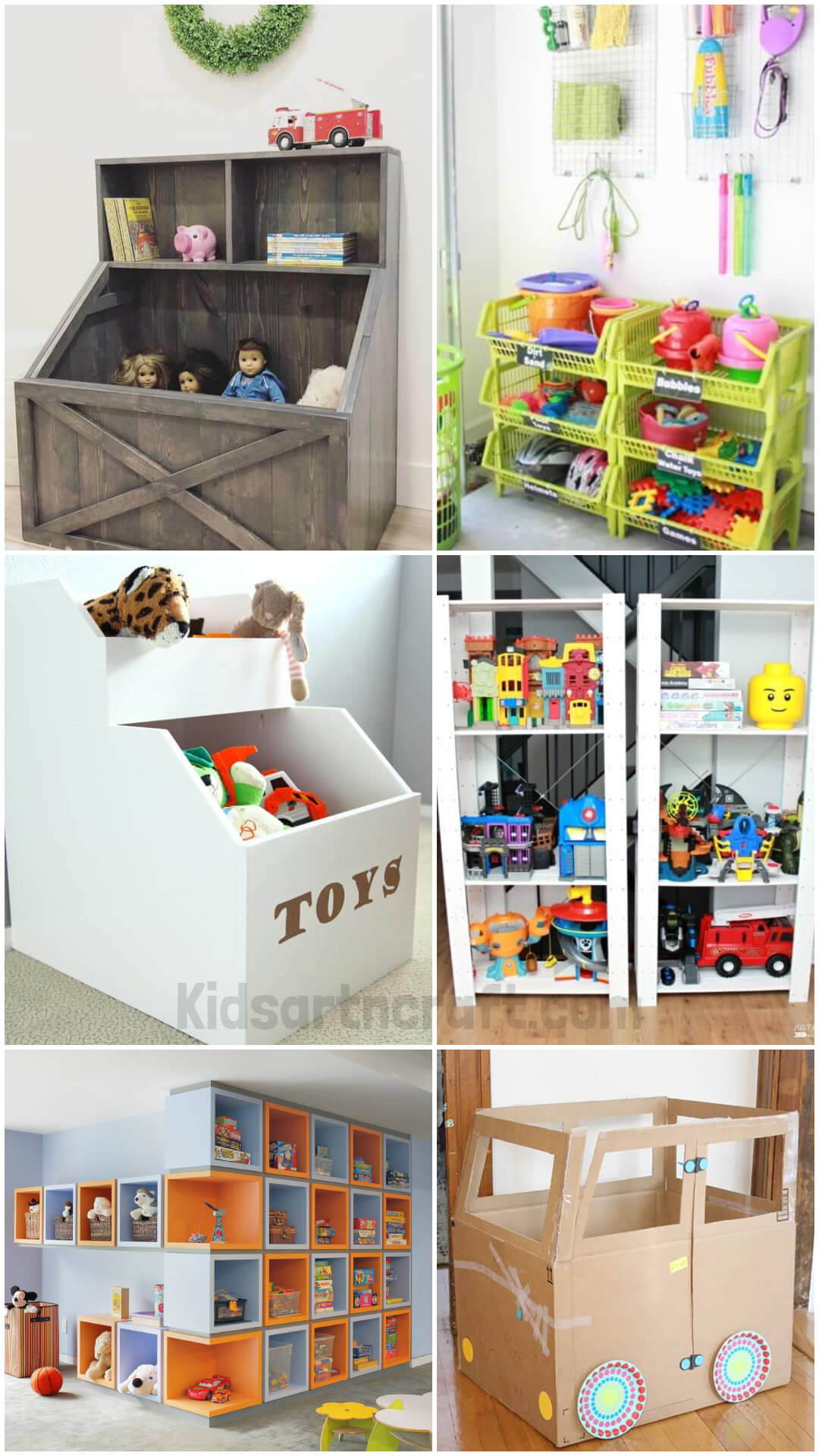
Large toys can quickly take over a room when they do not have a designated place. Create a specific area for ride-on toys, oversized vehicles, playhouses, and large building sets. Open floor-level storage, wide shelves, and spacious bins can work well when the storage area is large enough for the items being kept.
Explore these toy storage ideas for big toys to organize bulky playthings more efficiently. Measure the available space before choosing storage furniture, and keep heavy items low to make them easier to access safely.
5. Outdoor Toy Storage Box Ideas
Outdoor toys need storage that can handle regular use and changing weather conditions. A suitable outdoor storage box can hold balls, sand toys, garden play equipment, and other items used outside. Look for durable materials, a suitable lid, and enough capacity for your family’s collection.
Discover these outdoor toy storage box ideas for inspiration. Choose weather-resistant storage where appropriate, and make sure wet toys can dry properly before being stored to help prevent mould and unpleasant odours.
6. Garden Toy Storage Ideas
Garden toys often include watering cans, buckets, sand toys, balls, and small gardening tools for children. Keeping these items together makes outdoor play easier to manage and helps prevent toys from being left across the lawn or patio. Use a designated outdoor bin, sturdy basket, or suitable storage unit near the garden play area.
Explore these garden toy storage ideas to keep outdoor playthings organized. Separate gardening tools from regular toys, and store items in a dry, secure location when they are not being used.
Simple Toy Organization and Storage Hacks
Good toy storage is not only about buying containers. A simple organization routine can make the most of the storage you already have and help children learn to manage their belongings. Start by sorting toys into broad categories, removing broken items, and deciding which toys should remain accessible every day.
7. Toy Organization and Storage Hacks
Small changes can make a big difference to everyday toy organization. Use clear or labelled bins to identify contents, keep frequently used toys at child-friendly heights, and store small sets together so their pieces are easier to find. A quick cleanup routine after playtime can also prevent clutter from building up.
Try these toy organization and storage hacks for practical ways to simplify your home. You can also rotate toys periodically, keeping some items stored away and bringing them back later to renew children’s interest without adding more clutter.
How to Create a Toy Storage System That Works
A useful toy storage system should be easy for both adults and children to maintain. You do not need a separate storage unit for every toy. Instead, focus on creating clear categories and assigning each category a consistent place.
- Sort by type: Group blocks, dolls, vehicles, puzzles, books, and craft materials separately.
- Keep everyday toys accessible: Place frequently used items on low shelves or in easy-to-open bins.
- Use vertical space: Add suitable shelves or wall-mounted organizers when floor space is limited.
- Choose multipurpose furniture: Storage benches, ottomans, and cabinets can help keep toys out of sight in shared rooms.
- Label containers: Use words or pictures so children can recognize where their toys belong.
- Rotate toys: Store some toys away and periodically swap them with the toys currently in use.
- Make cleanup a routine: Encourage children to return toys after each play session instead of waiting until the end of the day.
Safety Tips for Toy Storage
Toy storage should be convenient without creating hazards. Choose stable shelving, secure tall furniture where appropriate, and keep heavy objects on lower shelves. Make sure storage boxes do not have dangerous hinges, sharp edges, or lids that could trap a child’s fingers.
Keep small toys and components away from toddlers who may put objects in their mouths. Outdoor storage should be placed on a stable surface, and containers should be used according to the manufacturer’s instructions. Avoid allowing children to climb on shelves, bins, or storage boxes to reach toys.
Start with a simple system based on your available space and your child’s everyday habits. Group similar toys together, keep frequently used items accessible, and build a short cleanup routine into daily play. With a few practical storage choices and consistent organization, you can create a home that supports children’s play while remaining comfortable and tidy for the whole family.