Alphabet
Geoboard Activities for Classroom

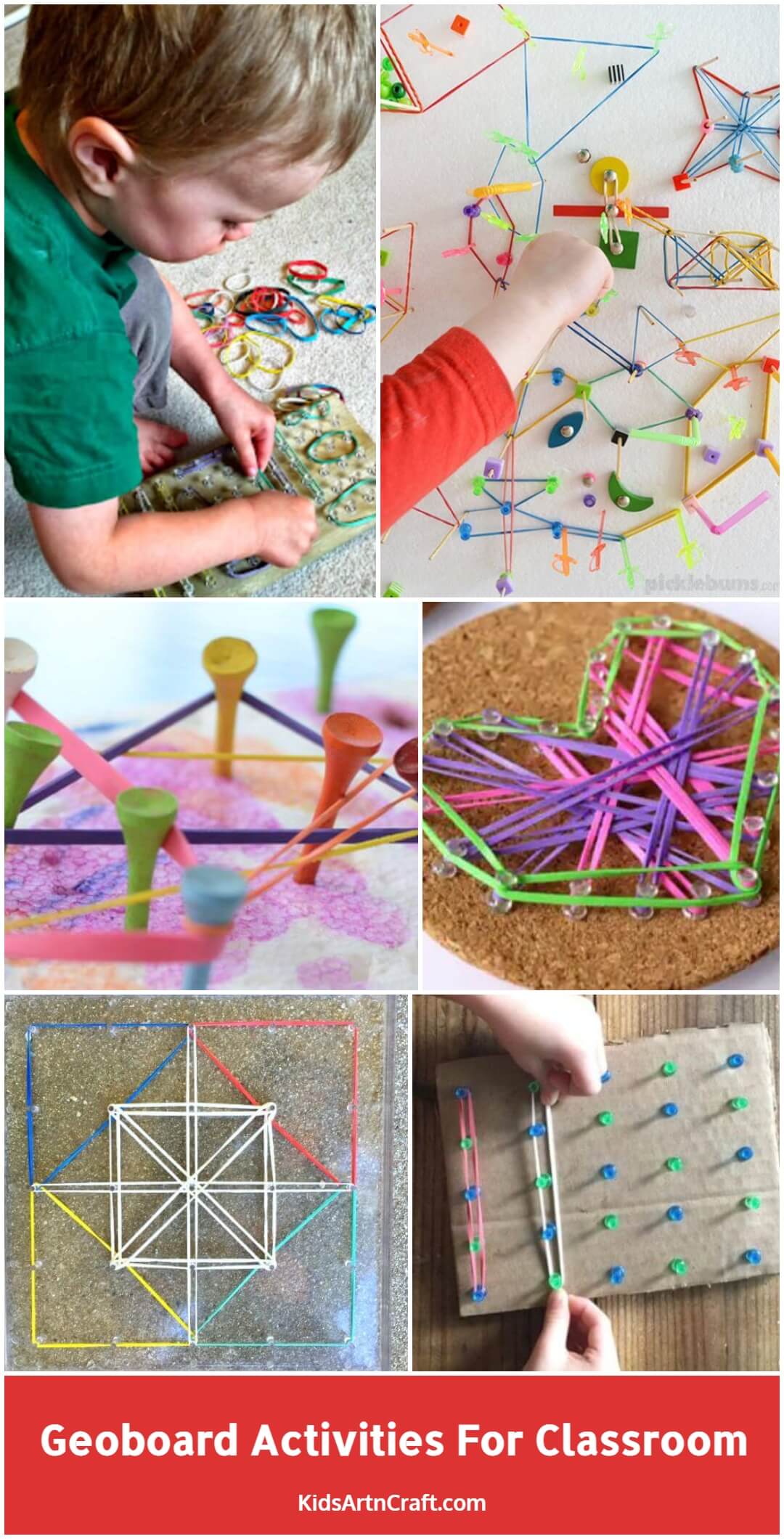
Geoboards are a classic math manipulative for teaching kids geometry basics like shapes, perimeter, area, and much more. Here we will share some interesting and clever ways to use Geoboards in the classroom. Some of these ideas are Alphabet Geoboards, Math Challenge, Cards, Letter Match, Astronomy, Snowflakes STEM, Manipulatives Fractions, Design, Crazy Accessories, Own Geoboard, Art & Design, Geometric Pattern, and Geometry Math.
Clever Ways to Use Geoboards in the Classroom

Read More: Classroom Ideas for Grade 2 – Activities & Crafts
Geoboard Shape Building Activity for Kids

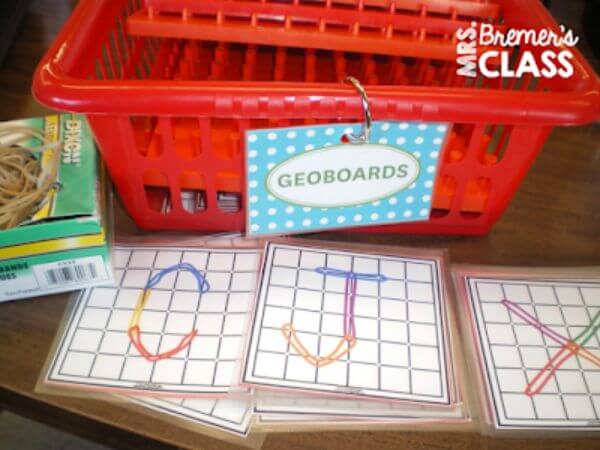
Image Source/tutorial: Mrs. Bremer’s Class
Materials Required:
Geoboards, rubber bands, printed shape cards, storage basket.
Procedure:
Give children a geoboard and a pattern card showing a design. Students stretch rubber bands on the pegs to copy the shape.
Basic Geoboard Line Pattern Activity
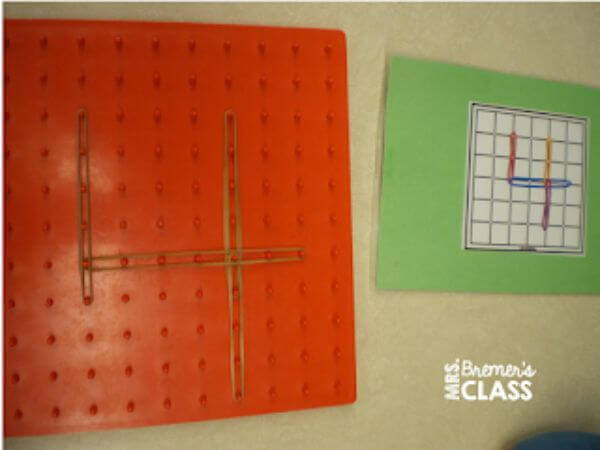
Image Source/tutorial: Mrs. Bremer’s Class
Materials Required:
Geoboard, rubber bands, printed design reference.
Procedure:
Show a simple line pattern to students on a card. Children recreate the same pattern using rubber bands on the board.
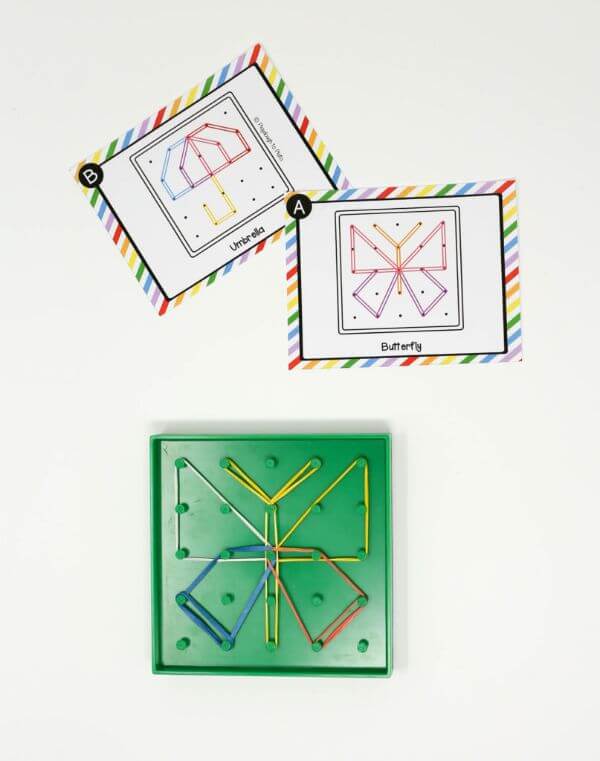
Butterfly Shape Geoboard Activity

Materials Required:
Geoboard, colored rubber bands, butterfly pattern cards.
Procedure:
Place a butterfly pattern card near the geoboard. Students stretch colored rubber bands to match the butterfly design.
Geometric Shapes Geoboard Challenge

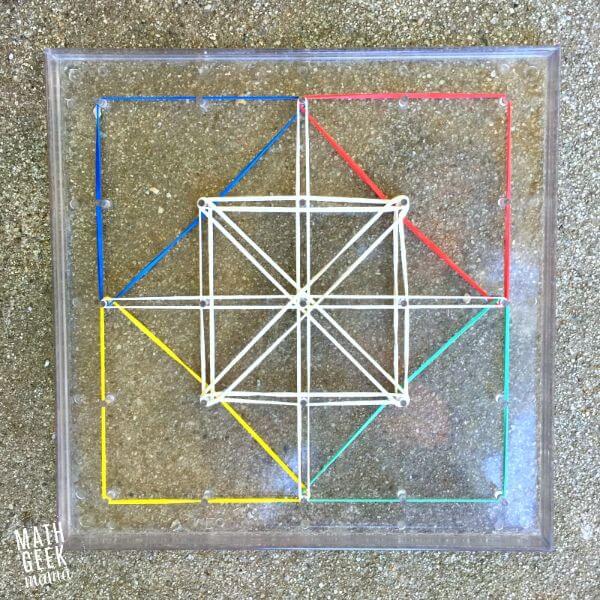
Image Source/tutorial: Math Geek Mama
Materials Required:
Geoboard, rubber bands of different colors.
Procedure:
Ask students to create geometric shapes such as squares and triangles. Combine shapes to form a complex symmetrical pattern.
Letter Formation Geoboard Activity
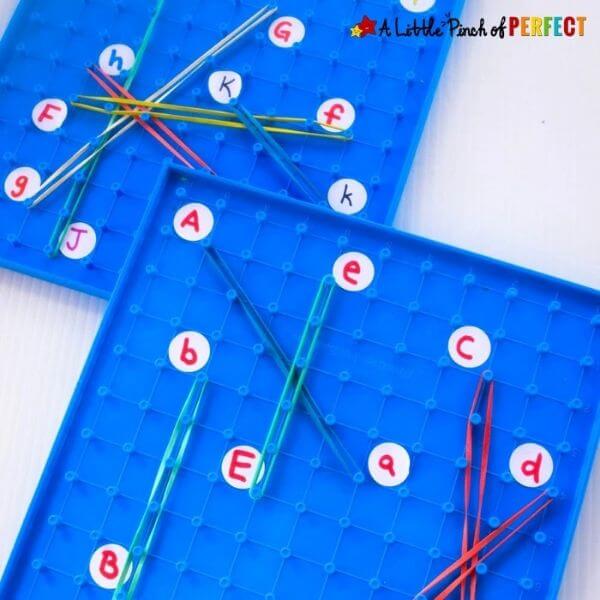
Image Source/tutorial: A Little Pinch Of Perfect
Materials Required:
Geoboard, rubber bands, alphabet letter cards.
Procedure:
Show a letter card to the child. Students stretch rubber bands on the geoboard to form the letter.
Read More: Art Activity Ideas For Toddlers & Preschoolers
Constellation Geoboard STEM Activity

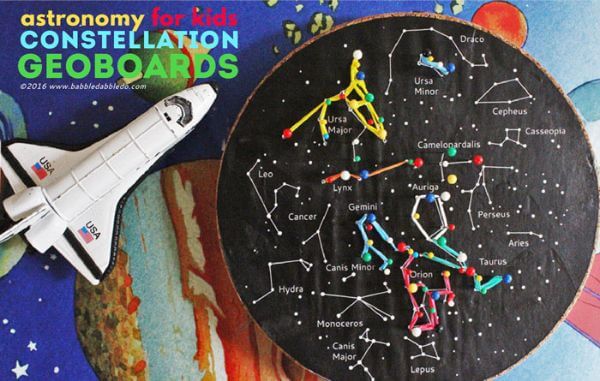
Image Source/tutorial: Babble Dabble Do
Materials Required:
Geoboard, rubber bands, constellation chart.
Procedure:
Choose a constellation from the chart. Students connect the matching points on the geoboard using rubber bands.
Snowflake Geoboard Winter Pattern
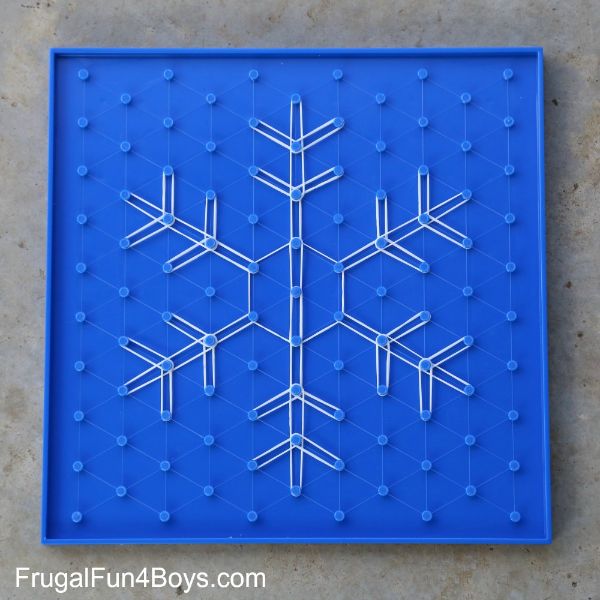
Materials Required:
Geoboard, white rubber bands.
Procedure:
Start by forming a central cross shape. Add additional lines symmetrically to complete the snowflake.
Fraction Learning Geoboard Activity

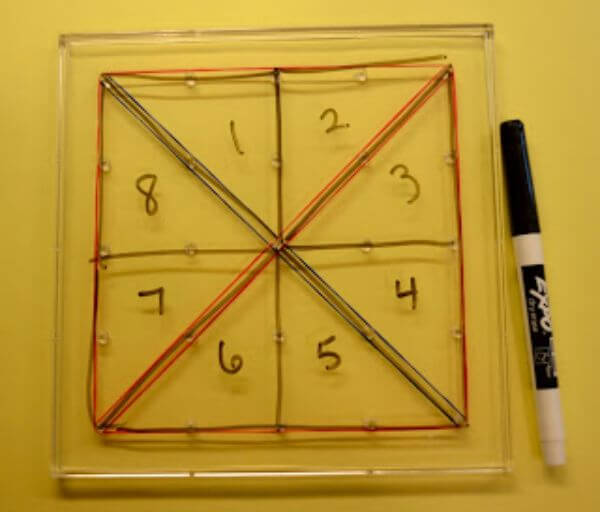
Image Source/tutorial: Love 2 Learn2 Day
Materials Required:
Geoboard, rubber bands, and a marker.
Procedure:
Divide the geoboard into equal sections using rubber bands. Label the sections to represent fractions such as halves or quarters.
Open-Ended Geoboard Design Activity
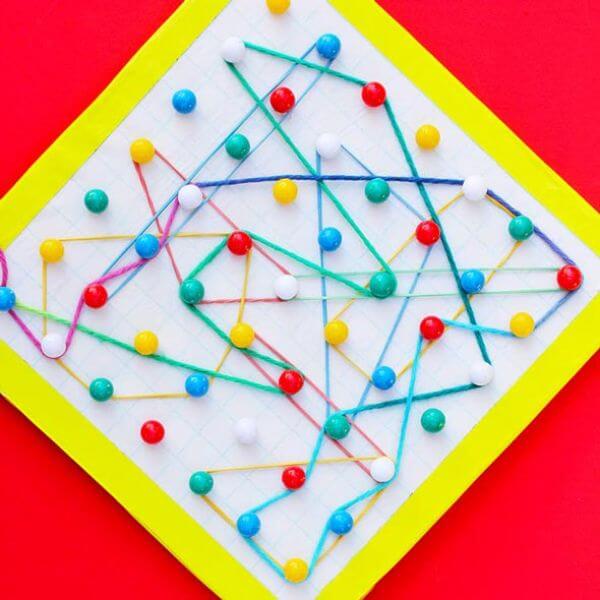
Image Source/tutorial: Artful Parent
Materials Required:
Pegboard or geoboard, push pins or pegs, and colorful rubber bands.
Procedure:
Place rubber bands around different pegs randomly. Encourage children to create unique shapes and patterns.
Large Wall Geoboard STEM Exploration

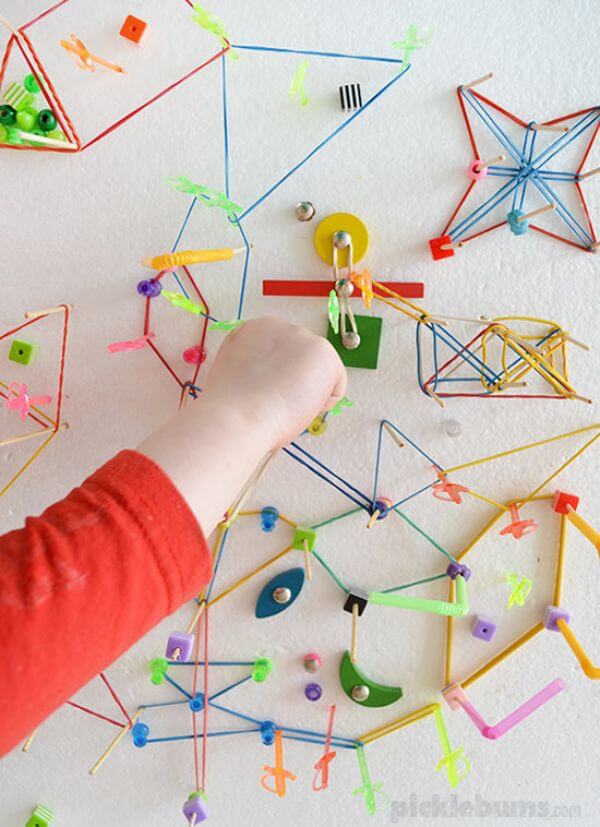
Image Source/tutorial: Pickle Bums
Materials Required:
Wall pegboard, sticks or straws, connectors or rubber bands.
Procedure:
Attach connectors or pegs to the board in a grid pattern. Children connect sticks or bands between pegs to form shapes and structures.
Read More: Art Activities For 3-Year-Olds
Push Pin Rubber Band Geoboard Activity

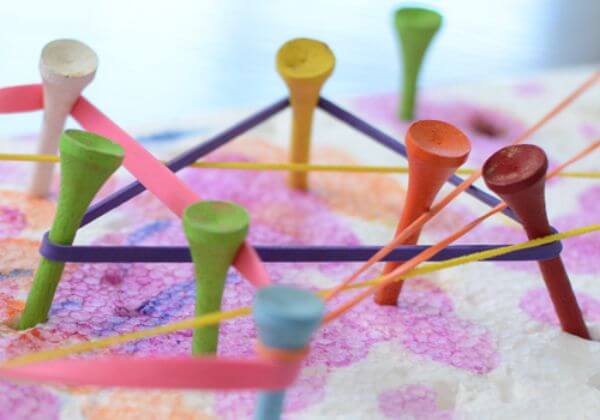
Image Source/tutorial: Meri Cherry
Materials Required:
Foam board or thick cardboard, push pins, and colorful rubber bands.
Procedure:
Insert push pins into the board in a grid pattern. Stretch rubber bands around the pins to create different shapes.
Starburst Geoboard Pattern Design
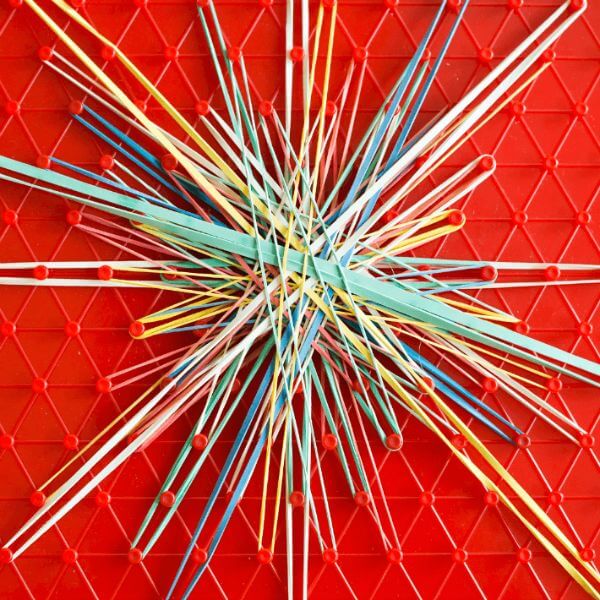
Image Source/tutorial: Artful Parent
Materials Required:
Geoboard, colorful rubber bands.
Procedure:
Start by stretching rubber bands across the center of the board. Add more bands in different directions to create a starburst pattern.
Wooden Board String Geometry Craft

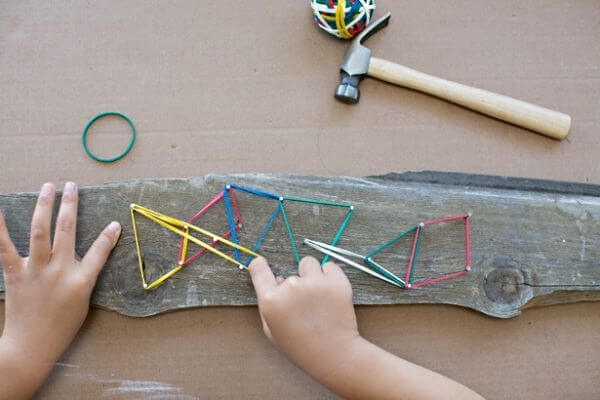
Image Source/tutorial: Hello Wonderful
Materials Required:
Wooden board, small nails, hammer, and colorful rubber bands.
Procedure:
Hammer nails into the board to form a grid or pattern. Stretch rubber bands around the nails to create shapes.
Geometry String Art Math Activity

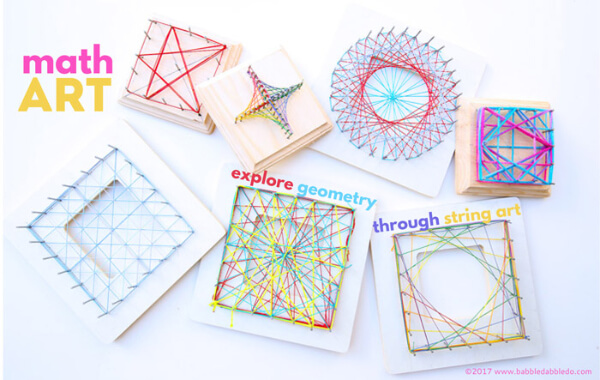
Image Source/Tutorial: Babble Dabble Do
Materials Required:
Wood boards, nails, colored thread or string, hammer.
Procedure:
Hammer nails around the board, forming a shape outline. Wrap the string around the nails to create geometric patterns.
DIY Heart String Art Craft

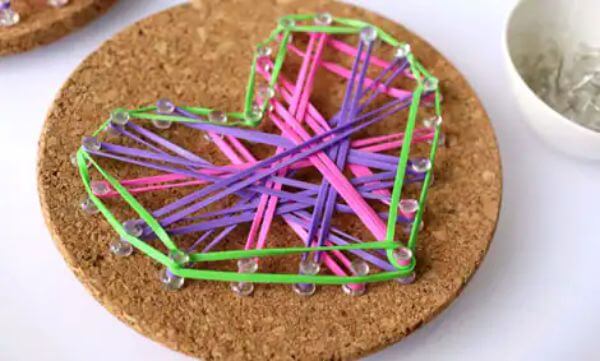
Image Source/tutorial: Cbc.ca
Materials Required:
Corkboard, push pins, and colorful rubber bands.
Procedure:
Arrange push pins in the shape of a heart. Stretch rubber bands across the pins to fill the design.
Homemade Wooden Geoboard Learning Activity

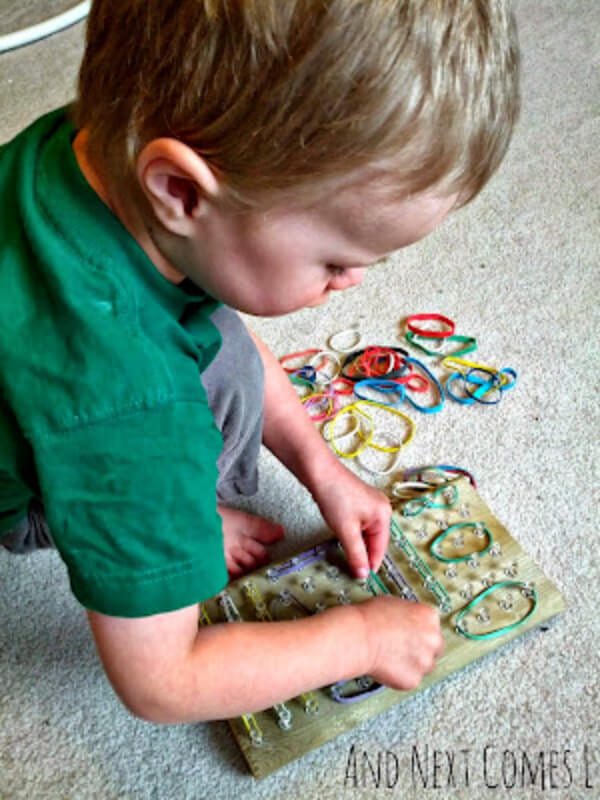
Image Source/Tutorial: And Next Comes L
Materials Required:
Wood board, nails or pegs, hammer, rubber bands.
Procedure:
Create a grid of nails on the wooden board. Use rubber bands to form shapes and patterns between the nails.
Cardboard Geoboard STEM Craft for Kids

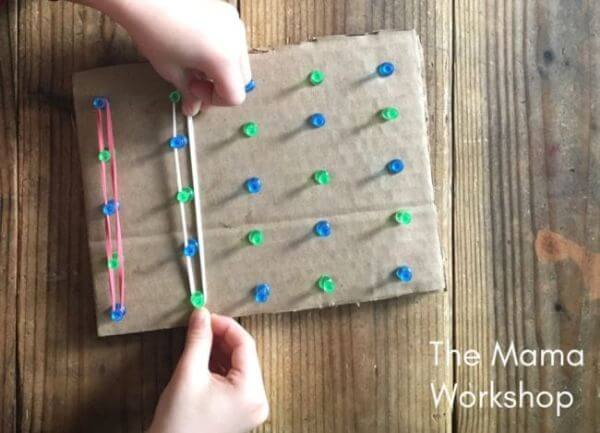
Image Source/Tutorial: The Mama Workshop
Materials Required:
Cardboard, push pins, colorful rubber bands, marker.
Procedure:
Mark a grid on the cardboard and insert push pins. Stretch rubber bands around the pins to form shapes.
Step-by-Step Tutorial for Kids Learning Shapes

Learn fun geoboard activities for the classroom with this step-by-step tutorial for kids. This educational activity helps children explore shapes, patterns, and geometry using rubber bands on a geoboard. Perfect for preschool and elementary students to develop creativity, spatial awareness, and fine motor skills while learning math through play.
Educational Benefits of Geoboard Activities for Classroom
Geoboard activities are a powerful hands-on learning tool used in classrooms to teach early geometry concepts engagingly and interactively. A geoboard is a simple manipulative where children use rubber bands stretched over pegs to create shapes, patterns, and designs.
According to early mathematics education research, manipulatives like geoboards help children understand abstract concepts such as shapes, symmetry, area, and perimeter through visual and tactile learning experiences. This approach improves conceptual clarity and long-term retention.
1. Strengthens Understanding of Geometry Concepts
Geoboard activities help children learn basic geometric concepts such as squares, triangles, rectangles, and polygons. By physically building shapes, students better understand their properties and relationships.
2. Improves Spatial Awareness
Working with geoboards enhances spatial reasoning skills as children visualize how shapes are formed, rotated, and transformed. This supports mathematical thinking and problem-solving abilities.
3. Develops Fine Motor Skills
Stretching rubber bands across pegs helps strengthen finger muscles and improves hand dexterity. This supports handwriting development and overall motor coordination in young learners.
4. Enhances Critical Thinking and Problem Solving
Geoboard challenges encourage students to create specific shapes or patterns, helping them think logically and find multiple solutions to a single task. This builds strong analytical skills.
5. Supports Learning of Area, Perimeter, and Angles
Teachers use geoboards to visually demonstrate mathematical concepts like area, perimeter, and angles. This makes abstract math topics easier to understand and more engaging for students.
6. Encourages Creativity and Active Learning
Geoboards allow students to design their own patterns, pictures, and structures. This open-ended activity promotes creativity while keeping learners actively engaged in the classroom.
Why Students Enjoy Geoboard Activities
Students enjoy geoboard activities because they turn mathematics into a fun, hands-on experience. Instead of memorizing formulas, children actively build and explore shapes, making learning more meaningful and enjoyable.
The interactive nature of geoboards keeps students motivated, encourages teamwork, and reduces learning anxiety in mathematics.
FAQs
Q1. What is a geoboard used for in the classroom?
Answer: A geoboard is used to teach geometry concepts such as shapes, symmetry, area, perimeter, and angles through hands-on learning.
Q2. What skills do geoboard activities develop?
Answer: They develop fine motor skills, spatial reasoning, problem-solving abilities, creativity, and mathematical understanding.
Q3. Are geoboards suitable for all age groups?
Answer: Geoboards are most suitable for preschool and primary students, but they can also be adapted for higher grades to explore advanced geometry concepts.
Q4. Why are geoboards important in math learning?
Answer: They help students understand abstract math concepts through visual and tactile learning, making mathematics easier and more engaging.
I hope you like our list of Geoboard Activities for the Classroom and will surely try to make them. If you like our ideas and want to read more craft ideas, keep visiting our website for the latest DIY ideas and other creative stuff for kids, parents, and teachers. Please let us know in the comment section which Geoboard Activities for the Classroom you like the most. Follow us on YouTube for art and craft tutorials and much more.
Reviewed By Rachit Gupta
More Articles From Kids’ Art & Craft
- 20+ DIY Ideas for Decorating Your Classroom
- Crab Crafts & Activities for Kids
- Creative Drawing & Coloring Activities for Kids
- DIY Cardboard Crafts & Activities for Kids
- DIY Games & Activities for Kids