Paragraph Writing
Paragraph on How Music Affects Emotions

Music affects emotions by making us feel happy, calm, or excited. It helps express feelings, reduces stress, and connects people, creating joy and comfort in everyday life. Step up your paragraph-writing skills by practising in four styles—Expository, Persuasive, Descriptive, and Narrative—while organising your ideas clearly using structures like PEEL, TEEL, TEXAS, and the Hamburger Model.
Read This Article in Other Languages
- संगीत भावनाओं को कैसे प्रभावित करता है (Hindi / हिंदी)
- Cómo la música afecta las emociones (Spanish / Español)
- Comment la musique affecte les émotions (French / Français)
- Wie Musik die Emotionen beeinflusst (German / Deutsch)
- كيف تؤثر الموسيقى على العواطف (Arabic / العربية)
- সঙ্গীত কীভাবে আবেগকে প্রভাবিত করে (Bengali / বাংলা)
- மைசிக் உணர்ச்சியைக் எப்படி பாதிக்கிறது (Tamil / தமிழ்)
- మ్యూజిక్ ఎలా భావోద్వేగాలను ప్రభావితం చేస్తుంది (Telugu / తెలుగు)
- സംഗീതം эмоഷന്റ്സിനെ എങ്ങനെ ബാധിക്കുന്നു (Malayalam / മലയാളം)
- موسیقی جذبات پر کیسے اثر انداز ہوتی ہے (Urdu / اردو)
- Cómo a música afeta as emoções (Portuguese / Português)
Translation Disclaimer: These links use Google Translate, an automated translation service. Translations may vary in accuracy and are provided for convenience only.
Different Styles of Paragraphs on ‘How Music Affects Emotions’
1. Expository Paragraph on How Music Affects Emotions (Explains with Facts)

Music has a powerful effect on human emotions and moods. Different types of music can make people feel happy, sad, excited, or relaxed. For example, upbeat songs with fast rhythms can energize listeners and make them feel joyful, while slow, soft melodies can create calmness or sadness. Music also helps people express feelings they might find difficult to put into words. Listening to or playing music improves focus, reduces stress, and enhances mental well-being. In schools, music is often used in lessons or activities to motivate students and make learning more enjoyable. Music therapy is also a tool used by psychologists to help people cope with anxiety, depression, or trauma. In addition, group activities like singing in a choir or playing in a band strengthen teamwork and social bonds. Overall, music influences emotions, helps people connect with their feelings, and plays an important role in mental and emotional health. It is a universal language that touches hearts and minds everywhere.
2. Persuasive Paragraph on How Music Affects Emotions (Tries to Convince You)
Everyone should use music to improve their emotions because it has many benefits. Music can make people happy, calm, or motivated. Upbeat songs can lift your mood, while soft melodies can help you relax after a stressful day. Listening to music or playing an instrument allows people to express feelings that are hard to say with words. Schools should include music activities because they help students focus, learn, and enjoy lessons more. Music also brings people together; singing in a choir or playing in a band builds teamwork and friendship. Scientists have shown that music can reduce stress, improve memory, and even make people feel more confident. Ignoring music means missing a powerful way to influence emotions positively. Everyone should take time to listen, sing, or play music daily because it improves mood, supports emotional health, and makes life happier. Music is not just entertainment—it is a tool for feeling better, connecting with others, and growing emotionally.
3. Descriptive Paragraph on How Music Affects Emotions (Paints a Picture with Words)
Music creates emotions that fill the heart and mind. Imagine listening to a soft piano melody; it slowly relaxes your body, and a calm feeling spreads through you. Fast, rhythmic songs make your feet tap, your head nod, and a smile appear on your face. Singing in a choir or playing in a band brings excitement, joy, and energy, while listening to a gentle lullaby can soothe stress and make you feel peaceful. Different instruments, from violins to drums, add color and texture to the emotions we experience. Music also tells stories without words; it can make us laugh, cry, or dream. In school, students feel motivated when a cheerful song plays or inspired when listening to music before a performance. Music connects people, evokes memories, and expresses feelings beyond language. The power of music lies in its ability to influence moods, touch hearts, and bring joy, comfort, and excitement to everyday life. Music makes emotions vivid and life richer.
4. Narrative Paragraph on How Music Affects Emotions (Tells a Story)
Last year, I learned how music can affect emotions in a very personal way. During a stressful week of exams, I felt nervous and tired. One evening, I played my favorite songs on the piano and immediately felt calmer. Soft, gentle notes made me relax, and faster, cheerful songs lifted my mood. I realized that music could express feelings I couldn’t put into words. At school, our music teacher asked us to play a song as part of a performance, and I noticed how everyone’s energy changed. Some students smiled, some felt inspired, and others became more confident. That experience taught me that music has a strong effect on emotions and can improve mood, focus, and confidence. I started listening to music whenever I felt stressed or sad, and it always helped me feel better. I also understood that playing or singing music can connect people, share emotions, and make life happier. Music is a powerful tool that touches the heart and teaches important lessons about emotions.
‘How Music Affects Emotions’ Paragraphs in Different Structured Methods
1. How Music Affects Emotions Paragraph Writing with PEEL Method
PEEL Method (Point, Evidence, Explanation, Link)
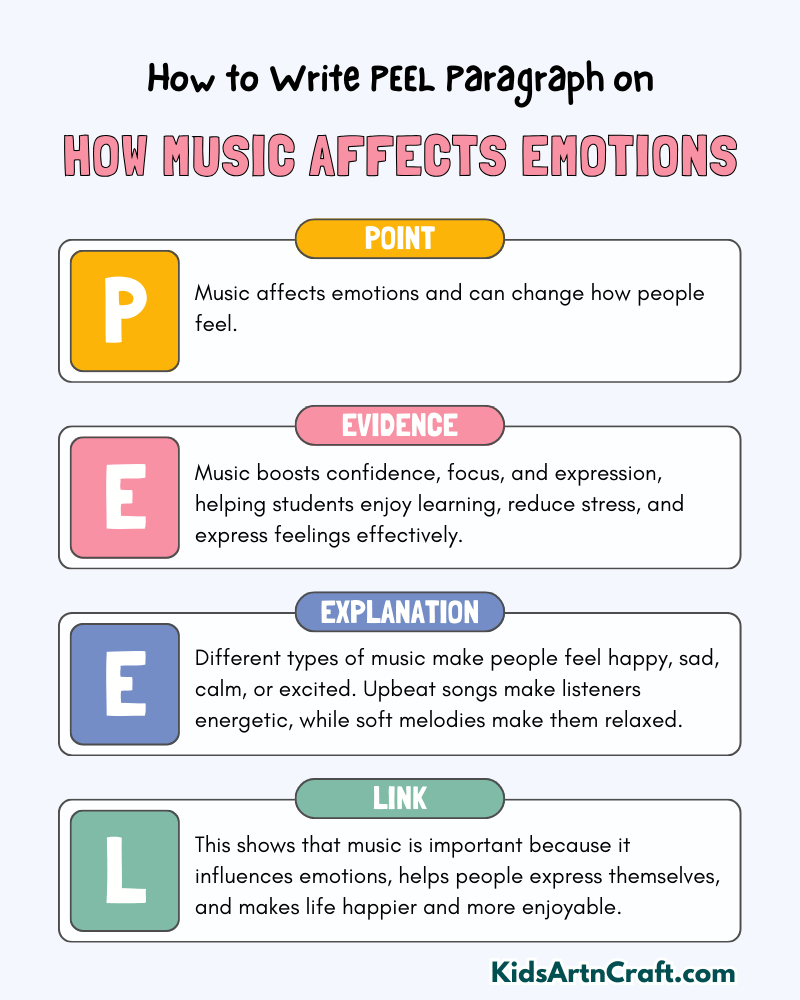

Point: Music affects emotions and can change how people feel.
Evidence: Music boosts confidence, focus, and expression, helping students enjoy learning, reduce stress, and express feelings effectively.
Explanation: Different types of music make people feel happy, sad, calm, or excited. Upbeat songs make listeners energetic, while soft melodies make them relaxed.
Link: This shows that music is important because it influences emotions, helps people express themselves, and makes life happier and more enjoyable.
2. How Music Affects Emotions Paragraph Writing with TEEL Method
TEEL Method (Topic, Evidence, Explanation, Link)
Topic: Music is important because it can change moods and feelings.
Evidence: Listening to a cheerful song can make students energetic, while a soft melody can help them relax. Singing in a choir or playing in a band builds confidence, teamwork, and focus. Music also helps express emotions that are hard to say with words.
Explanation: It helps people feel happy, calm, excited, or relaxed depending on the song or instrument.
Link: Music affects emotions, improves mental well-being, and makes school and life more fun and enjoyable.
3. How Music Affects Emotions Paragraph Writing with TEXAS Method
TEXAS Method (Topic, Example, Explanation, Analysis, Summary/Significance)
Topic: Music affects emotions in many ways.
Example: For instance, upbeat songs make listeners feel joyful and active, while soft piano music can make them feel peaceful. Singing, dancing, or playing an instrument also helps express feelings and build confidence.
Explanation: It can make people happy, calm, or excited depending on the rhythm and melody.
Analysis: Music influences mood, reduces stress, and makes learning and daily life more enjoyable.
Summary: Music is powerful because it changes emotions, helps people express themselves, and adds happiness to life.
4. How Music Affects Emotions Paragraph Writing with Hamburger Method
Hamburger Method (Top Bun, The Fillings, Bottom Bun)
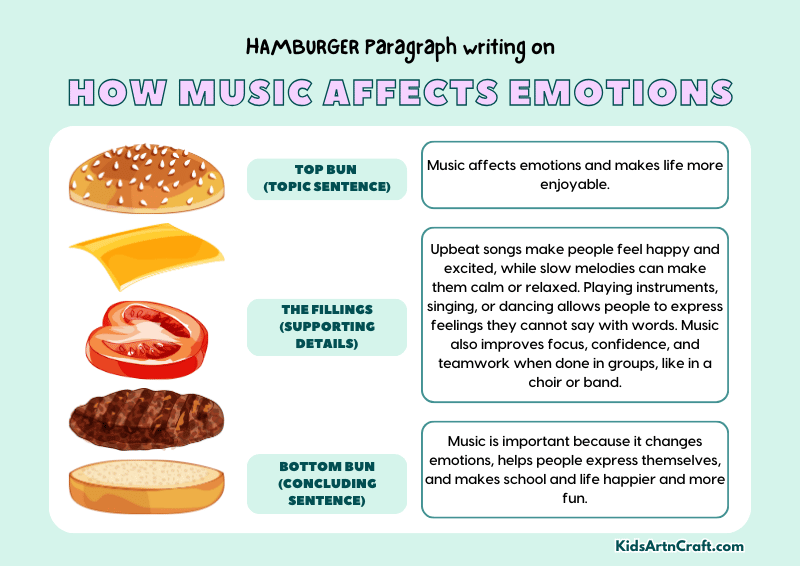

Top Bun (Topic Sentence):
Music affects emotions and makes life more enjoyable.
The Fillings (Supporting Details):
Upbeat songs make people feel happy and excited, while slow melodies can make them calm or relaxed. Playing instruments, singing, or dancing allows people to express feelings they cannot say with words. Music also improves focus, confidence, and teamwork when done in groups, like in a choir or band.
Bottom Bun (Concluding Sentence):
Music is important because it changes emotions, helps people express themselves, and makes school and life happier and more fun.
Importance of Music for Emotions
- Music activates brain areas that process emotions, creating joy, calmness, or sadness. [Source: ScienceNewsToday.org]
- Different tempos and rhythms influence emotional states like excitement or relaxation. [Source: Scientific Reports]
- Music releases dopamine, improving mood and emotional response. [Source: ScienceNewsToday.org]
Additional Facts About Music and Emotions
- Music helps regulate mood and supports emotional control. [Source: PubMed – Music Emotion Regulation Review]
- Regular engagement with music strengthens emotional resilience and well-being. [Source: PubMed – Music Therapy & Resilience]
- Music-induced emotions can promote empathy and prosocial behavior. [Source: PubMed – Music & Prosocial Behaviour]
Hope you liked these paragraphs on ‘How Music Affects Emotions’. Don’t forget to join the Telegram group for FREE Printables.
Check this article to write a paragraph on how music can change mood