Science Experiments
Easy Butterfly Life Cycle Science Project Model for Kids


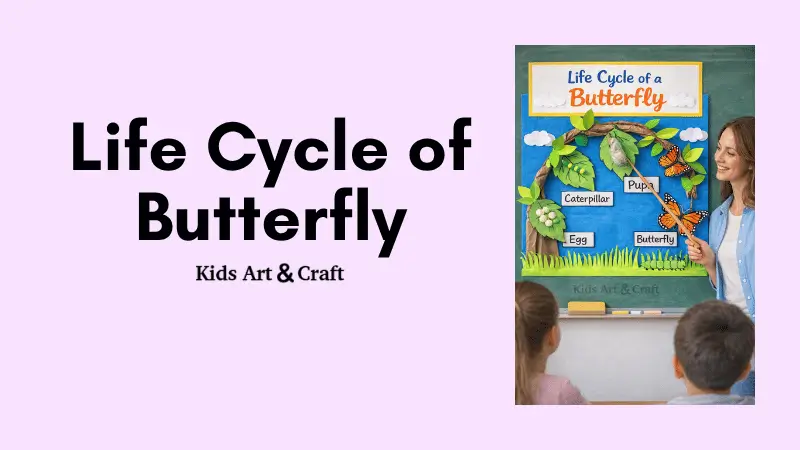
This project shows the life cycle of a butterfly using a colorful model. It explains how a tiny egg grows and changes step-by-step into a beautiful butterfly. This process is called a life cycle, which means the stages a living thing goes through while growing.
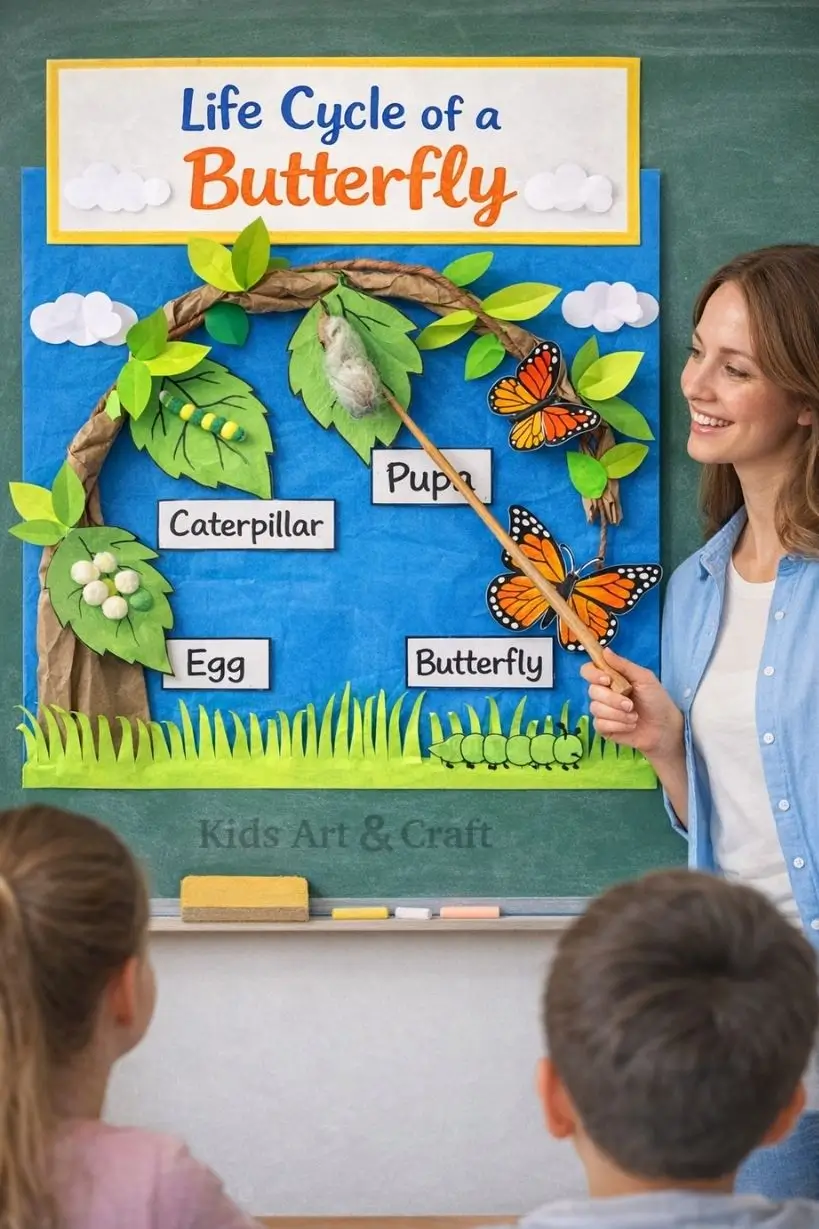
Educational classroom display explaining the stages of the egg, caterpillar, pupa, and butterfly visually
Science Concept Behind It
- Butterflies go through a special process called metamorphosis.
- Metamorphosis means a big change.
- A butterfly does not look the same when it is born. It changes completely in four stages:
- Egg
- Caterpillar (Larva)
- Pupa (Chrysalis)
- Butterfly (Adult)
- Each stage has a different shape and job!
Materials Required
- Colored chart paper (blue, green, brown)
- White cotton (for eggs and pupa)
- Printed butterfly pictures
- Sketch pens/markers
- Glue
- Scissors
- Cardboard sheet
- Brown paper (for branch)
Step-by-Step Working Explanation
Stage 1: Egg
- The butterfly lays tiny eggs on leaves.
- In the model, cotton balls represent the eggs.
- Inside the egg, a baby caterpillar is growing.
Stage 2: Caterpillar
- The egg hatches into a caterpillar.
- Caterpillars eat leaves and grow very fast!
- Their main job is to eat and grow.
Stage 3: Pupa (Chrysalis)
- After growing big, the caterpillar wraps itself in a covering called a chrysalis.
- Inside the chrysalis, an amazing change happens.
- The caterpillar slowly turns into a butterfly!
- This is the most magical stage.
Stage 4: Butterfly
- The adult butterfly comes out of the chrysalis.
- It has wings and can fly!
Now its job is to drink nectar and lay eggs to start the cycle again.
What Kids Learn
- The 4 stages of a butterfly’s life
- What metamorphosis means
- How living things grow and change
- Observation skills
- Creativity through model making
- Importance of nature
Real-Life Applications
- Helps us understand insect growth
- Useful in farming and gardening
- Teaches why protecting butterflies is important
- Helps students understand other life cycles (frog, plant, etc.)
Safety Tips
- Use scissors carefully
- Do not touch real insects without an adult
- Wash your hands after handling plants
Why This Project Is Great for Kids
- It is colorful and fun
- Easy to understand
- Hands-on learning experience
- Improves science knowledge
- Builds creativity and presentation skills
It makes science look magical and exciting!
Extension Ideas
- Create a small butterfly garden and observe real butterflies.
- Make a flipbook showing the life cycle in motion.
- Compare the butterfly life cycle with the frog life cycle.
The butterfly life cycle shows amazing metamorphosis, from egg to caterpillar, chrysalis, and adult butterfly, highlighting nature’s beauty, growth, and transformation in every stage of life for young learners everywhere.Get notified about fresh content in our Telegram channel. Watch and Learn Art & Craft Ideas on YouTube and Facebook.