Science Experiments
Magic Balloon Inflation Experiment with Baking Soda and Vinegar


Have you ever seen a balloon blow up without blowing into it? In this fun science experiment, we use baking soda and vinegar to magically inflate a balloon! When these two ingredients mix, they create a gas that fills the balloon and makes it expand. It’s a colorful and exciting way to learn about chemical reactions.
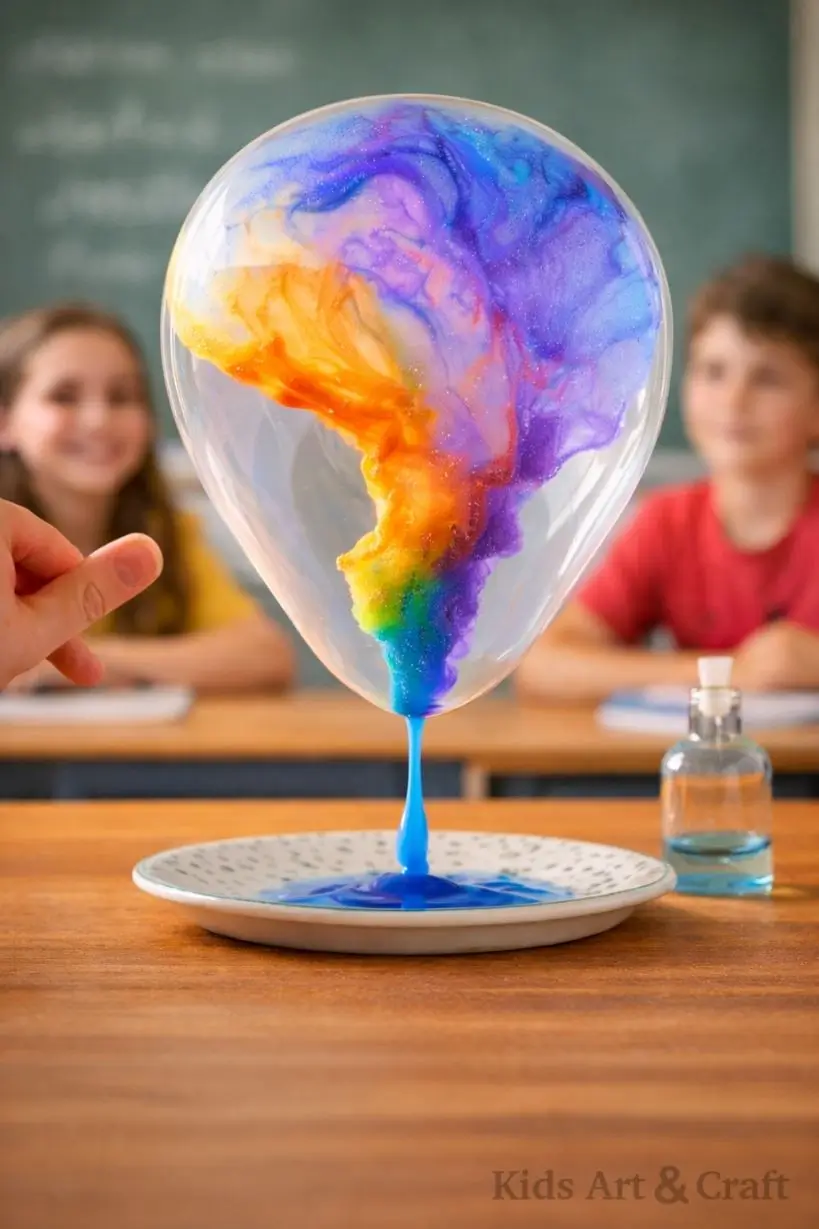
Vibrant rainbow experiment inside balloon dripping into a plate below beautifully
How Does This Balloon Experiment Work?
- This experiment works because of a chemical reaction.
- When baking soda (a powder) mixes with vinegar (a liquid), they react and produce a gas called carbon dioxide (CO₂).
- What happens next?
- The gas has nowhere to go.
- It travels into the balloon.
- The balloon fills up and inflates like magic!
- This is the same gas people breathe out and the same gas that makes soda fizzy.
Materials Required
- Balloon
- 2–3 teaspoons baking soda
- ½ cup vinegar
- Small bottle or jar
- Funnel or paper cone
- Food coloring (optional)
Step-by-Step Instructions to Inflate the Balloon
Step 1: Prepare the Balloon
Use a funnel to pour baking soda into the balloon.
Step 2: Add Vinegar to the Bottle
Pour about ½ cup of vinegar into the bottle.
Step 3: Attach the Balloon
Stretch the balloon opening over the bottle mouth. Make sure the baking soda stays inside the balloon.
Step 4: Start the Reaction!
Lift the balloon so the baking soda falls into the vinegar.
Step 5: Watch the Magic
The mixture will fizz and bubble, creating gas that inflates the balloon!
What Kids Will Learn from This Experiment
- How chemical reactions work
- How gas is formed during reactions
- How gases can inflate objects
- Observation and curiosity in science
- Basic experiment skills
Where Is This Science Used in Real Life?
This reaction helps us understand many real-world things:
- Carbonated drinks contain carbon dioxide bubbles.
- Baking bread and cakes uses similar reactions to make them fluffy.
- Rocket science uses gases to create thrust.
Safety Tips for Kids
- Experiment on a tray or table to avoid spills.
- Do not taste the mixture.
- Wear old clothes or an apron if using food coloring.
- Have an adult help younger kids.
Why Kids Love This Science Experiment
- Easy with common kitchen items
- Super visual and exciting
- Teaches science through play
- Encourages curiosity and experimentation
Fun Experiment Variations to Try
- Balloon Size Challenge: Try using different amounts of baking soda. Which amount makes the biggest balloon?
- Color Explosion Balloon: Add food coloring inside the balloon to create a colorful bubbling reaction.
- Temperature Test: Use warm vinegar and cold vinegar. See which one inflates the balloon faster!
Balloon baking soda offers a fun, safe, and educational way to explore science at home. It’s perfect for experiments, parties, and learning, combining creativity with simple, effective chemical reactions. Keep up with our latest releases on Telegram. Stay connected on YouTube & Facebook for creative art and craft ideas.