School Crafts
Rubber Band Powered Car – A Fun DIY Science Experiment


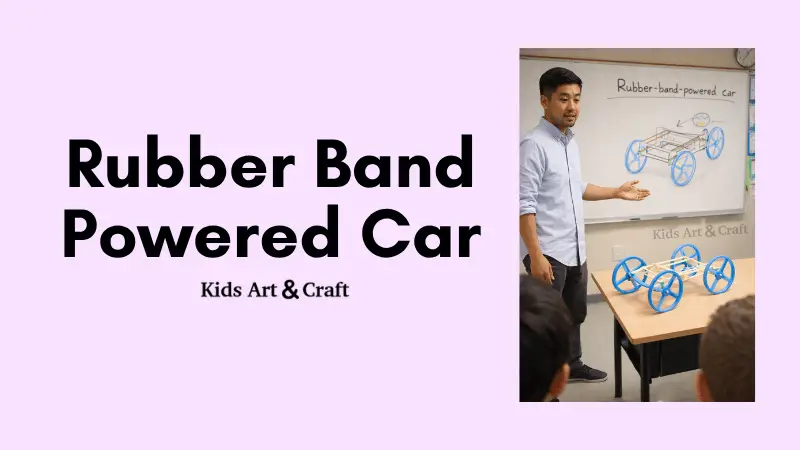
Have you ever wondered if a simple rubber band could power a car? In this fun STEM project, kids build a small car that moves using the energy stored in a stretched rubber band. When the rubber band is twisted and released, it spins the wheels and makes the car move forward—no batteries needed! This project is a great way to learn about energy, motion, and simple machines while having fun building something that actually moves.
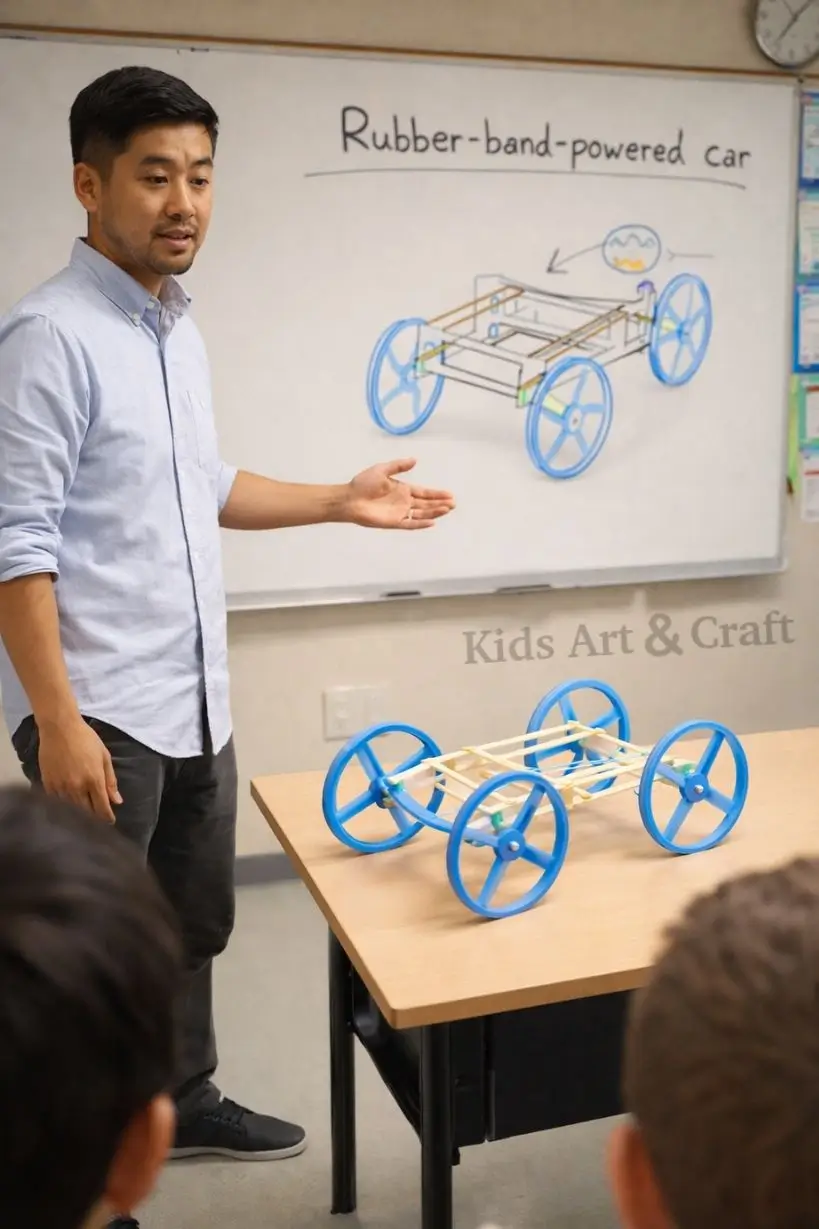
A rubber band stores energy and releases it to drive wheels forward.
How a Rubber Band Powered Car Works
- When you stretch or twist a rubber band, you store energy in it. This is called stored energy.
- When the rubber band is twisted → energy is stored.
- When you release it → the rubber band untwists.
- As it untwists, it turns the axle and wheels, making the car move.
- Think of it like a mini spring engine made from a rubber band!
- Energy change in this project:
- Elastic Energy (stored in a rubber band) ➜ Motion Energy (car moving)
Materials Required
- 4 plastic wheels
- Wooden sticks or skewers (for axles)
- Cardboard or wooden base for the car
- Rubber bands
- Paper clips or hooks
- Tape or glue
- Scissors
- Straw pieces (optional for smoother axles)
Explanation of the Step-by-Step Working of a Car
Step 1: Build the Car Base
Create a rectangular base using cardboard or a small wooden platform.
Step 2: Attach the Axles
Fix two wooden sticks under the base—one in the front and one in the back. These will hold the wheels.
Step 3: Add the Wheels
Attach four wheels to the ends of the axles so they can spin freely.
Step 4: Connect the Rubber Band
Hook one end of the rubber band to the front of the car and the other end to the rear axle.
Step 5: Wind the Rubber Band
Turn the back wheels several times to twist the rubber band tightly.
Step 6: Release the Car
Place the car on the floor and let go! As the rubber band untwists, it spins the axle, and the wheels move the car forward.
What Kids Learn
- How stored energy works
- How energy changes into motion
- Basics of mechanical movement
- Simple engineering and design thinking
- Hands-on STEM experimentation
Real-World Examples of Stored Energy Systems
This simple project relates to many real technologies:
- Wind-up toys
- Mechanical watches
- Spring-powered mechanisms
- Some early airplane launch systems
- Machines that store and release energy
Important Safety Tips for Kids
- Use scissors carefully.
- Do not stretch rubber bands toward your face.
- Younger kids should work with adult supervision.
- Make sure wheels are attached securely.
Why This Project Is Great for Kids
- Easy to build with simple materials
- Teaches science through hands-on learning
- Encourages creativity and problem-solving
- Kids can experiment and improve their design
- Super fun to race with friends!
Fun Extension Activities and Engineering Challenges
- Rubber Band Car Race: Build different cars and see which one goes the farthest or fastest.
- Change the Rubber Bands: Test thick vs thin rubber bands and see how it changes the speed.
- Engineering Challenge: Try to design a car that travels over 5 meters using only one rubber band!
Discover our rubber band-powered car model, demonstrating energy storage and conversion through elastic potential. Ideal for educational projects, science experiments, and STEM demonstrations, it highlights mechanical principles, simple machines, and hands-on learning with fun, sustainable energy concepts. Catch all our new content first on Telegram. Hey, don’t forget! Follow us on YouTube & Facebook for awesome craft ideas and fun tutorials.