Flashcards
Emotions Flashcards For Kids- Free Printable

Hey there, viewers! There is no denying the fact that these days, texting is the most popular mode of communication. As time goes by, more and more people are taking up texting instead of communicating through calls or speaking face-to-face in general. Even though it has its benefits, there are several limitations to it. When using texts to communicate, we cannot express how we feel clearly. It often leads to miscommunication and misinterpretation.
It is human to feel and express ourselves. Throughout our lives, we human beings experience several emotions. These emotions make us who we are. We get agitated, frustrated, excited, happy, sad, nervous, jealous, frightened, worried, angry, and embarrassed. While it is easy for us to express our emotions generally, emotions are subjective states of mind, and it is this state of mind that is conveyed through emojis when we text. In real-life scenarios, we communicate our feelings through facial expressions and our behavior, but it is impossible to do so over text. The person on the other side can’t see how we react to a certain thing he said. An emoji’s primary function is to fill in emotional cues otherwise missing from the typed conversation.
Emotions Flashcards For Kids


Emojis allow us to express how we feel during texting. Introduced originally in late 1997 on Japanese phones, emojis are used frequently. Originally meaning pictograph, the word ’emoji’ comes from the Japanese words ‘e’ and ‘moji’, which mean picture and character, respectively.
There are several emojis used throughout the world. Primarily, these are smiley faces that convey different emotions such as happiness, disgust, frenzy, sadness, and more. Children are fully aware of emojis by the time they are in their teens. While there are plenty of emojis to be used, varying from simple smileys to characters and more, the most commonly used emojis, according to a 2019 survey, are:
- Smiling Face With Heart-Eyes.
- Rolling on the Floor Laughing.
- Smiling Face With Smiling Eyes.
- Folded Hands.
- Two Hearts.
We bring to you these flashcards with emojis to get your students acquainted with the common emojis.
Emotions Flashcards For Kids- 1
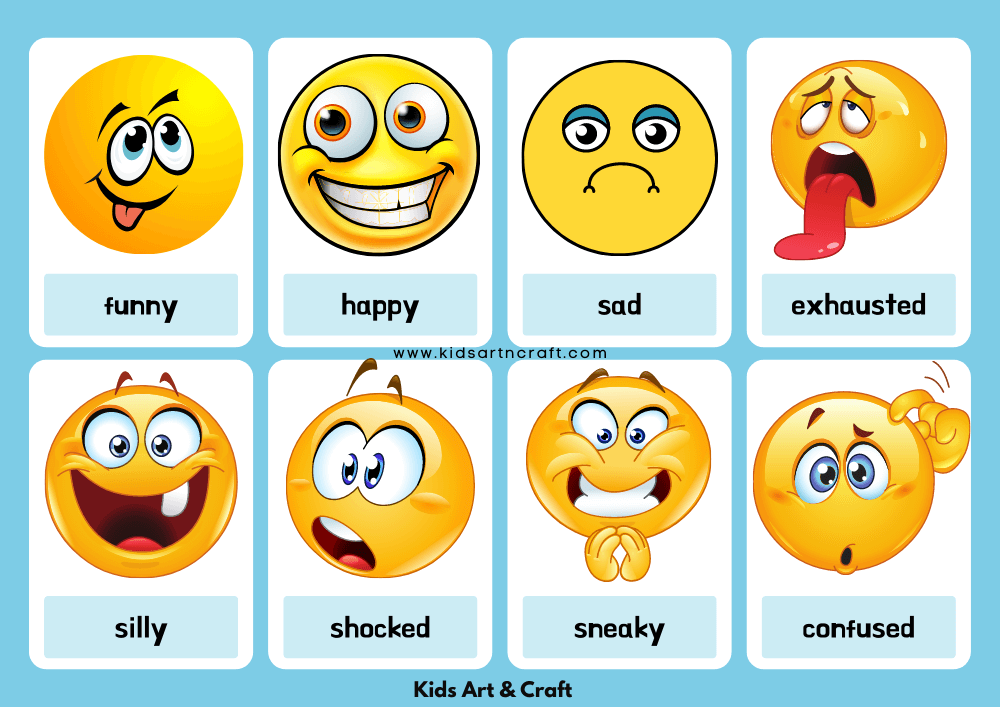

Emotions Flashcards For Kids- 2
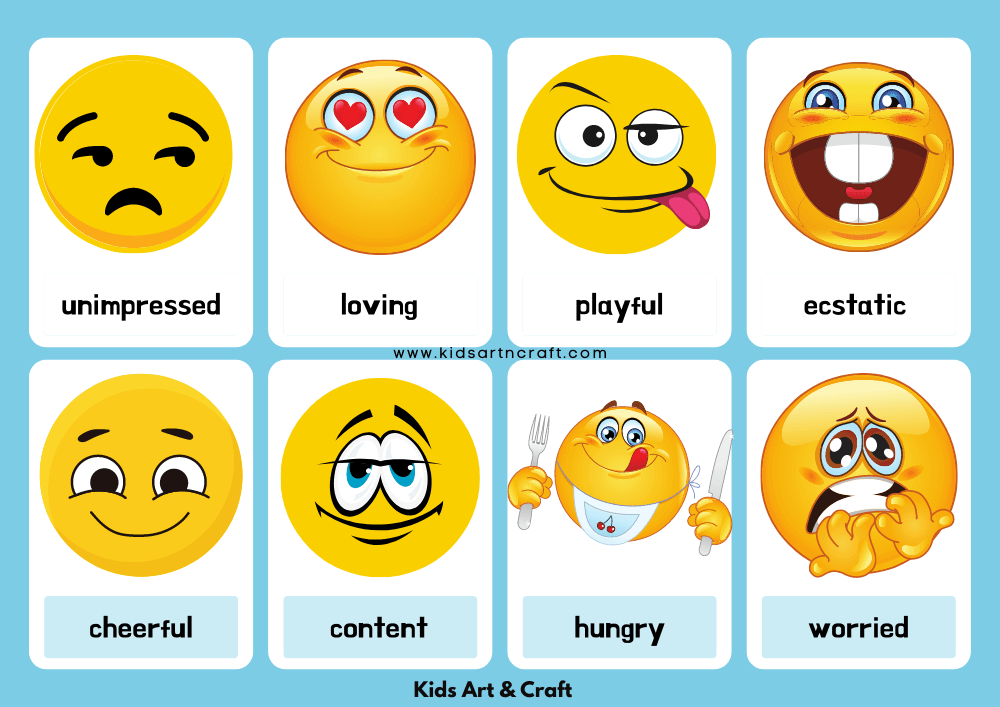
Emotions Flashcards For Kids- 3
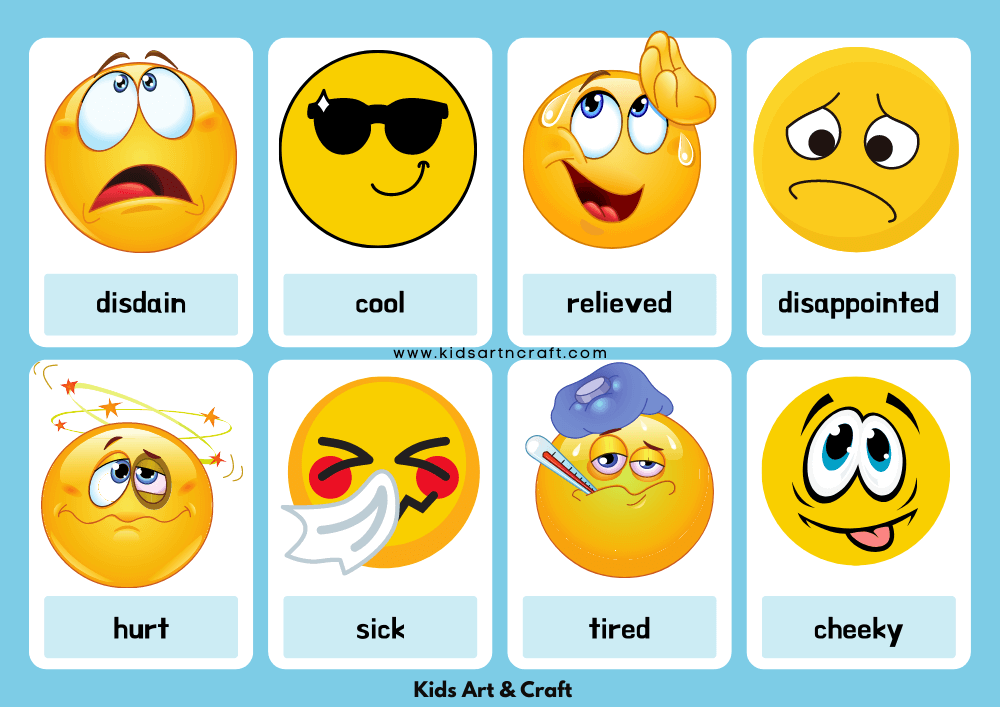
Emotions Flashcards For Kids- 4
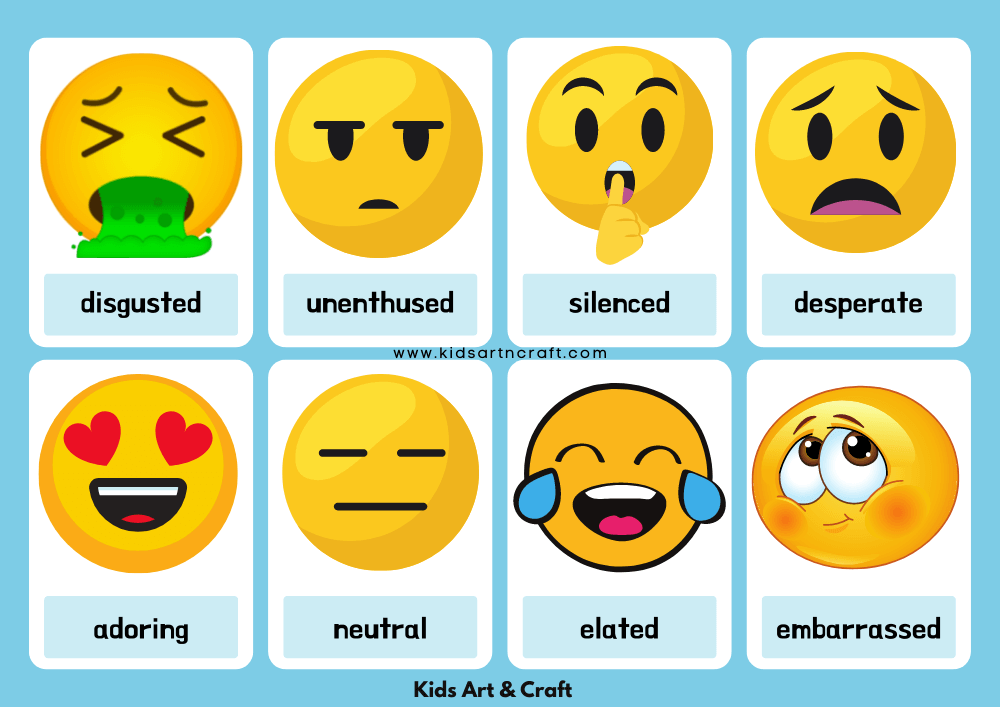
In this day and age, it is vital to stay updated on recent trends. Our emoji flashcards allow your kids to understand what emojis are all about. You can use these to help them identify the different emojis, or you can start a fun game with a group of children in which they communicate only using flashcards. Download and get started now!
Emotions Flashcards for Kids | Feelings Learning Activity for Preschoolers
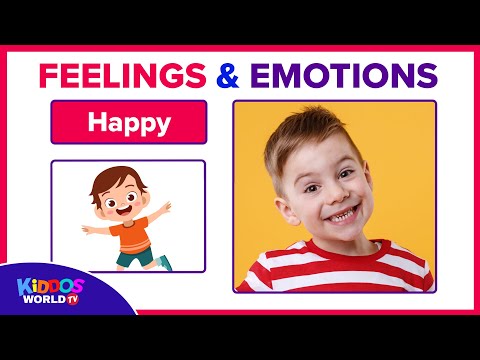
Help children learn emotions and feelings with these fun emotions flashcards for kids. This educational activity improves emotional intelligence, communication skills, vocabulary, and social learning for preschoolers and kindergarten students. Perfect for homeschooling, classroom learning, toddler activities, and early childhood education through interactive flashcard games and fun learning.
Understanding Feelings Through Emotions Flashcards
Emotions flashcards are a simple and engaging learning resource that helps children recognize, name, and understand different feelings. These colorful cards introduce kids to emotions like happiness, sadness, anger, excitement, and worry in an easy-to-understand way. Using flashcards regularly helps children build emotional awareness and improve communication skills.
Why Emotions Flashcards Are Helpful for Kids
Learning about emotions at an early age helps children express their feelings and understand the emotions of others. Emotion flashcards provide visual support that makes it easier for young learners to connect facial expressions with different feelings.
- Builds Emotional Vocabulary: Children learn new words to describe their feelings.
- Improves Communication: Kids become more confident in expressing their thoughts and emotions.
- Encourages Self-Awareness: Flashcards help children identify and understand their own emotions.
- Develops Empathy: Kids learn to recognize and respect the feelings of others.
- Supports Social Skills: Understanding emotions helps children build positive relationships.
Emotions Kids Can Learn From Flashcards
Emotion flashcards introduce children to different feelings such as happy, sad, angry, scared, excited, surprised, shy, worried, proud, and calm. These cards help kids identify facial expressions and understand situations connected to various emotions.
Fun Activities Using Emotion Flashcards
- Ask children to identify emotions shown on each card.
- Encourage kids to share examples of when they felt a certain emotion.
- Create matching games with similar emotions.
- Use flashcards during storytelling activities.
- Practice different facial expressions together.
Ways Parents and Teachers Can Use Emotion Cards
Parents and teachers can use emotion flashcards during classroom lessons, home learning, and daily conversations. These cards help children discuss feelings, improve self-expression, and develop better emotional understanding through interactive activities.
Tips for Teaching Emotions to Children
- Introduce emotions slowly and use simple explanations.
- Encourage children to talk openly about their feelings.
- Connect emotions with everyday experiences.
- Use positive examples while explaining different feelings.
- Create a comfortable environment for emotional learning.
How Emotion Flashcards Support Child Development
Emotion flashcards support social and emotional learning by helping children recognize feelings, improve kindness, develop empathy, and communicate more effectively. These activities make emotional learning fun and meaningful for young learners.
FAQs
Q1. What age group can use emotions flashcards?
Answer: Emotions flashcards are suitable for toddlers, preschoolers, kindergarten students, and early learners with guidance.
Q2. How do emotions flashcards help children?
Answer: They help children identify feelings, improve emotional vocabulary, communicate better, and understand others.
Q3. Can emotions flashcards be used in classrooms?
Answer: Yes. Teachers can use them for social-emotional learning activities, group discussions, and interactive games.
Q4. Which emotions can children learn through flashcards?
Answer: Children can learn emotions like happiness, sadness, anger, fear, excitement, surprise, calmness, and many others.
Emotion flashcards make learning about feelings simple, interactive, and enjoyable for kids. They encourage children to express themselves, understand emotions, and develop important social skills through creative learning activities. Inspire the next generation of creators with fun crafts and educational inspiration. Connect with us on YouTube, Telegram, & Facebook.
Reviewed By Yash Sharma
Read More:
- Emotions Flashcards For Preschoolers- Free Printable Worksheet
- Exercise Flashcards For Kindergarten- Free Printable
- Feelings Flashcards For Toddlers- Free Printable
- Feminist Flashcards – Free Printables
- Food Categories Activity Sorting Free Printable Worksheets