Science Experiments
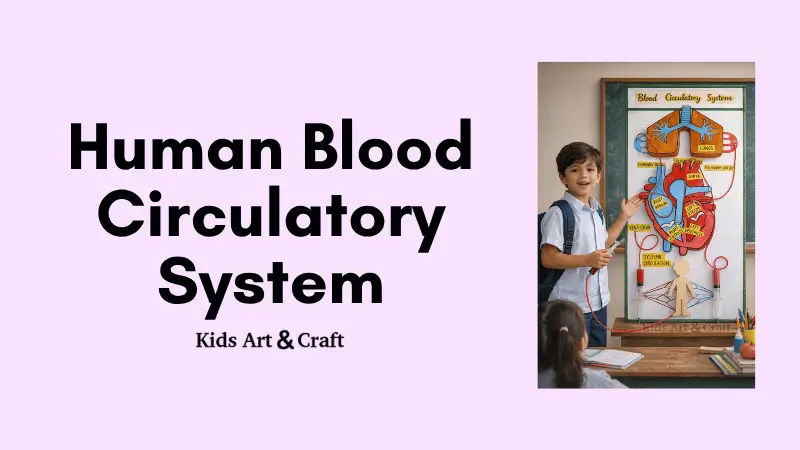
Human Blood Circulatory System Working Model for Students


This fun science project shows how blood moves inside our body using a working circulatory system model. The model includes the heart, lungs, and blood vessels. Using syringes and colored tubes, kids can see how blood flows through the body and returns to the heart again.
It is a great STEM activity that helps students understand how the heart pumps blood and keeps our body alive.
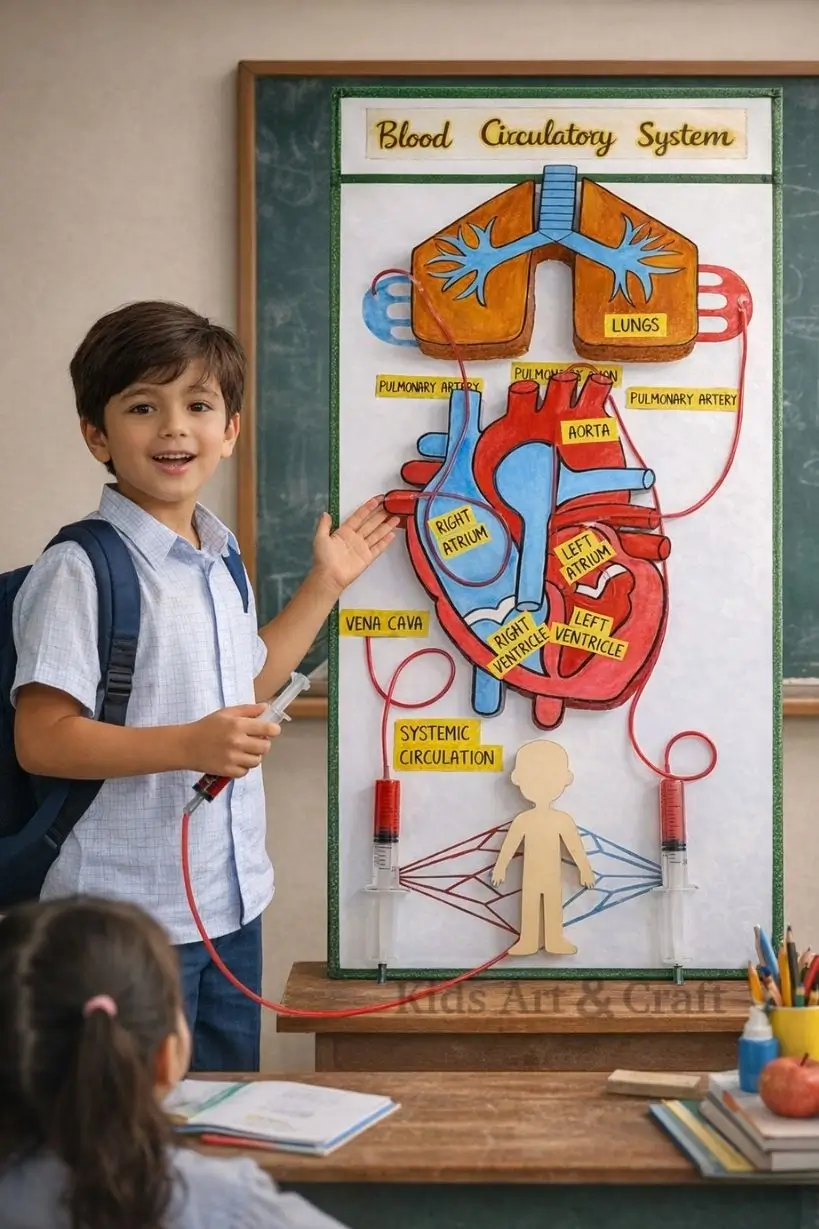
Interactive model explaining blood circulation through the heart, lungs, and body systems
Blood Circulation Science Explained
- Our body has a circulatory system that moves blood everywhere. Blood carries oxygen, nutrients, and energy to all parts of the body. The heart works like a pump. It pushes blood through tubes called blood vessels.
- Here is the basic process:
- Blood without oxygen enters the right side of the heart.
- It goes to the lungs to pick up oxygen.
- Oxygen-rich blood comes back to the left side of the heart.
- The heart then pumps it to the entire body.
- In this model:
- Blue color shows blood without oxygen.
- Red color shows oxygen-rich blood.
- The syringes act like the heart’s pump that pushes blood through the tubes.
Materials for Circulatory System Model
- Cardboard or foam board
- Colored chart paper
- Plastic tubes
- Two plastic syringes
- Red and blue colored water
- Glue or hot glue
- Markers or sketch pens
- Scissors
- Paper labels
- Tape
Step-by-Step Working Explanation
Step 1: Create the Base
Take a large cardboard sheet and use it as the base for the project.
Step 2: Draw the Heart and Lungs
Cut and paste heart and lung shapes using colored paper. Label the parts like:
- Right atrium
- Right ventricle
- Left atrium
- Left ventricle
- Aorta
- Pulmonary artery
- Pulmonary vein
Step 3: Attach Tubes as Blood Vessels
Use plastic tubes to represent blood vessels. Connect them between the heart, lungs, and body.
Step 4: Add Colored Water
Fill one syringe with red colored water and the other with blue colored water.
Step 5: Connect the Syringes
Attach the syringes to the tubes at the bottom of the model.
Step 6: Show Blood Flow
When you push the syringe, the colored water moves through the tubes. This shows how the heart pumps blood through the body and lungs.
Step 7: Explain the Circulation
- Blue blood → heart → lungs
- Lungs add oxygen
- Red blood → heart → body
This shows pulmonary circulation (heart to lungs) and systemic circulation (heart to body).
What Students Learn from This Project
- Structure of the human heart
- How blood circulates in the body
- Connection between the heart and the lungs
- Basic human body science
- Learning through hands-on STEM models
Real-Life Uses of the Circulatory System
Understanding the circulatory system helps us know:
- Why the heart is important for life
- How doctors check blood circulation
- Why exercise keeps the heart healthy
- How oxygen reaches every part of the body
Doctors and scientists study this system to treat heart diseases and blood problems.
Safety Tips
- Be careful while using scissors or sharp tools.
- If using hot glue, ask an adult for help.
- Do not squeeze syringes too hard to avoid spilling colored water.
Benefits of This Science Project
- Makes a complex body system easy to understand
- Shows real movement of blood flow
- Encourages creative learning and curiosity
- Perfect for science fairs and classroom demonstrations
- Combines biology and engineering
Extension Ideas
- Add a Heartbeat Demonstration: Use a balloon pump or squeeze bulb to show how the heart beats.
- Compare Fast and Slow Heartbeats: Pump the syringe slowly and quickly to show how blood flow changes during rest and exercise.
- Add LED Lights for Oxygen Flow: Use red and blue LED lights to make the blood flow path glow and look more realistic.
The human blood circulatory system is essential for delivering oxygen, nutrients, and hormones while removing waste. Understanding how the heart, blood vessels, and blood work together helps improve health awareness and supports better lifestyle choices for long-term well-being today globally. Join our Telegram group and follow us on YouTube & Facebook for fun art and craft ideas.