Science Experiments
Human Respiratory System Model Project – Materials, Steps & Science Explained


This project shows a working model of the human respiratory system (how we breathe).The model represents the lungs, trachea, bronchi, and bronchioles. By using simple craft materials, this experiment helps kids understand how air travels inside our bodies when we breathe in and breathe out. It is a great STEM project for school science fairs and helps students see how the lungs work simply and visually.
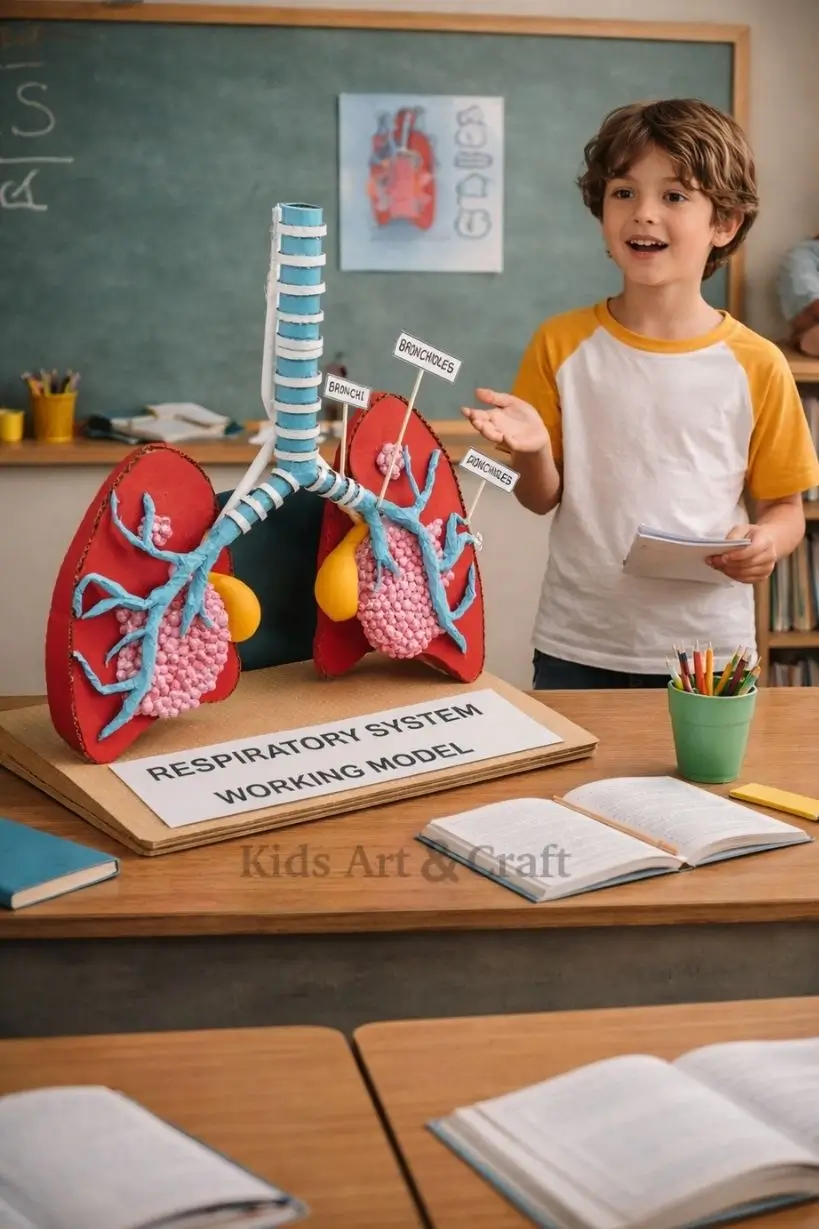
Working model demonstrating human respiratory system and breathing process step-by-step
Science Concept Behind It
- Our body needs oxygen to stay alive. The respiratory system helps us breathe and take oxygen into our bodies.
- Here is how breathing works:
- Air enters through the nose or mouth.
- It moves down a tube called the trachea (windpipe).
- The trachea splits into two tubes called bronchi.
- These bronchi go into the lungs.
- Inside the lungs, they divide into many tiny branches called bronchioles.
- At the end are tiny air sacs called alveoli, where oxygen goes into the blood.
- In this model:
- The blue tubes represent airways (trachea, bronchi, bronchioles).
- The pink clusters represent alveoli.
- The red shapes represent lungs.
Materials Required
- Cardboard base
- Colored craft paper (red, blue, yellow)
- Cardboard pieces for lungs
- Paper straws or rolled paper tubes
- Cotton balls or small foam balls (for alveoli)
- Glue or hot glue
- Scissors
- Toothpicks and small labels
- Paint or markers
- Modeling clay (optional)
Step-by-Step Working Explanation
Step 1: Build the Base
Take a cardboard sheet and use it as the base of your project.
Step 2: Make the Lungs
Cut two lung-shaped pieces from cardboard and cover them with red paper.
Step 3: Create the Trachea
Use a rolled paper tube or straw to represent the trachea (windpipe). Fix it vertically on the base.
Step 4: Add the Bronchi
Split the trachea into two branches using smaller tubes. These represent the bronchi going into each lung.
Step 5: Add Bronchioles
Attach more small branches inside the lungs using thin rolled paper pieces.
Step 6: Make the Alveoli
Glue small cotton balls or foam balls at the ends of the bronchioles to show alveoli, where oxygen exchange happens.
Step 7: Label the Parts
Use toothpicks and small paper tags to label:
- Trachea
- Bronchi
- Bronchioles
- Lungs
Step 8: Show the Air Path
Explain that air moves from the trachea → bronchi → bronchioles → alveoli when we breathe.
What Kids Learn from the Respiratory Model
- Structure of the human respiratory system
- How breathing works
- Basic human biology
- Creative model building
- Understanding science through visual learning
Real-Life Applications
This model helps kids understand:
- Why breathing is important
- How doctors study lung health
- Why exercise improves breathing
- How diseases like asthma or pneumonia affect lungs
It also helps students understand how oxygen reaches every part of our body.
Safety Tips
- Use scissors carefully.
- If using a hot glue gun, ask an adult for help.
- Keep small craft items away from very young children.
Benefits of the Respiratory System Project
- Makes human biology easy to understand
- Encourages hands-on STEM learning
- Improves creativity and problem-solving
- Perfect for science fairs and school projects
- Turns a complex body system into a simple visual model
Creative Extension Ideas for Model
- Balloon Lung Model: Add balloons inside a bottle to show how lungs expand and shrink during breathing.
- Air Flow Demonstration: Use a small fan or straw to show how air moves through the trachea and bronchi.
- Compare Healthy vs Unhealthy Lungs: Create another model showing smoking-damaged lungs vs healthy lungs.
The human respiratory system is essential for oxygen supply, energy production, and overall health. Understanding its structure, functions, and care helps prevent diseases, improves fitness, and supports long-term wellness. Learning about respiration encourages healthier lifestyles and better breathing habits daily. Stay updated with fresh posts by joining our Telegram group. Follow us on YouTube & Facebook for art and craft tutorials and much more.