Paragraph Writing
Paragraph on How Animals Show Emotions

Animals show emotions through actions and sounds. Dogs wag their tails when happy, cats purr when content, and elephants show sadness, proving they can feel and express feelings like humans. Learn to write strong paragraphs with “How Animals Show Emotions” in four styles—Expository, Persuasive, Descriptive, and Narrative—and clearly organize your ideas using structures like PEEL, TEEL, TEXAS, and the Hamburger Model.
Read This Article in Other Languages
- अनुच्छेद: जानवर अपनी भावनाएँ कैसे दिखाते हैं (Hindi / हिंदी)
- Párrafo: Cómo los animales muestran emociones (Spanish / Español)
- Paragraphe : Comment les animaux montrent des émotions (French / Français)
- Absatz: Wie Tiere Emotionen zeigen (German / Deutsch)
- فقرة: كيف تظهر الحيوانات المشاعر (Arabic / العربية)
- অনুচ্ছেদ: প্রাণীরা কীভাবে অনুভূতি প্রদর্শন করে (Bengali / বাংলা)
- பத்தி: விலங்குகள் உணர்ச்சிகளை எப்படி காட்டுகின்றன (Tamil / தமிழ்)
- పేరాగ్రాఫ్: జంతువులు ఎలా భావాలను చూపిస్తాయి (Telugu / తెలుగు)
- പാരഗ്രാഫ്: ജന്തുക്കൾ എങ്ങനെ വികാരങ്ങൾ കാണിക്കുന്നു (Malayalam / മലയാളം)
- پیراگراف: جانور اپنی جذبات کیسے ظاہر کرتے ہیں (Urdu / اردو)
- Parágrafo: Como os animais mostram emoções (Portuguese / Português)
Translation Disclaimer: These links use Google Translate, an automated translation service. Translations may vary in accuracy and are provided for convenience only.
Different Styles of Paragraphs on ‘How Animals Show Emotions’
1. Expository Paragraph on How Animals Show Emotions (Explains with Facts)

Animals, like humans, can show many emotions. They express happiness, sadness, fear, and love through behavior and body language. Dogs wag their tails or bark when excited, while cats purr and knead when content. Birds may sing to show joy or attract mates. Animals also show fear or distress by hiding, growling, or hissing. Elephants display grief by staying near deceased companions and touching them gently. Even farm animals, like cows and horses, communicate happiness or discomfort through sounds and gestures. Observing these signals helps humans understand animal emotions and meet their needs. Studying animal feelings improves their care, protects wildlife, and strengthens bonds between humans and animals. Recognizing that animals have emotions reminds us that they are sentient beings who deserve respect, kindness, and protection in all environments they live in.
2. Persuasive Paragraph on How Animals Show Emotions (Tries to Convince You)
Animals feel emotions just like we do, and we must treat them with care and respect. Dogs, cats, and even farm animals can feel happiness, sadness, fear, and love. When a dog wags its tail or a cat purrs, it is showing joy. Elephants mourn the loss of family members, and birds sing when they are content. Ignoring these feelings or treating animals cruelly causes them pain and suffering. We should protect their habitats, give them proper care, and avoid harming them for selfish reasons. By understanding and respecting animal emotions, we can create a kinder world where humans and animals live together happily. Animals are not just creatures; they are beings with feelings, and it is our responsibility to treat them well.
3. Descriptive Paragraph on How Animals Show Emotions (Paints a Picture with Words)
A dog running joyfully through a park, tail wagging and ears flopping, shows pure happiness. A cat curls up on a sunny windowsill, purring softly, signaling comfort and contentment. Elephants stand quietly near their fallen companions, gently touching them with their trunks, showing grief and respect. Birds flutter and sing lively tunes, expressing excitement and joy. Horses stamp their hooves or nuzzle their friends to display affection. Even small animals, like rabbits or guinea pigs, twitch their noses or hop around when excited or curious. Watching these actions, one can feel the emotions that flow through animals, from joy to fear to love. Their feelings are expressed in movements, sounds, and gestures, painting a vivid picture of life and emotion in the animal world.
4. Narrative Paragraph on How Animals Show Emotions (Tells a Story)
Last summer, I visited a farm and noticed how animals express their feelings. A calf ran toward its mother, nuzzling her gently, showing love and trust. A dog barked happily as children played near it, wagging its tail nonstop. I saw a cat hiding under a tree when strangers approached, showing fear. The farmer told me that horses often greet him with soft neighs when he comes to feed them, showing joy. Even the chickens seemed excited when food was scattered in the yard. Watching all these animals, I realized they have emotions just like humans. Each movement, sound, or gesture was a window into their feelings. That day taught me to respect animals and understand that their emotions matter too.
‘How Animals Show Emotions’ Paragraphs in Different Structured Methods
1. How Animals Show Emotions Paragraph Writing with PEEL Method
PEEL Method (Point, Evidence, Explanation, Link)
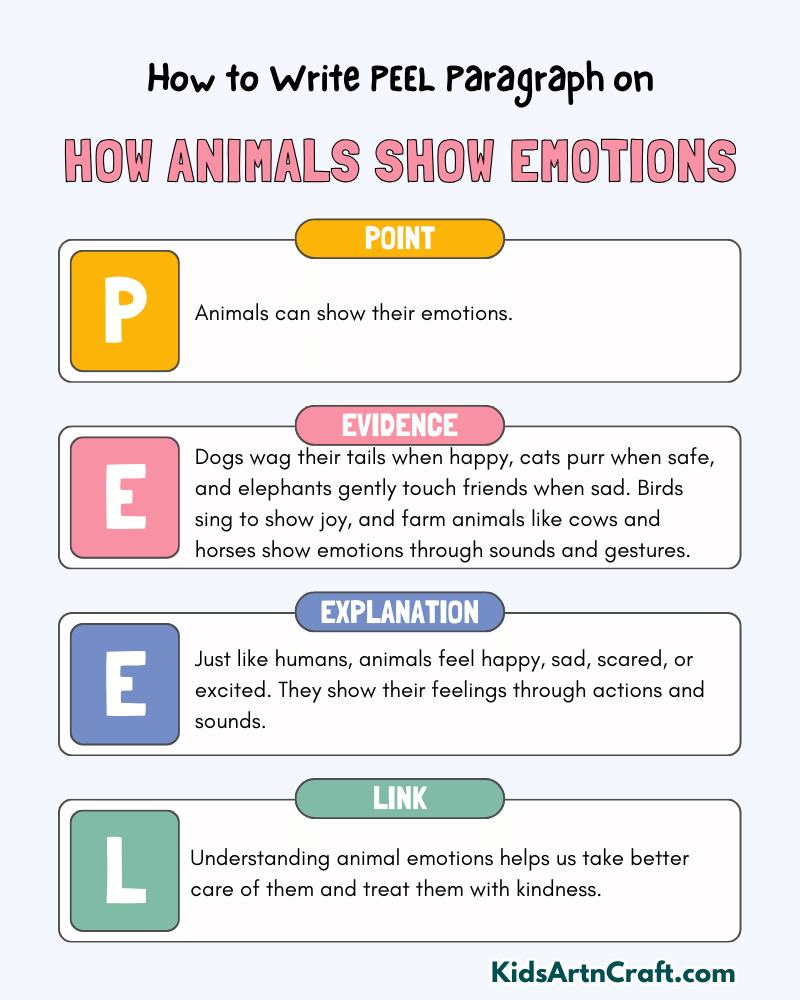

Point: Animals can show their emotions.
Evidence: Dogs wag their tails when happy, cats purr when safe, and elephants gently touch friends when sad. Birds sing to show joy, and farm animals like cows and horses show emotions through sounds and gestures.
Explanation: Just like humans, animals feel happy, sad, scared, or excited. They show their feelings through actions and sounds.
Link: Understanding animal emotions helps us take better care of them and treat them with kindness.
2. How Animals Show Emotions Paragraph Writing with TEEL Method
TEEL Method (Topic, Evidence, Explanation, Link)
Topic: Animals express emotions in many ways.
Evidence: A dog jumps and wags its tail when excited, a cat purrs when happy, and an elephant may stay near a lost friend to show grief. Birds sing songs to express joy, and horses nuzzle each other to show love.
Explanation: They use movements, sounds, and behavior to show how they feel.
Link: By observing these actions, we can understand animals’ feelings and take care of them properly.
3. How Animals Show Emotions Paragraph Writing with TEXAS Method
TEXAS Method (Topic, Example, Explanation, Analysis, Summary/Significance)
Topic: Animals show emotions just like people do.
Example: Dogs wag their tails when happy, cats purr when relaxed, and elephants touch friends when sad.
Explanation: They use gestures, sounds, and behavior to communicate feelings.
Analysis: These signs show that animals feel emotions such as joy, love, fear, and grief.
Summary: Learning how animals express emotions helps us be kind and caring toward them.
4. How Animals Show Emotions Paragraph Writing with Hamburger Method
Hamburger Method (Top Bun, The Fillings, Bottom Bun)
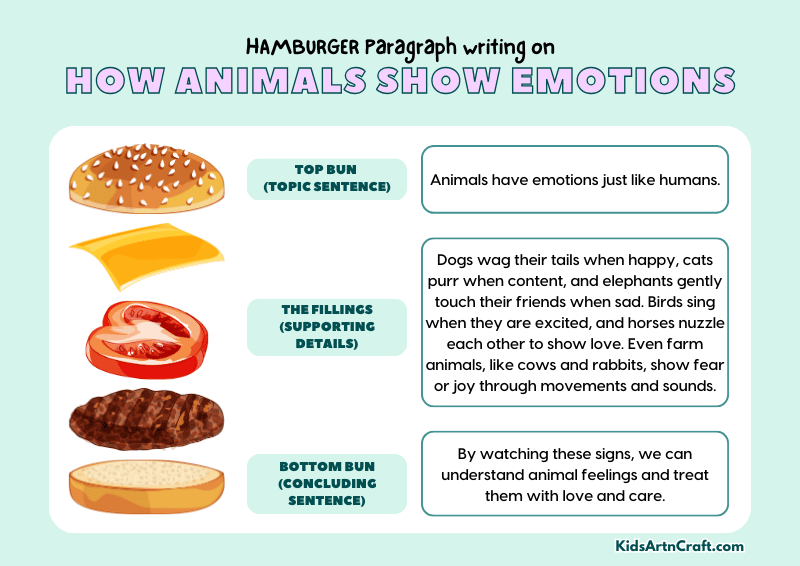

Top Bun (Topic Sentence):
Animals have emotions just like humans.
The Fillings (Supporting Details):
Dogs wag their tails when happy, cats purr when content, and elephants gently touch their friends when sad. Birds sing when they are excited, and horses nuzzle each other to show love. Even farm animals, like cows and rabbits, show fear or joy through movements and sounds.
Bottom Bun (Concluding Sentence):
By watching these signs, we can understand animal feelings and treat them with love and care.
Importance of Understanding Animal Emotions
- Animals show emotions like joy, grief, and empathy, helping humans understand behavior and improve welfare. [Source: American Psychological Association]
- Recognizing stress and emotional responses in animals enhances conservation and human-animal interactions. [Source: Humane Society]
Additional Facts of Animal Emotions
- Mammals release stress hormones when separated from social groups, indicating complex emotions. [Source: Nature]
- Elephants display mourning behaviors such as touching and standing near deceased herd members. [Source: World Wildlife Fund]
- Dogs can mirror human emotions, responding to happiness, sadness, and anxiety. [Source: ScienceDaily]
Hope you liked these paragraphs on ‘How Animals Show Emotions’. Don’t forget to join the Telegram group for FREE Printables.
Check this article to write a paragraph on how animals communicate without talking.