






Paragraph Writing
Paragraph on How Music Can Change Mood


Music can change our mood by calming the mind, boosting energy, and creating emotions. This paragraph explains its impact on feelings, relaxation, stress relief, and mental well-being. Let’s learn how to write a strong paragraph on “How Music Can Change Mood.” We’ll explore four writing styles—Expository, Persuasive, Descriptive, and Narrative—and use structures like PEEL, TEEL, TEXAS, and the Hamburger Model to present our ideas clearly.
Read This Article in Other Languages
- संगीत मनोभाव को कैसे बदलता है पर अनुच्छेद (Hindi / हिंदी)
- Párrafo sobre cómo la música cambia el estado de ánimo (Spanish / Español)
- Paragraphe sur la façon dont la musique change l’humeur (French / Français)
- Absatz darüber, wie Musik die Stimmung verändert (German / Deutsch)
- فقرة عن كيف يغير الموسيقى المزاج (Arabic / العربية)
- সঙ্গীত কীভাবে মেজাজ বদলে দেয় – অনুচ্ছেদ (Bengali / বাংলা)
- இசை மனதை எப்படி மாற்றுகிறது பற்றி பத்தி (Tamil / தமிழ்)
- మ్యూజిక్ మారుదల ఎలా చేస్తుంది గురించి పేరా (Telugu / తెలుగు)
- സംഗീതം മനോഭാവം എങ്ങനെ മാറ്റുന്നു എന്ന പാരഗ്രാഫ് (Malayalam / മലയാളം)
- موسیقی موڈ کو کیسے بدلتی ہے پر پیراگراف (Urdu / اردو)
- Parágrafo sobre como a música muda o humor (Portuguese / Português)
Translation Disclaimer: These links use Google Translate, an automated translation service. Translations may vary in accuracy and are provided for convenience only.
Different Styles of Paragraphs on ‘How Music Can Change Mood’
1. Expository Paragraph on How Music Can Change Mood (Explains with Facts)
Music has a powerful effect on the human mind, and it can easily change the way we feel. Different types of music can influence our mood in different ways. For example, upbeat songs with fast rhythms often make people feel energetic and happy, while slow and soft music can help calm the mind. Scientists say that music affects the brain’s release of chemicals like dopamine, which is linked to feelings of joy and motivation. This is why listening to a favorite song can instantly make someone feel better. Music is also used in therapy to help people deal with stress, anxiety, and sadness. It can create a peaceful environment, improve focus, and even help with emotional healing. Whether someone listens to music while studying, exercising, or relaxing, it plays an important role in shaping their mood. Overall, music is a simple yet powerful tool that can influence our emotions in positive and meaningful ways.
2. Persuasive Paragraph on How Music Can Change Mood (Tries to Convince You)
Music is one of the most effective ways to improve your mood, and everyone should use it to feel better. When you listen to music you love, your brain releases chemicals that make you happy and relaxed. Instead of turning to unhealthy habits when feeling stressed or sad, simply play a calming song and notice the difference. Music can lift your spirits, help you stay focused, and even reduce anxiety. Fast and energetic songs make you feel active and excited, while gentle tunes can calm your thoughts. Many experts agree that music therapy is a powerful method for emotional healing. So, the next time you feel low, don’t sit alone with your worries—put on your favorite music. You will feel lighter, more positive, and ready to face your day. Music is not just entertainment; it is a tool for emotional well-being. Everyone should include a few minutes of music in their daily routine to enjoy a happier, healthier mind.
3. Descriptive Paragraph on How Music Can Change Mood (Paints a Picture with Words)
Music has a magical way of shaping our emotions. A soft melody can feel like a warm blanket on a cold day, wrapping the mind in comfort and peace. When gentle notes float through the air, they create a quiet space inside us, easing stress and calming busy thoughts. In contrast, upbeat music feels like bright sunlight breaking through clouds, filling the heart with energy and excitement. The steady rhythm of a drum or the joyful sound of a guitar can make our feet tap, and our mood rise instantly. Sometimes, a familiar song carries memories that touch us deeply, reminding us of people we love or moments we cherish. These sounds paint emotional pictures that change the way we feel. With each beat, music colors the mind with new shades of emotion—joy, calmness, nostalgia, or inspiration. It is like an invisible artist, using sound to gently transform our mood.
4. Narrative Paragraph on How Music Can Change Mood (Tells a Story)
Last week, after a tiring day at school, I felt completely drained and frustrated. My mind was heavy with homework, and everything seemed overwhelming. When I reached home, I put on my favorite playlist without thinking much. As the first song began, a soft tune filled the room, and suddenly the stress in my chest started to fade. The slow rhythm helped me breathe more easily, and the singer’s gentle voice felt comforting. Soon, the music shifted to a lively beat, and I felt my energy returning. I even started humming along. Within minutes, my mood had changed from tired and stressed to calm and cheerful. Music didn’t solve my problems, but it made me feel strong enough to deal with them. That small moment reminded me that a simple song can completely transform how we feel. Since then, whenever I feel low, I turn to music to lift my spirits and guide me back to a positive mood.
‘How Music Can Change Mood’ Paragraphs in Different Structured Methods
1. How Music Can Change Mood Paragraph Writing with PEEL Method
PEEL Method (Point, Evidence, Explanation, Link)
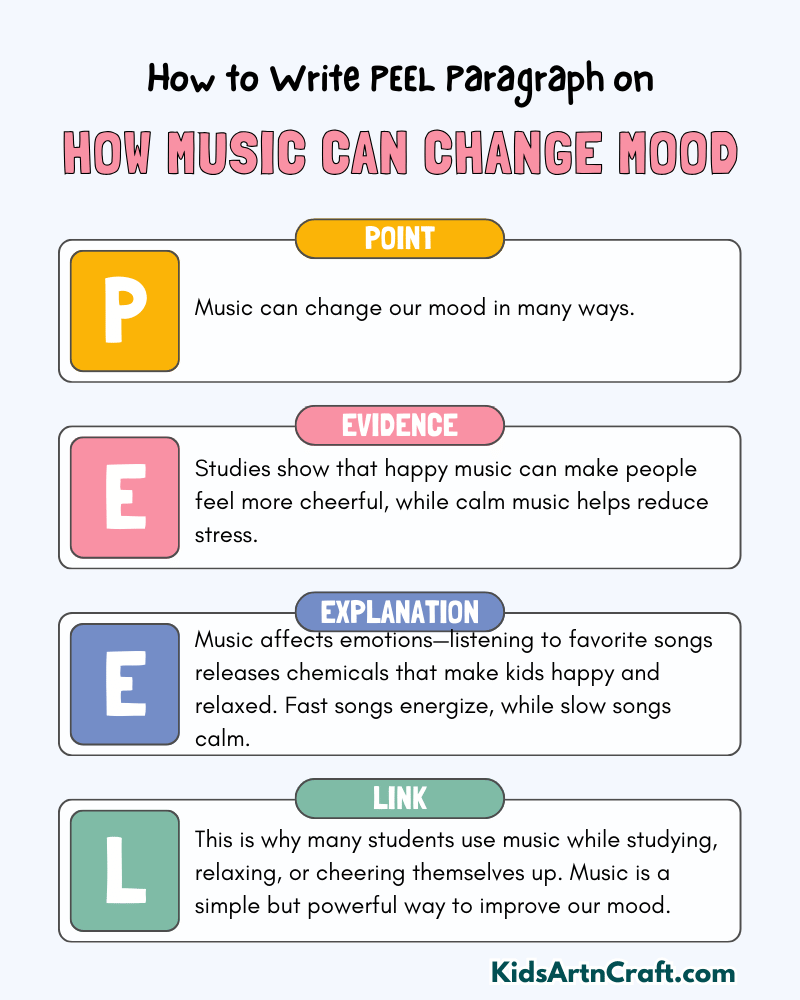
Point: Music can change our mood in many ways.
Evidence: Studies show that happy music can make people feel more cheerful, while calm music helps reduce stress.
Explanation: Music affects emotions—listening to favorite songs releases chemicals that make kids happy and relaxed. Fast songs energize, while slow songs calm.
Link: This is why many students use music while studying, relaxing, or cheering themselves up. Music is a simple but powerful way to improve our mood.
2. How Music Can Change Mood Paragraph Writing with TEEL Method
TEEL Method (Topic, Evidence, Explanation, Link)
Topic: Music has the ability to change the way we feel.
Evidence: For example, soft music can help kids feel relaxed after a long day, while upbeat songs can fill them with energy and joy.
Explanation: Different types of songs can make us feel happy, calm, excited, or even thoughtful.
Link: Because music affects our emotions so strongly, it is a great tool for kids to use whenever they want to feel better or stay focused.
3. How Music Can Change Mood Paragraph Writing with the TEXAS Method
TEXAS Method (Topic, Example, Explanation, Analysis, Summary/Significance)
Topic: Music can quickly change our mood.
Example: When kids listen to a fun and lively song, they may feel excited and motivated. On the other hand, gentle music can help them calm down after feeling upset.
Explanation: Songs with different rhythms and tones can make us feel cheerful, peaceful, or energized.
Analysis: This happens because music affects the brain and releases chemicals that control emotions.
Summary: Therefore, music is a helpful way for kids to manage and improve their mood every day.
4. How Music Can Change Mood Paragraph Writing with Hamburger Method
Hamburger Method (Top Bun, The Fillings, Bottom Bun)

Top Bun (Topic Sentence):
Music is a wonderful tool that can change how we feel.
The Fillings (Supporting Details):
Happy songs can make kids smile and feel energetic, while soft songs can help them relax when they feel tired or stressed. Music also helps the brain release chemicals that make us happier. Many kids listen to music while doing homework, resting, or playing because it makes them feel better.
Bottom Bun (Concluding Sentence):
Music is simple, fun, and a great way to quickly improve our mood.
Importance of Music
- Listening to music can quickly change how we feel and boost happiness. [Source: American Psychological Association]
- Fast, upbeat music makes people feel more active and energetic. [Source: Frontiers in Human Neuroscience]
- Slow music can calm the mind and reduce stress. [Source: National Institutes of Health (NIH)]
Additional Facts About Music
- Music releases dopamine, a chemical that makes us feel pleasure. [Source: Neuroscience Letters]
- Music can lower stress hormones and help people relax. [Source: Frontiers in Psychology]
- Certain types of music improve focus, learning, and memory. [Source: American Speech‑Language‑Hearing Association (ASHA)]
Hope you liked these paragraphs on ‘How Music Can Change Mood’. Don’t forget to join the Telegram group for FREE Printables.
Check this article for musical instruments flashcards – free printable worksheet.