Paragraph Writing
Paragraph on How Plants Help Reduce Pollution

Plants help reduce pollution by absorbing harmful gases from the air, trapping dust and smoke on their leaves, and cleaning water and soil, keeping the environment fresh and healthy. Improve your paragraph-writing skills by writing in four key styles—Expository, Persuasive, Descriptive, and Narrative—using structures like PEEL, TEEL, TEXAS, and the Hamburger Model
Read This Article in Other Languages
- पौधे प्रदूषण कम करने में कैसे मदद करते हैं पर अनुच्छेद (Hindi / हिंदी)
- Párrafo sobre cómo las plantas ayudan a reducir la contaminación (Spanish / Español)
- Paragraphe sur la façon dont les plantes aident à réduire la pollution (French / Français)
- Absatz über wie Pflanzen helfen, die Verschmutzung zu reduzieren (German / Deutsch)
- فقرة عن كيفية مساعدة النباتات في تقليل التلوث (Arabic / العربية)
- উদ্ভিদ কীভাবে দূষণ কমাতে সাহায্য করে তা নিয়ে অনুচ্ছেদ (Bengali / বাংলা)
- மரங்கள் மாசுபாட்டை குறைக்க எப்படி உதவுகின்றன என்பதற்கான பத்தி (Tamil / தமிழ்)
- మొక్కలు కాలుష్యాన్ని తగ్గించడంలో ఎలా సహాయపడతాయో పై పేరా (Telugu / తెలుగు)
- സസ്യങ്ങൾ മലിനീകരണം കുറയ്ക്കാൻ എങ്ങനെ സഹായിക്കുന്നു എന്ന പാരഗ്രാഫ് (Malayalam / മലയാളം)
- پودے آلودگی کم کرنے میں کس طرح مدد کرتے ہیں پر پیراگراف (Urdu / اردو)
- Parágrafo sobre como as plantas ajudam a reduzir a poluição (Portuguese / Português)
Translation Disclaimer: These links use Google Translate, an automated translation service. Translations may vary in accuracy and are provided for convenience only.
Different Styles of Paragraphs on ‘How Plants Help Reduce Pollution’
1. Expository Paragraph on How Plants Help Reduce Pollution (Explains with Facts)

Plants play an important role in reducing pollution and keeping the environment clean. Trees, shrubs, and grasses absorb harmful gases like carbon dioxide, sulfur dioxide, and nitrogen dioxide from the air. Leaves act like natural filters, trapping dust, smoke, and other pollutants, which helps improve air quality. Plants also prevent water pollution by reducing soil erosion; their roots hold the soil, stopping chemicals and dirt from entering rivers and lakes. Green spaces in cities help lower noise pollution by acting as sound barriers. Urban forests and parks can cool the air, reducing the need for energy-consuming air conditioners, which also lowers air pollution. Plants also absorb some heavy metals and toxins from the soil, cleaning the land naturally. By reducing air, water, and soil pollution, plants maintain a healthier environment for humans, animals, and all living beings. Planting and protecting more greenery is essential to keep our surroundings clean and safe.
2. Persuasive Paragraph on How Plants Help Reduce Pollution (Tries to Convince You)
We must plant and protect more greenery because plants help reduce pollution in many ways. Trees absorb harmful gases, trap dust, and make the air clean for us to breathe. Their roots prevent soil erosion, stopping chemicals and dirt from polluting rivers and lakes. Plants also reduce noise pollution by acting as natural sound barriers in busy areas. Urban parks and gardens lower temperatures, which decreases the need for electricity and reduces air pollution. Imagine cities without trees—air would be dirty, water polluted, and the land lifeless. By planting trees, shrubs, and flowers, we can fight pollution naturally and make our surroundings healthier. Everyone should take part in planting trees and caring for green spaces because it is a simple way to reduce pollution and protect the planet for future generations.
3. Descriptive Paragraph on How Plants Help Reduce Pollution (Paints a Picture with Words)
Plants help reduce pollution in beautiful and amazing ways. Tall trees line the streets, their green leaves catching dust, smoke, and harmful gases from vehicles. Flowers bloom in gardens, making the air smell fresh and clean. Bushes and shrubs near rivers stop soil and chemicals from flowing into the water, keeping it clear for fish and other creatures. In parks, grass and trees act like a cool, green shield, reducing noise from traffic. Forests look like a green blanket over the land, cleaning the air and keeping the soil healthy. Even in the city, plants make the surroundings fresh, cool, and less polluted. Seeing a lush green park or forest shows how nature can fight pollution and create a calm, healthy environment for humans and animals.
4. Narrative Paragraph on How Plants Help Reduce Pollution (Tells a Story)
Last week, I visited a city park and saw how plants help reduce pollution. Tall trees along the road trapped dust and smoke from cars, making the air fresh. Shrubs and grass near the pond prevented soil and chemicals from reaching the water, keeping it clean for fish. Birds sang happily in the trees, and the cool shade made walking comfortable, even on a hot day. The park felt peaceful, and I realized that plants do more than just look beautiful—they clean the air, soil, and water. Without them, the city would be noisy, dirty, and unhealthy. I promised myself that I would plant more trees at home and encourage my friends to care for plants so we can all live in a cleaner, safer environment.
‘How Plants Help Reduce Pollution’ Paragraphs in Different Structured Methods
1. How Plants Help Reduce Pollution Paragraph Writing with PEEL Method
PEEL Method (Point, Evidence, Explanation, Link)
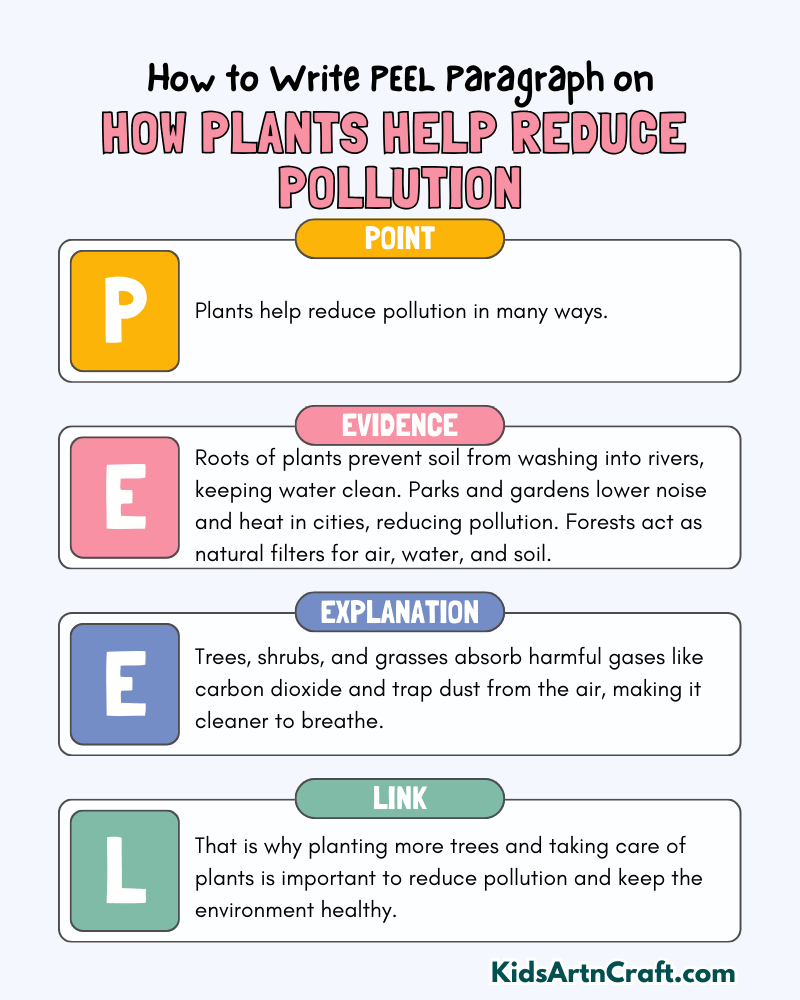

Point: Plants help reduce pollution in many ways.
Evidence: Roots of plants prevent soil from washing into rivers, keeping water clean. Parks and gardens lower noise and heat in cities, reducing pollution. Forests act as natural filters for air, water, and soil.
Explanation: Trees, shrubs, and grasses absorb harmful gases like carbon dioxide and trap dust from the air, making it cleaner to breathe.
Link: That is why planting more trees and taking care of plants is important to reduce pollution and keep the environment healthy.
2. How Plants Help Reduce Pollution Paragraph Writing with TEEL Method
TEEL Method (Topic, Evidence, Explanation, Link)
Topic: Plants are very important because they help reduce pollution.
Evidence: Trees and grass prevent soil erosion, stop chemicals from entering rivers, and reduce noise in busy areas.
Explanation: They clean the air by absorbing harmful gases and trap dust and smoke on their leaves.
Link: Taking care of plants and planting more greenery helps make the air, water, and land cleaner for everyone.
3. How Plants Help Reduce Pollution Paragraph Writing with TEXAS Method
TEXAS Method (Topic, Example, Explanation, Analysis, Summary/Significance)
Topic: Plants reduce pollution and keep our environment clean.
Example: Grass and shrubs prevent soil from entering rivers, keeping water clean for animals.
Explanation: Trees absorb carbon dioxide, and leaves trap dust and smoke from the air.
Analysis: Plants in cities lower noise and heat, improving the quality of life.
Summary: We should plant more trees and care for plants to fight pollution naturally.
4. How Plants Help Reduce Pollution Paragraph Writing with Hamburger Method
Hamburger Method (Top Bun, The Fillings, Bottom Bun)
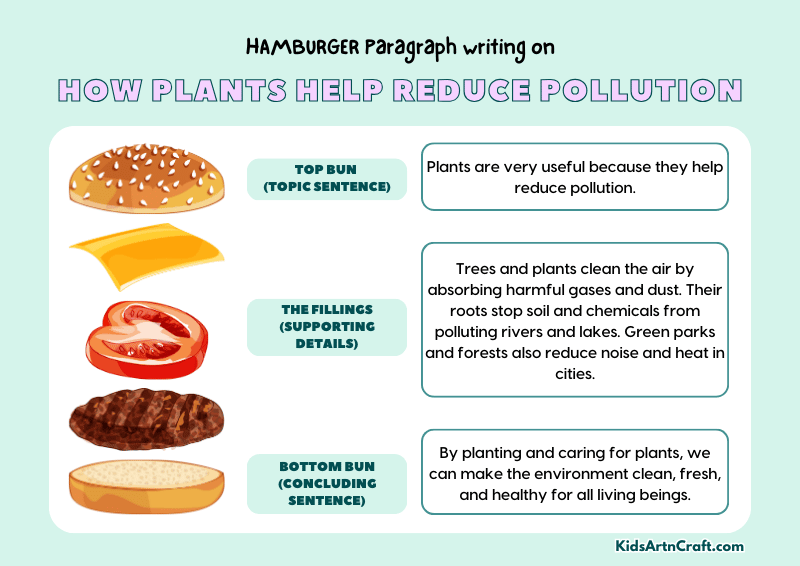

Top Bun (Topic Sentence):
Plants are very useful because they help reduce pollution.
The Fillings (Supporting Details):
Trees and plants clean the air by absorbing harmful gases and dust. Their roots stop soil and chemicals from polluting rivers and lakes. Green parks and forests also reduce noise and heat in cities.
Bottom Bun (Concluding Sentence):
By planting and caring for plants, we can make the environment clean, fresh, and healthy for all living beings.
Importance of Plants in Reducing Pollution
- Plants absorb carbon dioxide from the air and store it, helping lower greenhouse gases that cause climate change. [Source: Intergovernmental Panel on Climate Change]
- Plants and trees can remove air pollutants by trapping them on leaves and bark. [Source: U.S. EPA — Benefits of Trees & Vegetation]
Additional Facts About Plants and Pollution
- Vegetation helps manage rainwater and reduces polluted runoff entering rivers and lakes, improving water quality. [Source: Mississippi Watershed Management Organization]
- Plant roots and riparian buffers stabilize soil, preventing erosion and trapping soil‑bound pollutants. [Source: Wikipedia — Riparian buffer]
- Green infrastructure using plants and soil can reduce stormwater pollutants and protect ecosystems. [Source: NRDC — Green Infrastructure]
Hope you liked these paragraphs on ‘How Plants Help Reduce Pollution’. Don’t forget to join the Telegram group for FREE Printables.