Paragraph Writing
Paragraph on Ocean Pollution

Ocean pollution is a growing problem caused by plastic waste, chemicals, and oil spills. It harms sea animals, damages ecosystems, and threatens human life, making urgent action necessary. This lesson will guide you in writing paragraphs on “Ocean Pollution” using four major styles—Expository, Persuasive, Descriptive, and Narrative—and in organizing your ideas effectively using structures with PEEL, TEEL, TEXAS, and the Hamburger Model.
Most of our paragraphs are in 150 to 200 words. You can also find longer paragraphs (in 300 words) on ‘Ocean Pollution’ or essays on the same topic on the web.
Read This Article in Other Languages
- महासागर प्रदूषण पर अनुच्छेद (Hindi / हिंदी)
- Párrafo sobre la contaminación del océano (Spanish / Español)
- Paragraphe sur la pollution des océans (French / Français)
- Absatz über Ozeanverschmutzung (German / Deutsch)
- فقرة عن تلوث المحيط (Arabic / العربية)
- সমুদ্র দূষণ সম্পর্কে অনুচ্ছেদ (Bengali / বাংলা)
- மஹாசாகர மாசு பற்றி பத்தி (Tamil / தமிழ்)
- మహాసాగర కాలుష్యం గురించి పేరాగ్రాఫ్ (Telugu / తెలుగు)
- സമുദ്ര മലിനീകരണം സംബന്ധിച്ച പാരഗ്രാഫ് (Malayalam / മലയാളം)
- سمندر کے آلودگی پر پیراگراف (Urdu / اردو)
- Parágrafo sobre a poluição do oceano (Portuguese / Português)
Translation Disclaimer: These links use Google Translate, an automated translation service. Translations may vary in accuracy and are provided for convenience only.
Different Styles of Paragraphs on ‘Ocean Pollution’
1. Expository Paragraph on Ocean Pollution (Explains with Facts)
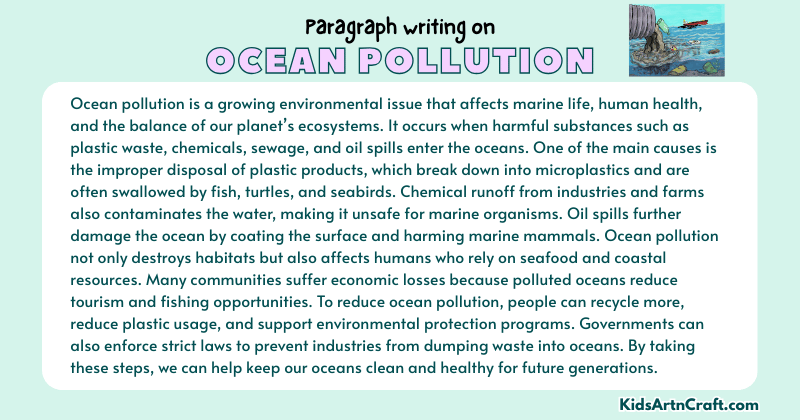

Ocean pollution is a growing environmental issue that affects marine life, human health, and the balance of our planet’s ecosystems. It occurs when harmful substances such as plastic waste, chemicals, sewage, and oil spills enter the oceans. One of the main causes is the improper disposal of plastic products, which break down into microplastics and are often swallowed by fish, turtles, and seabirds. Chemical runoff from industries and farms also contaminates the water, making it unsafe for marine organisms. Oil spills further damage the ocean by coating the surface and harming marine mammals. Ocean pollution not only destroys habitats but also affects humans who rely on seafood and coastal resources. Many communities suffer economic losses because polluted oceans reduce tourism and fishing opportunities. To reduce ocean pollution, people can recycle more, reduce plastic usage, and support environmental protection programs. Governments can also enforce strict laws to prevent industries from dumping waste into oceans. By taking these steps, we can help keep our oceans clean and healthy for future generations.
2. Persuasive Paragraph on Ocean Pollution (Tries to Convince You)
Ocean pollution is one of the most urgent problems we face today, and we must take immediate action to stop it. Every year, millions of tons of plastic and toxic waste enter our oceans, threatening marine animals and harming people who depend on ocean resources. If we continue to ignore this issue, many species could become extinct, and our oceans may lose their natural beauty and usefulness. You can help make a difference by reducing your use of single-use plastics, supporting beach clean-ups, and choosing eco-friendly products. Governments must also enforce stricter rules to stop factories from dumping chemicals and untreated waste into oceans. By raising awareness and encouraging others to act responsibly, we can create a powerful movement that protects our oceans. The responsibility lies with all of us—students, parents, workers, and leaders. Together, we can reduce pollution, save marine life, and ensure clean and safe oceans for future generations. Let us not wait until the damage becomes irreversible. Act now and be a part of the solution.
3. Descriptive Paragraph on Ocean Pollution (Paints a Picture with Words)
The beauty of the ocean, with its shimmering blue waters and graceful waves, hides a growing threat beneath the surface: pollution. When you look closely, you may notice bits of plastic floating near the shore, tangled fishing nets drifting in the current, or oil slicks spreading across the water like dark stains. Marine animals suffer in this polluted environment—turtles choking on plastic bags, seabirds caught in nets, and colorful fish swimming through contaminated water. The once vibrant coral reefs are slowly turning pale because chemicals and waste disturb their delicate balance. Even the fresh smell of the sea is sometimes replaced by the unpleasant odor of rotting waste. The ocean, which should be a place of life and beauty, is becoming a dumping ground for human activities. Each wave that reaches the shore seems to carry a reminder of how carelessly we treat our planet. Yet, with collective effort, this scene can change. Clean shores, clear waters, and thriving marine life can return if we commit to protecting our oceans.
4. Narrative Paragraph on Ocean Pollution (Tells a Story)
Last summer, I visited a beach I had loved since childhood, hoping to relive the memories of clear waves and soft sand. But as I walked along the shore, I was shocked by how much it had changed. Plastic bottles, food wrappers, and broken fishing nets were scattered everywhere. I watched a small crab struggle to move around a tangled piece of plastic, and my heart sank. A fisherman nearby told me that the fish population had decreased because of polluted waters. Later, when I stepped into the ocean, I felt pieces of debris brushing against my legs—something I had never experienced before. That moment made me realize how serious ocean pollution had become. Instead of feeling peaceful, I felt worried for the future of this beautiful place. I decided to join a beach clean-up event the next day, and many others joined too. Working together, we cleaned much of the shore, giving me hope that change is possible. That visit taught me that protecting the ocean is not just important—it is our shared responsibility.
‘Ocean Pollution‘ Paragraphs in Different Structured Methods
1. Ocean Pollution Paragraph Writing with PEEL Method
PEEL Method (Point, Evidence, Explanation, Link)
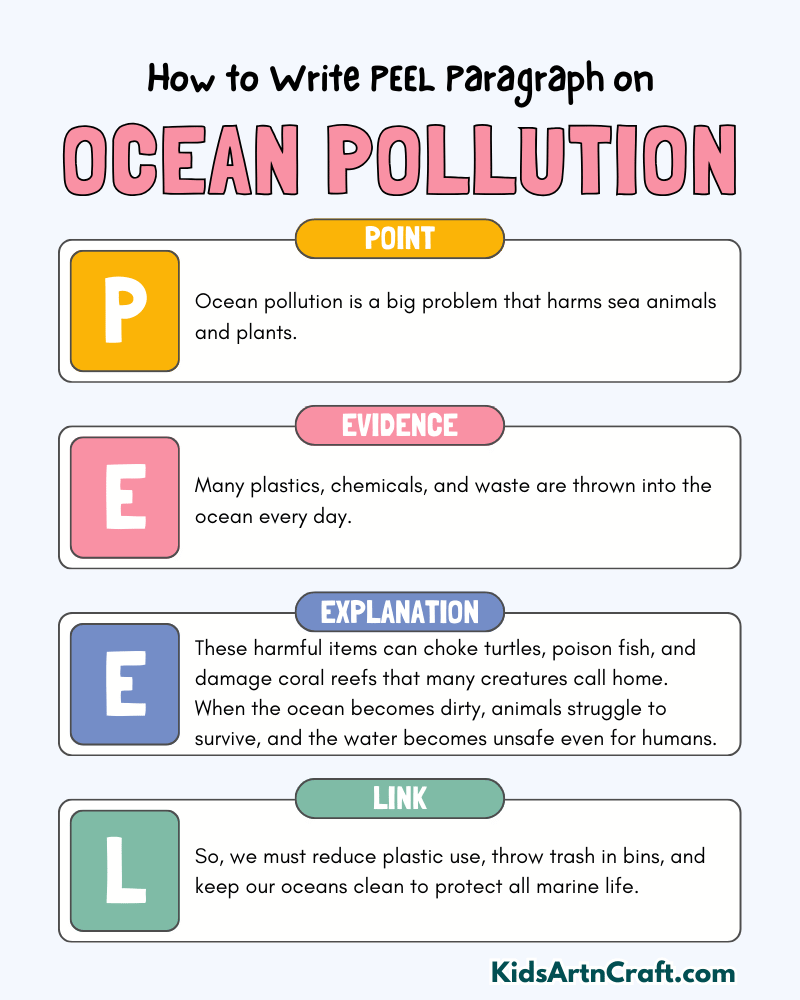

Point: Ocean pollution is a big problem that harms sea animals and plants.
Evidence: Many plastics, chemicals, and waste are thrown into the ocean every day.
Explanation: These harmful items can choke turtles, poison fish, and damage coral reefs that many creatures call home. When the ocean becomes dirty, animals struggle to survive, and the water becomes unsafe even for humans.
Link: So, we must reduce plastic use, throw trash in bins, and keep our oceans clean to protect all marine life.
2. Ocean Pollution Paragraph Writing with TEEL Method
TEEL Method (Topic, Evidence, Explanation, Link)
Topic: Ocean pollution is damaging our beautiful oceans.
Evidence: For example, plastic bags often look like jellyfish, and turtles mistakenly eat them, which can harm or even kill them.
Explanation: Trash, oil spills, and chemicals from factories are entering the sea, making the water unsafe.
Link: That is why everyone should be careful about waste and help protect the ocean from further pollution.
3. Ocean Pollution Paragraph Writing with the TEXAS Method
TEXAS Method (Topic, Example, Explanation, Analysis, Summary/Significance)
Topic: Ocean pollution is a serious issue that affects all sea life.
Example: A single plastic bottle can float for years, hurting fish or birds that get stuck in it.
Explanation: When people throw garbage into rivers or beaches, it eventually reaches the ocean.
Analysis: This shows that even small pieces of trash can cause big problems for the ocean and the creatures living in it.
Summary: To keep the ocean healthy, we must stop littering and help clean our beaches.
4. Ocean Pollution Paragraph Writing with Hamburger Method
Hamburger Method (Top Bun, The Fillings, Bottom Bun)
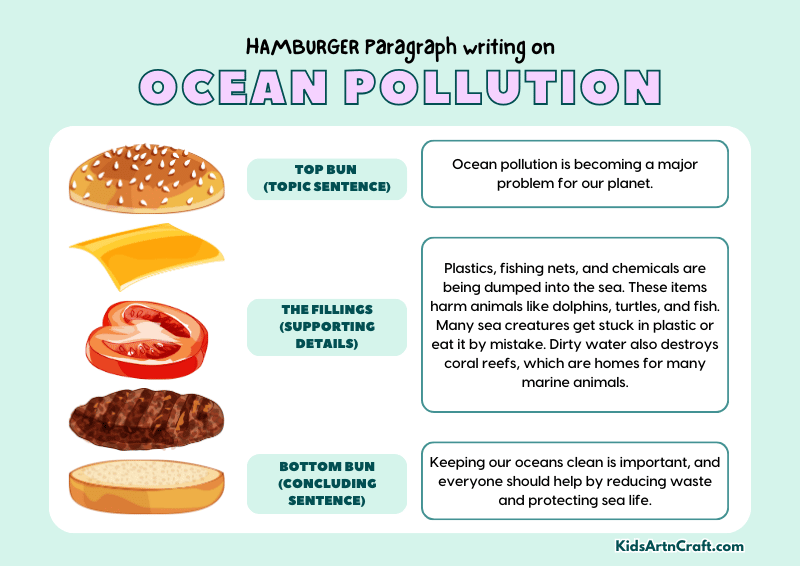

Top Bun (Topic Sentence):
Ocean pollution is becoming a major problem for our planet.
The Fillings (Supporting Details):
Plastics, fishing nets, and chemicals are being dumped into the sea. These items harm animals like dolphins, turtles, and fish. Many sea creatures get stuck in plastic or eat it by mistake. Dirty water also destroys coral reefs, which are homes for many marine animals.
Bottom Bun (Concluding Sentence):
Keeping our oceans clean is important, and everyone should help by reducing waste and protecting sea life.
Importance of Ocean Pollution Awareness
- Most ocean pollution comes from land, including trash, chemicals, and runoff. [Source: NOAA]
- Pollution harms marine life like fish, coral reefs, and seabirds. [Source: Institute for Environmental Research and Education]
- Plastic waste can injure or kill sea animals when swallowed or tangled. [Source: Institute for Environmental Research and Education]
Additional Facts About Ocean Pollution
- Polluted oceans can contaminate seafood, affecting human health. [Source: Institute for Environmental Research and Education]
- Dirty coastal waters can spread harmful bacteria and cause illnesses. [Source: Environmental Literacy Council]
- Healthy oceans help control climate, but pollution weakens this role. [Source: EVS Institute]
Hope you liked these paragraphs on ‘Ocean Pollution’. Don’t forget to join the Telegram group for FREE Printables.
Check this article to create ocean animal egg carton crafts.