


Paragraph Writing
Paragraph on Octopus


An octopus is a smart sea animal with eight arms, a soft body, and suction cups, known for changing color, escaping predators, and living on the ocean floor. Strengthen your writing skills by practicing clear and organized paragraphs on ‘Octopus’ through four styles—Expository, Persuasive, Descriptive, and Narrative—using structures with PEEL, TEEL, TEXAS, and the Hamburger Model.
Read This Article in Other Languages
- ऑक्टोपस पर अनुच्छेद (Hindi / हिंदी)
- Párrafo sobre el pulpo (Spanish / Español)
- Paragraphe sur la pieuvre (French / Français)
- Absatz über den Oktopus (German / Deutsch)
- فقرة عن الأخطبوط (Arabic / العربية)
- অক্টোপাস সম্পর্কে অনুচ্ছেদ (Bengali / বাংলা)
- ஆக்டோபஸ் பற்றிய பத்தி (Tamil / தமிழ்)
- ఆక్టోపస్ పై పేరాగ్రాఫ్ (Telugu / తెలుగు)
- ഓക്ടോപസിനെക്കുറിച്ചുള്ള പാരഗ്രാഫ് (Malayalam / മലയാളം)
- آکٹوپس پر پیراگراف (Urdu / اردو)
- Parágrafo sobre o polvo (Portuguese / Português)
Translation Disclaimer: These links use Google Translate, an automated translation service. Translations may vary in accuracy and are provided for convenience only.
Different Styles of Paragraphs on ‘Octopus’
1. Expository Paragraph on Octopus (Explains with Facts)
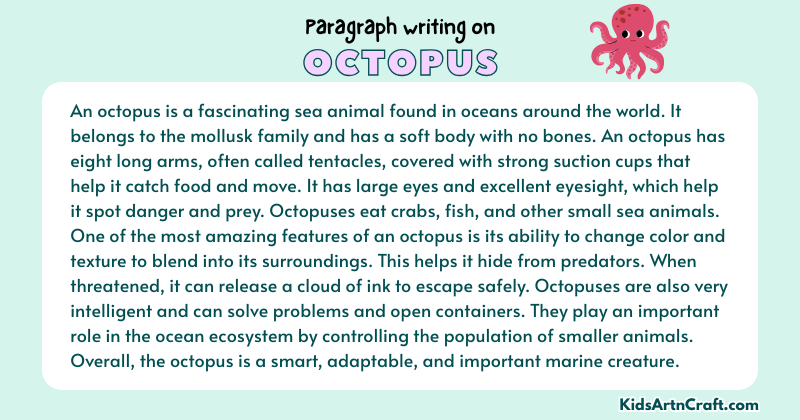
An octopus is a fascinating sea animal found in oceans around the world. It belongs to the mollusk family and has a soft body with no bones. An octopus has eight long arms, often called tentacles, covered with strong suction cups that help it catch food and move. It has large eyes and excellent eyesight, which help it spot danger and prey. Octopuses eat crabs, fish, and other small sea animals. One of the most amazing features of an octopus is its ability to change color and texture to blend into its surroundings. This helps it hide from predators. When threatened, it can release a cloud of ink to escape safely. Octopuses are also very intelligent and can solve problems and open containers. They play an important role in the ocean ecosystem by controlling the population of smaller animals. Overall, the octopus is a smart, adaptable, and important marine creature.
2. Persuasive Paragraph on Octopus (Tries to Convince You)
Octopuses should be protected because they are intelligent and valuable members of ocean life. Many people do not realize how smart octopuses are. They can solve puzzles, remember solutions, and even escape from small spaces. Unfortunately, pollution, plastic waste, and overfishing are putting octopuses in danger. When oceans become dirty, octopuses lose their homes and food sources. People should take responsibility by reducing plastic use and keeping the oceans clean. Governments should also create marine protected areas where octopuses can live safely. Schools can teach children about octopuses to help them understand why these animals matter. Protecting octopuses also helps protect the balance of the ocean ecosystem. When octopuses disappear, the number of smaller sea animals can increase too much and disturb marine life. By caring for octopuses and their habitats, we help keep the oceans healthy. Saving octopuses means saving the future of marine life.
3. Descriptive Paragraph on Octopus (Paints a Picture with Words)
The octopus glides smoothly through the deep blue water with its eight long arms flowing like ribbons. Its soft body changes color from brown to gray as it moves across rocks and coral. Tiny suction cups line each arm, gripping the surface as it crawls along the ocean floor. The octopus’s large, curious eyes watch every movement around it. When danger approaches, it suddenly releases a dark cloud of ink and disappears into a narrow crack. Its skin can become rough like stone or smooth like sand, helping it hide perfectly. Sometimes, it curls its arms gently while resting inside a rocky shelter. The octopus moves quietly and gracefully, showing both strength and beauty. Watching an octopus change shape and color feels magical. Its mysterious appearance and clever movements make it one of the most amazing creatures in the ocean.
4. Narrative Paragraph on Octopus (Tells a Story)
During a school trip to an aquarium, I saw an octopus for the first time. At first, it was hiding inside a small cave, and I could barely see it. Suddenly, one arm stretched out, followed by the others, and the octopus slowly came into view. It moved carefully across the glass, its suction cups sticking and releasing with ease. I watched in surprise as it changed color to match the rocks around it. A few moments later, it squirted ink and quickly disappeared behind a coral structure. The guide explained how smart octopuses are and how they protect themselves in the wild. That experience made me feel amazed and curious. I realized that octopuses are not scary but intelligent and gentle creatures. Since that day, I have admired octopuses and learned why protecting ocean animals is so important.
‘Octopus’ Paragraphs in Different Structured Methods
1. Octopus Paragraph Writing with PEEL Method
PEEL Method (Point, Evidence, Explanation, Link)
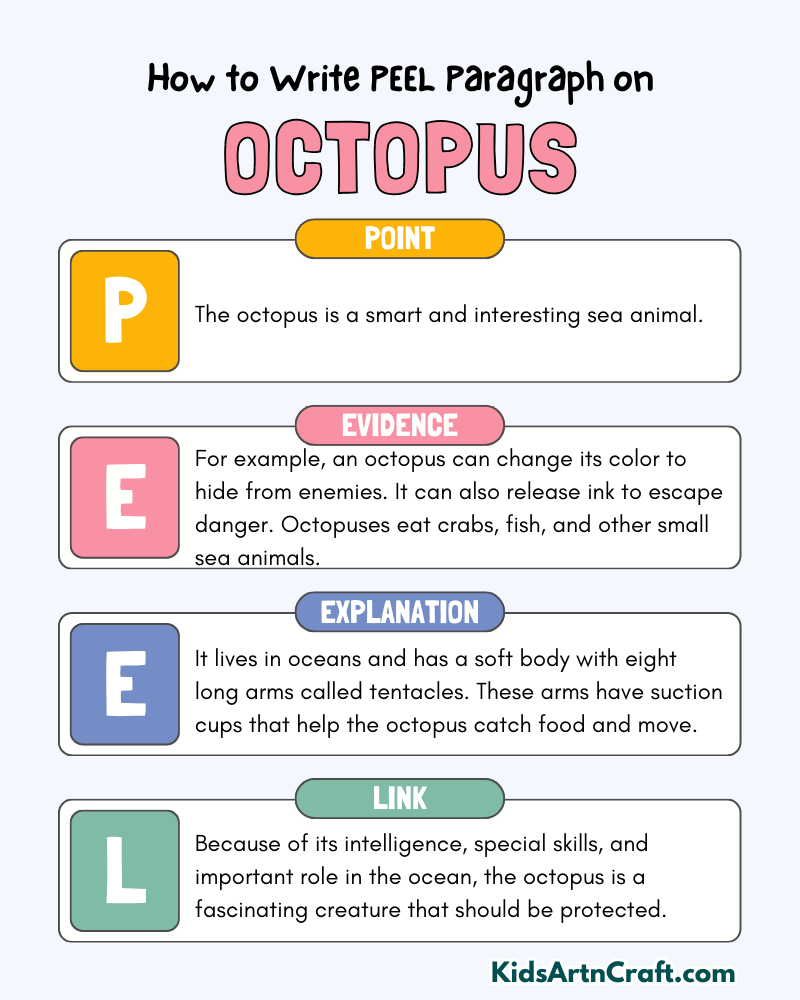
Point: The octopus is a smart and interesting sea animal.
Evidence: For example, an octopus can change its color to hide from enemies. It can also release ink to escape danger. Octopuses eat crabs, fish, and other small sea animals.
Explanation: It lives in oceans and has a soft body with eight long arms called tentacles. These arms have suction cups that help the octopus catch food and move.
Link: Because of its intelligence, special skills, and important role in the ocean, the octopus is a fascinating creature that should be protected.
2. Octopus Paragraph Writing with TEEL Method
TEEL Method (Topic, Evidence, Explanation, Link)
Topic: The octopus is one of the most amazing animals in the ocean.
Evidence: An octopus can change color to blend into its surroundings and squirt ink when it feels scared. It eats crabs and small fish and hides in rocks or coral.
Explanation: It has eight arms, no bones, and very good eyesight.
Link: These abilities make the octopus clever, unique, and important to ocean life.
3. Octopus Paragraph Writing with TEXAS Method
TEXAS Method (Topic, Example, Explanation, Analysis, Summary/Significance)
Topic: Octopuses are intelligent sea creatures.
Example: Octopuses change color to hide, use suction cups to grab food, and release ink to escape enemies.
Explanation: They live in oceans and have soft bodies with eight arms.
Analysis: These skills help octopuses survive and stay safe in the ocean.
Summary: Overall, octopuses are smart, interesting, and important animals.
4. Octopus Paragraph Writing with Hamburger Method
Hamburger Method (Top Bun, The Fillings, Bottom Bun)
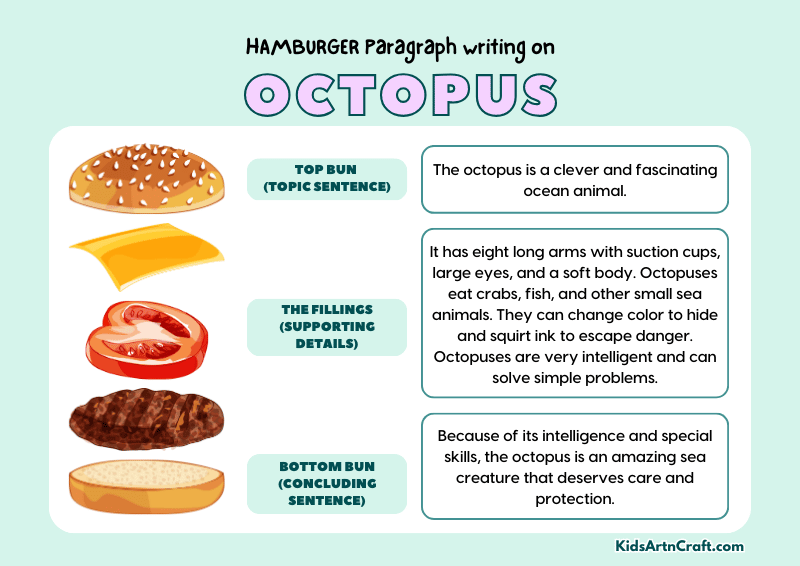
Top Bun (Topic Sentence):
The octopus is a clever and fascinating ocean animal.
The Fillings (Supporting Details):
It has eight long arms with suction cups, large eyes, and a soft body. Octopuses eat crabs, fish, and other small sea animals. They can change color to hide and squirt ink to escape danger. Octopuses are very intelligent and can solve simple problems.
Bottom Bun (Concluding Sentence):
Because of its intelligence and special skills, the octopus is an amazing sea creature that deserves care and protection.
Importance of Octopus
- Octopuses are highly intelligent marine animals known for problem-solving and learning abilities. [Source: Smithsonian Ocean]
- They have a unique body design with three hearts and a complex nervous system. [Source: National Geographic Education]
Additional Facts About Octopus
- Octopuses can change color, texture, and shape to camouflage or defend themselves. [Source: National Geographic]
- They live in oceans worldwide and can squeeze into very small spaces due to their soft bodies. [Source: Smithsonian Ocean]
- Octopuses can regrow lost arms, helping them survive predator attacks. [Source: Encyclopaedia Britannica]
Hope you liked these paragraphs on ‘Octopus’. Don’t forget to join the Telegram group for FREE Printables.