Paragraph Writing
Paragraph on School Cafeteria Food — Good or Bad?

School cafeteria food can be good or bad, depending on what is served. Healthy, fresh meals help students stay strong and focused, while unhealthy food can affect energy and learning. Enhance your paragraph-writing abilities with “School Cafeteria Food — Good or Bad?” in four styles—Expository, Persuasive, Descriptive, and Narrative—while clearly structuring your ideas using structures with PEEL, TEEL, TEXAS, and the Hamburger Model.
Read This Article in Other Languages
- स्कूल कैफेटेरिया के भोजन पर अनुच्छेद (Hindi / हिंदी)
- Párrafo sobre la comida de la cafetería escolar (Spanish / Español)
- Paragraphe sur la nourriture de la cafétéria scolaire (French / Français)
- Absatz über das Essen in der Schulkantine (German / Deutsch)
- فقرة عن طعام مقصف المدرسة (Arabic / العربية)
- স্কুল ক্যাফেটেরিয়ার খাবার সম্পর্কে অনুচ্ছেদ (Bengali / বাংলা)
- சாதாரண மத்தியில் பள்ளி காஃபிடேரியா உணவு பற்றி பத்தி (Tamil / தமிழ்)
- സ്കൂൾ ക്യാഫ്റ്റീരിയ ഭക്ഷണത്തെക്കുറിച്ചുള്ള പേരാ (Telugu / తెలుగు)
- സ്കൂൾ ക്യാഫെറ്റീരിയ ഭക്ഷണത്തെക്കുറിച്ചുള്ള പാരഗ്രാഫ് (Malayalam / മലയാളം)
- اسکول کیفیتیریا کے کھانے پر پیراگراف (Urdu / اردو)
- Parágrafo sobre a comida da cafeteria escolar (Portuguese / Português)
Translation Disclaimer: These links use Google Translate, an automated translation service. Translations may vary in accuracy and are provided for convenience only.
Different Styles of Paragraphs on ‘School Cafeteria Food — Good or Bad?’
1. Expository Paragraph on School Cafeteria Food — Good or Bad? (Explains with Facts)
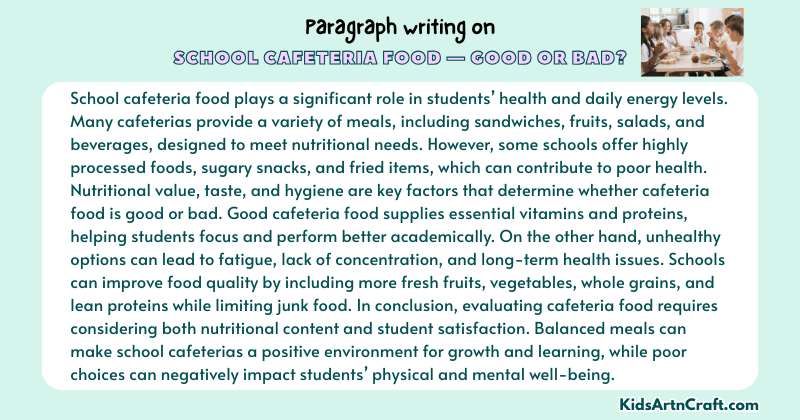

School cafeteria food plays a significant role in students’ health and daily energy levels. Many cafeterias provide a variety of meals, including sandwiches, fruits, salads, and beverages, designed to meet nutritional needs. However, some schools offer highly processed foods, sugary snacks, and fried items, which can contribute to poor health. Nutritional value, taste, and hygiene are key factors that determine whether cafeteria food is good or bad. Good cafeteria food supplies essential vitamins and proteins, helping students focus and perform better academically. On the other hand, unhealthy options can lead to fatigue, lack of concentration, and long-term health issues. Schools can improve food quality by including more fresh fruits, vegetables, whole grains, and lean proteins while limiting junk food. In conclusion, evaluating cafeteria food requires considering both nutritional content and student satisfaction. Balanced meals can make school cafeterias a positive environment for growth and learning, while poor choices can negatively impact students’ physical and mental well-being.
2. Persuasive Paragraph on School Cafeteria Food — Good or Bad? (Tries to Convince You)
School cafeterias must provide healthy food because students’ well-being and academic success depend on proper nutrition. Unhealthy meals, such as fried snacks and sugary drinks, may be tasty but harm children’s growth and energy levels. Imagine students trying to focus on lessons after eating a greasy burger—they often feel tired or distracted. Instead, cafeterias should serve balanced meals with fruits, vegetables, and whole grains to improve concentration, strength, and overall health. Parents and school authorities should demand nutritious options and limit junk food in schools. Good cafeteria food not only supports physical health but also teaches children lifelong healthy eating habits. Every student deserves meals that energize their minds and bodies. Therefore, schools have a responsibility to prioritize nutrition over convenience or cost. By making healthy cafeteria food the standard, we can ensure that children are well-fed, alert, and ready to succeed in their studies and daily activities.
3. Descriptive Paragraph on School Cafeteria Food — Good or Bad? (Paints a Picture with Words)
Walking into the school cafeteria, the smell of freshly baked bread and warm soup greets students, creating a cozy and inviting atmosphere. The colorful trays display a variety of meals: crisp salads, juicy fruits, golden fries, and steaming pasta dishes. Some students eagerly reach for their favorite items, like chocolate muffins or cheesy pizza slices, while others prefer the fresh vegetable options. The clatter of trays, chatter of friends, and the occasional laughter fill the room, making lunchtime lively and enjoyable. The taste varies from sweet and tangy fruit to salty, fried snacks, leaving students with mixed opinions about the food. The cafeteria walls, decorated with colorful posters about nutrition, remind students to make healthy choices. Though some meals are more appealing than others, the overall environment encourages students to enjoy their lunch break and recharge for afternoon classes.
4. Narrative Paragraph on School Cafeteria Food — Good or Bad? (Tells a Story)
Last Monday, I walked into the school cafeteria feeling very hungry. The trays were full of different foods—crispy fries, fresh sandwiches, and colorful fruits. I chose a sandwich and an apple, while my friend went for a burger and soda. As we ate, I noticed some students complaining about the taste of the food, while others were happily finishing every bite. By the time lunch ended, I felt full and energized, ready for my next class. That day made me realize that cafeteria food could be both good and bad. The fresh fruit and sandwich gave me energy, but some of the fried snacks looked tempting yet unhealthy. After that, I decided to make smarter choices and pick meals that help me stay active and focused throughout the day. Lunchtime became not just about eating but about learning to eat wisely.
‘School Cafeteria Food — Good or Bad?’ Paragraphs in Different Structured Methods
1. School Cafeteria Food — Good or Bad? Paragraph Writing with PEEL Method
PEEL Method (Point, Evidence, Explanation, Link)
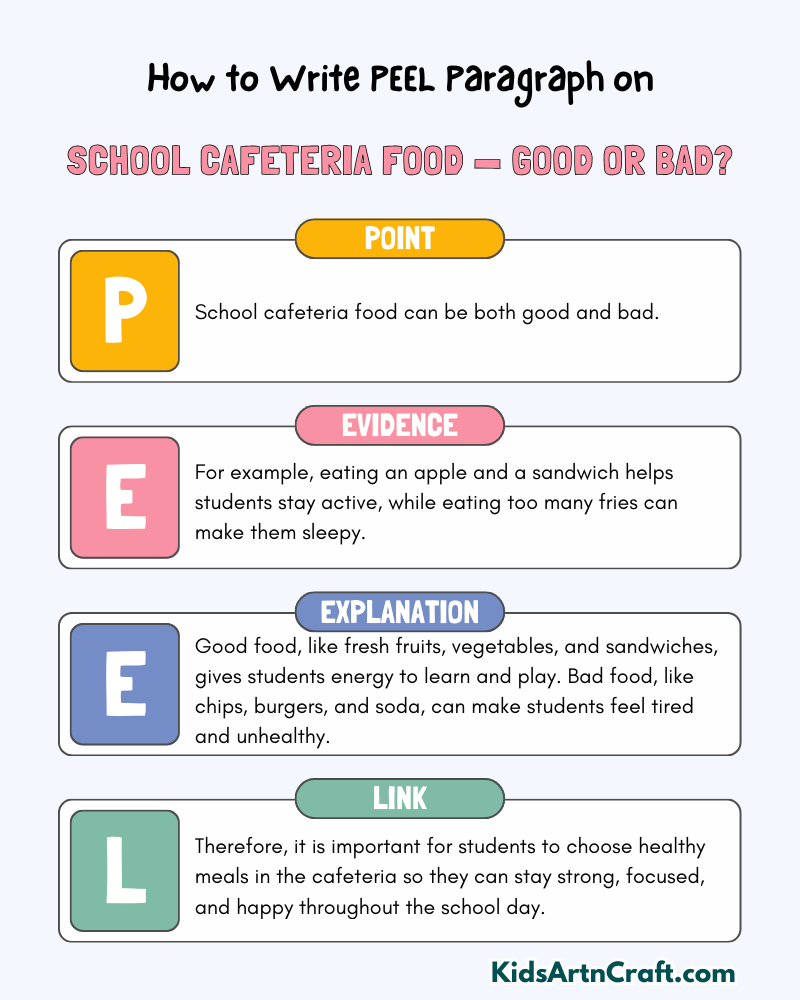

Point: School cafeteria food can be both good and bad.
Evidence: For example, eating an apple and a sandwich helps students stay active, while eating too many fries can make them sleepy.
Explanation: Good food, like fresh fruits, vegetables, and sandwiches, gives students energy to learn and play. Bad food, like chips, burgers, and soda, can make students feel tired and unhealthy.
Link: Therefore, students need to choose healthy meals in the cafeteria so they can stay strong, focused, and happy throughout the school day.
2. School Cafeteria Food — Good or Bad? Paragraph Writing with TEEL Method
TEEL Method (Topic, Evidence, Explanation, Link)
Topic: Cafeteria food can affect how students feel at school.
Evidence: Many schools now offer fruits, salads, and sandwiches, which help students learn better. Junk food like chips and candy can slow them down.
Explanation: Healthy meals give energy, help with concentration, and keep students strong. Unhealthy meals can cause tiredness and stomach aches.
Link: Choosing good food in the cafeteria is important for students’ health and learning.
3. School Cafeteria Food — Good or Bad? Paragraph Writing with the TEXAS Method
TEXAS Method (Topic, Example, Explanation, Analysis, Summary/Significance)
Topic: School cafeteria food is important for students’ health.
Example: For instance, a salad with fruit gives vitamins, while too many fries makes students sleepy.
Explanation: Eating healthy food like fruits, vegetables, and sandwiches makes students strong and full of energy.
Analysis: Healthy food helps students concentrate in class and enjoy school activities.
Summary Sentence: Choosing good cafeteria food keeps students healthy, happy, and ready to learn.
4. School Cafeteria Food — Good or Bad? Paragraph Writing with Hamburger Method
Hamburger Method (Top Bun, The Fillings, Bottom Bun)
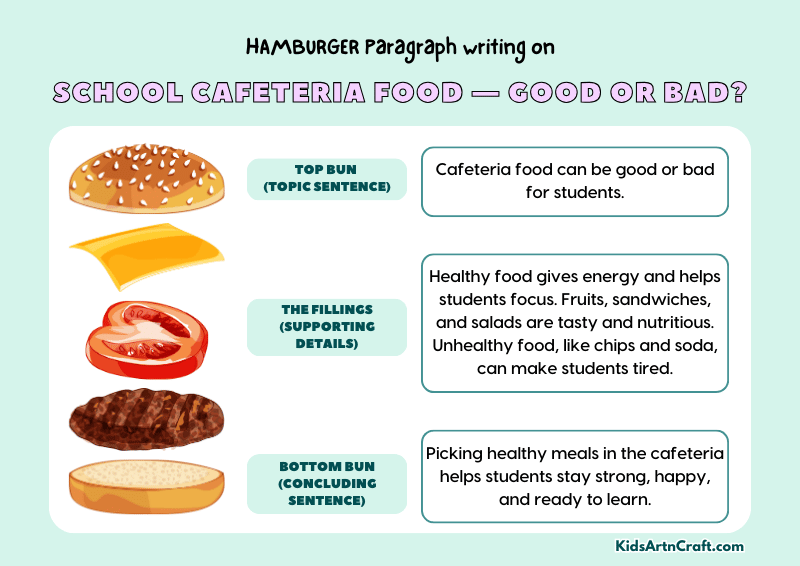

Top Bun (Topic Sentence):
Cafeteria food can be good or bad for students.
The Fillings (Supporting Details):
Healthy food gives energy and helps students focus. Fruits, sandwiches, and salads are tasty and nutritious. Unhealthy food, like chips and soda, can make students tired.
Bottom Bun (Concluding Sentence):
Picking healthy meals in the cafeteria helps students stay strong, happy, and ready to learn.
Importance of School Cafeteria Food
- School meals help children get important nutrients like fruits, vegetables, and calcium. [Source: PubMed]
- Healthy cafeteria food supports better learning and focus at school. [Source: Brookings]
Additional Facts of School Cafeteria Food
- School meals have become healthier with more whole grains, fruits, and vegetables. [Source: MDPI]
- Eating school meals helps children maintain a balanced diet every day. [Source: MDPI]
- School breakfast and lunch programs reduce hunger, especially for low-income children. [Source: FRAC]
- Nutrition rules for school meals follow scientific guidelines for children’s health. [Source: CSPI]
Hope you liked these paragraphs on ‘School Cafeteria Food — Good or Bad?’. Don’t forget to join the Telegram group for FREE Printables.