Paragraph Writing
Paragraph on Social Media Addiction

Social media addiction affects many people, especially students. Spending too much time online can reduce study time, harm health, and limit real-life interactions. Using social media wisely is important for balance and well-being. This lesson focuses on writing paragraphs about the “Social Media Addiction” in four styles—Expository, Persuasive, Descriptive, and Narrative—and shows how to structure your ideas using PEEL, TEEL, TEXAS, and the Hamburger Model.
Different Styles of Paragraphs on ‘Social Media Addiction’
Read This Article in Other Languages
- सोशल मीडिया की लत पर अनुच्छेद (Hindi / हिंदी)
- Párrafo sobre la adicción a las redes sociales (Spanish / Español)
- Paragraphe sur l’addiction aux réseaux sociaux (French / Français)
- Absatz über Social-Media-Sucht (German / Deutsch)
- فقرة عن إدمان وسائل التواصل الاجتماعي (Arabic / العربية)
- সোশ্যাল মিডিয়া আসক্তি সম্পর্কে অনুচ্ছেদ (Bengali / বাংলা)
- சமூக ஊடக அடிமை பற்றிய பத்தி (Tamil / தமிழ்)
- సోషల్ మీడియా వ్యసనం పై పేరా (Telugu / తెలుగు)
- സോഷ്യൽ മീഡിയ ഉപയോഗത്തെക്കുറിച്ചുള്ള ആശ്രയം പാരഗ്രാഫ് (Malayalam / മലയാളം)
- سوشل میڈیا کی لت پر پیراگراف (Urdu / اردو)
- Parágrafo sobre vício em redes sociais (Portuguese / Português)
Translation Disclaimer: These links use Google Translate, an automated translation service. Translations may vary in accuracy and are provided for convenience only.
1. Expository Paragraph on Social Media Addiction (Explains with Facts)

Social media addiction is a growing problem in today’s digital world. Many people, especially teenagers, spend hours scrolling through platforms like Instagram, Facebook, and TikTok every day. This addiction can affect mental health, leading to stress, anxiety, and depression. It can also reduce productivity, as students and employees may lose focus on their studies or work while constantly checking notifications. Social media addiction can impact sleep patterns too, because people often stay awake late at night using their devices. While social media can be useful for connecting with friends and sharing information, excessive use creates negative consequences. Experts suggest setting limits on daily screen time, taking breaks from social media, and engaging in offline activities like reading, sports, or spending time with family. Understanding the effects of this addiction is important, as it helps people develop healthier habits. By maintaining a balance between online and offline life, individuals can enjoy social media without letting it control their time or affect their mental well-being.
2. Persuasive Paragraph on Social Media Addiction (Tries to Convince You)
Social media addiction is harming our lives, and we must take action to stop it. Spending too much time on social media leads to wasted hours, poor concentration, and even mental health problems like anxiety and depression. Imagine a student who checks Instagram every few minutes instead of studying; their grades suffer, and they feel stressed. Parents and teachers should encourage children to limit screen time and participate in outdoor activities, hobbies, or family time. People should also consider digital detoxes, where they avoid social media for a certain period to regain focus and mental peace. By controlling social media usage, we can prevent it from taking over our lives. Everyone must realise that social media is a tool, not a necessity, and excessive use only brings harm. If we make conscious choices, we can enjoy social media’s benefits without falling into its addictive trap. It’s time to act now and save ourselves from the negative impacts of social media addiction.
3. Descriptive Paragraph on Social Media Addiction (Paints a Picture with Words)
Imagine a teenager sitting in a dimly lit room, staring at the glowing screen of their phone. Their eyes are tired, and their fingers swipe endlessly across Instagram, TikTok, and Facebook. The room is quiet except for the faint tapping of notifications. Hours pass, unnoticed, as the social media feed scrolls endlessly, full of posts, videos, and messages. Outside, the sun sets, but the teen remains glued to the screen, missing dinner and sleep. Their mood changes with every notification—joy when someone likes a post, sadness when ignored. Social media dominates their life, creating a cycle of dependency. The constant noise of alerts fills their mind, while real-life interactions fade away. This addiction is not just about using a phone; it is about the invisible hold that social media has over thoughts, time, and emotions. The room feels small, lonely, and endless, reflecting the world of someone trapped in social media addiction.
4. Narrative Paragraph on Social Media Addiction (Tells a Story)
Last year, I realized I was spending too much time on social media. Every morning, I checked my phone before getting out of bed, and every night, I stayed awake scrolling through feeds. I noticed my homework was delayed, I was sleeping less, and I felt anxious when I couldn’t check notifications. One day, I decided to change. I put my phone aside for a few hours and went outside to play football with friends. At first, it felt strange, but soon I felt happier, more relaxed, and focused. I started reading books, talking more with my family, and even studying better. Slowly, I learned to balance social media use and real-life activities. Now, I still enjoy my favourite apps, but I control my screen time. That experience taught me how addictive social media can be and how important it is to use it wisely.
‘Social Media Addiction‘ Paragraphs in Different Structured Methods
1. Social Media Addiction Paragraph Writing with PEEL Method
PEEL Method (Point, Evidence, Explanation, Link)
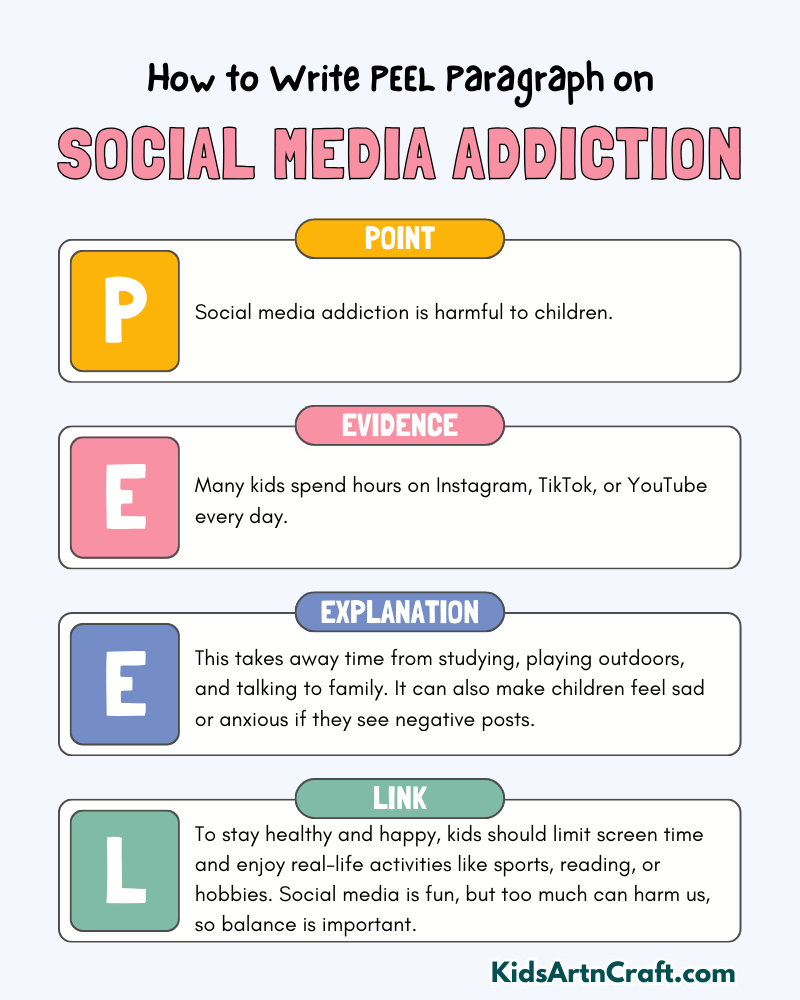

Point: Social media addiction is harmful to children.
Evidence: Many kids spend hours on Instagram, TikTok, or YouTube every day.
Explanation: This takes away time from studying, playing outdoors, and talking to family. It can also make children feel sad or anxious if they see negative posts.
Link: To stay healthy and happy, kids should limit screen time and enjoy real-life activities like sports, reading, or hobbies. Social media is fun, but too much can harm us, so balance is important.
2. Social Media Addiction Paragraph Writing with TEEL Method
TEEL Method (Topic, Evidence, Explanation, Link)
Topic: Spending too much time on social media is not good for kids.
Evidence: Studies show children who use phones for hours daily feel more tired and stressed.
Explanation: It can affect sleep, schoolwork, and friendships.
Link: Kids should use social media in moderation. Playing outside, reading, and spending time with family can make life happier and healthier.
3. Social Media Addiction Paragraph Writing with the TEXAS Method
TEXAS Method (Topic, Example, Explanation, Analysis, Summary/Significance)
Topic: Social media addiction can cause problems.
Example: For example, a child who watches videos every night may sleep late and feel tired at school.
Explanation: Kids may stop doing homework or outdoor activities.
Analysis: This affects learning, mood, and health.
Summary: Using social media wisely and taking breaks is important for a balanced life.
4. Social Media Addiction Paragraph Writing with Hamburger Method
Hamburger Method (Top Bun, The Fillings, Bottom Bun)


Top Bun (Topic Sentence):
Social media is fun, but too much use can be bad.
The Fillings (Supporting Details):
Kids may spend hours on phones, miss outdoor games, and feel sad if posts are ignored. They may also get less sleep and struggle with schoolwork.
Bottom Bun (Concluding Sentence):
Limiting screen time, playing with friends, and enjoying hobbies can help children stay healthy and happy while still enjoying social media.
Impact of Social Media Addiction
- Excessive use of social media can negatively affect mental health, increasing anxiety, depression, and loneliness in young people. [Source: World Health Organization]
- Frequent social media use can reduce attention span, academic performance, and disrupt sleep patterns. [Source: ScienceDirect – Academic Performance]
Additional Facts about Social Media Use
- Addictive social media behavior activates reward pathways in the brain similar to other behavioral addictions. [Source: National Institutes of Health]
- Balanced and mindful use of digital devices can improve well-being and reduce negative effects. [Source: American Psychological Association]
Hope you liked these paragraphs on ‘Social Media Addiction’. Don’t forget to join the Telegram group for FREE Printables.
Check this article to write a paragraph on effects of social media.