

Paragraph Writing
Paragraph on Types of Energy (solar, wind, etc)


There are many types of energy, like solar, wind, and hydro. These sources power our homes and industries, helping us live comfortably while protecting the environment. Learn to write confident paragraphs on “Types of Energy (solar, wind, etc.)” in four styles—Expository, Persuasive, Descriptive, and Narrative—while organizing your ideas effectively using structures with PEEL, TEEL, TEXAS, and the Hamburger Model.
Read This Article in Other Languages
- ऊर्जा के प्रकार (सौर, पवन आदि) पर अनुच्छेद (Hindi / हिंदी)
- Párrafo sobre los tipos de energía (solar, eólica, etc.) (Spanish / Español)
- Paragraphe sur les types d’énergie (solaire, éolienne, etc.) (French / Français)
- Absatz über die Arten von Energie (Solar, Wind usw.) (German / Deutsch)
- فقرة عن أنواع الطاقة (الشمسيه, الرياح, إلخ) (Arabic / العربية)
- শক্তির বিভিন্ন ধরনের (সৌর, বায়ু, ইত্যাদি) অনুচ্ছেদ (Bengali / বাংলা)
- சூரிய, காற்று போன்ற பல்வேறு சக்தியின் வகைகள் குறித்த பத்தி (Tamil / தமிழ்)
- సౌర, గాలి వంటి శక్తి రకాలపై పేరా (Telugu / తెలుగు)
- ഊർജത്തിന്റെ പലതരം (സോളാർ, കാറ്റ് മുതലായവ) പാരഗ്രാഫ് (Malayalam / മലയാളം)
- توانائی کی اقسام (شمسی، ہوائی وغیرہ) پر پیراگراف (Urdu / اردو)
- Parágrafo sobre os tipos de energia (solar, eólica, etc.) (Portuguese / Português)
Translation Disclaimer: These links use Google Translate, an automated translation service. Translations may vary in accuracy and are provided for convenience only.
Different Styles of Paragraphs on ‘Types of Energy (solar, wind, etc)’
1. Expository Paragraph on Types of Energy (solar, wind, etc.) (Explains with Facts)
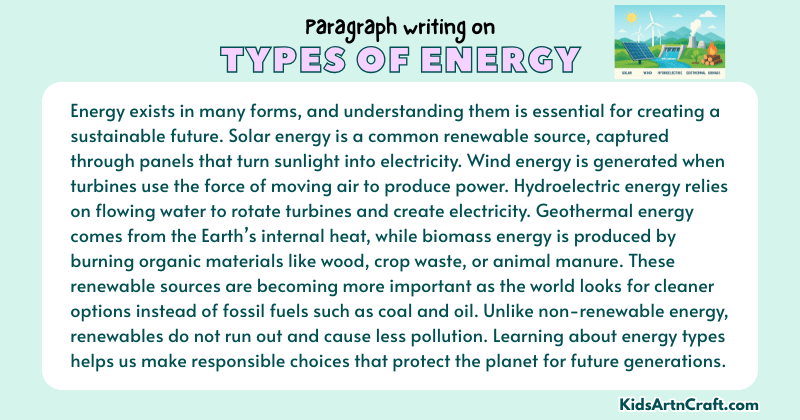
Energy exists in many forms, and understanding them is essential for creating a sustainable future. Solar energy is a common renewable source, captured through panels that turn sunlight into electricity. Wind energy is generated when turbines use the force of moving air to produce power. Hydroelectric energy relies on flowing water to rotate turbines and create electricity. Geothermal energy comes from the Earth’s internal heat, while biomass energy is produced by burning organic materials like wood, crop waste, or animal manure. These renewable sources are becoming more important as the world looks for cleaner options instead of fossil fuels such as coal and oil. Unlike non-renewable energy, renewables do not run out and cause less pollution. Learning about energy types helps us make responsible choices that protect the planet for future generations.
2. Persuasive Paragraph on Types of Energy (solar, wind, etc.) (Tries to Convince You)
The world urgently needs to shift toward renewable energy sources such as solar, wind, hydro, and geothermal power. These types of energy are not only clean but also endlessly available, making them far more reliable than fossil fuels, which damage the environment and will eventually run out. Solar panels, for example, can be installed on rooftops to power homes with zero pollution, while wind turbines generate electricity without producing harmful gases. Hydroelectric dams and geothermal plants offer steady, dependable energy that does not contribute to climate change. By investing in these renewable sources, we can reduce air pollution, slow global warming, and create a healthier planet. Renewable energy also brings economic benefits by creating new green jobs and lowering electricity costs over time. Every nation should prioritize expanding clean energy infrastructure and encourage people to adopt these technologies at home. The future of our planet depends on the choices we make today. Choosing renewable energy is not just a smart decision—it is a moral responsibility. If we want cleaner air, safer communities, and a stable world for our children, we must support renewable energy now.
3. Descriptive Paragraph on Types of Energy (solar, wind, etc.) (Paints a Picture with Words)
Renewable energy sources paint a beautiful picture of a cleaner world. Imagine bright solar panels shimmering under the warm sun, quietly converting light into electricity. Nearby, tall wind turbines stretch into the sky, their long blades spinning gracefully as the breeze passes through. By the river, hydroelectric dams stand strong, using the steady flow of water to generate power day and night. Far below the earth’s surface, geothermal plants tap into natural heat, bringing warm energy up to supply homes with comfort. In rural areas, piles of plant waste and wood chips are turned into biomass energy, filling communities with a sense of resourcefulness. Each type of energy has its own unique sound, texture, and environment. The hum of turbines, the rush of water, and the silent glow of sunlight all blend together to form a peaceful symphony of clean power. These sources show how natural forces—sunlight, wind, water, and heat—can work in harmony with human innovation. The scene created by renewable energy is calm, balanced, and full of hope, reflecting a world moving closer to sustainability.
4. Narrative Paragraph on Types of Energy (solar, wind, etc.) (Tells a Story)
Last year, during my school’s science fair, I discovered the power of renewable energy in a way I will never forget. My team built a small model village powered entirely by solar panels, a wind turbine, and a tiny waterwheel. When we placed the model under the sunlight, the solar panels lit up the houses instantly. Then a gentle fan created wind that spun the miniature turbine, adding even more energy to our tiny grid. Finally, we poured water over the waterwheel, and it turned smoothly, providing steady power. Watching all three sources work together felt magical, as if nature itself was helping us bring the village to life. Our teacher explained how real communities use these same sources—solar, wind, hydro, geothermal, and biomass—to power homes and protect the environment. I realized then that renewable energy is not just a science project; it is the key to a cleaner future. That day, I felt inspired to learn more and dreamed of designing real systems that could help people use energy responsibly. It was the moment I understood how powerful and important renewable energy truly is.
‘Types of Energy (solar, wind, etc.)’ Paragraphs in Different Structured Methods
1. Types of Energy (solar, wind, etc.) Paragraph Writing with PEEL Method
PEEL Method (Point, Evidence, Explanation, Link)

Point: Many types of energy help us power our world.
Evidence: For example, solar panels on rooftops change sunlight into electricity, and large wind turbines spin to make power for homes and schools.
Explanation: Solar energy comes from the sun, wind energy comes from moving air, and hydro energy comes from flowing water. These are all renewable, which means they never run out.
Link: These different kinds of energy are clean and safe for the Earth, which is why many countries are using them more today.
2. Types of Energy (solar, wind, etc.) Paragraph Writing with TEEL Method
TEEL Method (Topic, Evidence, Explanation, Link)
Topic: Renewable energy sources like solar, wind, and water are very important for our future.
Evidence: Solar panels capture sunlight, wind turbines spin with the breeze, and hydroelectric dams use rushing water to create electricity.
Explanation: They do not pollute the air and can be used again and again, unlike fossil fuels.
Link: With so many benefits, renewable energy helps us protect the planet while giving us the power we need every day.
3. Types of Energy (solar, wind, etc.) Paragraph Writing with the TEXAS Method
TEXAS Method (Topic, Example, Explanation, Analysis, Summary/Significance)
Topic: Types of energy, such as solar, wind, and hydro power, are clean and useful.
Example: Many homes now use solar panels, and wind farms with tall turbines can power entire towns.
Explanation: Solar energy uses sunlight, wind energy uses moving air, and hydro energy uses flowing water to make electricity.
Analysis: These energies help reduce pollution and keep the Earth healthier because they do not release harmful gases.
Summary: By using renewable energy, we can save resources and make our world a better place to live.
4. Types of Energy (solar, wind, etc.) Paragraph Writing with Hamburger Method
Hamburger Method (Top Bun, The Fillings, Bottom Bun)
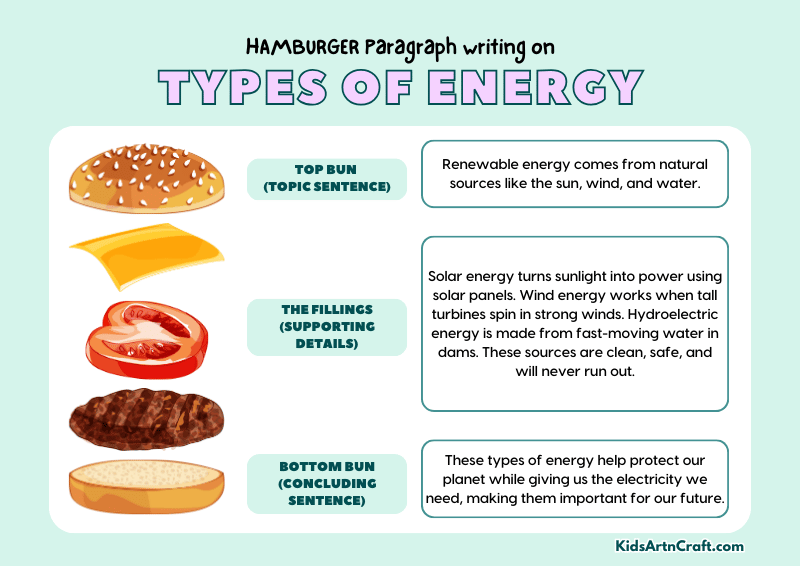
Top Bun (Topic Sentence):
Renewable energy comes from natural sources like the sun, wind, and water.
The Fillings (Supporting Details):
Solar energy turns sunlight into power using solar panels. Wind energy works when tall turbines spin in strong winds. Hydroelectric energy is made from fast-moving water in dams. These sources are clean, safe, and will never run out.
Bottom Bun (Concluding Sentence):
These types of energy help protect our planet while giving us the electricity we need, making them important for our future.
Types of Energy
- Solar energy comes from the Sun and provides clean electricity and heat. [Source: Britannica – Solar Energy]
- Wind energy uses moving air to turn turbines and generate power. [Source: Britannica – Wind Power]
- Renewable energy sources do not run out and are naturally replenished. [Source: National Geographic – Renewable Energy]
- Hydropower, geothermal, and biomass are other important renewable energy sources. [Source: Britannica – Renewable Energy]
Additional Facts
- Renewable energy reduces pollution and helps fight climate change. [Source: United Nations – Renewable Energy]
- Solar and wind energy are becoming cheaper than fossil fuels. [Source: International Renewable Energy Agency (IRENA)]
- Using renewable energy creates jobs and supports economic growth. [Source: United Nations – Renewable Energy Fast Facts]
- Renewable energy helps countries produce clean and sustainable electricity. [Source: International Renewable Energy Agency (IRENA)]
Hope you liked these paragraphs on ‘Types of Energy (solar, wind, etc.)’. Don’t forget to join the Telegram group for FREE Printables.
Check this article to write a paragraph on clean energy.