School Crafts
Thermoelectric Generator Model STEM Project for Students

This cool science project shows how heat can be turned into electricity. In the experiment, a small flame heats one side of a special device. That heat creates electricity, which then powers a tiny motor and fan. It’s a fun way to see how energy can change from one form to another!

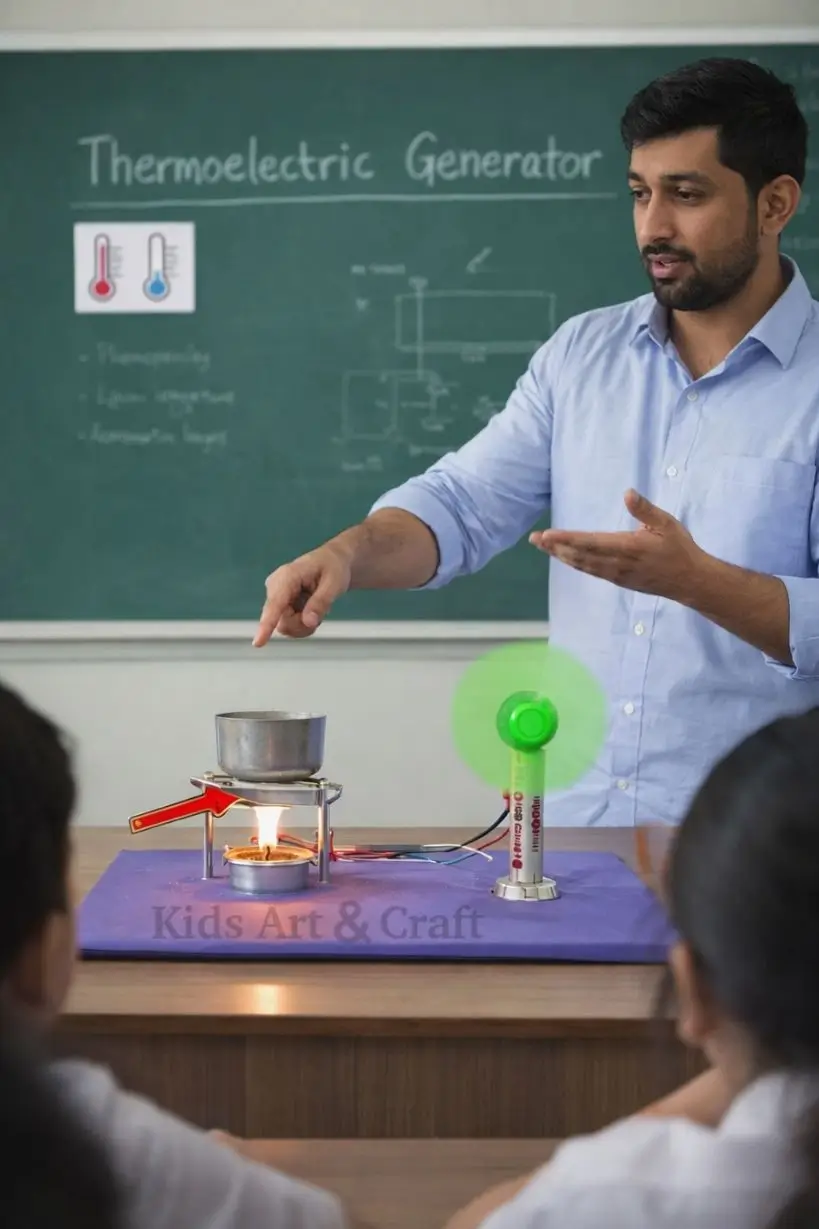
Heat energy is converted into electricity, powering a fan in a classroom experiment.
Thermoelectric Generator STEM Project Overview
The experiment works using something called the Thermoelectric Effect.
Here’s the simple idea:
- When one side of a special plate is hot, and the other side is cool, electricity is produced.
- This device is called a thermoelectric module.
- The heat from the flame creates a temperature difference.
- That difference pushes tiny electric charges through the wires.
- The electricity powers the small motor, making the fan spin.
In short: Heat → Electricity → Motion
Thermoelectric Generator Materials List
- Thermoelectric module (Peltier module)
- Small DC motor
- Mini fan blade
- Candle or small alcohol burner
- Metal container or heat plate
- Heat sink or cooling plate
- Connecting wires
- Foam board or cardboard base
- LED light (optional)
Step-by-Step Thermoelectric Generator Working
Step 1: Place the Thermoelectric Module
Put the thermoelectric module between a hot side and a cool side.
Step 2: Connect the Motor
Attach wires from the module to a small DC motor with a fan blade.
Step 3: Set the Heat Source
Place a candle flame under a metal cup or plate that touches the bottom of the module.
Step 4: Keep the Other Side Cool
Attach a heat sink or metal plate to the top side so it stays cooler.
Step 5: Create a Temperature Difference
The bottom becomes hot, and the top stays cool.
Step 6: Electricity Is Generated
The thermoelectric module converts the temperature difference into an electric current.
Step 7: Fan Starts Spinning!
The current flows to the motor, and the fan begins to rotate.
You just generated electricity using heat!
What Kids Learn
- Energy conversion (heat → electricity)
- Basic electricity and circuits
- Renewable and alternative energy ideas
- How temperature differences can produce power
- Simple engineering and problem-solving
Real-Life Uses of Thermoelectric Generators
This technology is used in many interesting places:
- Spacecraft power systems
- Camping stoves that charge phones
- Waste heat recovery in factories
- Remote sensors in cold areas
- Portable power generators
Scientists are also studying it for clean energy solutions.
Safety Tips
- Always use adult supervision when working with fire.
- Keep flammable materials away from the flame.
- Do not touch the hot metal surface.
- Use a stable base so the candle does not tip over.
Benefits
- Very visual and exciting (the fan spins!)
- Teaches real-world energy science
- Easy to build with simple materials
- Encourages curiosity and experimentation
- Perfect for science fairs and STEM learning
Thermoelectric Generator Extension Ideas
- Add an LED Light: See if the module can power a small LED along with the fan.
- Test Different Heat Sources: Try a hot cup of water, sunlight, or a stronger flame and compare results.
- Measure the Electricity: Use a multimeter to check how much voltage is produced at different temperatures.
Explore our thermoelectric generator model, demonstrating how heat energy converts into electricity using the Seebeck effect. Ideal for science projects, educational experiments, and renewable energy demonstrations, it highlights innovative, eco-friendly power generation and sustainable energy technology concepts. Get notified about fresh content in our Telegram channel. Follow us NOW on YouTube & Facebook for amazing art tutorials, fun projects, and way more!