Science Experiments
DIY Water Turbine Generator Science Project for Kids

Have you ever wondered how flowing water can create electricity? In this fun STEM project, we build a mini water turbine generator using a small water flow, a spinning fan (turbine), and a tiny motor. When water spins the turbine, it produces electricity that can light up a small LED. This project is similar to how real hydroelectric dams generate power for cities!

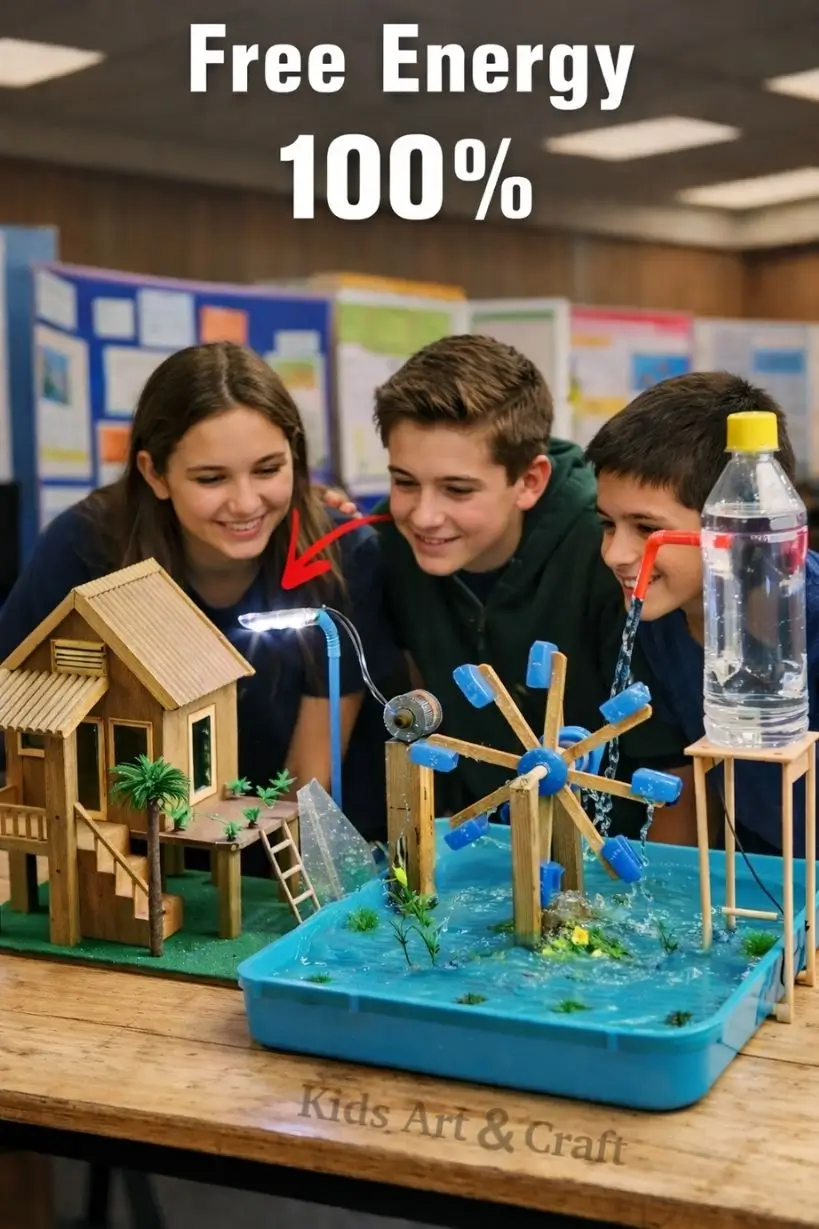
Science project demonstrating hydroelectric power generation using a small water turbine system.
Energy Conversion Explained Simply
This experiment shows energy conversion.
Here’s what happens in simple steps:
- Water energy (moving water) pushes the turbine blades.
- The turbine spins.
- The turbine spins a small motor.
- The motor acts like a generator and produces electricity.
- The electricity powers a small LED light.
In simple words:
Moving water → spinning turbine → electricity
Materials Required
- Small DC motor (acts as a generator)
- Plastic bottle or container for water
- Mini fan blades / plastic spoons (for turbine)
- LED light
- Wires
- Cardboard or foam base
- Wooden sticks or straws (for support)
- Glue or hot glue gun
- Water source (bottle or small tap)
Optional for decoration:
- Mini house model
- Plants or scenery
Step-by-Step Turbine Generator Guide
Step 1: Build the Base
Attach a cardboard or foam board as the base of your project.
Step 2: Make the Turbine
Create a small turbine using:
- Plastic spoons
- Bottle caps
- Or a small fan
Attach the turbine to the shaft of the DC motor.
Step 3: Mount the Generator
Fix the motor on a stand so the turbine can spin freely.
Step 4: Connect the LED
Connect wires from the motor terminals to the LED light.
Step 5: Add the Water Source
Place a water bottle or container above the turbine so water can fall onto the blades.
Step 6: Pour the Water
When water flows onto the turbine:
- Water hits blades
- Turbine spins
- Motor generates electricity
- LED lights up!
STEM Learning Outcomes for Kids
- Energy conversion (water → electricity)
- How generators work
- Basics of renewable energy
- Simple engineering design
- Problem-solving and creativity
- Building working science models
Real-Life Hydropower Uses
This project works like real hydropower plants, such as:
- Hydroelectric dams
- River power stations
- Water-powered generators
- Renewable energy systems
These systems produce clean electricity without pollution.
Safe Experiment Tips for Kids
- Use low-voltage motors and LEDs only
- Be careful with hot glue guns
- Keep electronics away from too much water
- Work with an adult if using sharp tools
Why Kids Love This STEM Project
- Hands-on STEM learning
- Easy to build with simple materials
- Demonstrates real-world renewable energy
- Encourages creativity and curiosity
- Fun and visual (kids love seeing the LED light up!)
Creative STEM Extension Ideas
- Test Different Turbines:
- Try:
- Plastic spoons
- Bottle caps
- Cardboard blades
- See which spins fastest!
- Try:
- Measure Electricity: Use a multimeter to measure how much voltage the turbine produces.
- Build a Mini Dam: Create a small waterfall or dam model to simulate real hydroelectric power plants.
Water turbine generators provide clean, reliable, and cost-effective renewable energy for homes, industries, and communities. By converting flowing water into electricity, they reduce carbon emissions, lower energy costs, and support sustainable power generation while ensuring long-term environmental and economic benefits. Join our Telegram group to receive timely content updates. Don’t forget to follow us on YouTube & Facebook for easy art and craft tutorials.