School Crafts
Wind Power Battery Charging STEM Project for Students

This wind power battery charging STEM project helps students learn how wind energy converts into electricity. By building a simple windmill model, kids can understand renewable energy, generators, and basic circuits. It’s an easy DIY science project that makes learning fun while exploring clean energy and real-world power generation concepts.

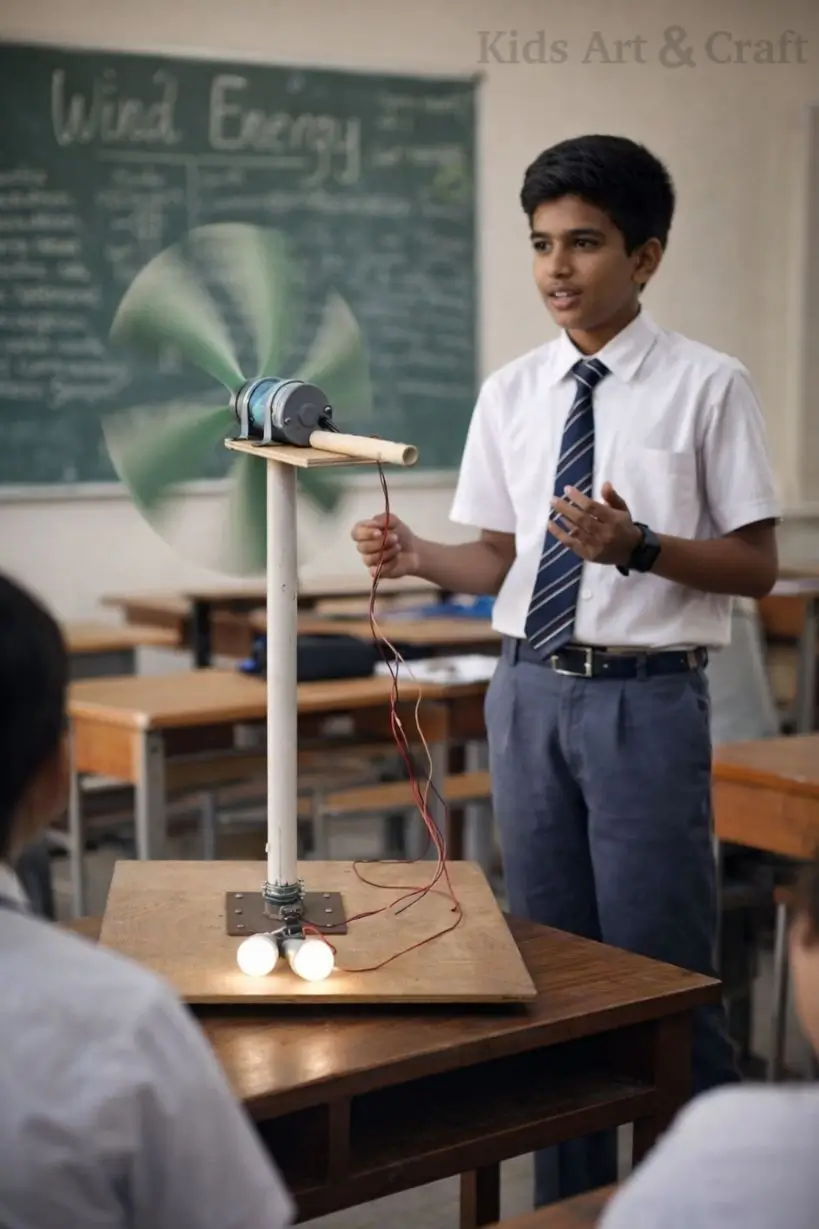
Wind energy conversion is illustrated using a basic turbine and lighting system.
Wind Energy Conversion Concept
- When the wind pushes the blades of the windmill, the blades start spinning.
- That spinning motion turns a small DC motor. A motor normally uses electricity to spin, but when you spin it by hand or wind, it works in reverse and produces electricity.
- This is called energy conversion:
- Wind Energy → Mechanical Energy (spinning blades) → Electrical Energy (charging battery)
- Large wind turbines used in wind farms work in the same way, just on a much bigger scale!
Materials Needed
- Small DC motor
- Windmill blades (plastic or homemade)
- Rechargeable battery
- LED bulbs
- Connecting wires
- Wooden base or board
- Vertical pipe or stand
- Switch (optional)
- Tape or screws
- Cardboard or plastic sheet (tail to face the wind)
Step-by-Step Working Explanation
Step 1: Build the Stand
Attach a vertical pipe or stick to a wooden base so the windmill stands upright.
Step 2: Attach the Motor
Fix the small DC motor on top of the stand.
Step 3: Add the Windmill Blades
Connect the blades to the motor shaft so they spin easily when the wind blows.
Step 4: Connect the Wires
Attach wires from the motor terminals to the battery.
Step 5: Add LED Bulbs (Optional)
Connect small LED lights to see the electricity being produced.
Step 6: Let the Wind Spin the Blades
Place the windmill where there is wind or use a fan. Electricity is Generated As the blades spin, the motor produces electricity that charges the battery or lights the LEDs.
Learning Outcomes for Kids
- How wind energy works
- How a motor can act like a generator
- The idea of renewable energy
- Basics of electric circuits
- How energy changes from one form to another
Real-Life Applications of Wind Energy
This project shows how real technologies work, such as:
- Wind power plants
- Electricity generation in windy areas
- Charging batteries in remote places
- Green energy systems for homes
Wind turbines around the world help produce clean electricity without pollution.
Safety Guidelines
- Keep fingers away from fast-spinning blades.
- Make sure wires are connected properly.
- Use low-voltage batteries for safety.
- Secure the base so the windmill does not fall over.
Benefits of This STEM Project
- Easy to build with simple materials
- Teaches clean energy concepts
- Encourages hands-on learning
- Makes science fun and visual
- Helps kids understand how electricity is produced
It’s like building a mini power plant!
Creative Extension Ideas
- Add a Voltage Meter: Measure how much electricity the windmill produces.
- Test Different Blade Shapes: See which blade design spins the fastest.
- Build a Bigger Windmill: Try larger blades to generate more power and charge bigger batteries.
This wind power STEM project is a fun and educational way for students to explore renewable energy and electricity generation. By creating a battery-charging windmill model, kids gain hands-on experience with science concepts. It encourages creativity, problem-solving, and awareness of clean energy solutions used in real-life wind power systems. Be the first to see new content on our Telegram channel. Bring your ideas to life! Follow us on YouTube & Facebook for crafts, creativity, and inspiration.