Science Experiments
Cardboard Escalator Working Model – Fun Engineering STEM Project for Kids

Have you ever stood on an escalator at a mall and watched the stairs move by themselves? In this fun DIY cardboard escalator model, you can build a small working version of an escalator and learn how it moves people up and down between floors. This project combines engineering, motion, and creativity. It shows how simple materials like cardboard and rubber bands can create a moving machine!

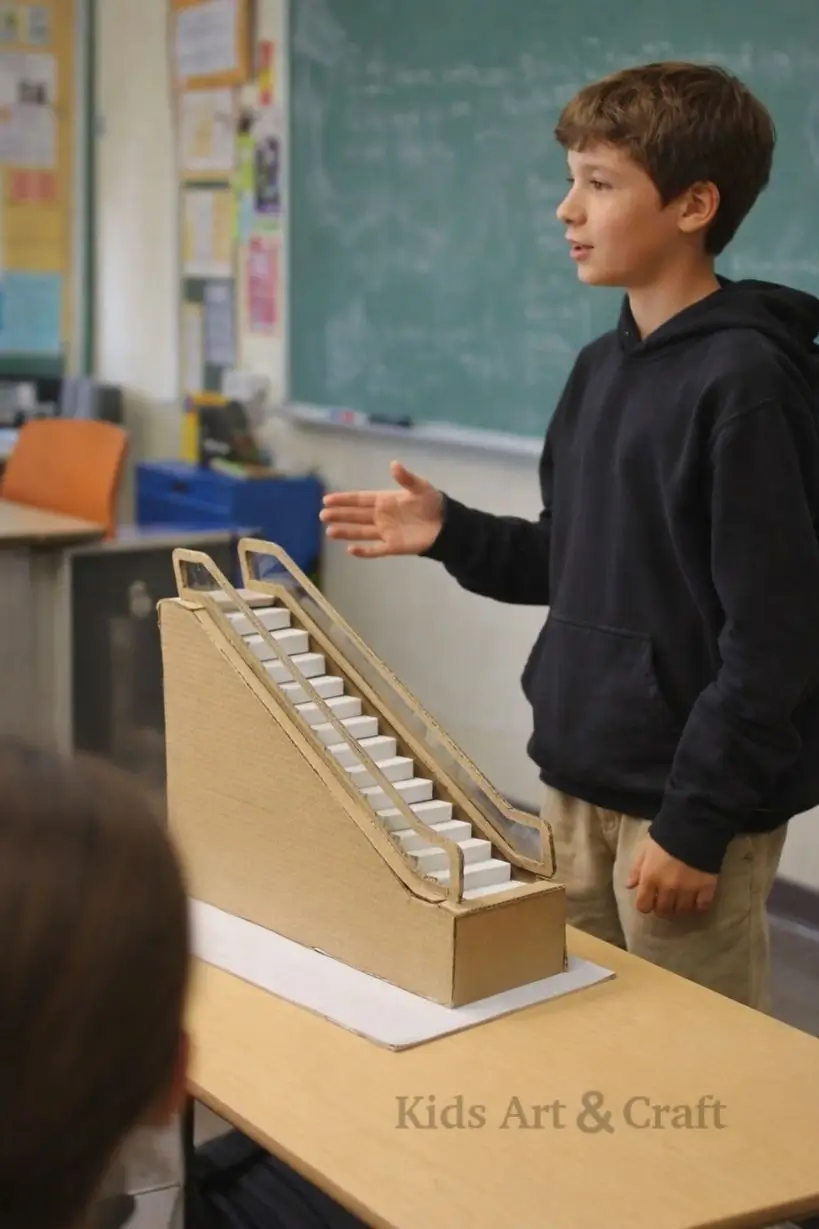
Working escalator model explaining mechanical motion and step movement concept
Escalator Working Principle & Mechanical Motion Explained
- An escalator works using a loop system.
- The steps are connected in a continuous chain.
- A motor or wheel system moves the chain.
- As the chain moves, the steps travel up one side and down the other side.
- Special wheels and tracks keep each step flat so people can stand safely.
- Think of it like a moving conveyor belt made of stairs!
- This project demonstrates ideas such as:
- Mechanical motion
- Chain movement
- Simple machines
- Engineering design
DIY Escalator Model Materials List
You can build the model with simple craft supplies:
- Cardboard sheets
- Small cardboard pieces (for stairs)
- Wooden sticks or skewers
- Rubber bands or belt loops
- Small DC motor or hand crank
- Glue or hot glue
- Scissors or craft knife
- Tape
- Ruler
- Marker or pencil
How to Make a Working Escalator Model Step-by-Step
Step 1: Build the Escalator Frame
Cut cardboard pieces and glue them to make a slanted ramp structure, just like an escalator in a mall.
Step 2: Make the Steps
Cut many small identical rectangles from cardboard. These will become the stairs.
Step 3: Connect the Steps
Attach the steps to a rubber band loop or belt system so they stay evenly spaced.
Step 4: Add Rollers or Axles
Insert wooden sticks through the sides to act as axles that guide the moving belt.
Step 5: Attach a Motor or Hand Wheel
Fix a small motor or rotating wheel at the bottom to pull the belt.
Step 6: Test the Movement
Turn the wheel or switch on the motor.
You will see the stairs move upward on one side and return underneath—just like a real escalator!
STEM Learning Benefits of the Escalator Model for Kids
- Basics of mechanical engineering
- How loop systems and belts move objects
- How machines turn rotational motion into movement
- Importance of design and structure
- Problem-solving while building
Real-Life Uses of Escalators in Daily Life
Escalator systems are used in many places:
- Shopping malls
- Airports
- Train and metro stations
- Large office buildings
- Hotels and convention centers
They help move many people quickly and safely between floors.
Safety Tips
- Always use scissors or craft knives with adult supervision.
- Be careful when using hot glue guns.
- Keep fingers away from moving parts and motors.
- Secure the structure so it does not collapse.
Why the Escalator STEM Project is Fun & Educational
- Combines science, engineering, and art.
- Uses simple, low-cost materials.
- Encourages creativity and building skills.
- Shows how everyday machines actually work.
- Super fun to watch your own mini escalator move!
Extension Ideas
- Add a Motor Switch: Install an on/off switch so the escalator can start and stop like a real one.
- Build a Mall Scene: Create a mini shopping mall model around the escalator using cardboard shops and tiny people.
- Try a Solar Motor: Use a small solar panel to power the escalator and learn about renewable energy.
An escalator working model clearly demonstrates the mechanism of continuous transportation, helping students understand gears, motors, and safety features. It is an effective educational tool that improves practical learning, attracts attention, and strengthens concepts in science and engineering. Get daily art and craft updates on Telegram group, YouTube & Facebook.