Science Experiments
Easy DIY Cardboard Microscope STEM Science Project for Kids

Have you ever wondered what a leaf or a tiny insect looks like up close? In this fun STEM project, kids can build a simple microscope using cardboard and a small lens.
This homemade microscope helps us magnify tiny objects so we can see details that are too small for our eyes. It’s a creative way to learn science while building something cool with your own hands! 🛠️

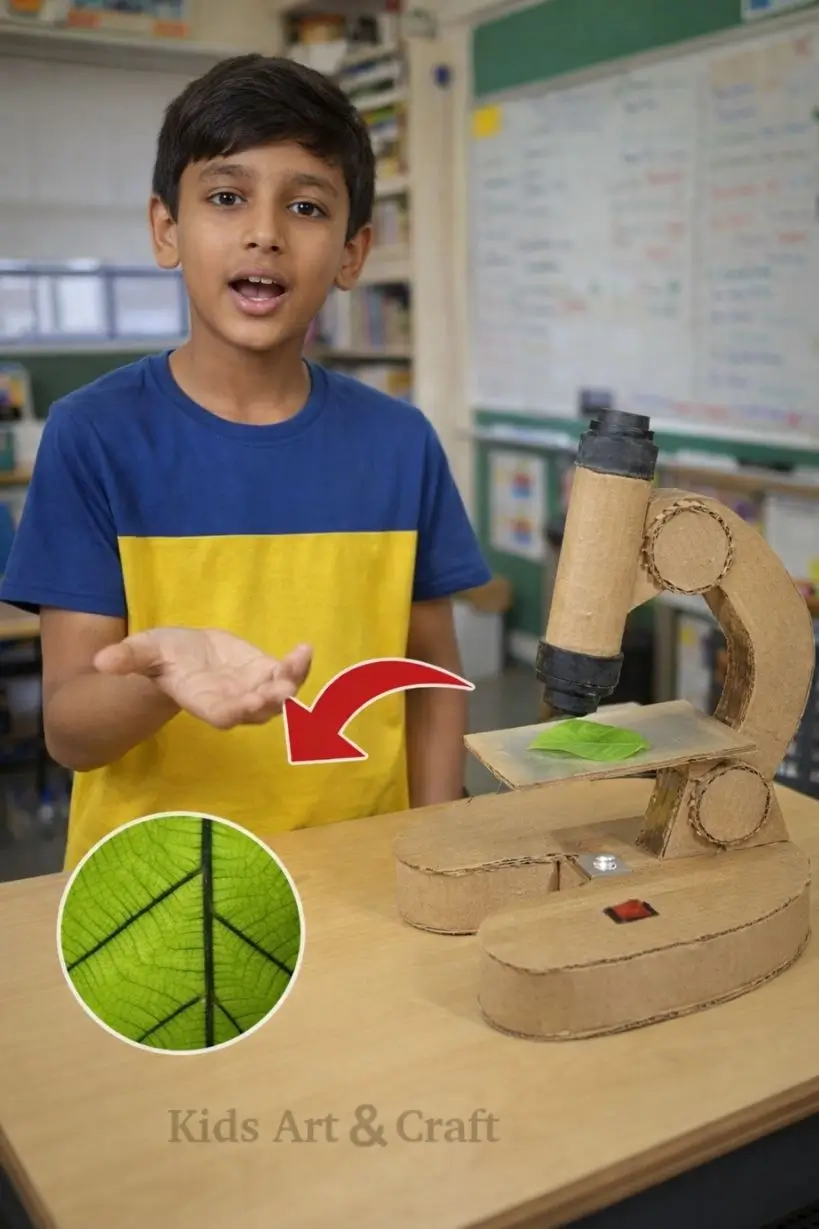
Science project explaining the microscope function and the magnification of small objects
Microscope Science Concept & Magnification Explained
- A microscope works by magnifying objects using a special curved glass called a lens.
- Here’s the simple idea:
- Light passes through the lens.
- The curved lens bends the light.
- This makes the object look bigger than it really is.
- So when you place a leaf or a small object under the lens, the microscope lets you see tiny patterns, veins, and textures that are normally invisible.
- Think of it like a super-powered magnifying glass!
Materials for DIY Microscope Model
You will need:
- Thick cardboard
- Small magnifying lens (or lens from an old toy microscope)
- Scissors or craft knife
- Glue or hot glue
- Ruler
- Pencil
- Transparent plastic sheet (for the slide)
- Small flashlight or phone light (optional for better viewing)
Easy Steps to Make a Cardboard Microscope
Step 1: Build the Base
Cut cardboard pieces and glue them together to make a strong base for the microscope.
Step 2: Make the Arm
Cut a curved cardboard piece and attach it vertically. This holds the lens and gives the microscope its classic shape.
Step 3: Add the Lens Tube
Roll the cardboard into a small tube and place the magnifying lens at the end. Attach this tube to the arm.
Step 4: Create the Stage (Platform)
Make a small flat platform where you place the object you want to observe.
Step 5: Add a Slide Holder
Place a clear plastic sheet on the stage to hold leaves or tiny objects.
Step 6: Adjust the Focus
Move the lens closer or farther from the object until it becomes clear and magnified.
Step 7: Shine Light
Use a small flashlight or sunlight so the object is easier to see.
Now your microscope is ready!
STEM Learning with Microscope Activity
Kids learn many STEM skills, including:
- How microscopes work
- Basics of light and lenses
- Observation and curiosity
- Building and engineering skills
- Exploring nature in detail
Real-Life Applications
Microscopes are used everywhere in the real world:
- Scientists study cells and bacteria
- Doctors examine blood and diseases
- Biologists study plants and insects
- Researchers develop new medicines
Safety Tips
- Use scissors or craft knives carefully.
- Ask an adult for help when cutting thick cardboard.
- Do not point bright lights directly into your eyes.
- Handle the lens gently so it doesn’t scratch.
Why This Project Is Great for Kids
- Makes science hands-on and fun
- Uses simple, low-cost materials
- Encourages creativity and problem-solving
- Helps kids discover the tiny world around them
Creative Microscope Project Ideas & Extensions
- Smartphone Microscope: Place a phone camera near the lens to take magnified photos.
- Nature Investigation: Observe different things like:
- leaf veins 🍃
- sand grains 🏖️
- fabric fibers 🧵
- Adjustable Focus Microscope: Add a sliding stage or screw system to make focusing easier.
In conclusion, a microscope is an essential scientific tool that enhances learning, research, and innovation by revealing microscopic details. From classrooms to laboratories, modern microscopes support discoveries, improve understanding, and play a vital role in science, medicine, and technology today. Don’t miss out—follow our Telegram group for fresh updates. Follow us on YouTube & Facebook for art and craft tutorials and much more.