Science Experiments
Simple Electric Circuit Science Project For Student

Have you ever wondered how a light bulb turns on when you flip a switch? In this fun science project, kids build a simple electric circuit using a battery, wires, a switch, and a bulb. When everything is connected correctly, electricity flows through the circuit, and the bulb lights up!
This easy STEM activity helps kids understand how electricity travels in a loop to power devices.

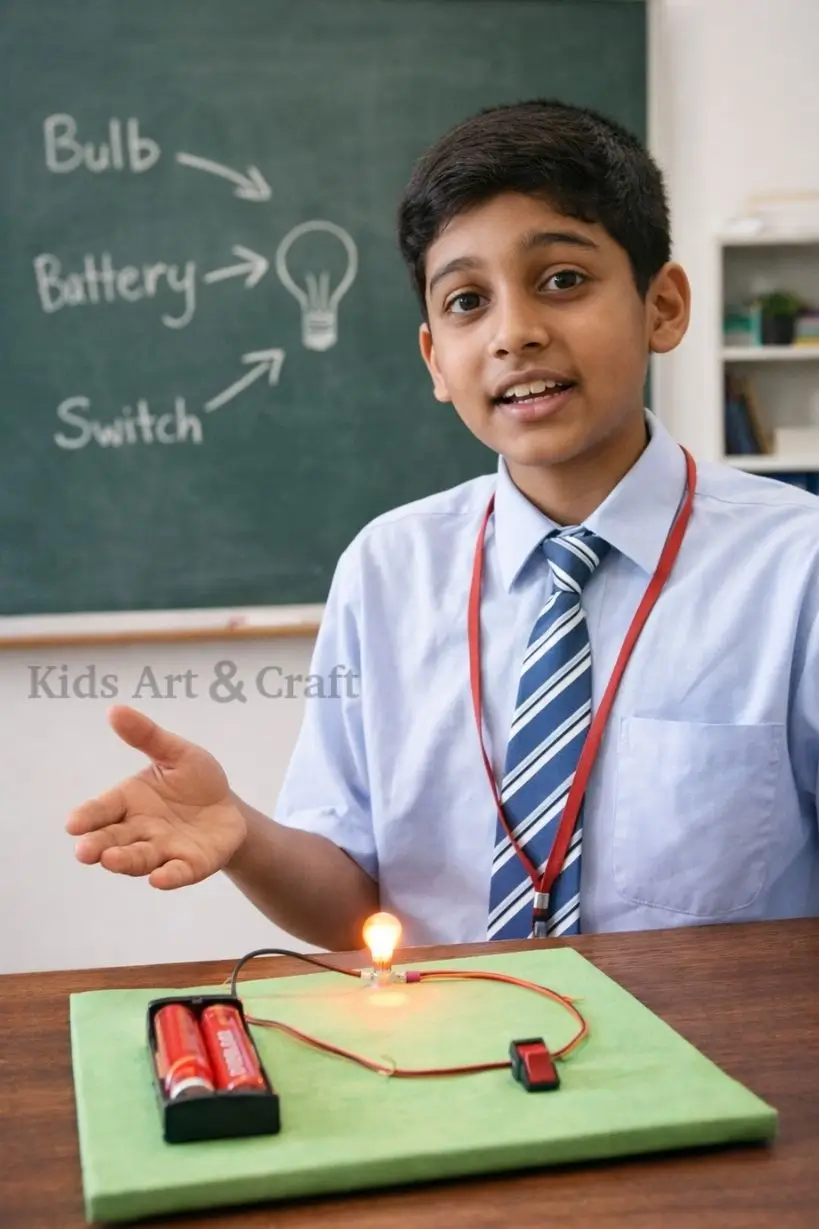
Simple circuit demonstration showing electricity flow and the bulb lighting mechanism
Basic Electricity Concept Explained
- Electricity needs a complete path (called a circuit) to travel.
- Think of electricity like water flowing through a pipe. If the pipe is connected from start to end, water flows easily. But if there is a break, the water stops.
- In this project:
- The battery gives electrical energy 🔋
- The wires carry the electricity 🧵
- The switch opens or closes the path 🔘
- The bulb uses electricity to produce light 💡
- When the switch is ON, the circuit is closed and electricity flows.
- When the switch is OFF, the circuit is open, and the bulb turns off.
Materials Required
- 2 batteries
- Small light bulb
- Connecting wires
- Small switch
- Cardboard or foam board (base for the project)
- Tape or glue
- Scissors (optional)
Step-by-Step Electric Circuit Working Guide
- Place the batteries on the board and connect them in a battery holder or using tape.
- Connect a wire from the positive end of the battery to one side of the bulb.
- Attach another wire from the other side of the bulb to the switch.
- Connect the switch back to the negative end of the battery with another wire.
- Now flip the switch ON.
- The electricity flows: Battery → Wire → Bulb → Switch → Back to Battery
- The circuit is complete, and the bulb lights up!
- If the switch is turned OFF, the path breaks and the light goes out.
What Kids Learn from Electric Circuit Activity
- What electricity is
- How a closed circuit works
- The role of batteries, wires, switches, and bulbs
- Basic problem-solving when the bulb doesn’t light
- Simple electronics and STEM skills
Real-Life Uses of Electric Circuits
This same idea is used in many things around us:
- Light switches in homes
- Flashlights
- Doorbells
- Battery-powered toys
- Electrical systems in vehicles
All of these devices work because they use electric circuits.
Electric Circuit Safety Tips for Kids
- Use small batteries only (like AA).
- Do not connect wires directly across the battery for long (it may heat up).
- Make sure wires are secure but not touching where they shouldn’t.
- Always ask an adult for help when using scissors or tools.
Benefits of a Simple Circuit STEM Project
- Easy and fun to build
- Uses simple materials
- Teaches an important science concept
- Encourages curiosity and experimentation
- Perfect for school science fairs and STEM learning
Fun Electric Circuit Extension Activities
- Add More Bulbs: Try connecting two bulbs and see if both light up.
- Make a Paper Clip Switch: Create your own switch using a paper clip and two pins.
- Try Series vs Parallel Circuits: Connect bulbs in different ways and see how the brightness changes.
Understanding electric circuits helps learners master how electricity flows, powers devices, and improves everyday technology. With clear concepts of current, voltage, and resistance, students can build smarter projects and strengthen their foundation in physics and modern electrical engineering successfully today. Follow our Telegram Group and watch fun craft activities on YouTube & Facebook