DIY and Crafts
Sensory Bin Play Ideas For Kids

Hey, crafty heads!
We are back with a brand new article regarding art and craft. These days, toddlers learn a lot of things while playing in their preparatory schools. This is the proper way of teaching them while enjoying. A toddler should get the idea of certain basic things, but we shouldn’t forget their age, also. Various cool activities have been introduced in Playschools that are helping in building the brain capacity of children. We should encourage such activities.
Sensory bins are special bins that are made up of different stuff and our child is used to acknowledging them using their sense organs. We can use many things in a container, like sand, pulses, seeds, water, etc. Kids put their hands in the bin and love to play by moving and touching their hands with different textured stuff.
It’s not necessary to keep this activity restricted only to preparatory or Playschools. We can make one at home for our child to stimulate their sense organs well. I have tried to make some of them at home, and it was fun and full of excitement. I wish you all good luck, and make one for your little one.
Sensory Bin Play Craft Ideas For Kids
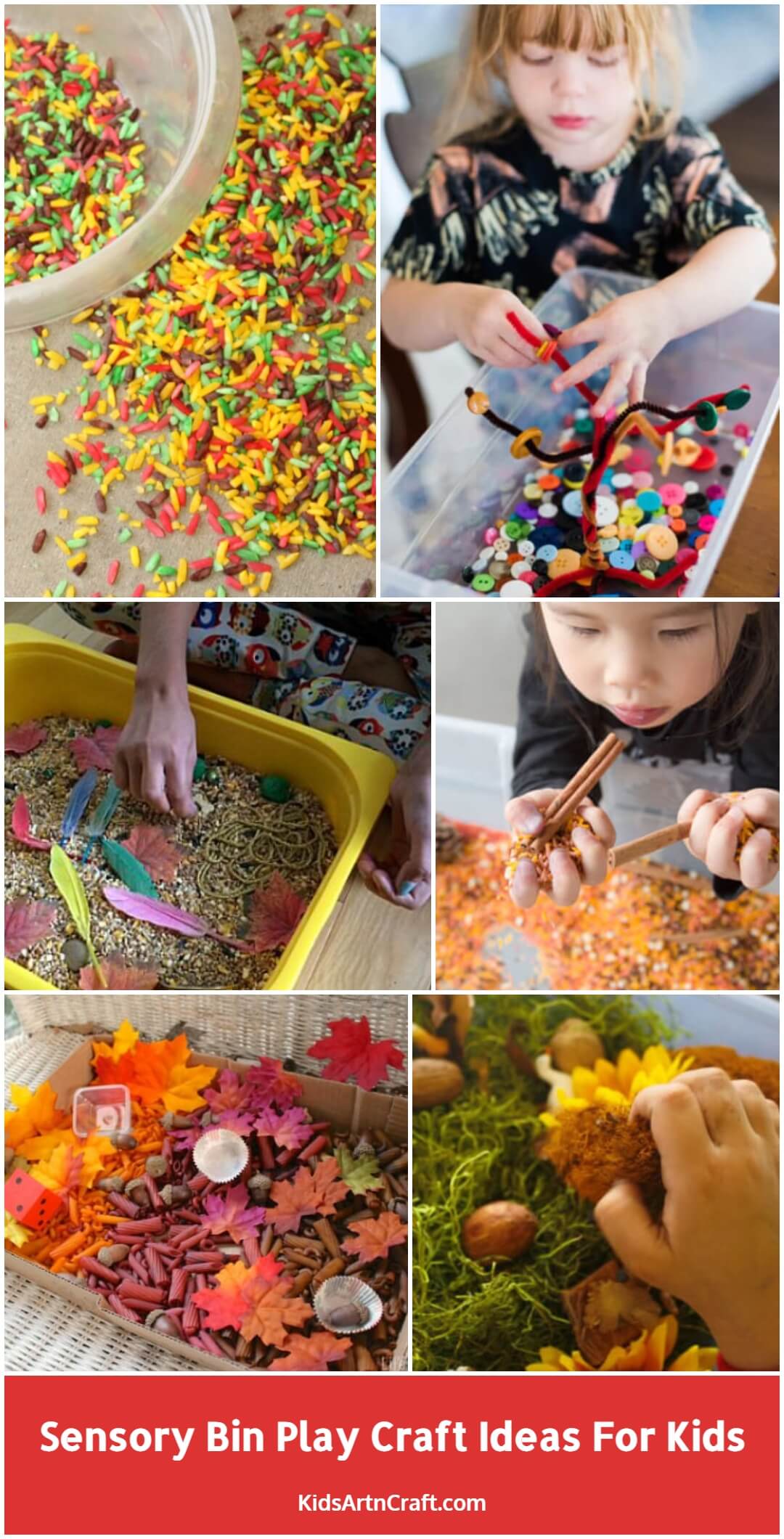

Acorn Sensory Bin Craft Ideas

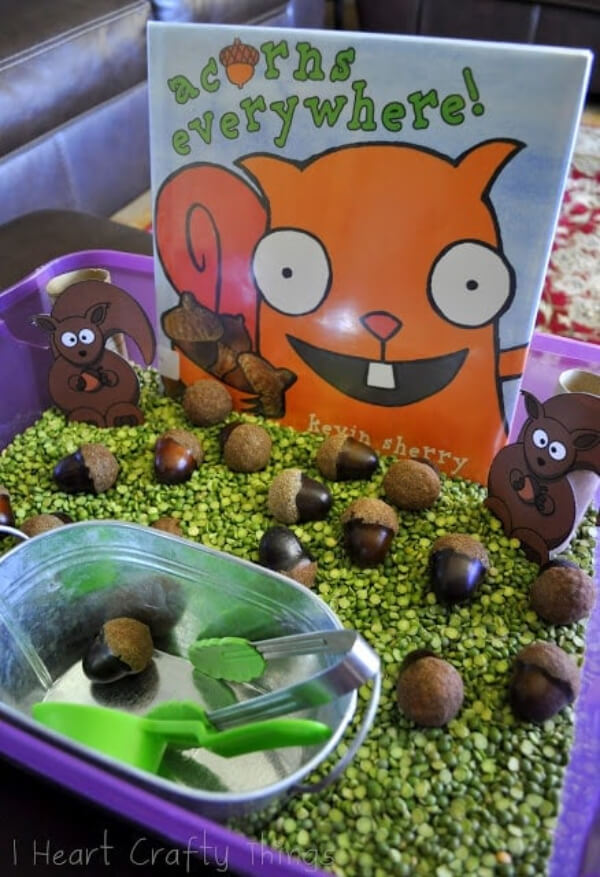
Image Source/Tutorial: I Heart Crafty Things
Materials required:-
- Plastic container,
- Peas,
- Acorns,
- Printed squirrels,
- Empty toilet paper roll,
- Scooper,
- Tongs,
- Metallic container.
Activity:- To find the hidden acorns from the bin.
Procedure:-
- Get an empty big plastic container.
- Get some peas and spread them in the container.
- Buy some acorns from the market and mix them in the container randomly.
- Make sure that the quantity of the peas is much more than the acorns so that they remain hidden inside the peas.
- Get printed squirrels and paste them around the empty toilet paper rolls using glue.
- Now decorate them in the plastic bin.
- Provide your child with a metallic container, tongs, and a scooper.
- Your child needs to find the hidden acorns.
Apple Cinnamon Sensory Bin For 5-Year-Old

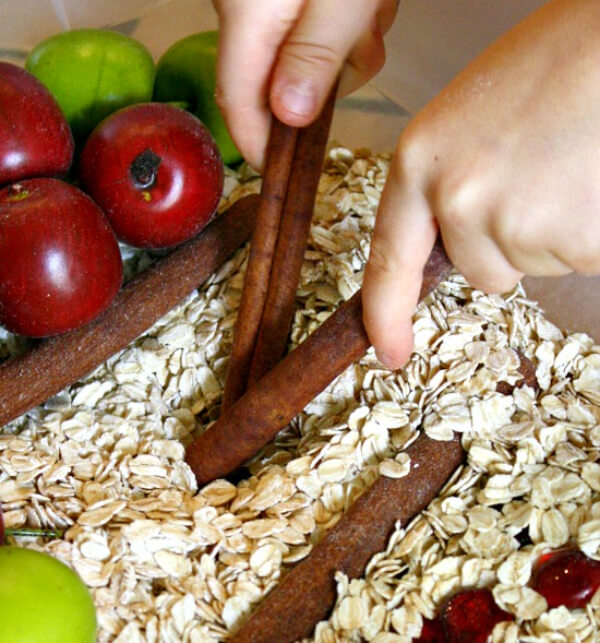
Image Source/Tutorial: Fantastic Fun And Learning
Materials required:
- Empty container,
- Oats
- Artificial red and green apples,
- Cinnamon sticks and small wooden baskets.
Activity: To find the number of red apples, green apples, and cinnamon sticks.
Procedure:
- Take an empty container and fill it with oat seeds.
- Buy some artificial red and green apples from the market and hide them in the container or bin.
- Get some cinnamon sticks from your kitchen and add them to the container.
- Provide your toddler with a small wooden basket that will be used as a scooper to scoop different hidden materials out of the oats.
- Tell your child to count the number of red and green apples and also the cinnamon sticks.
Apple Pie Sensory Bin For 4-Year-Old

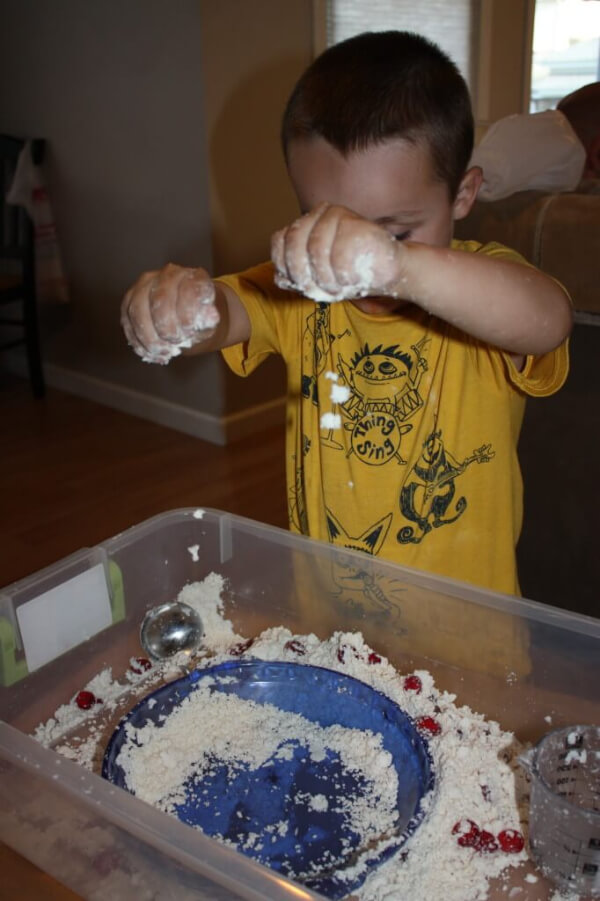
Materials required:-
- Apple fragrance sand,
- Container,
- Strawberries,
- Spoons.
Activity: Collection of all the strawberries from the sand.
Procedure:-
- Take a big container and fill it with sand scented with apple fragrance bought from the market.
- Fill it with some small artificial or natural strawberries.
- Using a spoon, ask your kid to find out all the hidden strawberries from the bin.
- Collect the strawberries in any container using a spoon as a scooper.
Fall Sensory Bin Play Activities with Apples & Acorns!

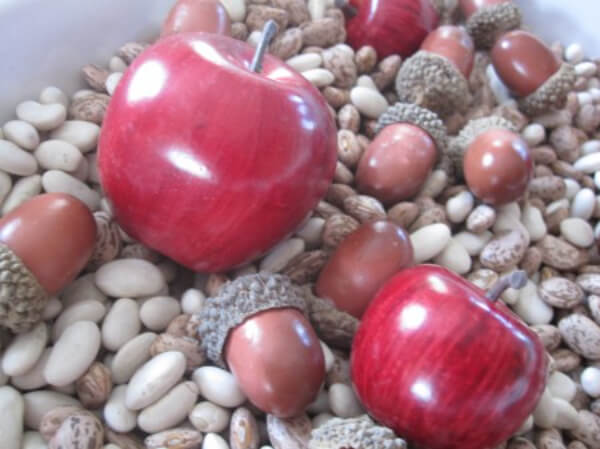
Image Source/Tutorial: No Time For Flash Cards
Materials required:-
- Container,
- Scooper,
- Tongs,
- Beans,
- Artificial acorns,
- Artificial apples,
- Nuts
Activity:- Collect all the acorns and apples from the bin and tell which are more in quantity.
Procedure:-
- First of all, you need to find a big container that will be deep enough to convert into a sensory bin.
- Then you need to buy some packets of nuts and beans from the supermarket.
- Artificial apples and acorns are also easily available in the market.
- Now fill your bin with nuts and beans.
- Get some artificial apples and acorns. Mix them in the bin.
- Let’s start the activity by providing the toddler with a scooper and an empty container to collect the apples and acorns.
- Once you’re done with the collection. Count the number of acorns and apples.
Autumn Sensory Bin For 5-year-olds

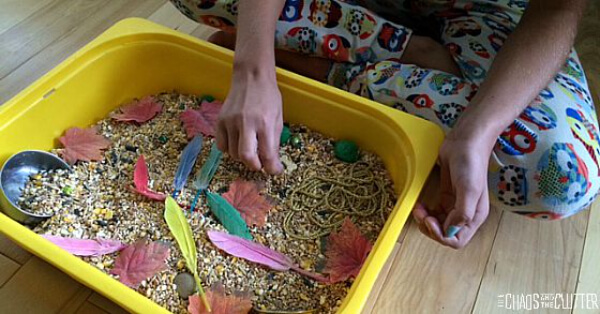
Image Source/Tutorial: The Chaos And The Clutter
Materials required:-
- Rocks,
- Feathers,
- Glitter powders,
- Scoopers,
- Bird seeds,
- Pom-pom leaves,
- Plastic containers or plastic tubs.
Activity:- Collection of all the materials that will be found hidden in the bird seeds or glitter powder.
Procedure:-
- Get a plastic container and fill it with birdseed and glitter powder.
- Collect some feathers, rocks, and leaves, mix them, and add them to the bin.
- Buy some pom poms from the market and hide them in the bin.
- Using a scooper, ask your kid to find all the hidden items from the bin.
- It will be a little bit time-consuming to locate pom-poms as they are small in size. But it will be fun to play this game.
Autumn Sensory Play Activities For Toddlers

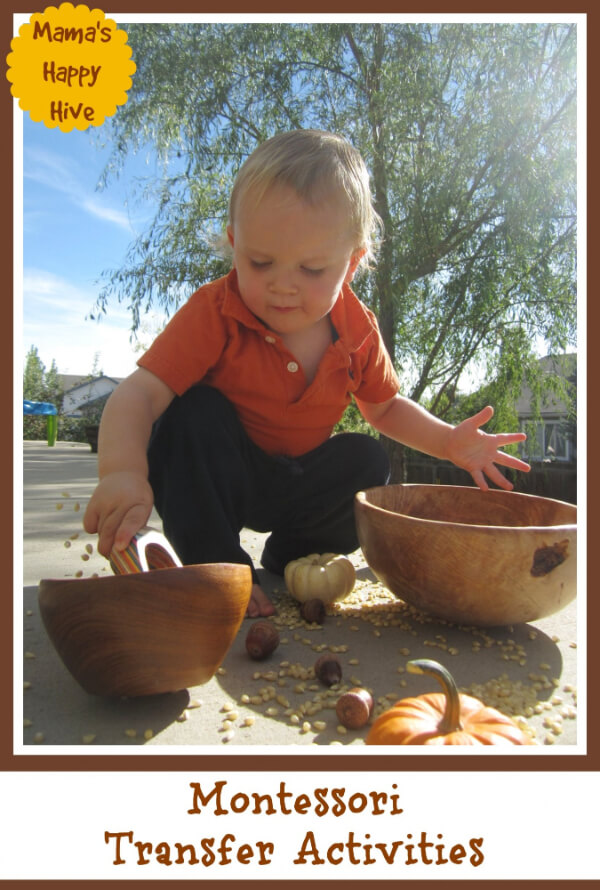
Image Source/Tutorial: Mama’s Happy Hive
Materials required:-
- Big wooden bowls,
- Corn kernels,
- Pumpkins,
- Acorns,
- Scoopers
Activity:- Segregation of different materials based on size.
Procedure:-
- Find a big wooden Bowl in the kitchen.
- Fill this bowl with corn kernels.
- Take some acorns and hide them in the bowl.
- Get some medium and small-sized pumpkins from the market and make sure to hide them properly inside the bowl.
- Prefer small-sized pumpkins as we can hide them easily.
- With the help of a scooper, find all the hidden items.
- Once you’re done with it, then separate them based on size.
Colored Rice Sensory Bin

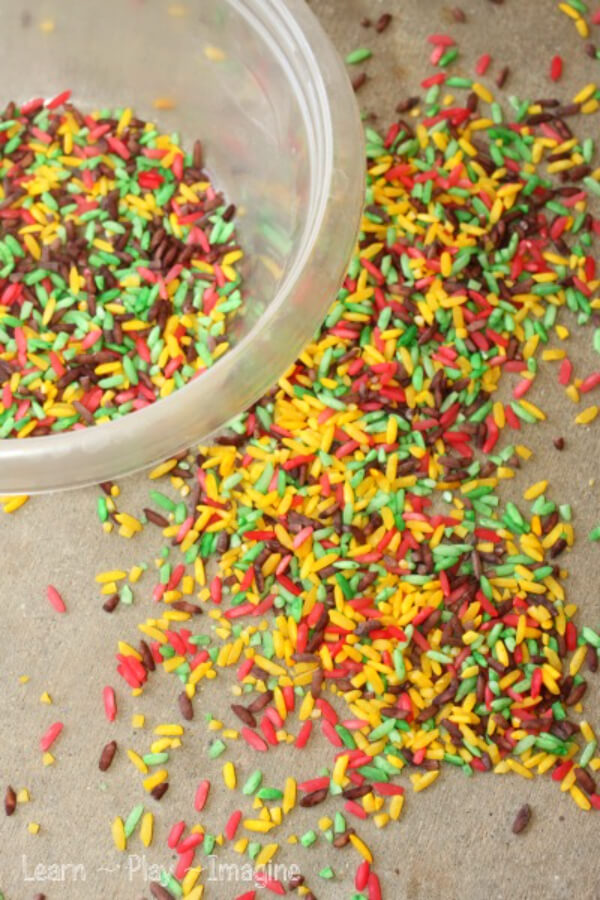
Materials required:-
- Rice,
- empty bin,
- food colour or water colours,
- plastic bags,
- scooper,
- bowls.
Activity:- Recognition of different colours.
Procedure:-
- Get four plastic bags.
- Fill each bag with a handful of rice.
- Get water colours or good colours and add different colours to each bag.
- Like in one bag, we added green, in the second one, we added brown, in the third one, brown, and in the fourth one, yellow.
- You can use your favourite colours.
- Seal the ends of each bag and mix them well till you find that the rice has been stained well with colours.
- Unseal the Bags and transfer the coloured rice to different bowls.
- Using a scooper, tell your child to mix all four different coloured rice in a bin.
Pine sensory bin

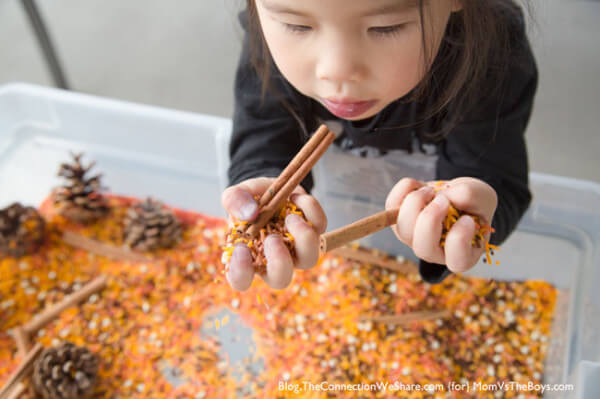
Image Source/Tutorial: Momvstheboys
Materials required:-
- Rice,
- Watercolours,
- Jars,
- Cinnamon sticks,
- Cinnamon powder,
- Pine cones,
- Scoopers,
- Bin.
Activity:-Find the hidden items and also recognise the shape of the items.
Procedure:-
- Get some jars.
- Fill each jar with a handful of rice.
- Get watercolours or good colours and add different colours to each jar.
- Let the colours stain the rice properly.
- Now remove the rice and transfer it into an empty bin.
- Take some cinnamon sticks and grind them to make powder out of them.
- Mix this powder in the bin.
- Collect some pine cones from the woods.
- Hide the cones and the cinnamon sticks inside the bin.
- Let your little one find these two using a Scooper.
Colours of Fall Sensory Bin Play Activities

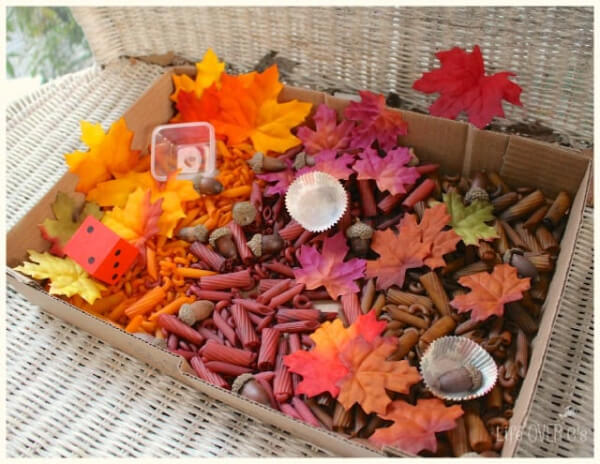
Image Source/Tutorial: Life Over C’s
Materials required:-
- Cardboard tray,
- Pasta,
- Cupcake liners,
- Artificial Autumn leaves,
- Dice,
- Scooper,
- Bowl.
Activity:- Collecting items according to the number that comes up when rolling the dice.
Procedure:-
- Find any cardboard box or tray.
- Buy some artificial Autumn leaves from the market and add them to the tray.
- Take pasta packets of different colours and mix them on the tray.
- To make it look more attractive, you can add cake liners to it.
- Now start playing, first you need to roll a dice and check the number that comes on it.
- Then, according to that number, you need to collect items. If two come up on the dice, you need to collect two things from the tray.
- For collecting objects, you can use a scooper and a bowl.
Nature Table Fall Sensory Science Ideas

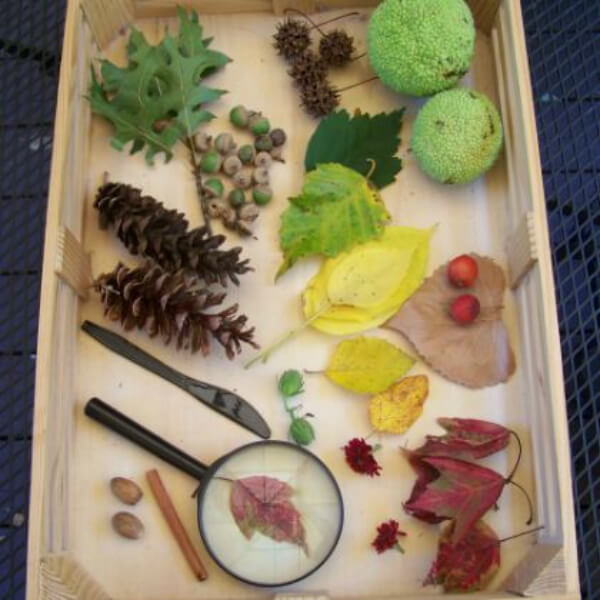
Image Source/Tutorial: KC Edventures
Materials required:-
- Any natural thing you find in your garden, like leaves,
- Seeds,
- Branches,
- Flowers,
- Fruit,
- Grass,
- Magnifying glass,
- Bin.
Activity:- Comment on the collected material and explain the texture and colour of the found items.
Procedure:-
- Move outside your lawn or garden.
- Collect all the natural items you find in your surroundings.
- Collect them in a bin.
- Now invite your friends and start discussing with them the things you collected.
- You can make use of a magnifying glass to check the minute details of the objects and observe them.
Easy Fall Button Tree Quiet Sensory Bin

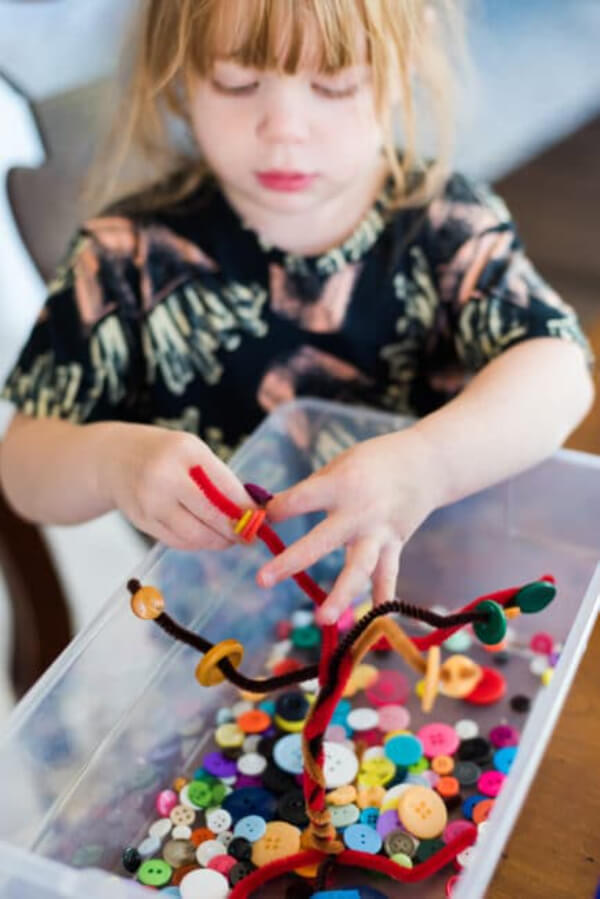
Image Source/Tutorial: Hands-on As We Grow
Materials required:-
- Buttons,
- Plastic containers,
- Pipeline cleaners.
Activity:-Using the hidden items, try to make a tree.
Procedure:-
- Take an empty plastic container and fill it with buttons of different colours.
- Collect some pipeline cleaners and add them to the bin.
- You can make the base of the tree using pipeline cleaners.
- Pass the buttons through the pipeline cleaners and complete your project.
Fall Farm Sensory Bin Play Activities

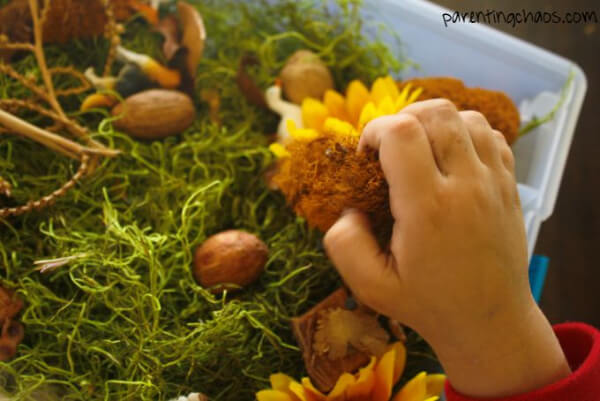
Image Source/Tutorial: Parenting Chaos
Materials required:-
- Plastic bin,
- Grass,
- Flowers,
- Acorn.
Activity: Differentiate between the hard and the soft materials.
Procedure:-
- Visit any garden and cut some grass from there.
- Add the grass to an empty plastic bin.
- Collect some flowers also and hide them in the bin.
- Add the acorns to the bin also.
- Ask your child to find the soft material, which is a flower, and the hard one, which is an acorn.
- This activity will help you to make your child understand the difference between the textures of different materials, and it will be cool to play such games.
Step-by-Step Sensory Bin Play Tutorial for Kids

Watch this step‑by‑step tutorial on sensory bin play ideas for kids! Learn how to set up engaging sensory bins with fun themes, easy materials, and playful learning activities that boost motor skills, creativity, and exploration. Perfect for toddlers and preschoolers — DIY sensory play guides you through every step!
Why Sensory Bin Play Is Important for Kids
Sensory bin play is a fun, hands-on learning activity that encourages children to explore different textures, colours, shapes, and materials. It stimulates multiple senses at once, helping children develop important cognitive, physical, and social skills while enjoying open-ended play.
Whether filled with rice, sand, water beads, dried beans, or nature items, sensory bins inspire creativity, curiosity, and imagination. They are ideal for toddlers, preschoolers, kindergarten children, and early elementary learners at home or in the classroom.
Benefits of Sensory Bin Play
Sensory bins offer numerous developmental benefits that support children’s overall growth.
- Develops fine motor skills and hand strength
- Encourages creative and imaginative play
- Improves hand-eye coordination
- Enhances problem-solving and critical thinking
- Supports language and vocabulary development
- Builds focus, patience, and concentration
- Promotes sensory exploration and discovery
- Encourages independent learning
- Supports early math concepts like counting and sorting
- Provides a calming and relaxing play experience
Safety Tips for Sensory Bin Activities
- Always supervise young children during sensory play.
- Avoid small materials for children who still mouth objects.
- Use non-toxic and child-safe supplies.
- Wash your hands before and after each activity.
- Store sensory materials in clean, sealed containers.
- Discard damaged or dirty materials regularly.
FAQs
Q1. What is a sensory bin?
Answer: A sensory bin is a container filled with materials that encourage children to explore through touch, sight, and movement while learning through play.
Q2. What age is suitable for sensory bin play?
Answer: Sensory bins are ideal for toddlers, preschoolers, kindergarten children, and early elementary students. Activities should always be adapted according to the child’s age and developmental level.
Q3. Can sensory bins be educational?
Answer: Yes. Sensory bins teach counting, sorting, colours, letters, numbers, science concepts, vocabulary, and fine motor skills through engaging, hands-on experiences.
Q4. How can I make a sensory bin at home?
Answer: Simply fill a shallow container with a sensory base such as rice, beans, sand, or pasta, then add themed toys, scoops, cups, and other safe objects for children to explore.
Q5. How often should children use sensory bins?
Answer: Children can enjoy sensory bin activities several times each week. Rotating themes and materials keeps the experience exciting while supporting continuous learning.
Sensory bin play encourages creativity, exploration, and hands-on learning while developing fine motor, cognitive, and problem-solving skills. These engaging activities make learning enjoyable for children at home, school, or daycare. Get daily inspiration with creative crafts and exciting activities. Join us on Telegram, YouTube & Facebook.
Reviewed by Yash Sharma
More Articles from Kids’ Art & Craft
- Interesting Letter Learning Activities For Preschoolers
- Math Games And Activities For Kids
- Puzzle Activities For Kids
- Ant Crafts & Activities for Kids
- Nature-Inspired Crafts Activities for Kids