Games
Shapes Learning & Activities For Kids

If you’re searching for Shapes Learning & Activities for kids to do at home, you’re in the right place! Keep your learning spirit alive with our curated list of shapes learning & activities like sorting shapes, copying the image, posters, anchor charts, a simple worksheet, playing hopscotch, 2-D shapes activity, sorting blocks, maze activity, popstick puzzle shapes, activity hunt, and shape booklets.
Shapes Learning & Activities For Kids
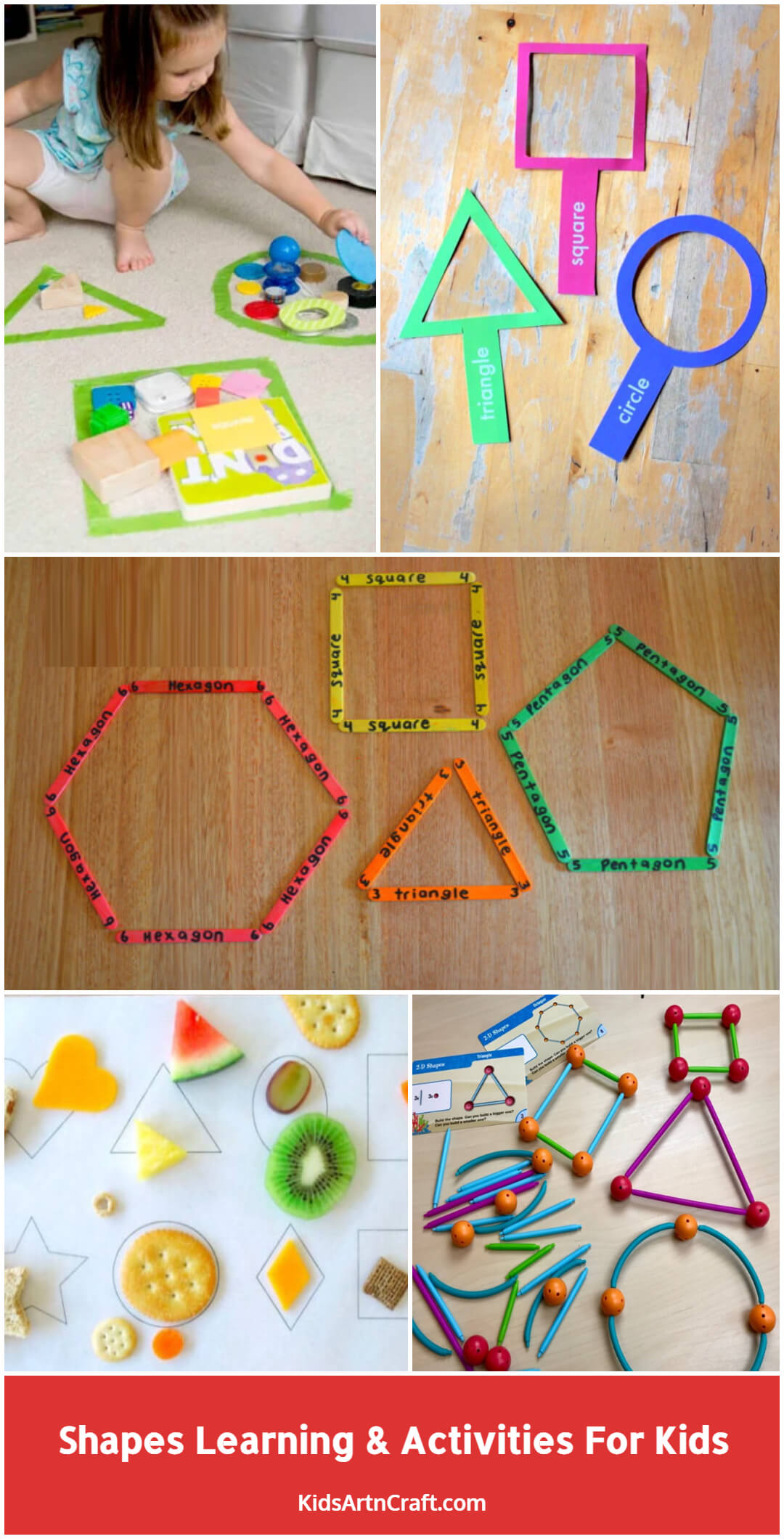

Shape Sorting with Snacks

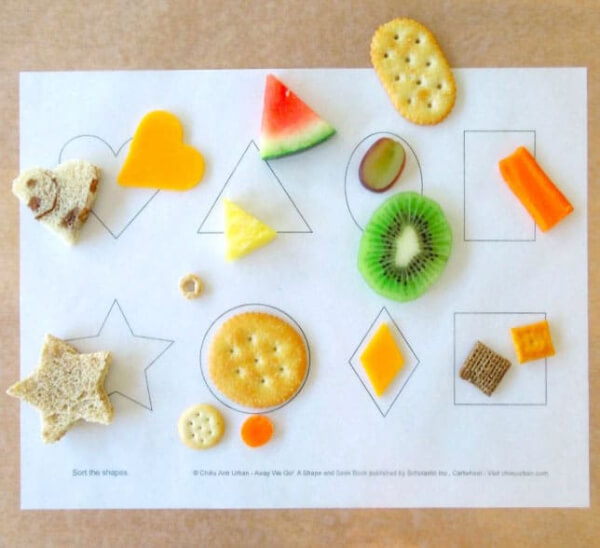
Image Source/Tutorial: Hello Wonderful
Materials Required:
Printed shape worksheet, fruits or crackers, knife (adult use).
Procedure:
Cut snacks into shapes like circles, triangles, or stars. Children place each snack on the matching shape on the worksheet.
Read More: Fine Motor Activities for Kids
Tangram Shape Puzzle Game

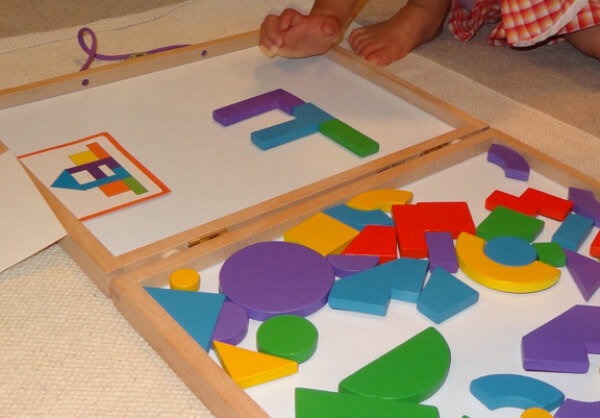
Image Source/Tutorial: Gift Of Curiosity
Materials Required:
Tangram pieces, puzzle cards, tray, or board.
Procedure:
Show a pattern card with a shape design. Children arrange tangram pieces to match the design.
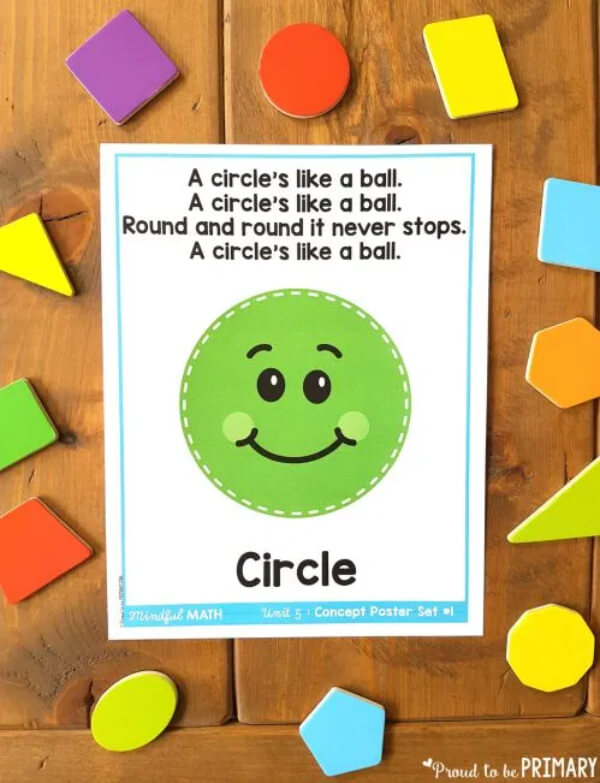
Circle Shape Learning Poster

Materials Required:
Printed poster, colored shape blocks (optional).
Procedure:
Display the circle poster and discuss the shape. Ask children to find circle objects around the classroom.
Color the Shapes Worksheet

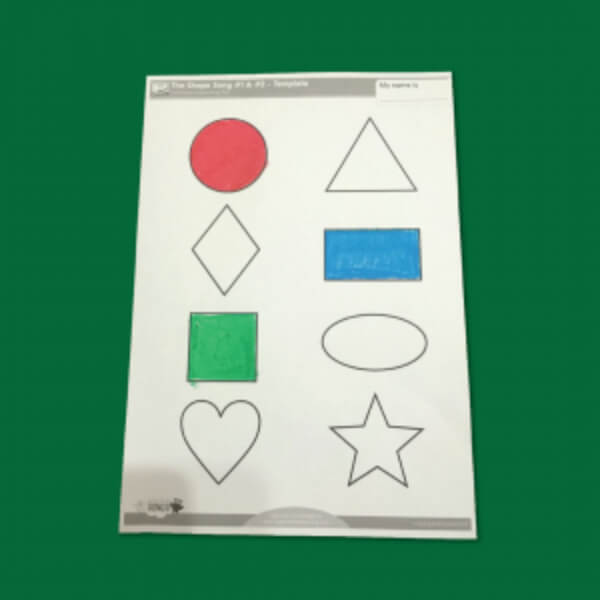
Image Source/Tutorial: Super Simple
Materials Required:
Printed worksheet, crayons, or markers.
Procedure:
Show the different shapes on the worksheet. Children color each shape with different colors.
Hopscotch Number Game

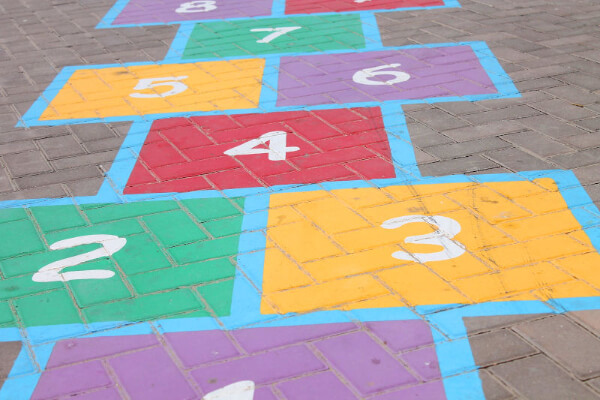
Image Source/Tutorial: joy
Materials Required:
Sidewalk chalk or paint, outdoor space.
Procedure:
Draw numbered squares on the ground in hopscotch style. Children jump from number to number while counting aloud.
2D Shapes Learning Chart

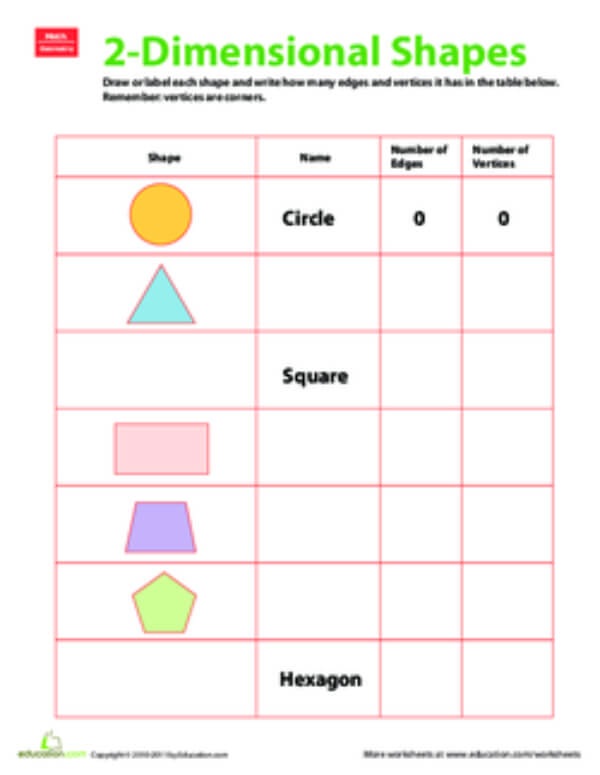
Image Source/Tutorial: Education
Materials Required:
Printed chart, markers (optional).
Procedure:
Introduce each shape shown on the chart. Discuss its name and how many sides and corners it has.
Read More: Fun Activities and Crafts For Toddlers
Shape Flashcards for Kids

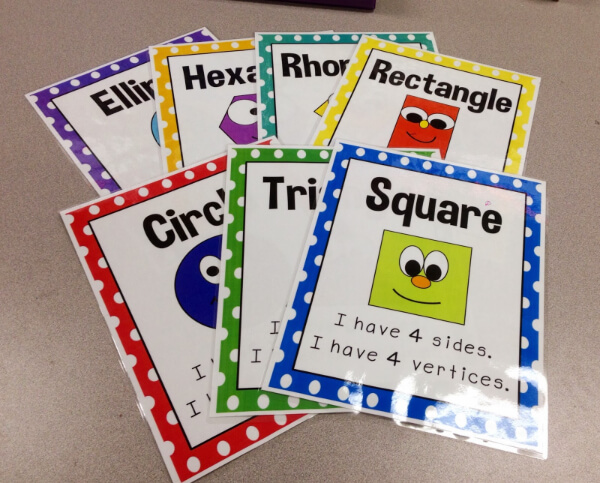
Materials Required:
Printed flashcards, laminator (optional).
Procedure:
Show one flashcard at a time to the child. Ask them to name the shape and find similar objects.
Wooden Block Shape Building Activity
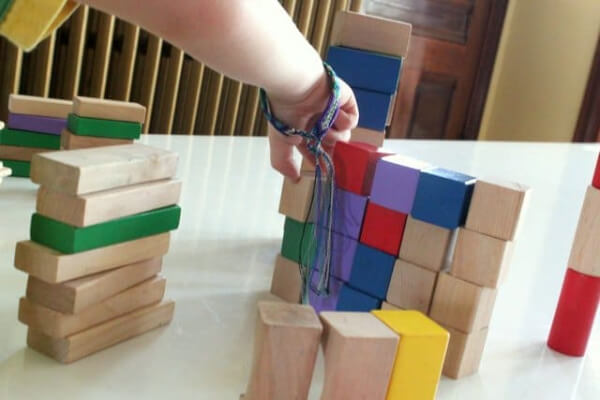
Image Source/Tutorial: Hands On As We Grow
Materials Required:
Wooden blocks, flat surface.
Procedure:
Provide different block shapes to children. Encourage them to stack and arrange blocks to create structures.
Floor Shape Sorting Game
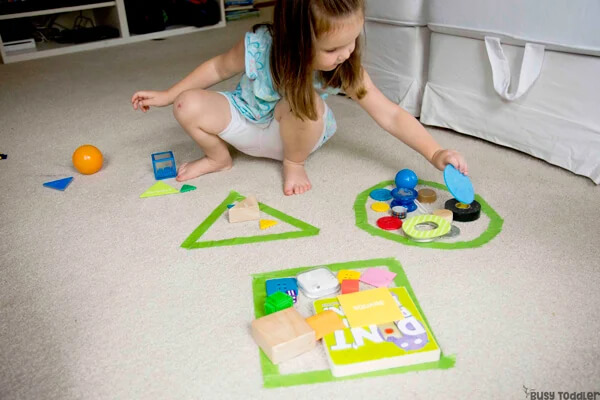
Image Source/Tutorial: Busy Toddler
Materials Required:
Masking tape, small toys, or objects.
Procedure:
Make large shape outlines on the floor using tape. Children place objects into the matching shape area.
Shape Magnifying Glass Craft

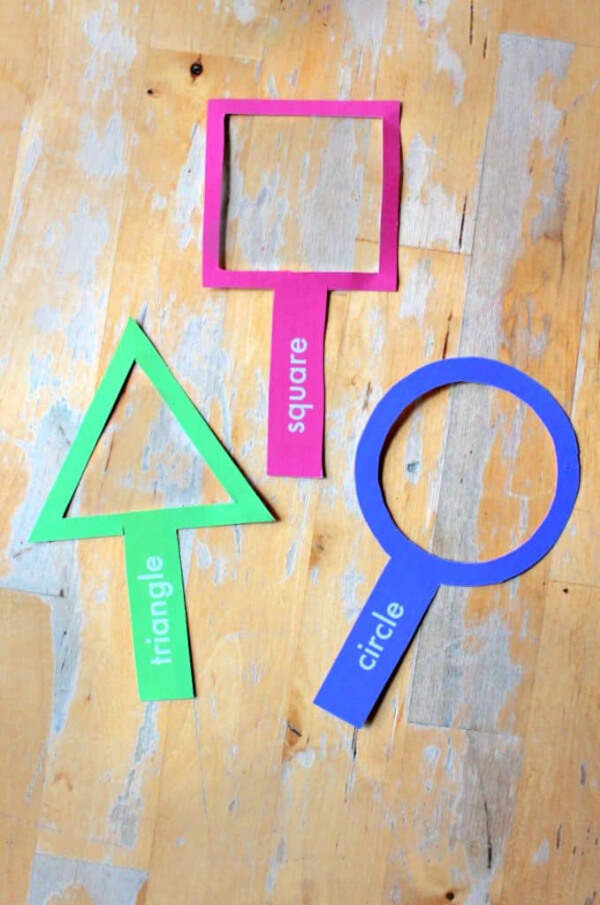
Image Source/Tutorial: Nurture Store
Materials Required:
Colored paper, scissors, glue, and a marker.
Procedure:
Cut large shape frames from colored paper. Attach handles and let kids use them to find shapes around them.
Outdoor Chalk Shape Hop Game
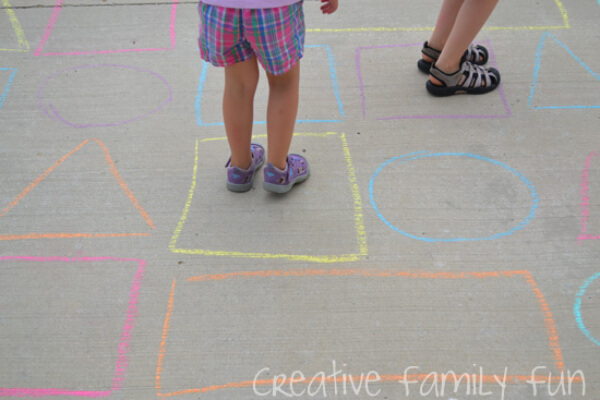
Image Source/Tutorial: Creative Family Fun
Materials Required:
Sidewalk chalk, open pavement, or playground space.
Procedure:
Draw different shapes like circles, squares, and triangles on the ground. Call out a shape and let kids jump to the correct one.
Read More: Fun Activities For Kids To Do at School and Home
Foam Shape Sorting Activity

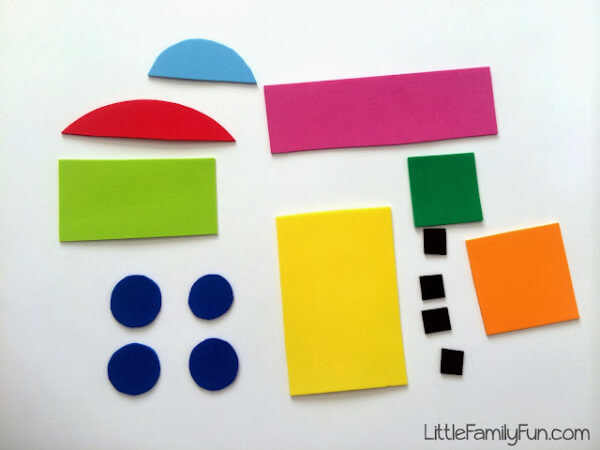
Image Source/Tutorial: Little Family Fun
Materials Required:
Foam sheets, scissors, and glue (optional).
Procedure:
Cut foam sheets into different shapes such as circles, rectangles, and squares. Let children sort or arrange the shapes into pictures or patterns.
Toy Car Shape Tracing Activity

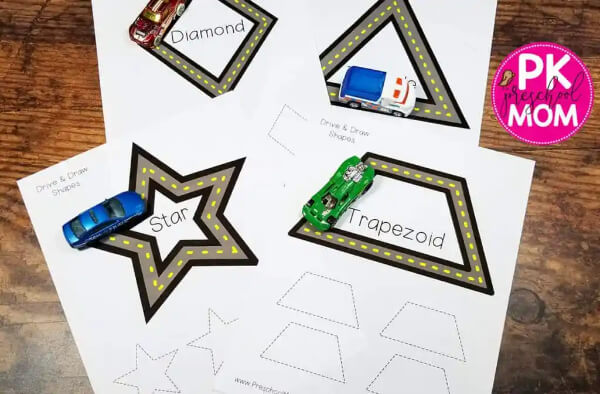
Image Source/Tutorial: Preschool Mom
Materials Required:
Printed shape worksheets, toy cars, crayons.
Procedure:
Place toy cars at the start of the shape path. Children drive the cars along the outline to trace each shape.
Rock Shape Making Activity

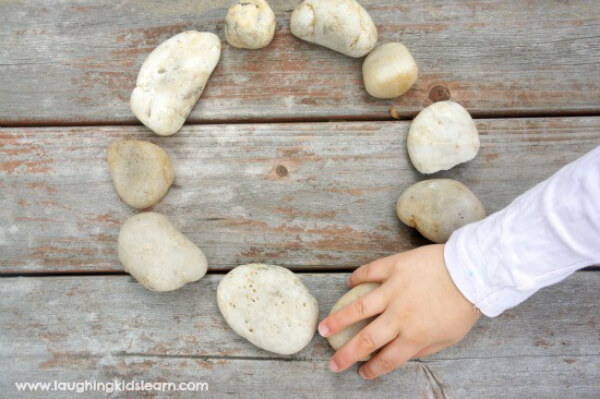
Image Source/Tutorial: Nurture Store
Materials Required:
Small stones or pebbles, flat surface.
Procedure:
Collect small stones from outside. Arrange them to form shapes like circles, triangles, or squares.
Popsicle Stick Shape Craft
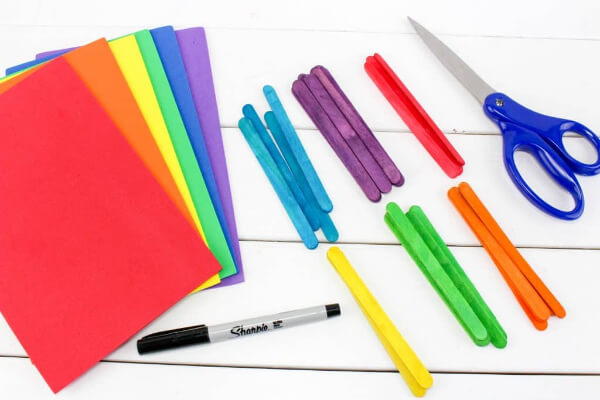
Image Source/Tutorial: Surviving a Teacher’s Salary
Materials Required:
Colored popsicle sticks, colored paper, scissors, marker.
Procedure:
Use popsicle sticks to form simple shapes like triangles and squares. Glue them onto paper to create shape art.
Popsicle Stick Geometry Shapes

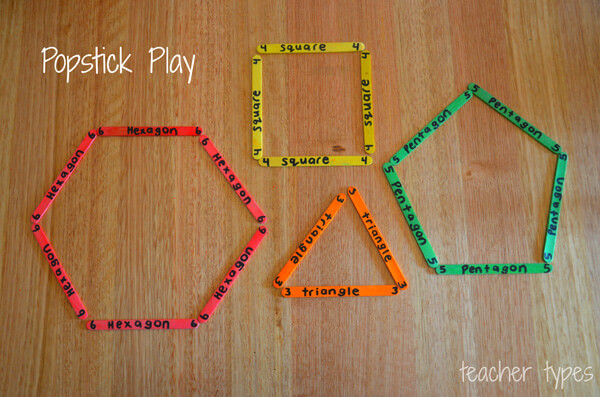
Image Source/Tutorial: Childhood 101
Materials Required:
Popsicle sticks, markers, and glue (optional).
Procedure:
Write the shape name on each stick. Arrange sticks to form the matching geometric shape.
Read More: Fun Addition Activities for Kids
Dot Marker Shape Learning
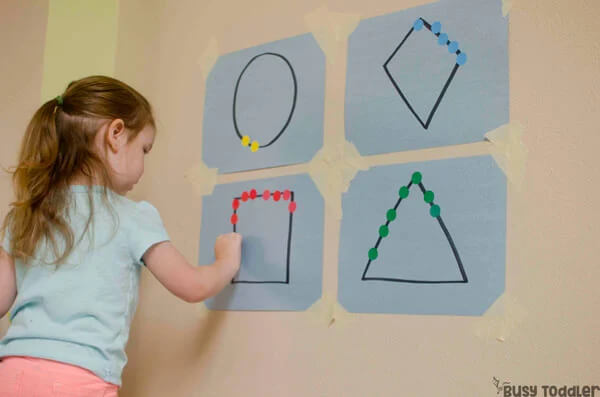
Image Source/Tutorial: Busy Toddler
Materials Required:
Paper, markers or stickers, tape.
Procedure:
Draw large shapes on paper and attach them to the wall. Kids place dots along the edges of each shape.
Shape Lacing Craft

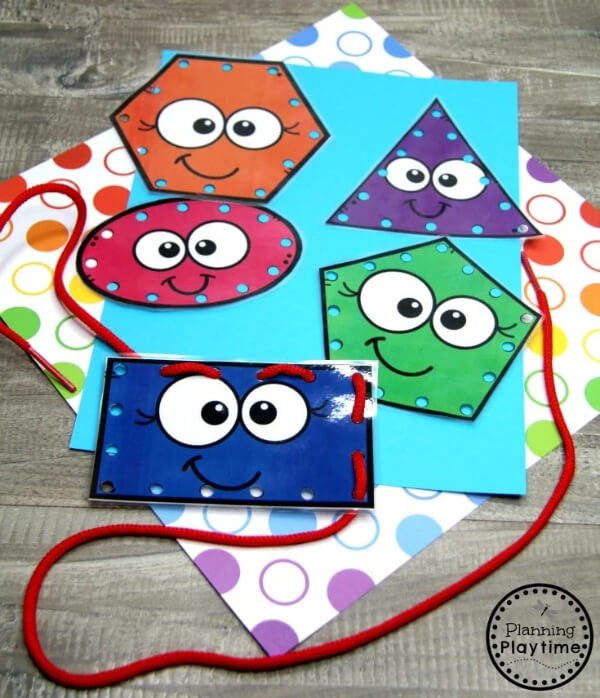
Image Source/Tutorial: Planning Play Time
Materials Required:
Printed shape cards, hole punch, yarn, or shoelace.
Procedure:
Punch holes around the edges of the shape cards. Children lace the string through the holes.
Shape Building with Manipulatives

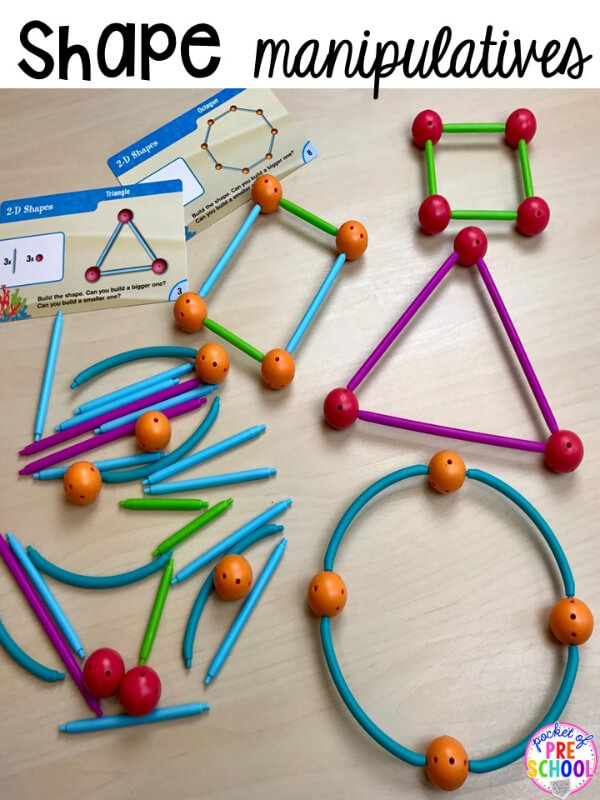
Image Source/Tutorial: Pocket Of Preschool
Materials Required:
Shape connectors, plastic rods, or sticks.
Procedure:
Provide rods and connectors to children. Let them join pieces together to build different shapes.
3D Shape Sorting Game

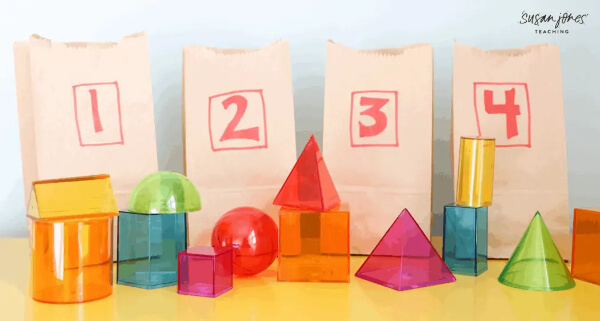
Image Source/Tutorial: Susan Jones Teaching
Materials Required:
3D plastic shapes, paper bags, marker.
Procedure:
Label paper bags with numbers or shape names. Children place each 3D shape into the correct bag.
Shape Graph Counting Worksheet

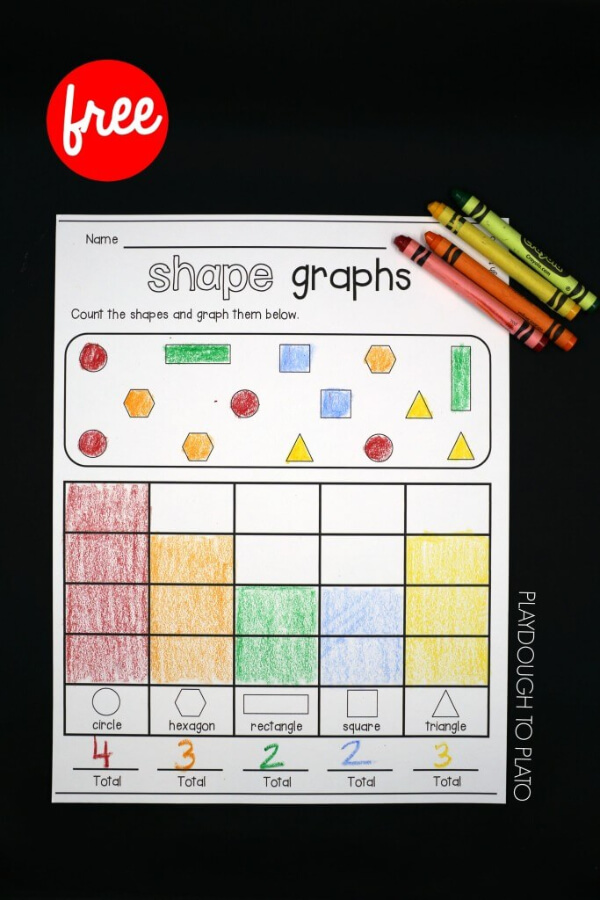
Materials Required:
Printed shape graph worksheet, crayons, or colored pencils.
Procedure:
Ask children to count each type of shape shown at the top. Color the graph boxes to show how many shapes were counted.
Read More: Fun Math Activities for 4th Graders
Triangle Monster Shape Craft
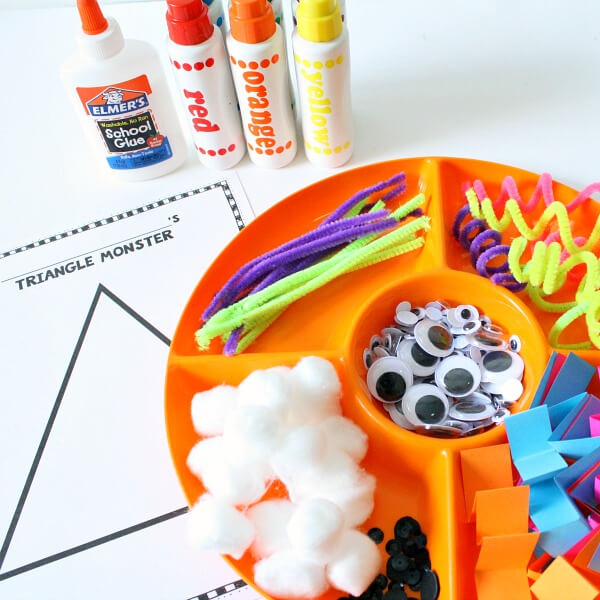
Image Source/Tutorial: Fantastic Fun And Learning
Materials Required:
Triangle template, glue, pipe cleaners, googly eyes, cotton balls, and colored paper.
Procedure:
Provide the triangle template for the monster base. Let kids decorate it with craft materials to create a funny monster.
Shape Sensory Sorting Tray
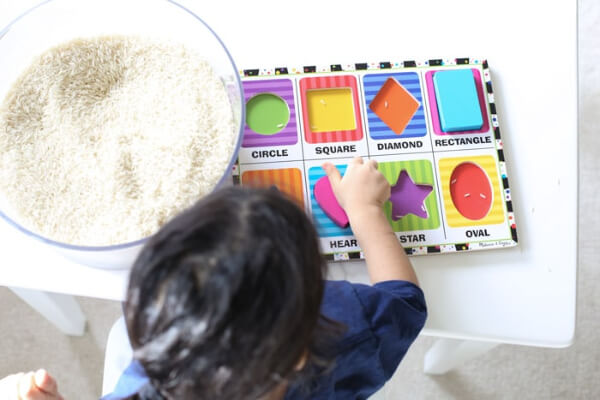
Image Source/Tutorial: Fun With Mama
Materials Required:
Shape puzzle board, rice sensory bin, small container.
Procedure:
Hide shapes inside the sensory rice bin. Children find the shapes and place them into the matching slots.
Paper Ice Cream Shape Craft
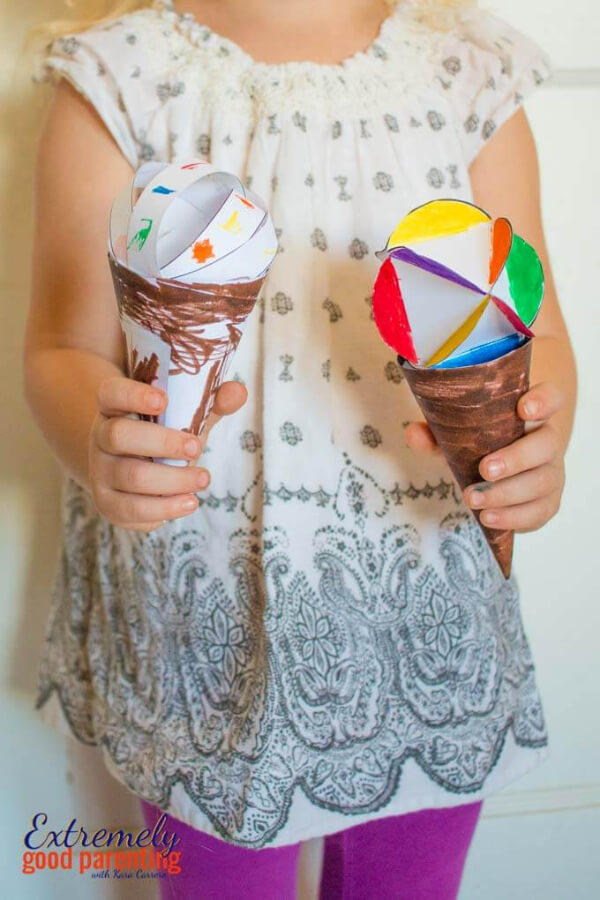
Image Source/Tutorial: Kara Carrero
Materials Required:
Colored paper, scissors, glue, crayons, or markers.
Procedure:
Cut paper into cone and scoop shapes. Let children color and assemble the pieces into ice cream cones.
What Does the Shape Say? Mini Book

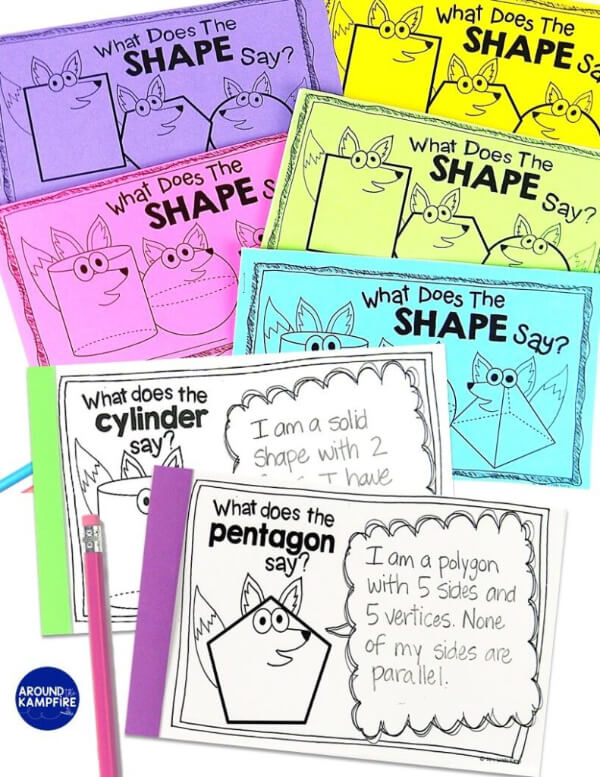
Image Source/Tutorial: Around The Kampfire
Materials Required:
Printed shape book templates, scissors, crayons, stapler.
Procedure:
Cut and fold the pages to create the mini book. Children color the shapes and read the descriptions.
Popsicle Stick Shape Matching Puzzle
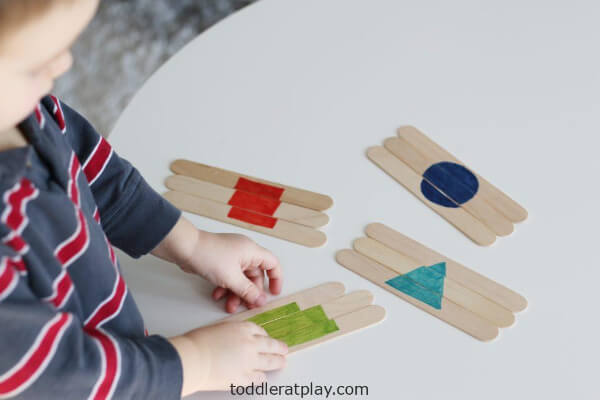
Image Source/Tutorial: Toddler At Play
Materials Required:
Popsicle sticks, colored markers, and glue.
Procedure:
Draw half shapes on different popsicle sticks. Kids match the sticks together to form complete shapes.
Step-by-Step Tutorial for Preschool & Kindergarten

Learn basic shapes with fun and engaging activities in this step-by-step tutorial for kids. Perfect for preschool and kindergarten learners, this educational video teaches circle, square, triangle, and more through simple games and creative exercises that improve recognition, creativity, and early math skills while making learning shapes enjoyable and interactive.
Educational Benefits of Shapes Learning Activities for Kids (EEAT Section)
Shapes learning activities are more than simple classroom or craft exercises—they play a crucial role in early childhood development. Research in early education shows that hands-on shape activities help children build strong foundations in math readiness, spatial awareness, problem-solving, and cognitive development.
By engaging with shapes through crafts, games, and sensory play, children learn to connect abstract concepts with real-world objects, making learning more meaningful and long-lasting.
Cognitive Development and Early Math Skills
Shape-based activities help children recognize, compare, and classify objects based on their properties such as sides, curves, and sizes. This builds early mathematical thinking and logical reasoning.
Through regular practice, children develop:
- Strong understanding of basic geometric shapes (circle, square, triangle, rectangle)
- Early sorting and classification skills
- Pattern recognition and sequencing abilities
- Improved memory through visual learning
These foundational skills prepare children for more advanced math concepts in later grades.
Fine Motor Skills and Physical Development
Hands-on shape activities such as tracing, cutting, building, and matching help strengthen a child’s fine motor control. These activities are especially important for preschoolers who are developing writing readiness.
Children improve:
- Pencil grip and handwriting control
- Hand-eye coordination
- Finger strength and dexterity
- Precision in movement through cutting and crafting
Activities like shape puzzles, clay modeling, and lacing cards are especially effective for motor development.
Creativity and Problem-Solving Skills
Shape learning is not limited to worksheets—it encourages children to think creatively. When children build pictures or objects using shapes, they learn how different forms combine to create meaningful designs.
This supports:
- Creative thinking and imagination
- Problem-solving through trial and error
- Ability to visualize and construct patterns
- Confidence in independent learning
For example, using triangles for roofs or circles for wheels helps children understand real-world applications of geometry.
Sensory and Experiential Learning
Shape activities often involve tactile experiences such as sand tracing, playdough modeling, or foam shape sorting. These sensory-rich activities help children learn through touch, movement, and visual interaction.
Benefits include:
- Better sensory awareness and exploration
- Increased attention span and engagement
- Improved focus through hands-on learning
- Enhanced retention of concepts through active participation
Sensory learning is especially helpful for young learners who struggle with traditional classroom methods.
Early STEM and Spatial Awareness
Learning shapes is the first step toward understanding geometry and spatial relationships. Children begin to recognize how objects fit together, rotate, and form structures in the real world.
They begin to understand:
- Basic geometry and structure building
- Spatial reasoning (position, direction, and size)
- Real-life connections between shapes and objects
- Early engineering and design thinking skills
These skills form the foundation of STEM (Science, Technology, Engineering, and Mathematics) education.
Why Teachers and Parents Use Shape Activities
Educators and parents prefer shape-based activities because they combine learning with play, making education more engaging and effective for young children.
Shape activities help children:
- Learn through interactive and fun methods
- Improve classroom participation and attention
- Develop communication and vocabulary skills
- Strengthen social learning through group activities
They are easy to adapt for both classroom and home learning environments
FAQs
Q1. Why are shapes important for preschool learning?
Answer: Shapes help children understand basic geometry, improve observation skills, and build early math foundations.
Q2. What skills do shape activities improve?
Answer: They improve fine motor skills, cognitive development, spatial awareness, creativity, and problem-solving abilities.
Q3. What are the best shape activities for kids?
Answer: Shape sorting games, tracing activities, playdough modeling, puzzles, and scavenger hunts are highly effective.
Q4. At what age should children learn shapes?
Answer: Children can start learning basic shapes as early as 2–3 years old through playful activities.
Q5. How do shape activities help in real life?
Answer: They help children recognize objects in the real world and understand how shapes form the basis of everyday structures
Shape learning activities are essential in early childhood education because they support overall development in cognitive skills, motor coordination, creativity, and early math understanding. By integrating fun and interactive shape-based crafts and games into daily learning, children build strong foundational skills that support long-term academic success. Follow us on YouTube for art and craft tutorials and much more.
Reviewed By Rachit Gupta
More Articles from Kids’ Art & Craft
- Fun Sensory Activities To Promote Growth And Development Of Children
- Geoboard Activities for the Classroom
- Hundreds Chart Activities for Kids
- Interactive Number Line Activities for Kids
- Interesting Letter Learning Activities For Preschoolers