Science Experiments
Water Distillation Working Model Project for Students


Have you ever wondered how we can turn dirty or salty water into clean drinking water? This science project shows a simple process called distillation. In this experiment, water is heated until it becomes steam, and then the steam is cooled back into clean water. During this process, dirt and impurities are left behind! It’s like giving water a mini cleaning cycle using heat and cooling.
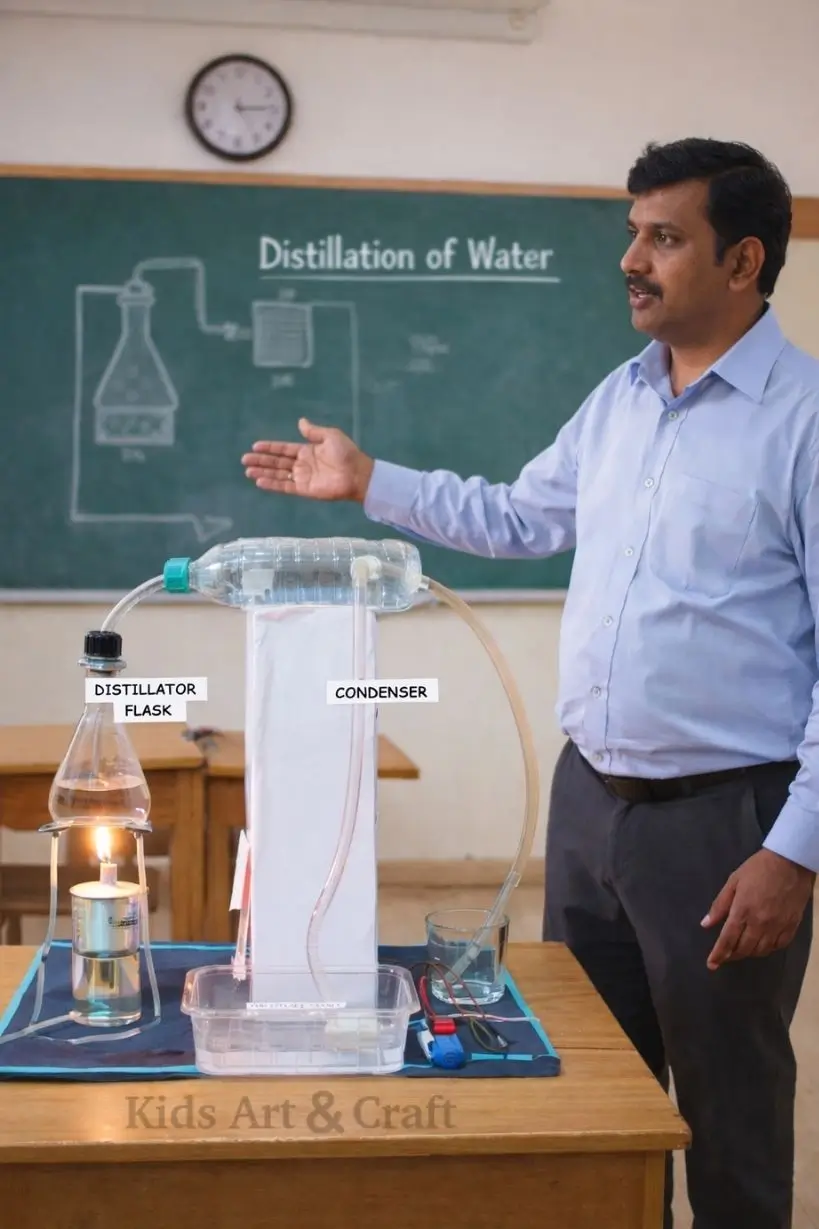
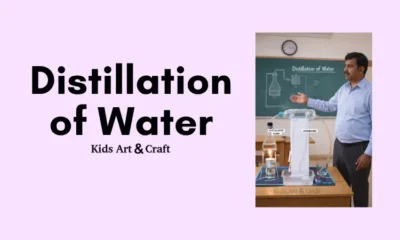
Demonstration of water purification through the distillation process in a science classroom
The Science Concept Behind It
This project works using a process called distillation.
Here’s the idea in simple words:
- When water is heated, it turns into steam (water vapor).
- The steam travels through a tube.
- The tube cools the steam.
- The steam turns back into liquid water.
The important part:
Most dirt, salt, and impurities cannot turn into steam, so they stay behind. So the water collected at the end is cleaner than the original water.
Materials Required
- Glass flask or bottle
- Heat source (candle or spirit lamp)
- Rubber tube or plastic pipe
- Plastic bottle or container
- Stand or support for holding the bottle
- Ice or cold water (to cool the tube)
- A beaker or cup to collect water
- Dirty or salty water
Step-by-Step Distillation Process
Step 1: Fill the Flask
Pour dirty or salty water into the glass flask.
Step 2: Set Up the Tube
Attach a tube from the flask to another container. The tube should pass through a cool area (like a bottle with cold water).
Step 3: Heat the Water
Light the candle or lamp under the flask. The water begins to heat up and turn into steam.
Step 4: Steam Travels
The steam moves through the tube.
Step 5: Cooling Happens
The tube is surrounded by cold water or ice, which cools the steam.
Step 6: Water Forms Again
The steam condenses (turns back into liquid water).
Step 7: Collect Clean Water
The clean water drips into the collecting cup. This is distilled water!
What Kids Learn
- How water changes from liquid to gas and back
- The idea of evaporation and condensation
- How scientists purify water
- How heat can be used in scientific processes
- Basic lab setup and observation skills
Real-Life Applications
Distillation is used in many real-world situations:
- Desalination plants turn seawater into drinking water
- Factories purify chemicals
- Making distilled water for laboratories and hospitals
- Cleaning polluted water in some water treatment systems
Safety Tips for the Distillation Experiment
- Always do this experiment with an adult or teacher
- Be careful with the flame and hot glass
- Do not touch the heated flask
- Keep flammable items away from the flame
Benefits of the Water Distillation Project
- Easy to build with simple materials
- Shows a real scientific process clearly
- Teaches environmental awareness about clean water
- Combines chemistry, physics, and engineering
- Looks impressive for science fairs
Creative Distillation Experiment Ideas
- Salt Water Experiment: Try using salt water and check if the collected water tastes salty.
- Temperature Test: Use ice around the tube and see if more water is collected faster.
- Solar Distillation: Try using sunlight instead of a flame to make a solar water purifier.
Distillation of water remains one of the most reliable purification methods, effectively removing impurities, salts, and harmful contaminants. By using simple heating and condensation, it ensures safe, clean drinking water, making it essential for homes, laboratories, and water treatment solutions. Join our Telegram group for regular updates and follow us on YouTube & Facebook for fun DIY art and crafts.