Kids Activities
Creative Ways to Teach About States of Matter


Explore creative ways to teach states of matter! Use fun experiments, hands-on activities, and interactive lessons to engage kids in learning solids, liquids, and gases.
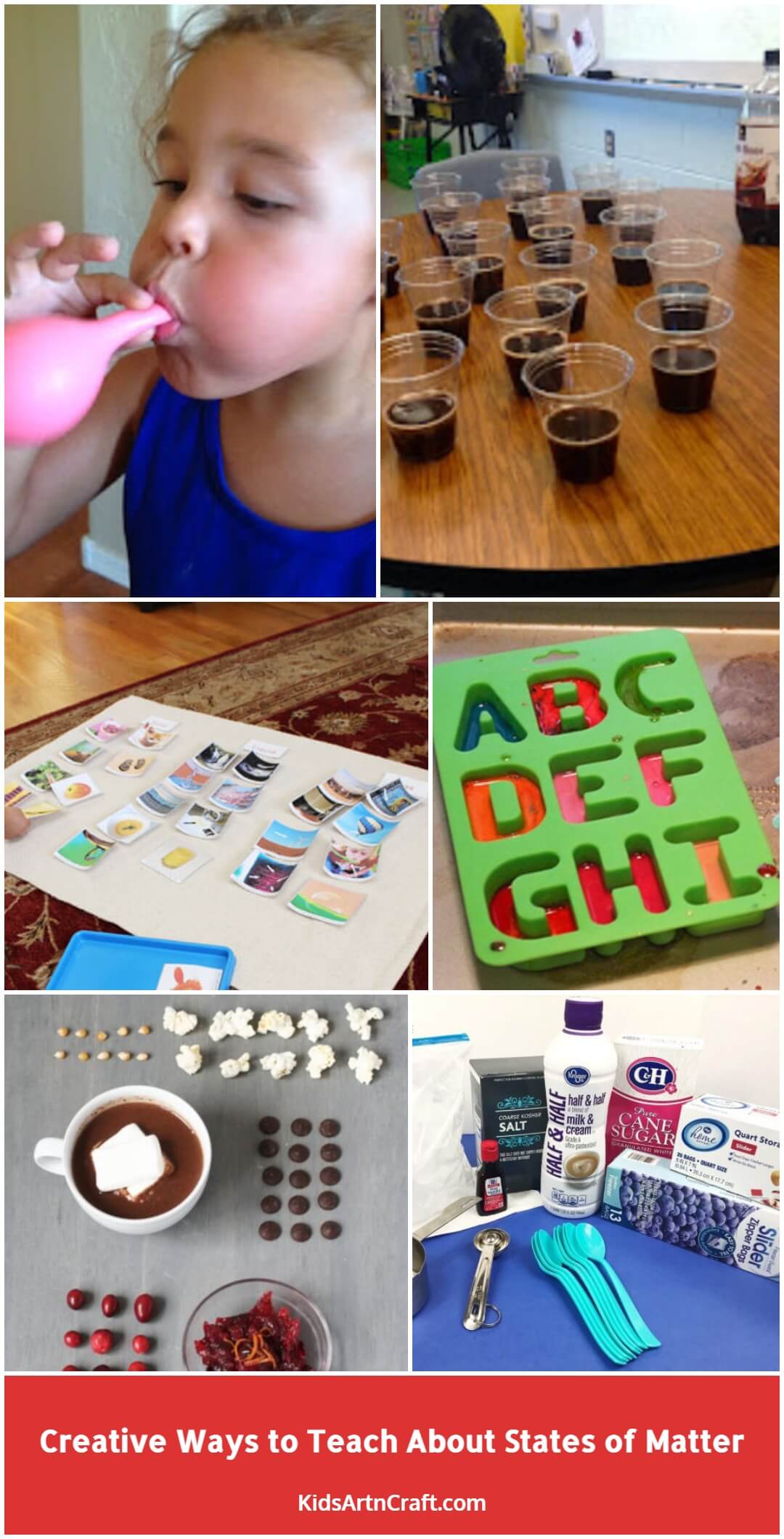
If you’re searching for creative ways to teach about states of matter, you’re in the right place! Keep your learning spirit alive with our curated list of creative ways to teach about states of matter, like solid-to-liquid activity for preschoolers, change in matter experiment ideas, and fun sorting card activity for the state of matter.
Creative Ways to Teach About States of Matter
Read More: Cotton Pad Crafts for Kids
States of Matter Guide For Kids
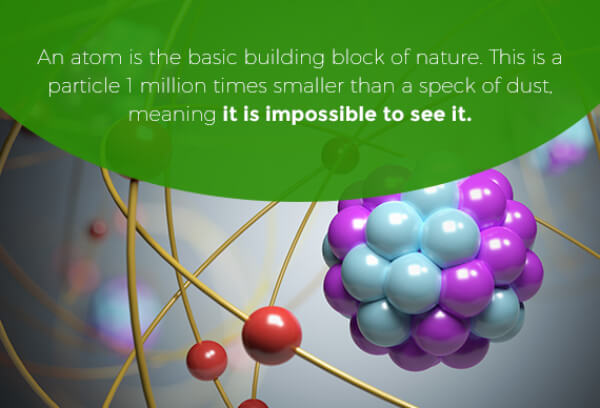
Image Source/Tutorial: Science Explorers
There is a simple and easy way to teach the states of matter. There are three types of states of matter for kids, i.e., solid, liquid, and gas. So here, an atom is the smallest unit of matter and the basic part of the chemical elements.
Explore the State Of Matter In A Fun Way
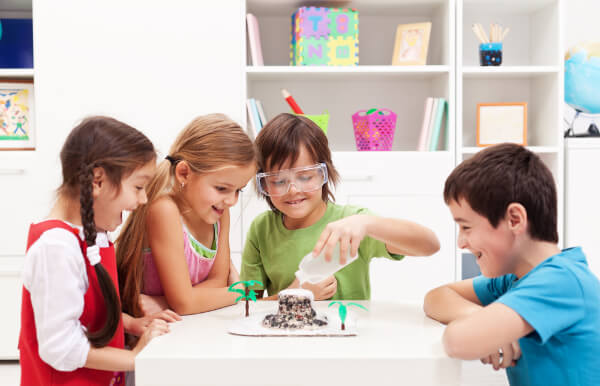
Image Source/Tutorial: kidsacademy
Learning and exploring the state of matter in an experimental, fun way. You can take one or multicolor slime and mix them. Then spread it on a plane surface in thin layers and dry it for 3-4 days. After drying out, the slime evaporates and turns from a liquid to a solid. Then, after it dries out from all the edges, put all the sides up. Lastly, when the object dries fully, it looks like a plastic structure. I hope you like this new idea for learning about the state of matter by experimenting. This experiment can easily be done by kids in the age group 8-10.
How To Teach A Unit On States of Matter
The state of matter is part of science. In this concept, we learn that a soda or cold drink is not only a liquid but also a gas form. To understand this concept, you can do an easy and simple experiment at home. First, take a soda bottle and a balloon. Now take a balloon and put it around the top of a soda bottle. After this, wait for 30-45 min. After a minute, you can see that ithe a balloon there is a high amount of gas in the soda. Kids can do this activity at home or school, and it is also budget-friendly for you all.
Amazing Introduction To The State Of Matter
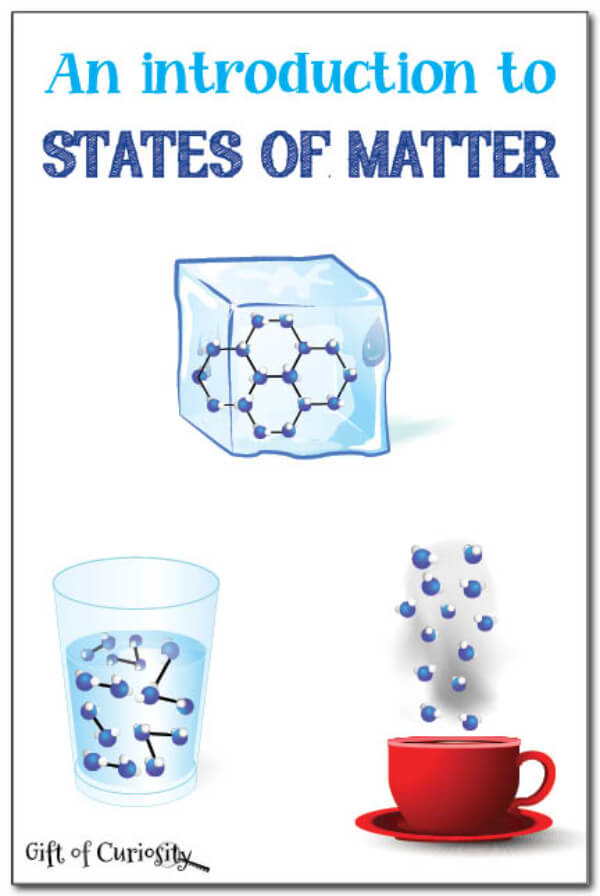
Image Source/Tutorial: Gift Of Curiosity
We know that the states of matter are solid, liquid, and gas. Here is an experiment on the state of matter of one item, which can be all three. Take a glass of water; here, water is liquid. Now take that glass of water and an ice tray and put it in the fridge for 2-4 hr. After an hour, it comes out in the ice cube shape, which is fixed-shaped and is solid. Now take the ice cube and put it in one container and on the flame; then that ice can melt and evaporate in the air, so it is the last stage of matter, i.e., gas. This is a simple and easy experiment that you can do at home.
Solid To Liquid Activity For Preschoolers
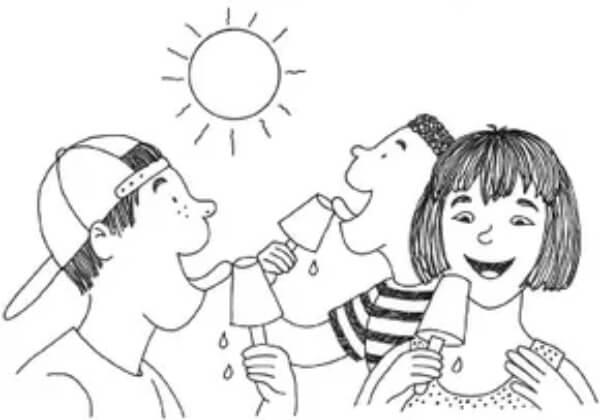
Image Source/Tutorial: Life Style
Here is the best example of learning about the state of matter. In this activity, we can learn about the two states of matter. To do such an activity, take a can of frozen juice and a spoon for the large pitcher. Now add some water to it. Then fill several trays with juice and put them into the freezer. Then check it after 2-3 hours. The juice is frozen and forms a solid shape. This is the easiest activity that can be done by kids at home.
Read More: Cupcake Coloring Pages For Kids – Free Printables
Clip And Sort: State OF Matter Activities For Kindergarten
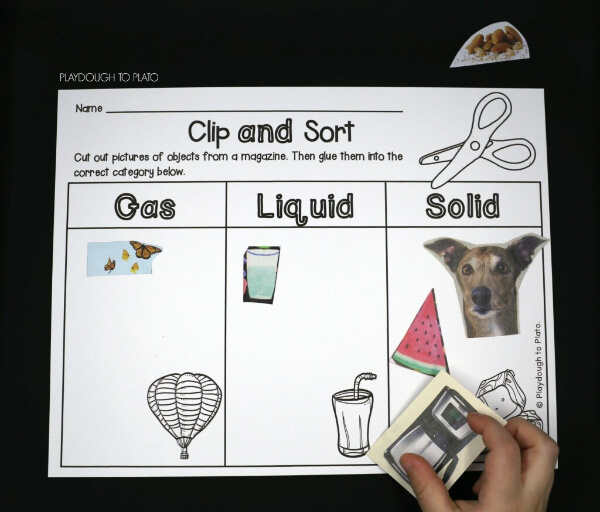
Image Source/Tutorial: Play-Doh to Plato
Give this assignment to a child or kids to understand the state of matter in this situation. Take a printable sheet of the state of matter in this situation, i.e., solid, liquid, and gas, and paste images and explain to the child what a solid, liquid, and gas are.
State Of Matter Anchor Chart For Toddlers
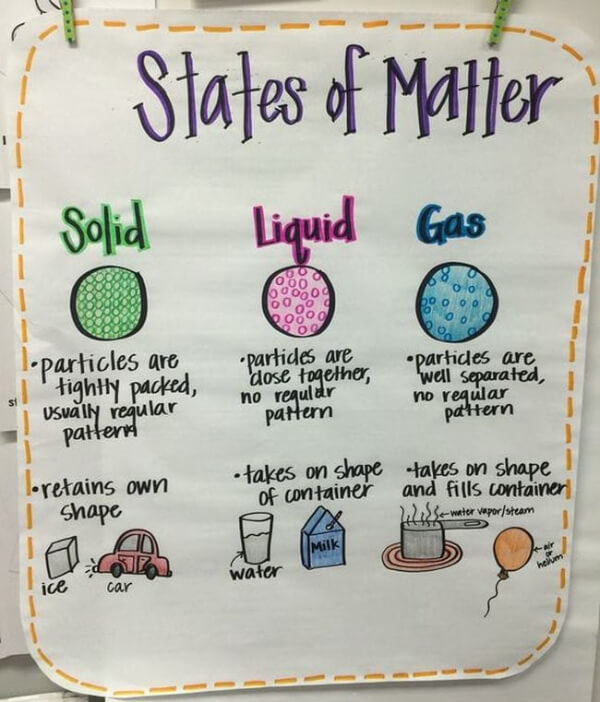
From this anchor chart, the kids easily learn the states of matter. For this, you need a white chart and sketch pens. You can easily learn from this anchor chart by making differences in all three states of matter with figures, so kids can easily learn the process. First, we should discuss solids. Solids have a fixed shape and are tightly packed; for example, ice cubes. The liquid does not have a fixed shape, and their particles are not together; for example, water. Now we discuss the last state of matter, which is gas, in which all particles are separated and can take any shape, for example, a balloon.
Change In Matter Experiment Ideas
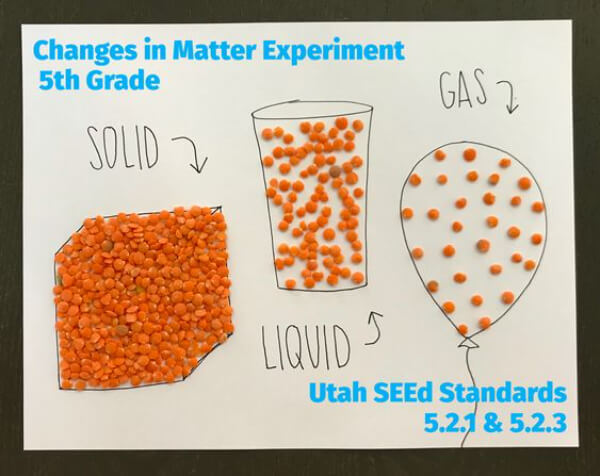
Image Source/Tutorial: Pinterest
This change in matter experiment is for the 5th grade. Take a piece of blank paper, glue, pulses, and a pen. To understand the state of matter, make the shape of an ice cube, a glass, and a balloon. Now take any pulses as per your choice and paste the pulses on the shape that you have on the blank paper. To explain the solid part, paste the pulses closely on the ice cube. To explain the liquid part, paste the pulses on the glass, not very close to each other. At last, paste the pulses on the balloon, well separated from each other. This experiment can be done at your home or school in 15 minutes. I hope you like this activity to learn about the state of matter.
Fun Sorting Card Activity For State OF Matter
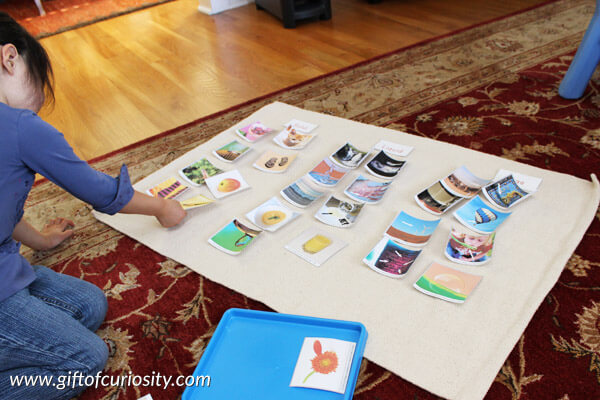
Image Source/Tutorial: Gift Of Curiosity
There are several activities for learning about the states of matter, but this is a new way of learning. Take a mat and paste the three states of matter on it. Now take a printable card and start placing it in order according to the matter it belongs to. After applying all the cards on the mat, take one card and identify the object of the card, i.e., solid, liquid, or gas. I repeated this process by taking 10-12 printable cards and finishing this activity. It is a simple and budget-friendly activity. You can do this activity in the evening in your free time.
Water To Steam: Change in Matter of State Activity For Kids
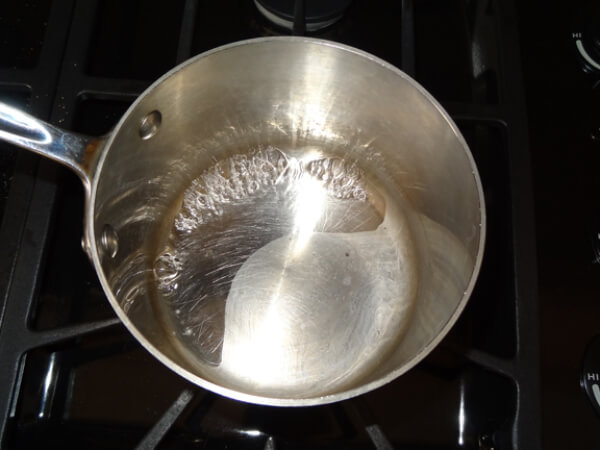
Image Source/Tutorial: Gift Of Curiosity
This is a water-to-steam activity for kids. This is a simple and easy activity that the 9-10 age group of kids can do on their own. Take the container and some pieces of ice. Now turn on the heat, and you can see the ice cube start melting. You can see that the solid ice cube turned into liquid water.
Read More: Cute Forest & Farm Animal Drawings for Kids
Simple State Of Matter Learning Pages
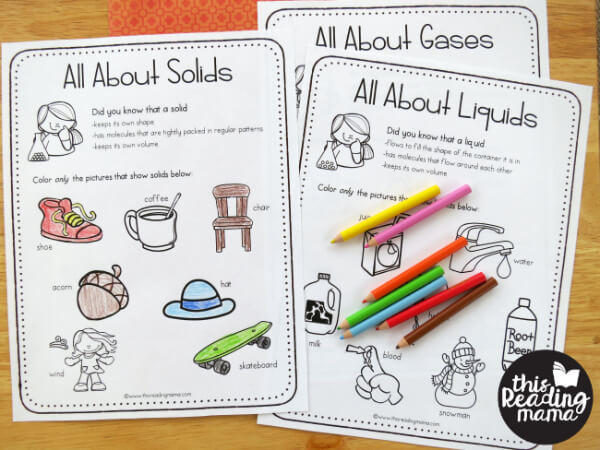
Image Source/Tutorial: This Reading Mama
To teach a child or kid, a fun-loving and unique method for understanding the state of matter. Take three printable sheets of each solid, liquid, and gas with some figures. Then take a pencil, color, and give your child the sheet and ask them to color the state of matter that is asked for in the sheet. This is a budget-friendly activity. From this activity, kids easily understand what a state of matter is.
Learn Matter with Root Beer Floats
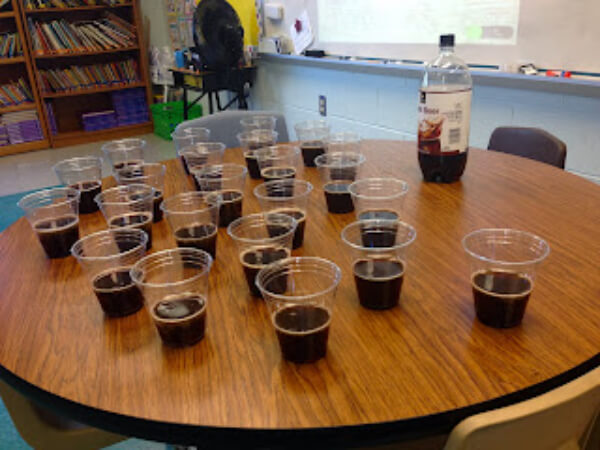
Image Source/Tutorial: Learning Lab Resources
To understand the state of matter, all you need is a root beer, ice cream, an ice cream scoop, a cup, a mug, or a plastic glass. Now take a root beer, which is liquid, into the glass or mug and add one scoop of your favorite ice cream, which is solid. After adding the ice cream, you can easily see that it made a carbonate in the root beer, which is a gas.
Ice Cream In a Bag Experiment For 2nd Grade
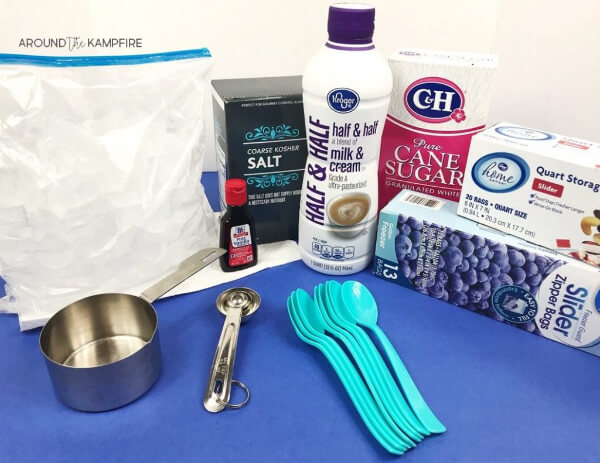
Image Source/Tutorial: Around The Kampfire
To do such an experiment, you will need a plastic spoon, rock salt, sugar, a sandwich-size plastic zipper bag, half-and-half milk, a slider zipper bag, and vanilla extract. Now mix the milk, vanilla extract, and sugar in the zipper bag together. Now take the mixture and salt in the bag. Now place the mixture in the large bag and seal it. At last, shake the plastic bag for 8-10 min, and your experiment is ready.
DIY Water From Fog Activity For Kids
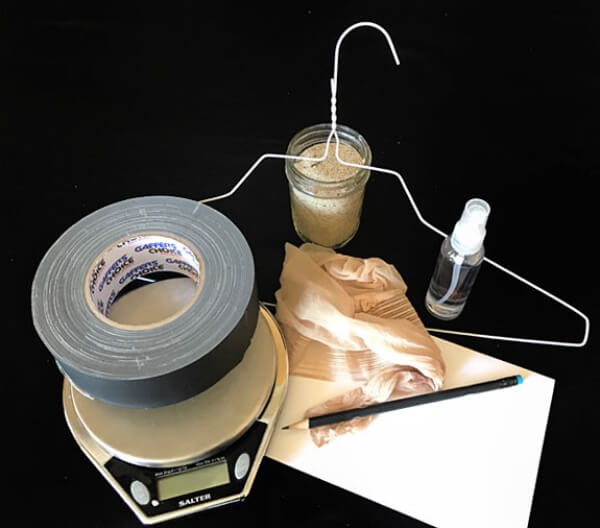
Image Source/Tutorial: Science Buddies
This is a unique experiment-based activity for the state of matter. For this, you are required to use a coat hanger, sand, water, tape, paper, a pen or pencil, pantyhose, and a glass. Now take a hanger and form the diamond shape. Then, place the pantyhose and secure them with tape at the bottom. Now fill the glass with sand. Then take the hook off the hanger and place it into the sand glass. Now fill the glass with water. Spray from the fog catcher, then spray the pantyhose for 10 min. Repeat this process 8-10 times. Lastly, take the fog catcher, put it on the scale, and check the mass. This is a unique experiment that the kids of the 10-12 age group can easily do.
Creative Crayon Activity For State Of Matter
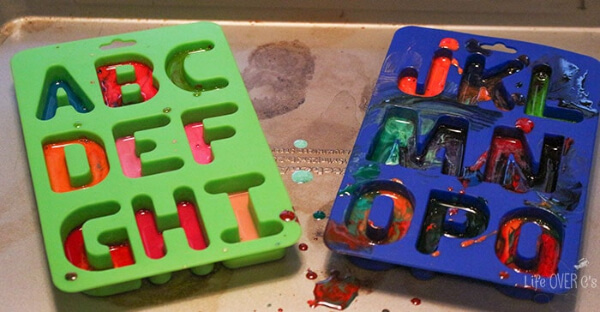
Image Source/Tutorial: Life Over CS
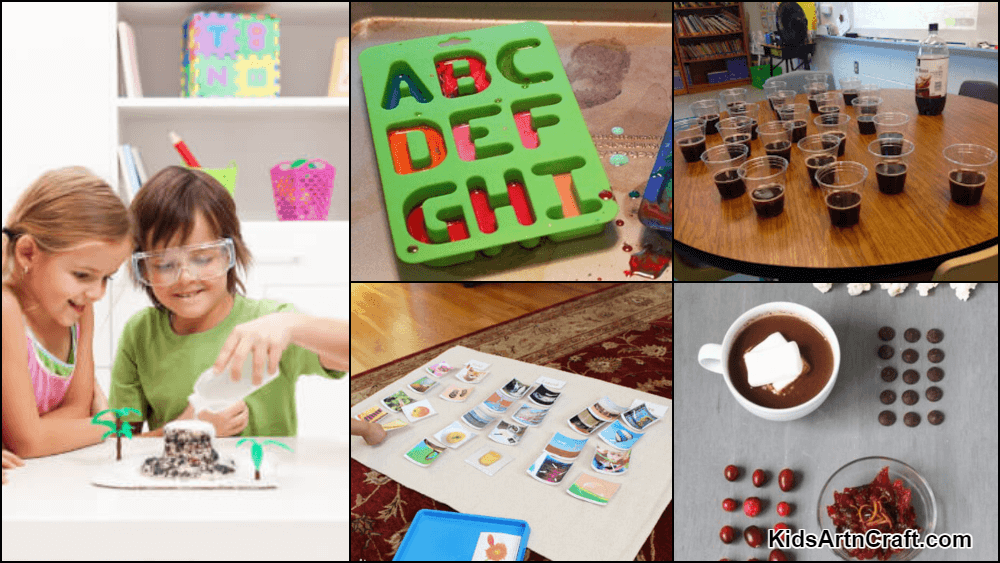
To do such an experiment, take a crayon and the alphabetical tray. Let’s start this experiment by breaking up crayons into smaller pieces so they can easily fit in the alphabetical mold. Then fill the crayons into the mold and bake them for 10-13 min. After a minute, remove the tray from the oven and let it rest for up to 10 minutes so it cools. After a minute, remove an alphabetical crayon from the tray smoothly so that the mold doesn’t break down. In this, there is a solid-to-liquid transition, and again, a solid matter is applied. This is a budget-friendly experiment that you can easily try and suggest to your friend.
Read More: DIY Christmas Ornament Crafts for Toddlers to Teenagers
State OF Matter Activities in the Kitchen
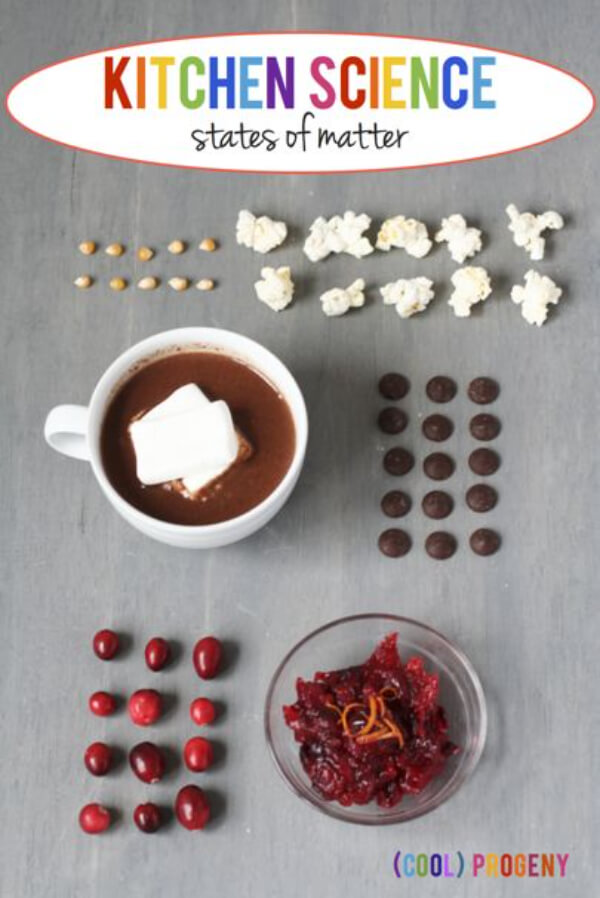
Image Source/Tutorial: Cool Progeny
Let’s use kitchen materials for science experiments. Take a cup of cocoa powder, sugar, and milk; put all this in one container on a gas in low flame. Mix this until it gets thick. Now, put hot chocolate in the cup and add some crushed candy, chocolate chips, and marshmallows to it. After this, take a candy mold and put hot chocolate on it, then put it in the freezer for 60 min. In this experiment, all three states of matter are applicable, i.e., first liquid, then gas, then solid. You can also try this experiment at home.
Molecules Of Liquid Anchor Chart Activity
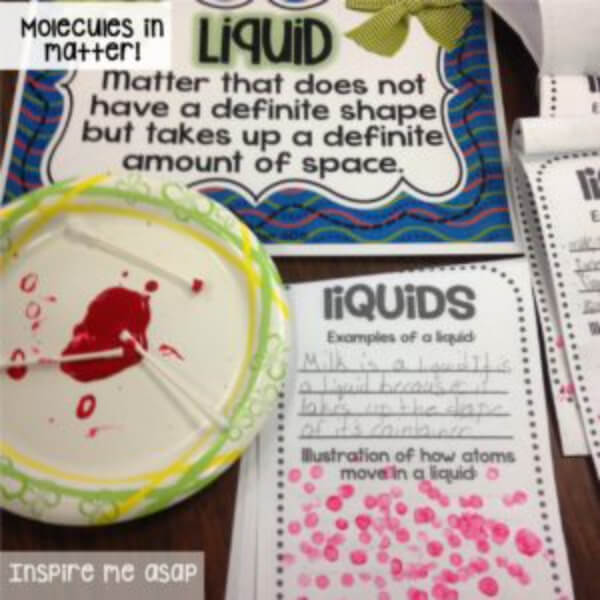
Image Source/Tutorial: Inspire Me Asap
In this experiment, the riddles are already written on printable sheets and describe which properties of matter they belong to. Then take one more blank piece of paper and write the answer with an example, and color the paper with paint or whatever you like. This is a simple and easy experiment for kids in the age group 10-12. Also, it is budget-friendly for everyone.
Easy State Of Matter Poster For Kindergarten
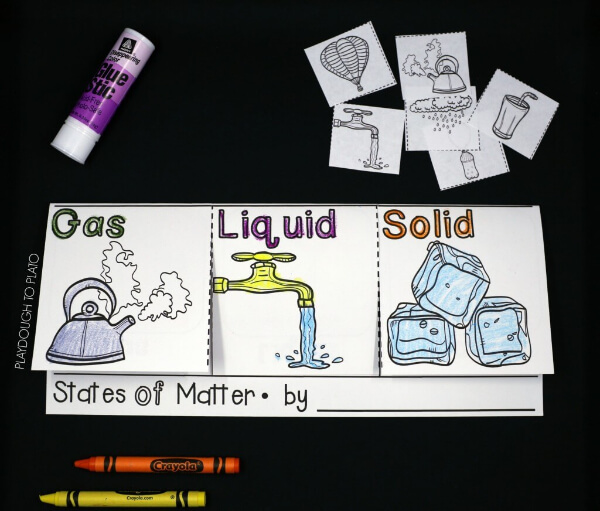
Image Source/Tutorial: Playdough To Plato
In this activity, we take a printable chart and ask which state of matter it belongs to. Then take more samples of the printable matter and paste them with the glue in front of the state of matter.
State Of Matter Activities For Preschool Science
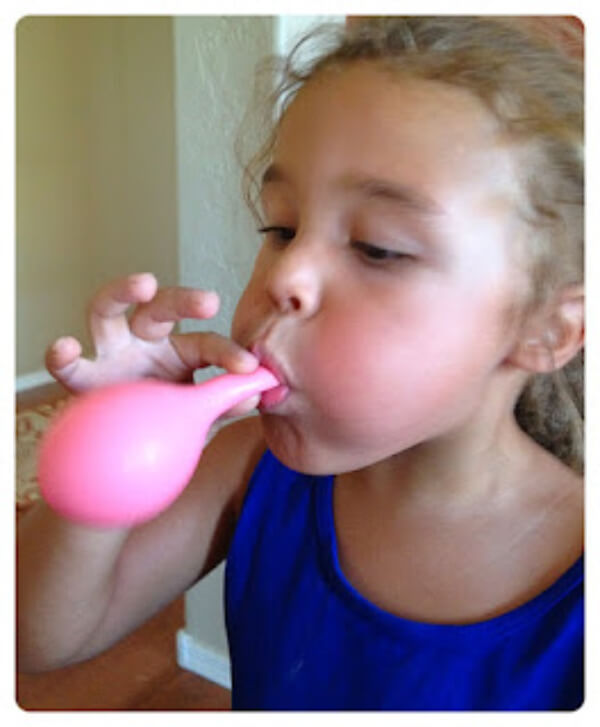
Image Source/Tutorial: Fit Kids Club
This experiment is for preschool science. Take a balloon and fill it with gas with your mouth. After this, take a pin and pinch the balloon with it. This is a simple and easy experiment for kids. Kids enjoy this game. This is also budget-friendly; you can easily purchase it from the market.
Creative Ways to Teach States of Matter
Watch this step-by-step tutorial and video lesson on creative ways to teach States of Matter – solids, liquids, and gases. This educational tutorial breaks down key concepts with fun examples, teaching tips, and clear science explanations for classrooms, homeschooling, or beginner science learners. Perfect science tutorial for teachers and students alike!
Why Learning About States of Matter Is Important for Kids
Teaching children about states of matter helps them understand how the world around them works. Everything they see, touch, and use every day is made of matter. By learning the differences between solids, liquids, and gases, kids begin to develop scientific thinking and observation skills. States of matter lessons also introduce important concepts such as physical changes, temperature effects, and the scientific method.
Hands-on activities and experiments make these concepts easier to understand because children can observe matter changing in real time. Whether watching ice melt, water evaporate, or steam form, students gain a deeper understanding of science through direct experience. Research-based science education emphasizes active learning and observation as effective ways to build long-term understanding of scientific concepts.
Key Learning Objectives
After completing states of matter activities, children should be able to:
- Identify solids, liquids, and gases.
- Explain the basic properties of each state of matter.
- Recognize examples of matter in everyday life.
- Understand how heating and cooling can change matter.
- Describe melting, freezing, evaporation, and condensation.
- Develop observation and critical-thinking skills through experiments.
Simple Science Facts About States of Matter
- Matter is anything that has mass and takes up space.
- Solids have a fixed shape and volume.
- Liquids have a fixed volume but take the shape of their container.
- Gases spread out and fill the space available.
- Water is one of the best examples of matter because it can exist as a solid (ice), liquid (water), and gas (water vapor).
Tips for Teaching States of Matter Effectively
- Use real-life examples such as ice cubes, juice, steam, balloons, and rocks.
- Encourage children to make predictions before experiments.
- Ask open-ended questions to promote scientific thinking.
- Include visual aids, charts, and sorting activities.
- Allow children to record observations in a science journal.
- Reinforce learning through games, crafts, and hands-on investigations.
Benefits of States of Matter Activities
States of matter activities offer more than science learning. They also help children:
- Improve observation skills.
- Build problem-solving abilities.
- Strengthen vocabulary and communication skills.
- Develop curiosity about scientific concepts.
- Practice recording and analyzing results.
- Gain confidence through hands-on discovery.
Safety Tips for States of Matter Experiments
When conducting science activities with children:
- Always supervise experiments involving heat.
- Use child-safe materials whenever possible.
- Wear safety goggles during demonstrations.
- Keep hot water and heating tools out of children’s reach.
- Follow experiment instructions carefully.
- Clean up spills immediately to prevent accidents.
FAQs
Q1. What are the three states of matter?
Answer: The three common states of matter are solids, liquids, and gases. Each state has different properties based on how its particles are arranged and move.
Q2. What is the easiest way to teach states of matter?
Answer: Hands-on experiments, sorting activities, and real-life examples are among the most effective ways to teach states of matter to children.
Q3. What are examples of solids, liquids, and gases?
Answer: Examples include ice (solid), water (liquid), and steam (gas).
Q4. Why do states of matter change?
Answer: Matter changes state when it gains or loses heat energy. Heating and cooling affect how quickly particles move.
Q5. At what age can children learn about states of matter?
Answer: Basic concepts can be introduced in preschool and kindergarten through simple observations and sensory activities, while more detailed explanations are suitable for elementary students.
Teaching states of matter through creative activities and hands-on experiments makes science exciting and meaningful for children. By exploring solids, liquids, and gases through observation, play, and experimentation, kids develop a strong foundation in physical science while building critical-thinking and problem-solving skills. These engaging learning experiences encourage curiosity and help young learners understand how matter behaves in the world around them. Your daily source of crafts, creativity, and fun activities awaits on Telegram, YouTube & Facebook!
Reviewed By Rachit Gupta
More Articles from Kids’ Art & Craft
- Christmas Tree Ideas for School Projects
- Christmas Wreath Crafts For Kids
- Classroom Decor Paper Craft Ideas for Kids
- Classroom Door Decoration Ideas For Kindergarten
- Classroom Ideas for Grade 2 – Activities & Crafts