Kids Activities
Easy Finger Painting Activities for Kids

The most engrossing way to keep your kids occupied and busy is by letting them play with watercolours…
Yes, that is true! Even toddlers are first attracted to the variety of coloured objects present around them!!
Parents generally stereotype painting and watercolours for grown-up children projects, but fingerprinting art as such is an innovative way in which small kids can exercise their hands and paint their dreams on paper or, in particular, canvas, for that matter. We just need to keep a watchful eye and clean the mess they make during this exercise!
Playing and learning go hand-in-hand. To develop a kid’s creativity in the easiest, fun-filled, and actualized manner- let them recognize and mix paints to obtain hues or shades of endless kinds. Let them put to use their different fingers, thumbprints, palms, sides, and edges of different fingers, their knuckles to create shapes of various sizes in many colours.
I name it -“Creativity at its best”. This painting and drawing colourful activities will- a) Firstly make smaller kids self-conscious, better aware of different colours, shapes, and sizes. b) Will render recognition of different types of animals and their characteristics.
Five examples of pictorialism are below to see for yourself how painting art can transform impressions into beautiful cartoon animals.
DIY Thumb Painted Colourful Quirky Animals
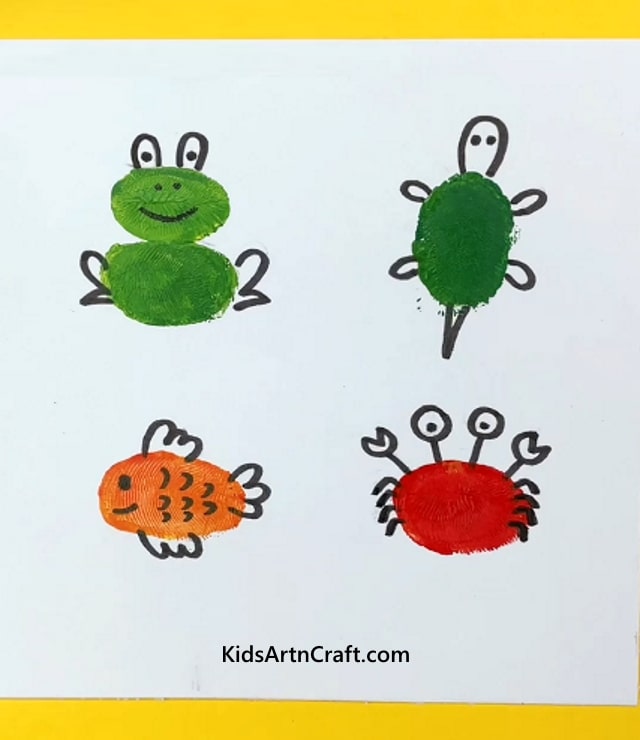

A child can dip his hands into different painting colours and make impressions of them on White Paper. With a black sketch pen, give these small-sized thumbprints eyes, nose, hands, legs, and gills to form a frog, tortoise, fish, and crab as shown in the above sketch. The concept behind this activity or play idea is to teach kids how amusingly animals can be contrived from thumb painting in different sizes and colours. This means any sort of random-looking fingerprint can turn into an animal of their choice.
Hand-Painted Yellow Giraffe with Brown Finger-Painted spots
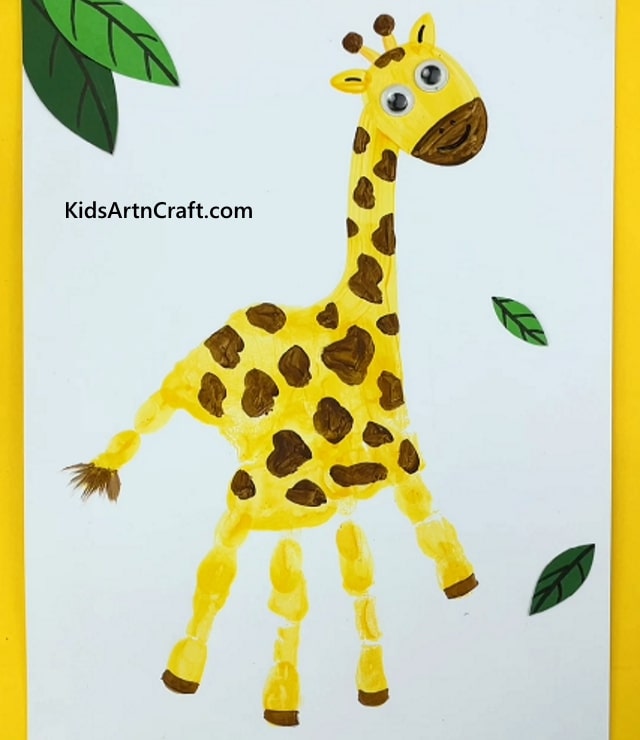

Make your toddler dip his hand in yellow watercolour and press that hand firmly on the sheet of paper to obtain a perfect yellow palm print. Now, randomly using different fingers excluding the thumb, ask them to stamp the giraffe’s body with brown spots separated by a little space from each other. Show them how to turn this handprint into a beautiful giraffe by turning fingertips into legs, thumb into the giraffe’s ponytail, and rendering eyes, mouth, antlers, and ears to the giraffe with the help of a brown and yellow sketch pen. The more the practice, the more perfect the giraffe becomes!
Plant-Eater Green Dinosaur from Hand-Painted Art
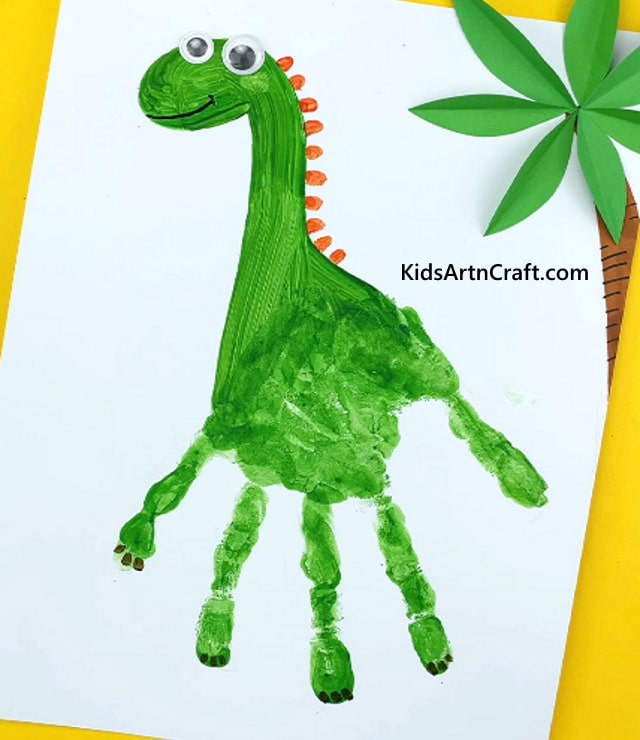

This time, cover your toddler’s hands with green paint. Press it firmly against the white sheet to get a clear palm print. Use green and black sketch pens to perfectly outline this dinosaur. Artify with nails. eyes and body scales. You can draw a tree and a few floating leaves in the background to give a perfect background to this plant-eating dinosaur. This idea can be used to make an ideal greeting card for special occasions with a toddler’s palm print that becomes the very basis of that painting!
Fingers Painted Colourful Caterpillar sitting on a Green Leaf Painting.
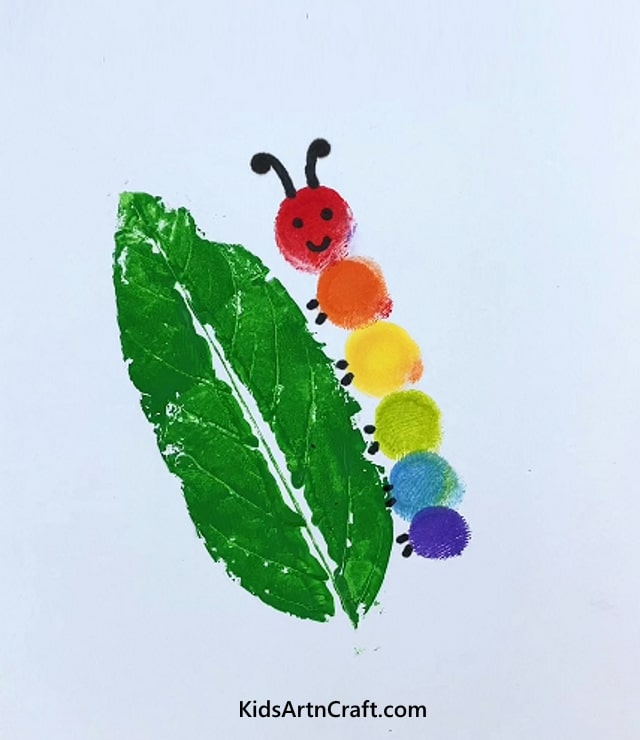
Distinct watercolours such as purple, light blue, green, yellow, orange, and red coloured have been used here to denote the fused segments of a caterpillar body. Besides caterpillar fabrication from different-sized fingerprints arranged in an increasing to decreasing order right from the head to toe, leaf painting is also a vital part of this art form. One side of a leaf has been painted in green watercolour and imprinted clearly on the white sheet of paper. On this, the caterpillar can be seen climbing and smiling back happily. Its legs, eyes, and antennae have been sketched out using a black sketch pen.
White-Dotted Finger-Painted Cutesy Reindeers
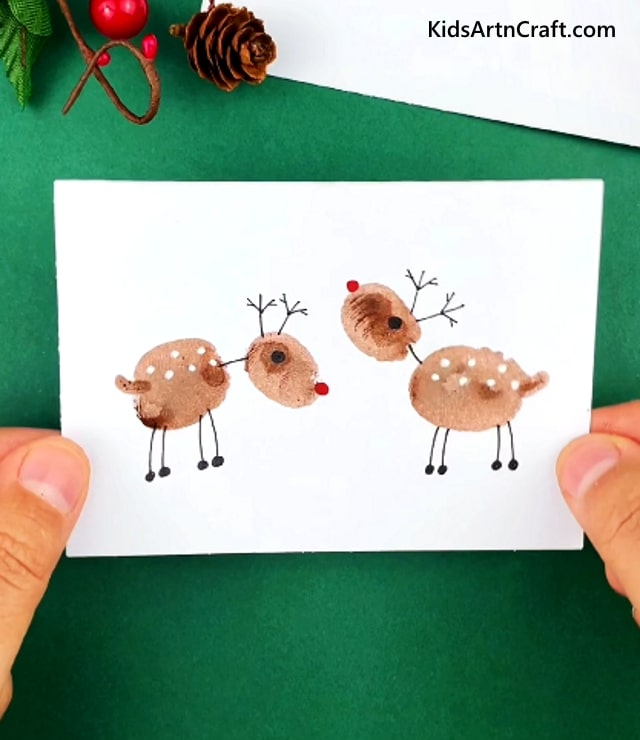
Here, Thumbprints have been used to paint the reindeer’s body, and finger paints to make the heads of the two reindeer. After the light brown painting colour dries off completely, white dots spread over the entirety of the reindeer’s body have been made using a white sketch pen. While a black sketch pen has been used to shape up and work out eyes, legs plus both reindeer’s antlers, a red sketch pen will suffice for the nose.
Easy Finger Painting Animals for Kids Step by Step
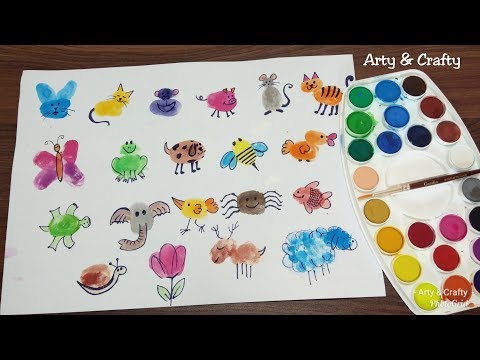
Learn easy finger painting animals for kids in this step-by-step tutorial. This fun thumb painting art activity teaches children how to create cute animals and insects using simple finger prints. Perfect for preschoolers, kindergarten crafts, and summer art activities that boost creativity, sensory play, and fine motor skills.
Fingerprinting or Finger painting drawings and Handprint painting activities for toddlers raise the excitement level in toddlers to great heights. Learning becomes fun, and the family gets to spend some creative time together. Besides giggles, added benefits include the development of fine-motor skills and the development of coordinated reflexes.
Benefits of Finger Painting for Kids
Finger painting is more than just a fun, messy activity—it plays an important role in early childhood development. When children use their fingers to create art, they strengthen hand muscles, improve hand-eye coordination, and explore colours and textures creatively. It also encourages self-expression and boosts confidence as kids proudly create their own artwork.
Some major benefits of finger painting include:
- Improves fine motor skills
- Encourages creativity and imagination
- Supports sensory development
- Helps children recognize colours and patterns
- Builds focus and concentration
- Reduces stress and promotes emotional expression
Safety Tips for Finger Painting Activities
Before starting finger painting activities with toddlers and preschoolers, make sure to follow some basic safety guidelines:
- Always use non-toxic and child-safe paints
- Dress kids in old clothes or aprons
- Cover the table or floor with newspaper or plastic sheets
- Keep wipes and towels nearby for easy cleanup
- Supervise younger children during painting activities
- Avoid paints with strong chemical smells
Using washable paints makes cleanup easier and keeps the activity stress-free for parents and teachers.
Best Materials for Finger Painting
Here are some easy-to-find materials you can use for finger painting activities at home or in the classroom:
- Washable finger paints
- Thick white chart paper
- Cardstock sheets
- Paper plates for mixing colours
- Sponges and wet wipes
- Cotton buds and stamps for texture effects
- Aprons or old T-shirts
You can even make homemade finger paint using flour, cornstarch, and food colouring for a safer and budget-friendly option.
Easy Finger Painting Ideas for Preschoolers
If you want more creative ideas, try these simple finger painting activities with kids:
- Rainbow finger painting
- Handprint trees
- Fingerprint animals
- Bubble wrap finger painting
- Vegetable print art
- Flower garden painting
- Underwater ocean scenes
- Butterfly wing designs
- Fingerprint balloons
- Sun and cloud painting
These activities are perfect for preschool, kindergarten, daycare centers, and home learning.
Why Parents and Teachers Love Finger Painting Activities
Finger painting is a low-cost and screen-free activity that keeps children engaged for hours. Parents and teachers love it because it combines fun with learning. Kids naturally explore textures, shapes, and colours while developing essential early learning skills. It is also a great group activity for classrooms, birthday parties, and art sessions.
FAQs
Q1. What materials do I need for finger painting?
Answer: You will need finger paints, paper, and something to cover your work surface.
Q2. How can I keep the mess to a minimum?
Answer: Cover the work surface with newspaper or an old sheet. Wear old clothes and put a smock on your child.
Q3. What kind of paper should I use for finger painting?
Answer: Finger painting paper is best, as it is thicker and won’t curl up when it gets wet. You can also use cardstock or construction paper.
Q4. Is finger painting safe for young children?
Answer: Yes, finger painting is a safe activity for young children. It helps to develop their fine motor skills.
Q5. What kind of paint should I use for finger painting?
Answer: You can use traditional finger paints, or you can make your own paint with flour, water, and food colouring.
Q6. Should I use a brush or my fingers for painting?
Answer: Using your fingers is the best way to finger paint as it allows for more control.
Q7. What techniques can I use for finger painting?
Answer: Experiment with different techniques such as dabbing, swirling, and dragging your fingers.
Q8. Can I make interesting shapes with finger painting?
Answer: Yes, you can make all kinds of shapes with finger painting, such as stars, circles, flowers, and more.
Q9. How can I keep my finger painting from getting smudged?
Answer: Let the painting dry completely before moving it.
Q10. What can I do with the finished paintings?
Answer: You can hang them up in your home, frame them, or make cards or gifts with them.
Reviewed By Jatin
Read More:
- Cotton Bud Painting Hacks for Kids
- Stamping Art Ideas for Earth Day
- Playful Paint Combination Ideas for Kids
- Easy Painting Ideas For Kids
- Fall Activities for Toddlers