Science Experiments
Mini Electric Motor Science Experiment for Kids


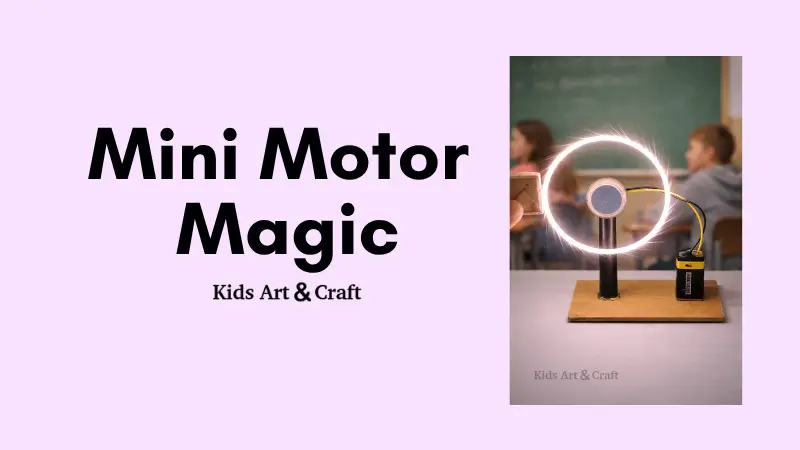
Have you ever wondered how fans, mixers, or toy cars spin and move? This fun Mini Motor Magic experiment shows how electricity can create motion. Using a battery, a wire, and a spinning coil, we can build a tiny motor that lights up and spins. It’s a simple way to see how electricity turns into movement!
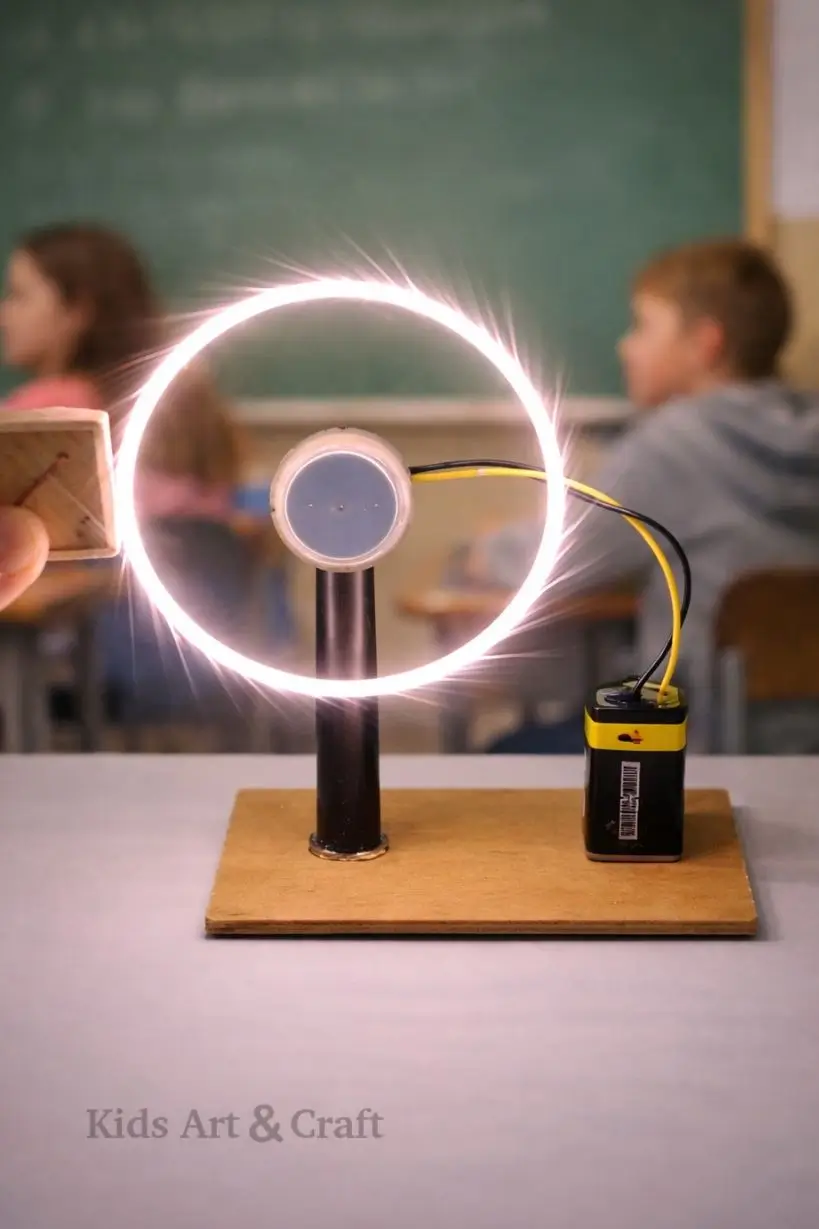
Simple electric plasma ring demonstration for kids’ science learning activity
Electromagnetism Explained – How Electricity and Magnets Create Motion
This experiment demonstrates electromagnetism.
Here’s the simple idea:
- When electricity flows through a wire, it creates a magnetic field.
- When this wire is placed near a magnet, the magnetic forces push or pull the wire.
- This push makes the coil spin, creating motion.
So in simple words:
Electricity + Magnet = Movement
This is the same principle used in many electric machines.
Materials Required
- 9V battery
- Small magnet (if used in the setup)
- Copper wire (thin insulated wire)
- Small LED light (optional in some designs)
- Paper clips or metal supports
- Small wooden base or cardboard
- Tape or glue
- Wire cutter or scissors (with adult help)
Step-by-Step Working Explanation
Step 1: Make the Coil
- Wrap the copper wire into a circular loop (like a wheel).
- Leave two straight ends sticking out.
Step 2: Set Up the Supports
Use paper clips or metal stands to hold the coil so it can spin freely.
Step 3: Connect the Battery
Attach the wire ends to the battery terminals so electricity can flow through the coil.
Step 4: Add the Magnetic Effect
Place a magnet near the coil or design the coil so the magnetic effect occurs when current flows.
Step 5: Watch It Spin!
When electricity flows through the wire:
- A magnetic field forms
- Magnetic forces push the coil
- The coil starts spinning like a motor
Sometimes the spinning ring looks like a glowing circle of light because it spins so fast!
What Kids Learn from the Electric Motor Experiment
- How electricity flows through wires
- How magnets interact with electricity
- How electric motors work
- Basic engineering and problem-solving
- Building and experimenting skills
Real-Life Applications of Electric Motors
The same idea is used in many machines:
- Electric fans
- Electric cars
- Washing machines
- Electric toothbrushes
- Electric trains
Almost every device with a spinning motor uses this principle!
Safety Tips For Kids
- Ask an adult for help when cutting wires.
- Do not keep the battery connected for too long (it can heat up).
- Make sure wires don’t touch where they shouldn’t to avoid short circuits.
- Work on a clean and dry table.
Why This Electric Motor Project is Great for Kids
- Easy and low-cost experiment
- Hands-on learning
- Shows real science in action
- Encourages curiosity and creativity
- Helps kids understand how everyday machines work
Creative Extension Ideas
- Build a Faster Motor: Try different coil sizes or wire thickness and see which spins faster.
- Make a Mini Fan: Attach a paper fan blade to the spinning coil.
- LED Motor Light Wheel: Add small LED lights to create cool spinning light patterns.
Mini Motor Magic offers an exciting, hands-on STEM experience for kids, fostering creativity, problem-solving, and engineering skills. This engaging toy combines fun and learning, making it perfect for inspiring young inventors and curious minds at home or school. Connect with us on Telegram for regular content updates. Join us on YouTube & Facebook for exciting art and craft tutorials.