





Paragraph Writing
Paragraph on Ethical Use of Artificial Intelligence


Ethical use of artificial intelligence ensures AI is fair, safe, and responsible, protecting privacy, avoiding bias, and benefiting society without causing harm. Explore ways to write strong paragraphs on ‘Ethical Use of Artificial Intelligence’ using four key styles—Expository, Persuasive, Descriptive, and Narrative—while organizing ideas using structures with PEEL, TEEL, TEXAS, and the Hamburger Model.
Read This Article in Other Languages
- कृत्रिम बुद्धिमत्ता के नैतिक उपयोग पर अनुच्छेद (Hindi / हिंदी)
- Párrafo sobre el uso ético de la inteligencia artificial (Spanish / Español)
- Paragraphe sur l’usage éthique de l’intelligence artificielle (French / Français)
- Absatz über die ethische Nutzung von Künstlicher Intelligenz (German / Deutsch)
- فقرة عن الاستخدام الأخلاقي للذكاء الاصطناعي (Arabic / العربية)
- কৃত্রিম বুদ্ধিমত্তার নৈতিক ব্যবহারের সম্পর্কে অনুচ্ছেদ (Bengali / বাংলা)
- கோப்பை நுண்ணறிவின் நெறிமுறைப் பயன்பாடு பற்றிய பத்தி (Tamil / தமிழ்)
- కృత్రిమ బుద్ధిమత్తా యొక్క నైతిక ఉపయోగంపై పేరాగ్రాఫ్ (Telugu / తెలుగు)
- കൃത്രിമ ബുദ്ധിമത്തയുടെ നൈതിക ഉപയോഗത്തെക്കുറിച്ചുള്ള പാരഗ്രാഫ് (Malayalam / മലയാളം)
- مصنوعی ذہانت کے اخلاقی استعمال پر پیراگراف (Urdu / اردو)
- Parágrafo sobre o uso ético da inteligência artificial (Portuguese / Português)
Translation Disclaimer: These links use Google Translate, an automated translation service. Translations may vary in accuracy and are provided for convenience only.
Different Styles of Paragraphs on ‘Ethical Use of Artificial Intelligence’
1. Expository Paragraph on Ethical Use of Artificial Intelligence (Explains with Facts)
Artificial Intelligence (AI) is a powerful tool that can do many tasks quickly and accurately, but it must be used ethically. Ethical use of AI means designing and using it in ways that are fair, safe, and responsible. AI should not harm people, invade their privacy, or spread false information. It should be transparent, so people understand how decisions are made. For example, AI used in healthcare should protect patient data and give accurate results, while AI in schools should support learning without being unfair. Governments, companies, and scientists must set rules and guidelines to ensure AI is used responsibly. Ethical AI also involves making sure that it does not replace humans in harmful ways or increase inequality. By following ethical principles, AI can be used to benefit society safely and fairly. Overall, ethical AI helps people trust technology and ensures that it improves life without causing harm.
2. Persuasive Paragraph on Ethical Use of Artificial Intelligence (Tries to Convince You)
AI is a useful technology, but it must be used ethically to prevent problems. AI should not invade privacy, harm people, or spread false information. In schools, healthcare, and workplaces, AI must follow rules to ensure fairness and safety. Governments and companies should make strict guidelines for AI and educate people about responsible use. People should always check that AI decisions are correct and do not hurt anyone. Ethical AI ensures that technology benefits society without causing harm or inequality. By using AI responsibly, humans can enjoy its advantages, such as faster work, safer machines, and better learning tools. Everyone should follow ethical practices when developing and using AI. Ethical AI is not just smart; it is safe, fair, and trustworthy, making life better for everyone.
3. Descriptive Paragraph on Ethical Use of Artificial Intelligence (Paints a Picture with Words)
Ethical AI feels like a careful helper that works safely and responsibly. It follows rules to protect people, their data, and their rights. In hospitals, AI ensures patient information is private, and in schools, it helps students fairly without favoritism. AI systems are transparent, meaning they explain how decisions are made. They avoid spreading false information or causing harm. When AI is used ethically, workplaces are safer, homes are smarter, and society benefits from technology without risk. Ethical AI learns responsibly, works fairly, and supports humans rather than replacing them unfairly. It is a quiet, intelligent partner that improves life safely. Using AI ethically creates trust, fairness, and protection for everyone while still making daily life easier, safer, and more efficient.
4. Narrative Paragraph on Ethical Use of Artificial Intelligence (Tells a Story)
Last week, Sameer read about AI being used in schools and hospitals. He noticed that ethical AI protects people’s privacy and makes fair decisions. In a hospital, AI helped doctors check patients’ reports accurately while keeping their personal information safe. In his school, AI learning apps suggested lessons to students without giving unfair advantages to anyone. Sameer realized that AI could be powerful but must follow rules to avoid mistakes or harm. He imagined what could happen if AI was used carelessly—it could spread wrong information or make unfair decisions. Sameer decided that humans must always check and guide AI to ensure it is used ethically. He understood that when AI works responsibly, it becomes a safe and helpful tool, improving learning, healthcare, and daily life while keeping people protected. That day, Sameer felt excited about the future of AI guided by ethics.
‘Ethical Use of Artificial Intelligence’ Paragraphs in Different Structured Methods
1. Ethical Use of Artificial Intelligence Paragraph Writing with PEEL Method
PEEL Method (Point, Evidence, Explanation, Link)
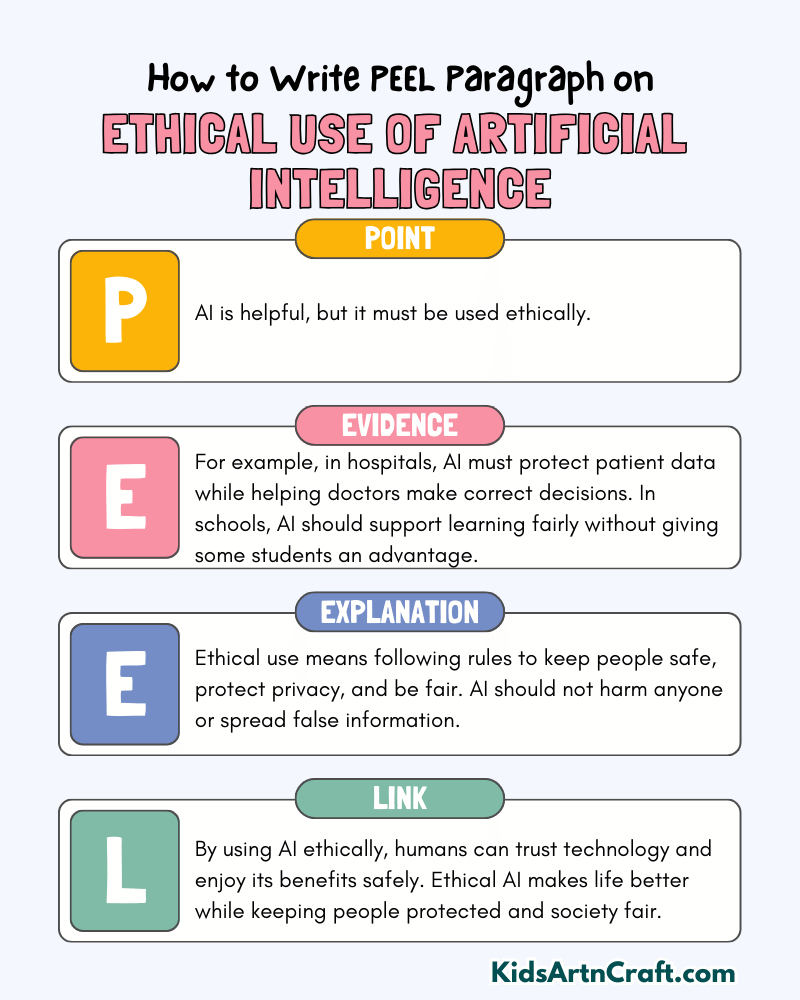
Point: AI is helpful, but it must be used ethically.
Evidence: For example, in hospitals, AI must protect patient data while helping doctors make correct decisions. In schools, AI should support learning fairly without giving some students an advantage.
Explanation: Ethical use means following rules to keep people safe, protect privacy, and be fair. AI should not harm anyone or spread false information.
Link: By using AI ethically, humans can trust technology and enjoy its benefits safely. Ethical AI makes life better while keeping people protected and society fair.
2. Ethical Use of Artificial Intelligence Paragraph Writing with TEEL Method
TEEL Method (Topic, Evidence, Explanation, Link)
Topic: AI should always be used in an ethical way.
Evidence: For instance, AI in apps, schools, or hospitals must follow rules to protect personal data and make correct decisions.
Explanation: Ethical AI respects privacy, avoids mistakes, and treats people fairly.
Link: Therefore, ethical AI helps society stay safe and fair. People can use technology confidently, knowing it will improve life without causing harm.
3. Ethical Use of Artificial Intelligence Paragraph Writing with TEXAS Method
TEXAS Method (Topic, Example, Explanation, Analysis, Summary/Significance)
Topic: AI is powerful, but it needs ethical use.
Example: For example, AI in hospitals keeps patient data safe and in schools helps students learn fairly.
Explanation: It should not harm people or invade privacy.
Analysis: Without ethical rules, AI could make mistakes or treat people unfairly.
Summary: In short, ethical AI is safe, fair, and trustworthy, making life better for everyone.
4. Ethical Use of Artificial Intelligence Paragraph Writing with Hamburger Method
Hamburger Method (Top Bun, The Fillings, Bottom Bun)
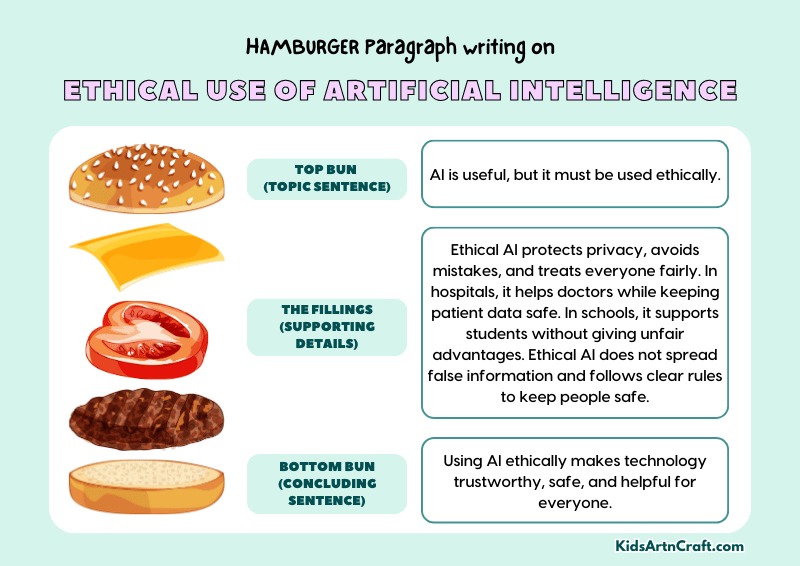
Top Bun (Topic Sentence):
AI is useful, but it must be used ethically.
The Fillings (Supporting Details):
Ethical AI protects privacy, avoids mistakes, and treats everyone fairly. In hospitals, it helps doctors while keeping patient data safe. In schools, it supports students without giving unfair advantages. Ethical AI does not spread false information and follows clear rules to keep people safe.
Bottom Bun (Concluding Sentence):
Using AI ethically makes technology trustworthy, safe, and helpful for everyone.
Importance of Ethical AI
- Global ethical standards exist to guide responsible AI development that respects human rights, fairness, and dignity. [Source: UNESCO – Recommendation on Ethics of AI]
- Ethical AI principles help prevent harm by promoting fairness and reducing discrimination in AI systems. [Source: IndiaAI – Ethical AI Guidelines]
Additional Facts of Ethical AI
- Ethical frameworks emphasize transparency, accountability, and human oversight to ensure AI systems are safe and understandable. [Source: UNESCO – AI Ethics Principles]
- Respect for privacy and data protection is a core principle in ethical AI governance, safeguarding user information. [Source: UNESCO – Recommendation on Ethics of AI]
- Fair and inclusive AI ensures diverse populations benefit equally and reduces risk of discrimination in automated decisions. [Source: UNESCO – AI Ethics Principles]
- Ongoing research shows ethical awareness in AI increases trust and acceptance among users and stakeholders. [Source: arXiv – Responsible AI Study]
Hope you liked these paragraphs on ‘Ethical Use of Artificial Intelligence’. Don’t forget to join the Telegram group for FREE Printables.