



Paragraph Writing
Paragraph on Why Reading Fiction Builds Imagination


Reading fiction builds imagination by taking readers to new worlds, introducing creative characters, and inspiring ideas. It encourages thinking, dreaming, and exploring possibilities beyond real life. Discover how to improve your paragraph-writing in four styles—Expository, Persuasive, Descriptive, and Narrative—while organizing your ideas clearly using structures like PEEL, TEEL, TEXAS, and the Hamburger Model.
Read This Article in Other Languages
- कल्पना को मजबूत करने में कल्पनात्मक पढ़ाई क्यों महत्वपूर्ण है (Hindi / हिंदी)
- Por qué leer ficción desarrolla la imaginación (Spanish / Español)
- Pourquoi lire de la fiction développe l’imagination (French / Français)
- Warum das Lesen von Belletristik die Vorstellungskraft fördert (German / Deutsch)
- لماذا قراءة الخيال تبني الخيال (Arabic / العربية)
- কেন কাল্পনিক বই পড়া কল্পনাশক্তি গঠন করে (Bengali / বাংলা)
- கற்பனை வாசிப்பால் கற்பனை உருவாகுவது ஏன் (Tamil / தமிழ்)
- కథలు చదవటం ఊహాశక్తిని పెంచే కారణం (Telugu / తెలుగు)
- കഥാവചനമെന്തുകൊണ്ട് ആസൂത്രണശേഷി വളർത്തുന്നു (Malayalam / മലയാളം)
- فکشن پڑھنے سے تخیل کس طرح بڑھتا ہے (Urdu / اردو)
- Por que ler ficção desenvolve a imaginação (Portuguese / Português)
Translation Disclaimer: These links use Google Translate, an automated translation service. Translations may vary in accuracy and are provided for convenience only.
Different Styles of Paragraphs on ‘Why Reading Fiction Builds Imagination’
1. Expository Paragraph on Why Reading Fiction Builds Imagination (Explains with Facts)
Reading fiction is important because it helps students develop imagination and creativity. Fiction books take readers to magical worlds, historical times, and adventurous places, allowing them to picture scenes, characters, and events in their minds. When students read about wizards, pirates, or talking animals, their brains create ideas beyond everyday life. Fiction also improves problem-solving and critical thinking skills because readers follow plots, understand character decisions, and anticipate outcomes. Reading different genres, such as fantasy, mystery, or science fiction, encourages curiosity and inspires students to think in new ways. Additionally, fiction helps students develop empathy by understanding characters’ feelings and experiences. In schools, teachers encourage reading stories because it makes learning enjoyable, improves focus, and enhances vocabulary. By exploring fictional worlds, students learn to imagine possibilities, create their own stories, and think creatively in real life. Overall, reading fiction builds imagination, creativity, and emotional growth.
2. Persuasive Paragraph on Why Reading Fiction Builds Imagination (Tries to Convince You)
Students should read fiction because it is one of the best ways to build imagination and creativity. Fiction books allow readers to enter magical worlds, meet interesting characters, and experience exciting adventures. For example, reading about a wizard’s journey or a pirate’s treasure hunt encourages students to imagine new places, creatures, and events. Fiction also teaches empathy by helping students understand characters’ feelings and motivations. Schools should encourage students to read stories because it makes learning fun, improves vocabulary, and strengthens thinking skills. Reading fiction inspires creative expression, such as writing, drawing, or acting out stories. Students who read regularly often have better problem-solving skills because they follow plots and think about how characters solve challenges. Without fiction, students might miss the chance to explore imaginative ideas and develop creativity. Therefore, reading fiction is not just entertaining—it is essential for growing imagination, improving thinking, and making school and life more enjoyable. Fiction opens the door to new worlds and endless possibilities.
3. Descriptive Paragraph on Why Reading Fiction Builds Imagination (Paints a Picture with Words)
Reading fiction fills the mind with colorful and exciting images. Imagine opening a book and discovering a magical forest filled with talking animals, sparkling rivers, and hidden treasures. As you read, you picture heroes embarking on daring adventures, brave friends solving mysteries, and enchanting creatures performing magical acts. Each story creates new worlds in your imagination, where anything is possible. The sounds of laughter, whispers of secrets, and excitement of unexpected twists make the mind lively and creative. Characters’ emotions—joy, sadness, fear, or courage—connect with readers and inspire empathy. Fantasy, adventure, and mystery stories allow students to think beyond reality and dream big. Reading fiction also sparks creativity for writing, drawing, or performing, giving imagination a playground to explore. Every page invites readers to invent, imagine, and wonder. Through fiction, the mind travels to endless worlds, experiences new emotions, and discovers possibilities far beyond the ordinary. Reading fiction is like opening a door to a magical land where imagination comes alive.
4. Narrative Paragraph on Why Reading Fiction Builds Imagination (Tells a Story)
Last year, I learned how reading fiction can build imagination during our school library hour. I picked up a fantasy book about a young wizard who went on an adventure to save a magical kingdom. As I read, I imagined the towering castles, flying dragons, and sparkling forests described in the story. I pictured myself traveling alongside the wizard, solving puzzles, and meeting unusual creatures. The story made me think creatively, invent my own characters, and imagine different endings. I also started writing a short story inspired by the book, creating my own magical world with talking animals and secret treasures. Reading this fiction book taught me that stories can take you anywhere and inspire ideas beyond real life. I realized that fiction does not just entertain—it builds imagination, creativity, and problem-solving skills. Since then, I enjoy reading stories regularly because they help me think, dream, and explore possibilities that I could never experience in my everyday life. Fiction has shown me how imagination can make life exciting and inspiring.
‘Why Reading Fiction Builds Imagination’ Paragraphs in Different Structured Methods
1. Why Reading Fiction Builds Imagination Paragraph Writing with PEEL Method
PEEL Method (Point, Evidence, Explanation, Link)
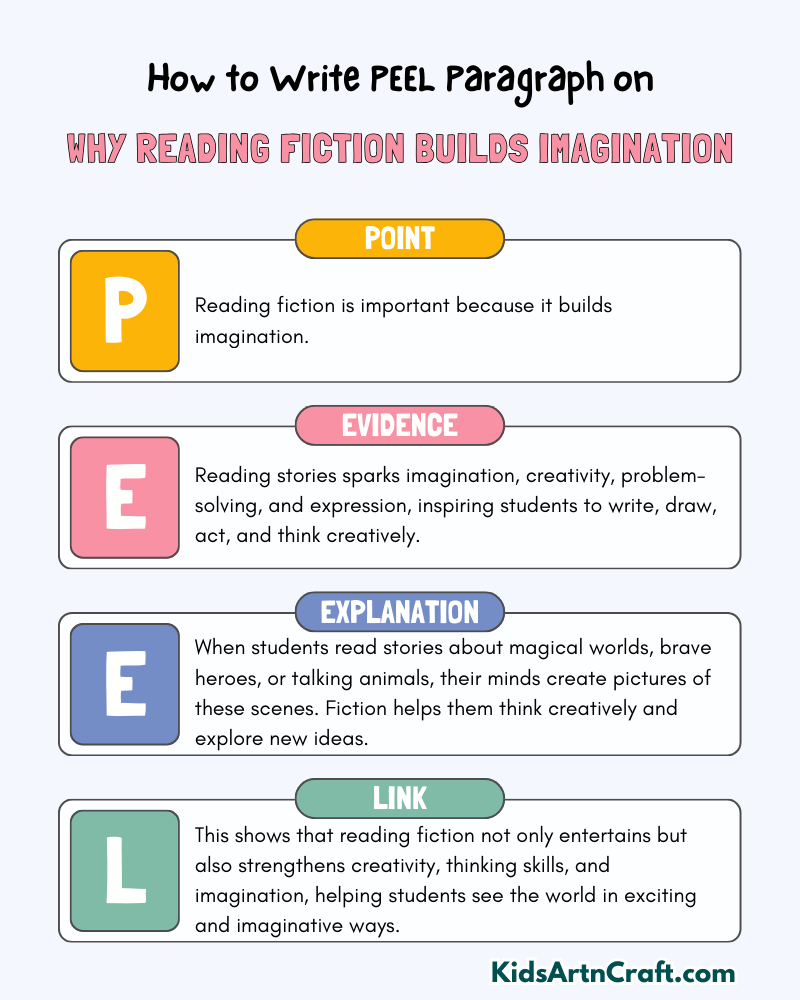
Point: Reading fiction is important because it builds imagination.
Evidence: Reading stories sparks imagination, creativity, problem-solving, and expression, inspiring students to write, draw, act, and think creatively.
Explanation: When students read stories about magical worlds, brave heroes, or talking animals, their minds create pictures of these scenes. Fiction helps them think creatively and explore new ideas.
Link: This shows that reading fiction not only entertains but also strengthens creativity, thinking skills, and imagination, helping students see the world in exciting and imaginative ways.
2. Why Reading Fiction Builds Imagination Paragraph Writing with TEEL Method
TEEL Method (Topic, Evidence, Explanation, Link)
Topic: Reading fiction is important because it helps students imagine new worlds and ideas.
Evidence: For example, reading a book about pirates can make students imagine sailing ships, hidden treasures, and exciting adventures. Fiction also encourages problem-solving, empathy, and creative expression through writing or drawing.
Explanation: Stories with magical lands, adventures, or fantasy characters let readers create mental pictures and think creatively.
Link: By reading fiction, students improve imagination, creativity, and thinking skills while enjoying exciting stories and learning to see the world in different ways.
3. Why Reading Fiction Builds Imagination Paragraph Writing with TEXAS Method
TEXAS Method (Topic, Example, Explanation, Analysis, Summary/Significance)
Topic: Reading fiction builds imagination in students.
Example: For example, a story about wizards or talking animals can make students imagine new places, creatures, and exciting events.
Explanation: Fiction books allow readers to explore magical worlds, characters, and adventures.
Analysis: Reading fiction improves creativity, problem-solving, and thinking skills. It also inspires students to write, draw, or create their own stories.
Summary: Fiction is important because it strengthens imagination, creativity, and thinking while making reading fun and exciting.
4. Why Reading Fiction Builds Imagination Paragraph Writing with Hamburger Method
Hamburger Method (Top Bun, The Fillings, Bottom Bun)
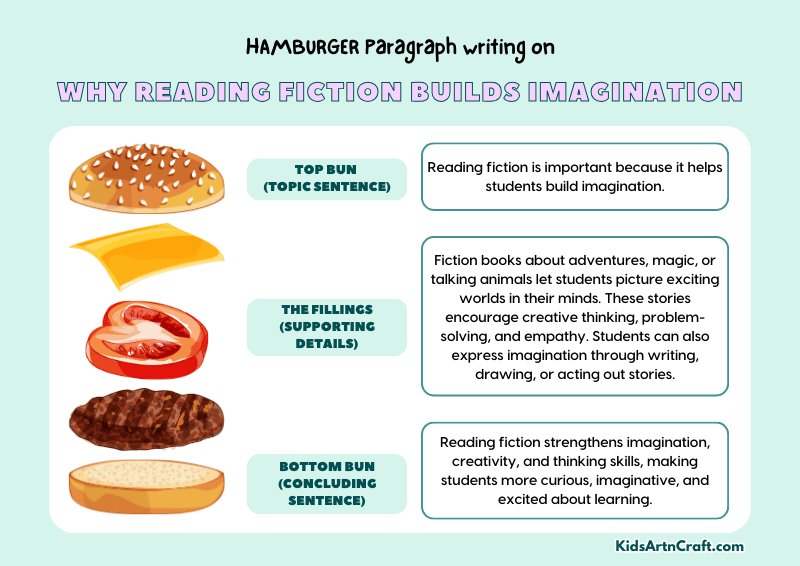
Top Bun (Topic Sentence):
Reading fiction is important because it helps students build imagination.
The Fillings (Supporting Details):
Fiction books about adventures, magic, or talking animals let students picture exciting worlds in their minds. These stories encourage creative thinking, problem-solving, and empathy. Students can also express imagination through writing, drawing, or acting out stories.
Bottom Bun (Concluding Sentence):
Reading fiction strengthens imagination, creativity, and thinking skills, making students more curious, imaginative, and excited about learning.
Importance of Reading Fiction
- Reading fiction helps children imagine characters and settings, boosting creativity. [Source: Reality Pathing – Fiction & Creativity]
- Fiction improves empathy by helping readers understand others’ thoughts and feelings. [Source: PMC – Fiction & Empathy Study]
- Exposure to fictional worlds enhances language skills, imagination, and vocabulary. [Source: IJHSSI – Fiction & Cognitive Skills]
Additional Facts About Fiction Reading
- Fiction stimulates brain areas involved in social thinking and imagination. [Source: Oxford Academic – Fiction & Social Cognition]
- Reading across fiction genres builds empathy, problem-solving, and creative thinking. [Source: National Geographic]
- Narratives encourage visualization and strengthen creative brain networks. [Source: Reality Pathing – Fiction & Creativity]
Hope you liked these paragraphs on ‘Why Reading Fiction Builds Imagination’. Don’t forget to join the Telegram group for FREE Printables.
Check this article to write a paragraph on importance of reading books.