Science Experiments
Exploring the Parts of a Flower – A Fun 3D Science Model!

Have you ever wondered how flowers make seeds and grow into new plants?
This science project shows the different parts of a flower using a colorful 3D model. By building and observing this model, kids can easily understand how each part of a flower works together to help plants reproduce.

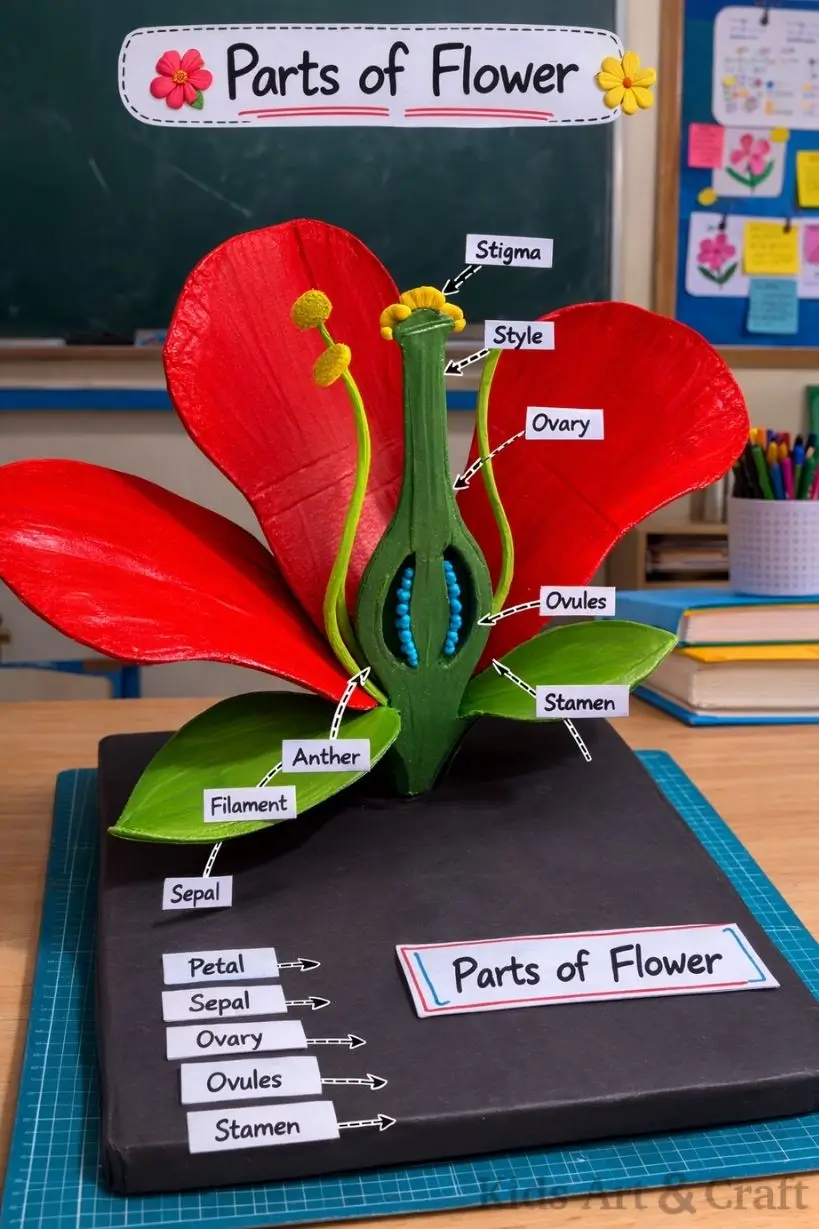
Handmade flower model showing labeled reproductive and structural plant parts
Flower Science Basic Concept
- Flowers are the reproductive part of a plant. This means they help plants make seeds so new plants can grow.
- A flower has several important parts:
- Petals – Bright and colorful parts that attract insects
- Sepals – Green parts that protect the flower bud
- Stamen – The male part that produces pollen
- Pistil (or Carpel) – The female part where seeds form
- Ovary – The part that holds the ovules (future seeds)
- When pollen from the stamen reaches the pistil, pollination happens, and new seeds can form.
Materials Required
- Colored chart paper or foam sheets
- Cardboard or thick baseboard
- Clay or modeling dough
- Scissors
- Glue or hot glue
- Straws or sticks
- Small beads (for ovules)
- Markers or paint
- Paper labels
- Toothpicks or pins for labeling
Step-by-Step Working Explanation
Step 1: Make the Base
Take a cardboard sheet and use it as the base for your flower model.
Step 2: Create the Petals
Cut large petal shapes from colored paper and attach them around the center.
Step 3: Add Sepals
Cut green leaf-shaped pieces and place them under the petals.
Step 4: Build the Pistil (Center Part)
Use clay or cardboard to make the stigma, style, and ovary in the center of the flower.
Step 5: Add Ovules
Place small beads inside the ovary section to represent ovules (future seeds).
Step 6: Make the Stamen
Use straws or sticks with small clay balls to represent the anther and filament.
Step 7: Label Each Part
- Write labels like:
- Petal
- Sepal
- Stamen
- Pistil
- Ovary
- Ovule
- Attach them using small sticks or paper tags.
Now your 3D flower model is ready!
Learning Outcomes
- Parts of a flower
- How plants reproduce
- The process of pollination
- Basic plant biology
- Model building and creativity
- Observation and labeling skills
Real-Life Uses
- Helps farmers understand plant reproduction
- Important for crop production
- Useful in botany and gardening
- Helps scientists study plant life cycles
Flowers are essential for producing fruits, vegetables, and seeds we eat every day!
Safety Tips
- Be careful when using scissors or hot glue
- Work with an adult if using sharp tools
- Keep your workspace clean
- Wash your hands after using glue or paint
Why Kids Love It
- Easy and fun to build
- Uses simple craft materials
- Makes learning visual and hands-on
- Perfect for science fairs and school projects
- Helps kids remember plant parts better
Extra Activities
- Pollination Activity: Use colored powder to show how pollen moves from the stamen to the pistil.
- Fruit Model Idea: Show how the ovary becomes a fruit after fertilization.
- Compare Flowers: Collect real flowers and compare their parts with your model.
This 3D flower model makes learning parts of a flower simple and fun. Kids understand pollination and plant reproduction while enjoying a creative, hands-on science project at home or school. Get our newest updates on Telegram and explore creative ideas on YouTube & Facebook