

Kids Activities
Fun Math Activities for Kids


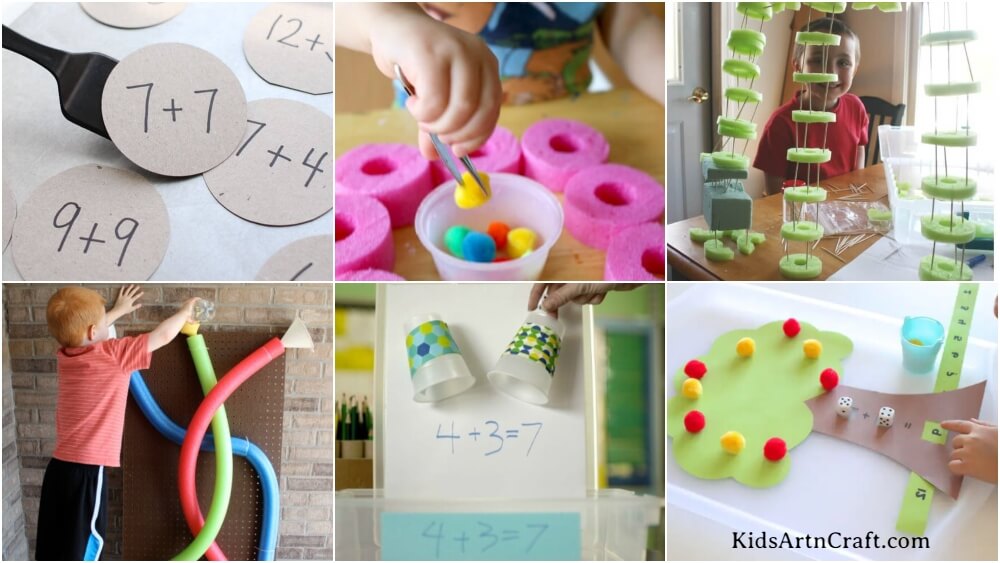
We are here with fun Addition activities for your kids. Kids can play and learn math skills! Keep the learning spirit of your kids alive with our curated list of Addition games and activities to learn addition, like dice calculator, apple-tree addition game, fun math, Uno cards, LEGO race, pool noodles, multiplication, building structure, waterfall, box, fine motor skills, flip sticks, color by code, and flashcard pancake.
Fun Addition Activities for Kids
Read More: Fun Character Themed Easter Egg Designs
Paper Cup Addition Math Game
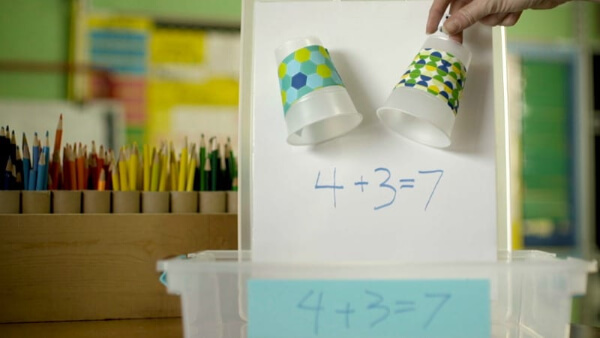
Image Source/Tutorial: We Are Teachers
Materials Required:
Paper cups, markers, numbers written on paper, and tape.
Procedure:
Write numbers or dots on the cups to represent values. Children combine the cups and count the total to solve the addition.
Dice Addition Counting Game
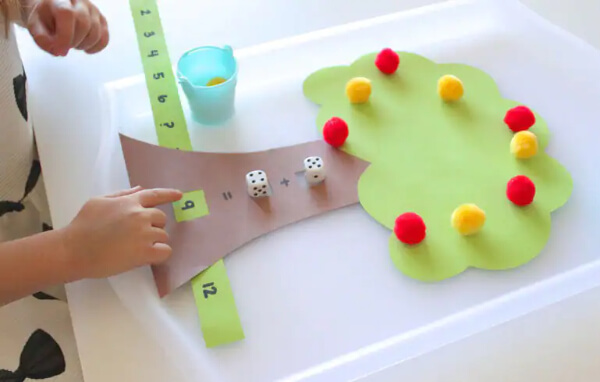
Image Source/Tutorial: CBC
Materials Required:
Dice, pom-poms, paper, markers, and a tray.
Procedure:
Roll two dice and place the matching number of pom-poms. Count the pom-poms together to find the total.
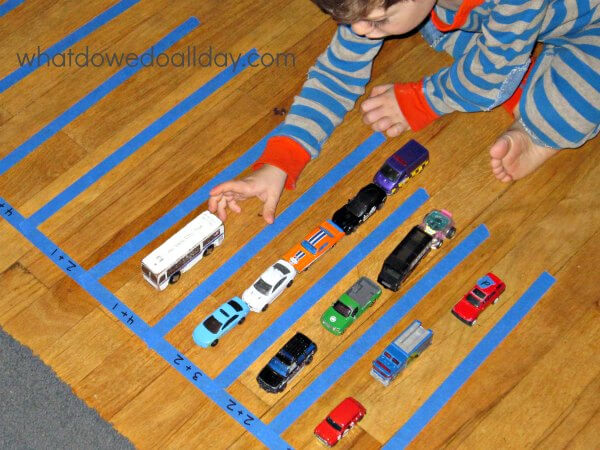
Toy Car Graphing Math Activity
Materials Required:
Toy cars, masking tape, and marker.
Procedure:
Create columns with tape on the floor. Children place cars in each column and count them to compare quantities.
UNO Card Math Addition Game
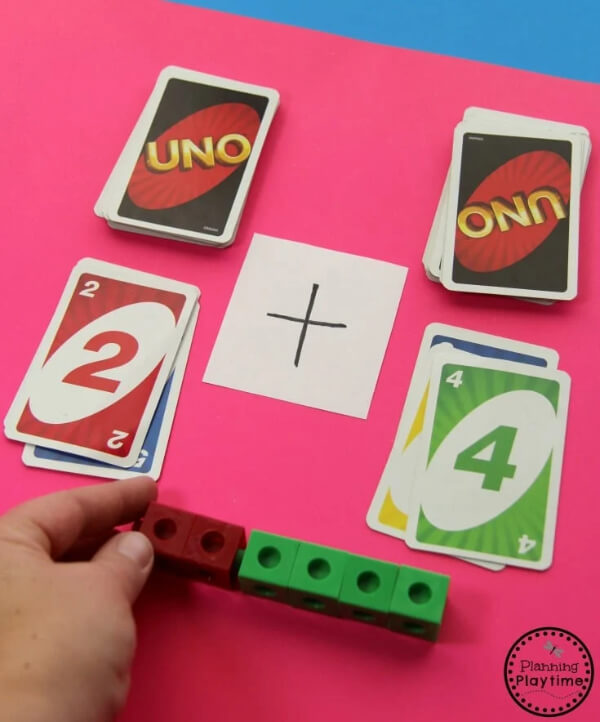
Image Source/Tutorial: Planning Play Time
Materials Required:
UNO cards, counting blocks or cubes, paper, and a marker.
Procedure:
Pick two UNO cards and place them on the table. Use blocks to represent each number and count the total.
Race to 20 Counting Game
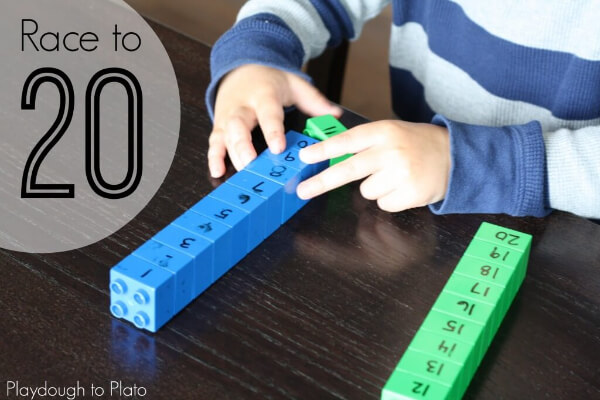
Image Source/Tutorial: Play-Doh to Plato
Materials Required:
Counting cubes or blocks, a marker, and paper.
Procedure:
Take turns adding blocks to the stack. The player who reaches 20 first wins the game.
Read More: Carrot Crafts & Activities for Kids
Pool Noodle Spelling Builder
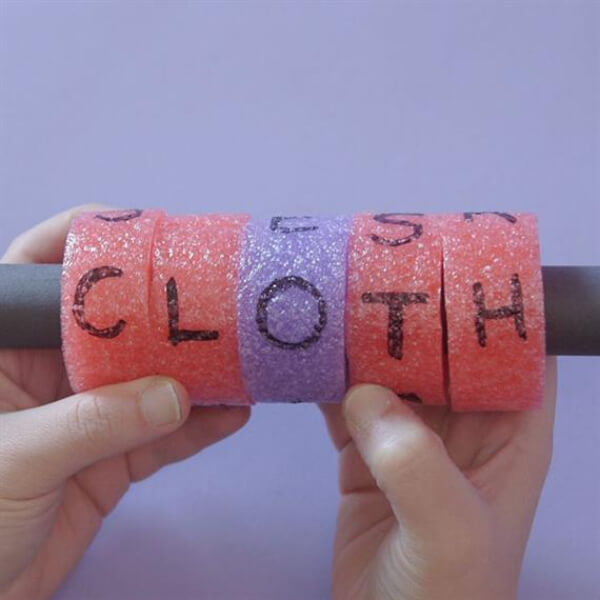
Image Source/Tutorial: We Are Teachers
Materials Required:
Pool noodle, marker, knife or cutter, stick.
Procedure:
Cut the pool noodle into rings and write letters on them. Slide the rings onto a stick to form different words.
Pool Noodle Multiplication Practice
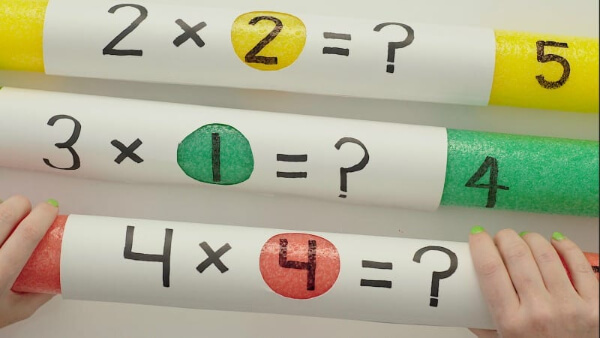
Materials Required:
Pool noodles, marker, knife or cutter, paper strips.
Procedure:
Write multiplication questions on paper wrapped around noodles. Rotate the noodle to match the correct answer.
Pool Noodle Engineering Challenge
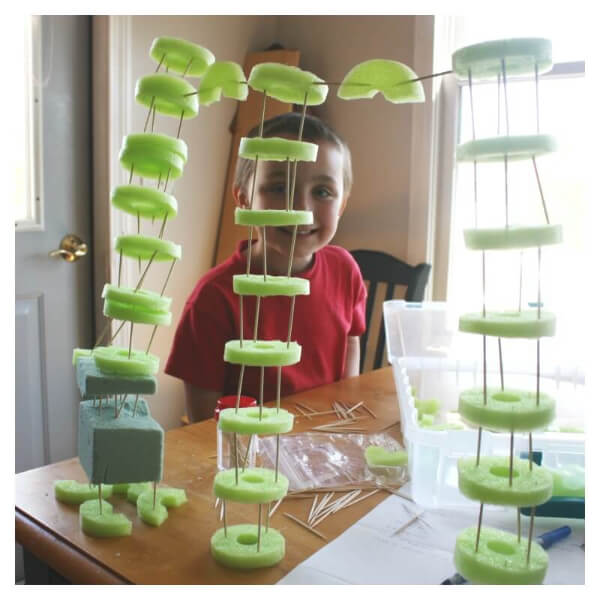
Image Source/Tutorial: Little Bins For Little Hands
Materials Required:
Pool noodles, wooden skewers or sticks, foam base.
Procedure:
Insert sticks into the foam base and slide noodle slices onto them. Stack them to build creative towers and structures.
Pool Noodle Water Wall Activity
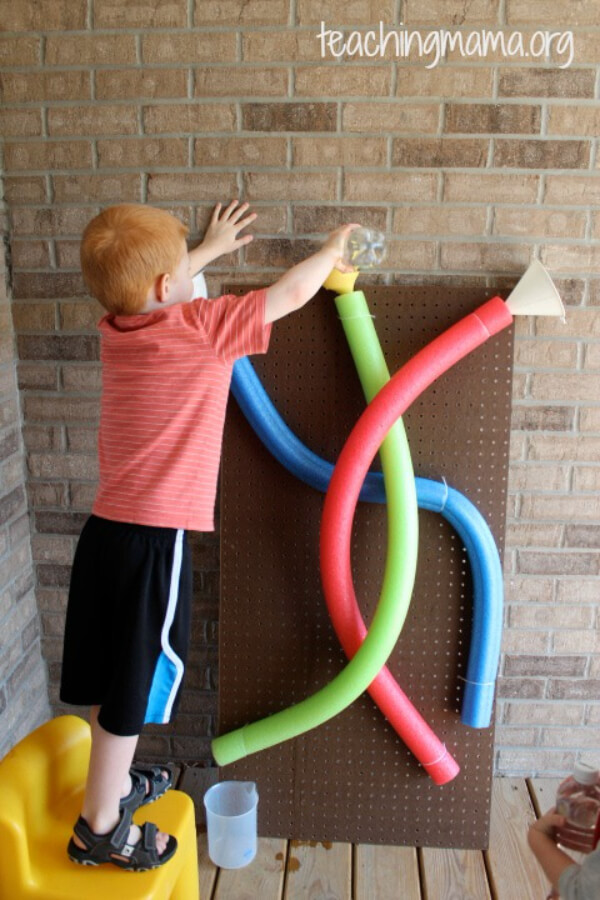
Image Source/Tutorial: Teaching Mama
Materials Required:
Pool noodles, board, zip ties or tape, cups, water.
Procedure:
Attach pool noodles vertically to a board. Pour water from the top and watch it travel through the noodle paths.
Pool Noodle Stamp Art
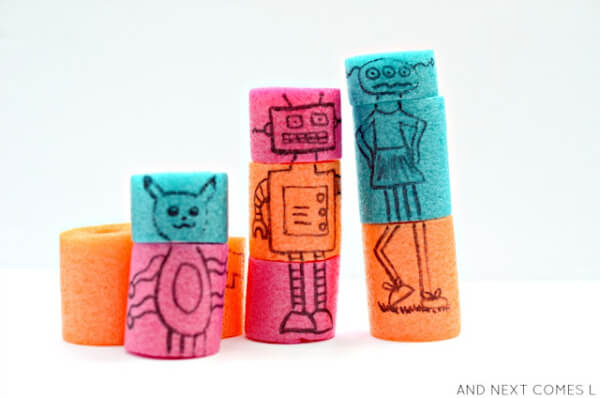
Image Source/Tutorial: And Next Comes
Materials Required:
Pool noodles, paint, paper, and marker.
Procedure:
Cut noodles into small pieces and draw simple shapes on them. Dip them in paint and stamp patterns onto paper.
Read More: Finding Different Activities – Worksheets Preschool
Pom-Pom Sorting Fine Motor Activity
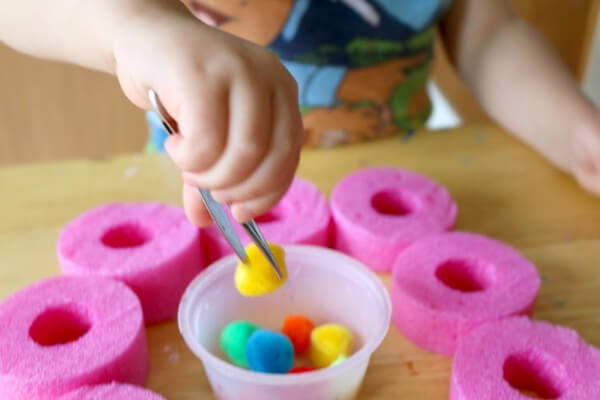
Image Source/Tutorial: School Times Nippets
Materials Required:
Pom-poms, tweezers, a small bowl, pool noodle rings, or foam rings.
Procedure:
Place colorful pom-poms in a bowl and give children tweezers. Kids pick up pom-poms with tweezers and sort them into the rings or containers.
Watermelon Name Craft for Kids
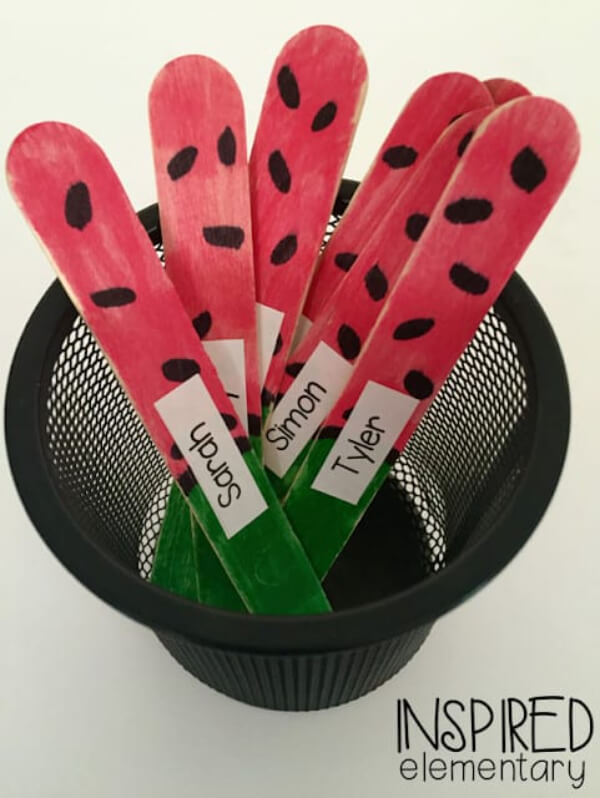
Image Source/Tutorial: Inspired Elementary
Materials Required:
Popsicle sticks, red and green paint, black marker, paper labels, and glue.
Procedure:
Paint the popsicle sticks red with a green base to resemble watermelon. Write children’s names on labels and attach them to the sticks.
Addition Color-By-Number Activity
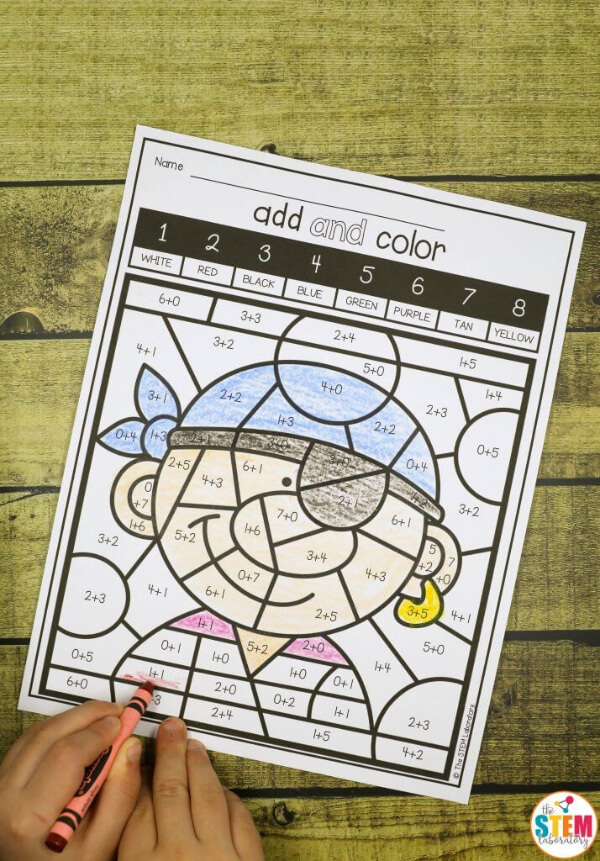
Image Source/Tutorial: The Stem Laboratory
Materials Required:
Printed worksheet, crayons, or colored pencils.
Procedure:
Solve each addition problem on the worksheet. Color the sections according to the number color guide.
Addition Flip Card Learning Game
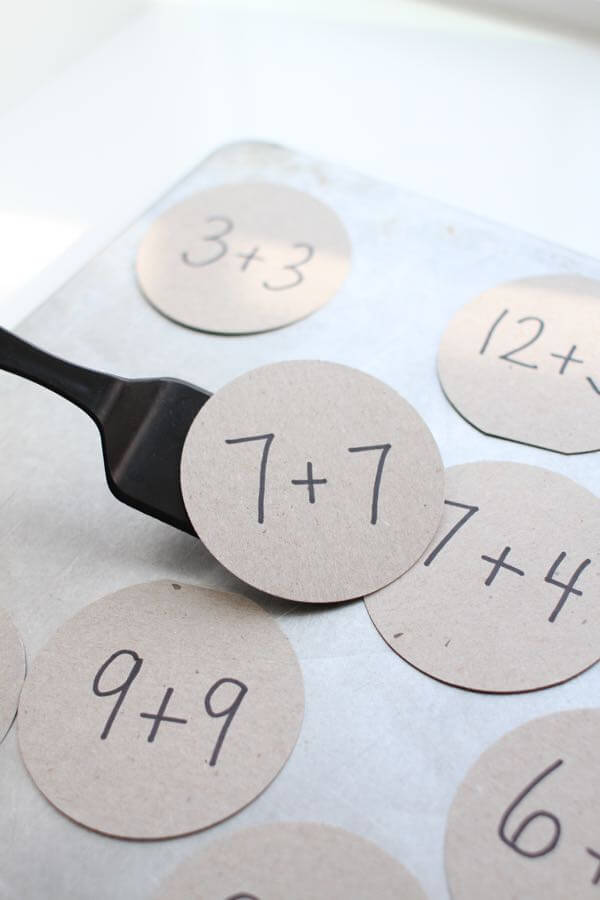
Image Source/Tutorial: I Can Teach My Child
Materials Required:
Paper circles, marker, spatula or spoon, tray.
Procedure:
Write addition problems on paper circles and place them face down. Children flip a circle with the spatula and solve the problem.
Step-by-Step Tutorial for Easy & Engaging Learning Games
Learn fun math activities for kids with this step-by-step tutorial! This educational video shows simple and engaging math games that help children practice counting, numbers, and problem-solving while having fun. Perfect for parents, teachers, and homeschool learning to make math exciting and interactive for young learners.
Expert Tips: How to Teach Addition Effectively (For Parents & Teachers)
Teaching addition is most effective when children understand the why behind the numbers, not just the final answer. Early childhood education research shows that children build stronger math foundations when they explore numbers through hands-on, visual, and real-life learning experiences rather than memorization alone.
Here are some expert-backed strategies to make addition easier and more meaningful for kids:
1. Start with Concrete Objects
Begin with real objects such as blocks, buttons, fruits, or toys. When children physically combine two groups and count the total, they clearly understand that addition means “putting together” quantities. This builds strong number sense and reduces dependency on memorization.
2. Use the “Make 10” Strategy
A widely used early math technique is helping children “make 10” before solving larger problems. For example, in 8 + 5, children can break 5 into 2 and 3, making 10 first and then adding the rest. This strategy improves mental math and prepares students for advanced arithmetic.
3. Encourage Counting On Instead of Starting From 1
Instead of counting both numbers from the beginning, children should start from the larger number and count forward. For example, in 6 + 3, they start at 6 and say 7, 8, 9. This method builds fluency and confidence in early learners.
4. Mix Learning with Everyday Activities
Addition becomes more meaningful when connected to daily life. Parents can involve children in simple tasks like counting fruits at home, adding utensils during meal prep, or grouping toys during playtime. Real-life examples make math more relatable and less intimidating.
5. Use Games and Movement-Based Learning
Hands-on games like dice rolling, card games, or building towers with blocks help children stay engaged while learning. Interactive play improves attention span, memory retention, and problem-solving skills.
Why Hands-On Addition Activities Are Important
Educational experts agree that children learn math best through active participation and sensory experiences. Hands-on addition activities support multiple areas of development, including:
- Cognitive development (understanding number relationships)
- Fine motor skills (handling objects and tools)
- Logical thinking and reasoning
- Confidence in problem-solving
According to early learning research, students who regularly use manipulatives (like counters, blocks, or visual aids) develop stronger mathematical thinking skills compared to those who rely only on worksheets.
This is why fun, interactive addition activities are essential in early childhood education—they transform abstract numbers into something children can see, touch, and understand
FAQs
Q1. What are the best fun addition activities for kids?
Answer: Some of the best fun addition activities include using counting blocks, dice games, number cards, bead counting, and real-life object grouping (like toys or fruits). These hands-on activities make learning interactive and help children understand addition more easily.
Q2. At what age should children start learning addition?
Answer: Most children begin learning basic addition between the ages of 4 and 6, depending on their developmental readiness. Early exposure through play-based learning helps build a strong foundation before formal math begins in school.
Q3. Why are hands-on addition activities important?
Answer: Hands-on activities help children visually and physically understand how numbers work. Instead of memorizing, they learn by doing—this improves number sense, problem-solving skills, and long-term retention.
Q4. How can I teach addition at home easily?
Answer: You can teach addition at home using everyday items like snacks, toys, or household objects. Ask simple questions like “How many apples do we have in total?” or “If we add 2 more cars, how many are there now?” This makes learning natural and practical.
Q5. What games help kids learn addition faster?
Answer: Games like dice rolling, board games, flashcard challenges, and LEGO building activities are great for teaching addition. These games encourage repeated practice without making learning feel boring.
Q6. How does learning addition benefit early childhood development?
Answer: Learning addition improves cognitive development, logical thinking, and early problem-solving skills. It also builds confidence in math and prepares children for more advanced arithmetic concepts in later grades.
Fun addition activities help children understand math through play, hands-on learning, and real-life examples. These engaging methods build strong number sense, improve problem-solving skills, and make early math learning enjoyable and effective for kids. Follow us on YouTube for art and craft tutorials and much more.
Reviewed By Rachit Gupta
More Articles from Kids’ Art & Craft
- DIY Easter Basket Ideas
- DIY Easter Garlands Ideas
- Easter Bunny Crafts for Kids
- Easter Crafts for Adults
- Easter paper wreath, an easy craft for kids