Kids Activities
Social Emotional Learning Activities For Kids

Are you looking for art and craft activities that will teach your kids about social emotions? Then you have landed on the right web page.
Welcome to some specially designed art and craft ideas to make kids aware of social-emotional feelings. Having awareness about social feelings is important for kids as well as adults. Giving teachings on social emotions would develop positive attitudes such as sharing and caring. They will have a positive attitude in and out of the classroom. They will also learn the correct way of dealing with unpleasant activities. Let’s learn!
Social-emotional learning skills, mainly known as “SEL”, are a set of skills that a child needs to thrive throughout their life. It is not only meant for kids but also plays a very important part in everyone’s day-to-day life. SEL includes five core competencies: social awareness, relationship skills, self-awareness, self-management, and responsible decision making. Social-emotional learning activities are really necessary for kids as they help them to understand their emotions and also those of other people, which ultimately leads to better choices and decision-making.
Social-emotional learning activities developed personal well-being and emotional competence that will further help them to thrive in future challenges in both academics and life. These activities develop a growth mindset in the children, which initially teaches them to develop positive relationships. These activities are mainly performed in elementary schools and kindergartens to make children learn the concept of emotions in a playful manner. To perform this activity, you don’t require any expensive materials; everything you need can be easily available at your school or home.
So this summer holiday teaches your kids the values and concepts of social-emotional learning, with the help of these amazing learning activities, and makes their holiday more fun and memorable. Happy learning!!
We are here with socio-emotional learning activities like monster feelings cards, paper plate emotion masks, breathing exercises, strategy anchor charts, sharing activity for toddlers, discovery bottle, storytelling craft, sticky cutting tray, catch, emoji, color by code, flip book, and self-portrait.
Social-Emotional Learning Activities For Kids

Read More: Clay Footprint DIY Baby Keepsake
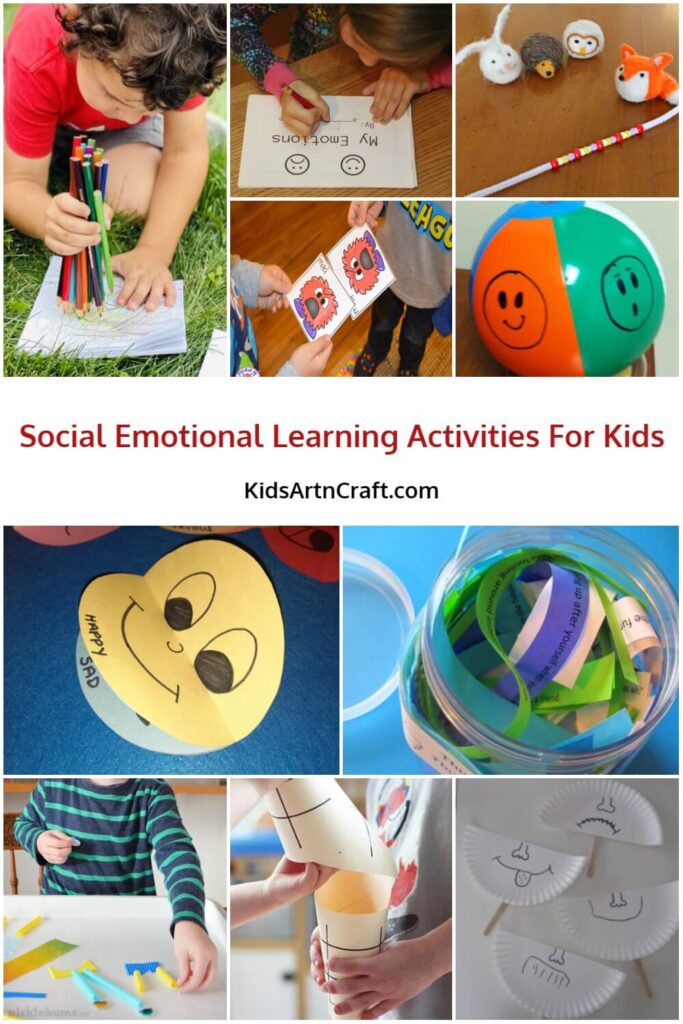
Monster Feelings Cards For Kids

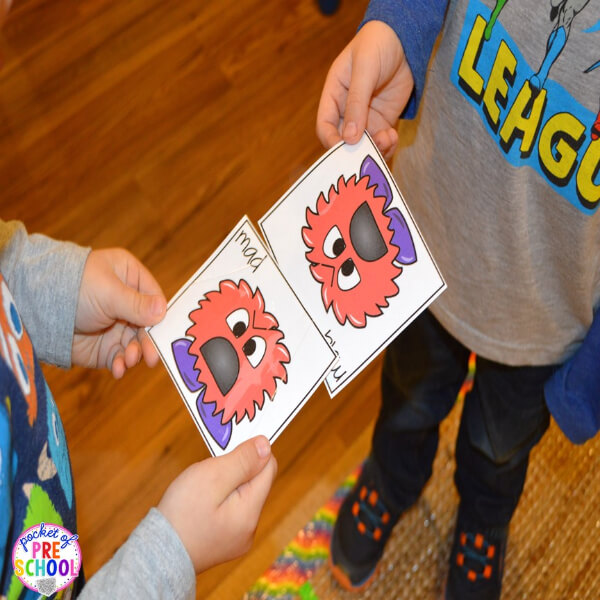
Image Source/Tutorial: Pocket Of Preschool
Make some monster feeling cards that have feelings. This activity is designed to introduce kids to different kinds of feelings, such as sadness, anger, frustration, envy, fear, and so on. These cards can be used to play a game. These will be crafted in pairs, and students will be given these cards randomly, and then they will find the other same emotion monster card. This way, they will be taught about several emotions. For this, you need white A3-size sheets, colored pencils, scissors, and a black marker. The feeling monsters will be drawn on small square white cards.
Simple Paper Plate Emotion Masks

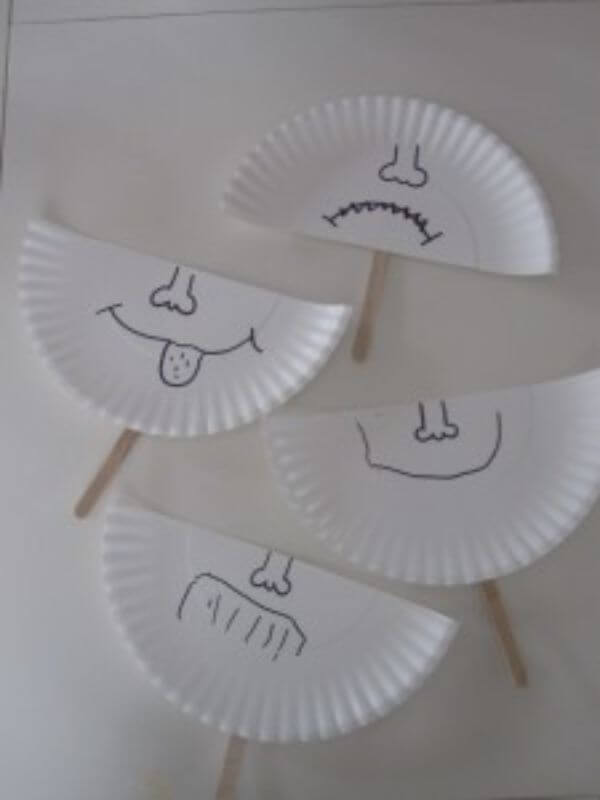
Image Source/Tutorial: No Time For Flash Cards
Simple paper plate masks have emotions. This activity will help to cultivate the importance of social emotions. For this, you need some circular paper plates, glue/tape, a pair of scissors, ice cream sticks, and a black marker pen. At first, the circular plates are cut in half, and facial expressions are drawn on them. At last, the ice cream sticks are stuck to the back of all the paper plates using glue/tape. The sticks would be used to hold the masks in front of the face. These facial expressions have the purpose of teaching children about emotions. Enjoy!
Fun Breathing Exercises For Preschoolers

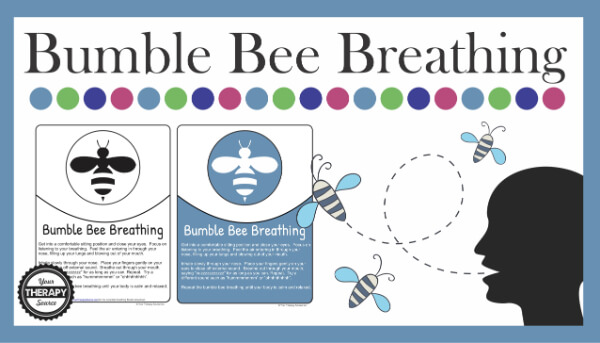
Fun breathing exercises for kids. These exercises would keep their respiratory system healthy, and during bad moods, this exercise would help them to calm down and think wisely. For this, a teacher needs to demonstrate this exercise with the help of the bumblebee breathing poster. This kind of exercise should be on the daily schedule of the school curriculum. Doing such exercise would be highly beneficial for a child’s mental as well as physical health. The teacher should guide children while exercising, and the teacher should check on their breathing rhythms. Stay calm and composed while exercising, and eventually stay healthy.
4 Ways To Cope: Strategy Anchor Charts
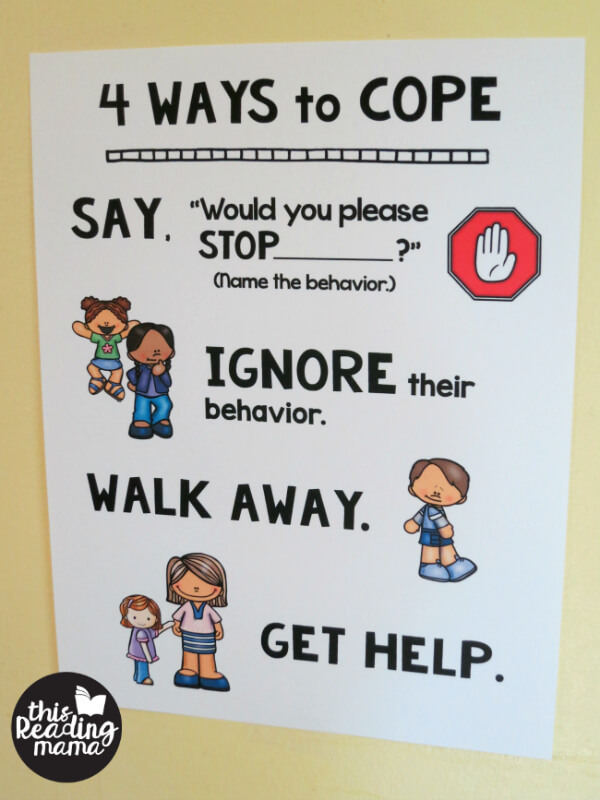
Image Source/Tutorial: This Reading Mama
This is a chart that will help children cope with strategy anchors. This chart is essential because, through this, children learn how to deal with negative emotions or how to respond to negative attitudes. The teacher must take a printout of this chart and paste it into the classroom for every student to look at. Teachers must also explain this chart to the students and make them understand that there are a few better ways of responding to negative emotions. The purpose of this chart makes it vital. For a better understanding, narrate a story.
Sharing Activity For Toddlers

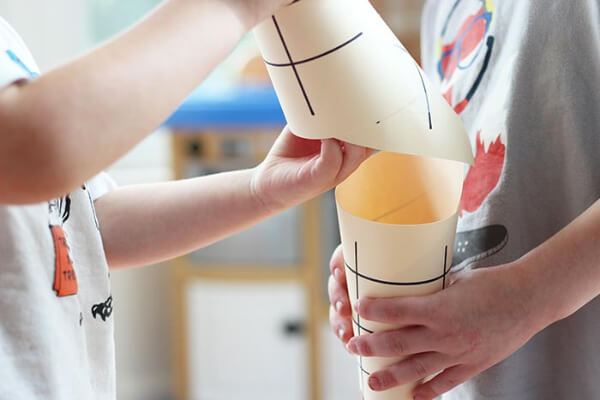
Image Source/Tutorial: Sunny Day Family
Explore an interesting activity for toddlers that will teach them the importance of sharing. There is an ice cream game. For this, you need peach-colored sheets, a black marker, and some colorful balls. Vertical and horizontal lines are drawn on the sheets to make it look like an ice cream cone. They are folded into a conical shape, and the ball is put in it to make it look like a cone of ice cream. In this activity, they will make decisions about whether they want to share their ice cream with other classmates or not. Preschoolers will learn a lot.
Easy Emotion Discovery Bottle

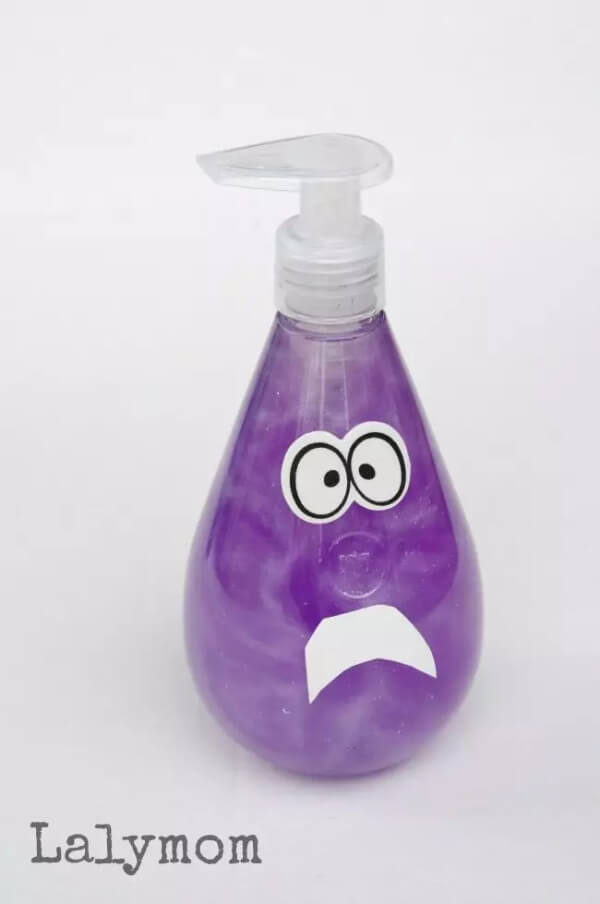
Image Source/Tutorial: Laly Mom
Learn about some emotions through bottles. Any bottle can be used, for example, a hand wash dispenser, a shampoo bottle, a face wash bottle, a conditioner bottle, and so on. For this, you need some bottles, a pair of scissors, plastic tape, and some social emotion printables. The printables of emotions are cut and pasted on the bottle to display the emotions on it. Children can look at these emotions and learn from them. Teachers should also teach them about each emotion, and whether it is a negative or positive emotion. Have fun while learning!
Social Stories Storytelling Craft For Kids

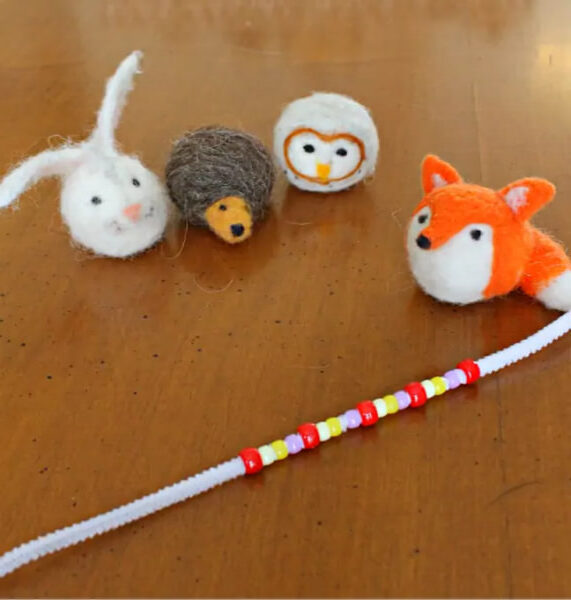
Social stories storytelling craft. Here, a story would be narrated by a teacher. The main objective of this story is to tell them about a social setup and how emotions work in such cases. What kind of response are you more likely to get if you greet someone with a positive attitude? In this story, animals would be used as characters, and for this, an e-book is available, or you can get a printout. The story’s protagonist is a fox who is short-tempered. Therefore, no one plays with the fox. Children aged 6-9 years would love listening to this.
Fun Sticky Cutting Tray Invitation to Play

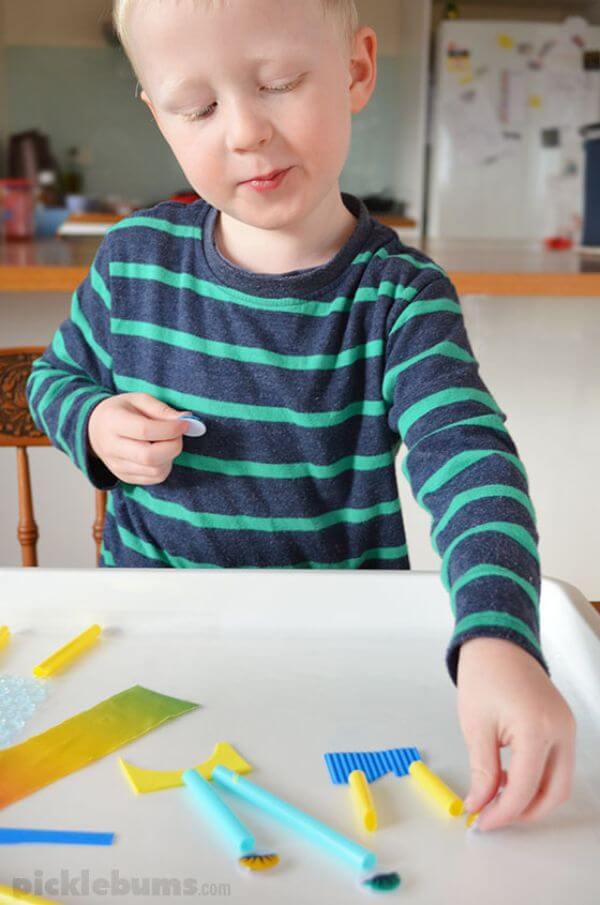
Image Source/Tutorial: Pickle Bums
Fun sticky cutting tray invitation to play. This activity is all about experiments. For this, you need a large tray, colorful tape, some straws, wool thread of any color you like, bubble wrap, googly eyes, and a pair of scissors. In this activity, children would see which sticks were on the tray and which stuck objects could be removed. They can stick googly eyes, tapes, straws, woolen threads, and so on. Once they have a clear idea of sticking and cutting, they may proceed. Kids aged 9-12 years of age would love it. Teachers must supervise the kids while using scissors.
Catch a Feeling Craft Activity

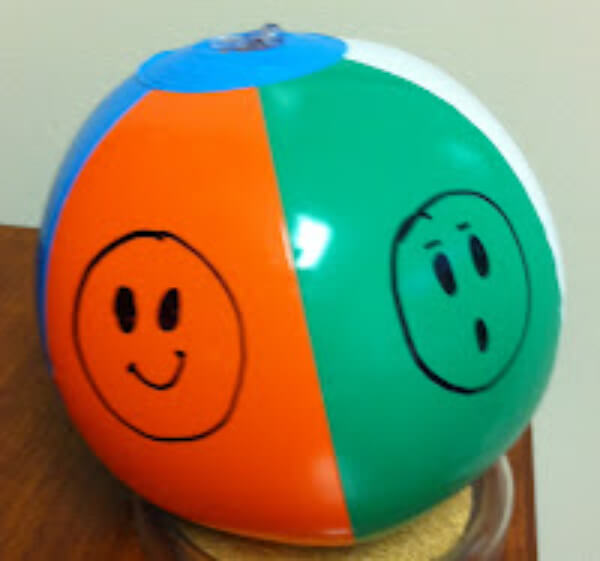
Image Source/Tutorial: Pam Dyson
Catching a feeling craft activity is fun to do. For this, you need a beach ball and a black marker pen. A teacher would draw some emotions on the ball, and a game would be conducted. Kids would sit in a circle, and they would pass the ball to each other. And, the one who has caught the ball would look at the emotion and will share an incident when he felt that emotion. Kids aged 6-9 years of age would love playing this game. Overall, it is an amazing game to teach children about emotions. Teachers should guide them.
Emoji Feeling Recognition Activities For Toddlers

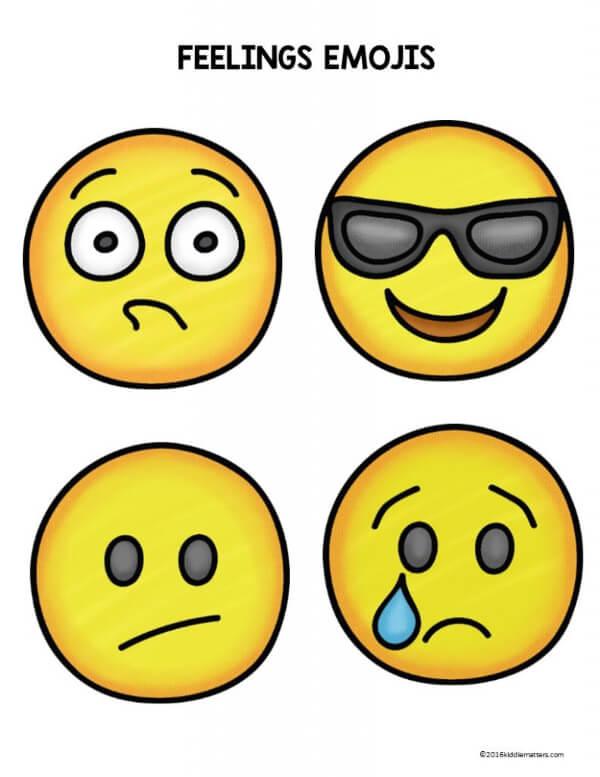
Image Source/Tutorial: Kiddie Matters
The Emoji feeling recognition activity is a very vital activity, as from this activity, children would easily be able to express their feelings. Since children are not sure how to express their feelings, this activity will help them out. For this, you need some emoji printables, chart paper, a pair of scissors, and glue. Then, all the printable emojis are cut and pasted on the chart paper. Children should be able to recognize the expression on the emoji, and teachers should help them in case of difficulty. This activity is suitable for kids 6-9 years of age. Keep learning.
Easy Paper Plate For Feelings Craft
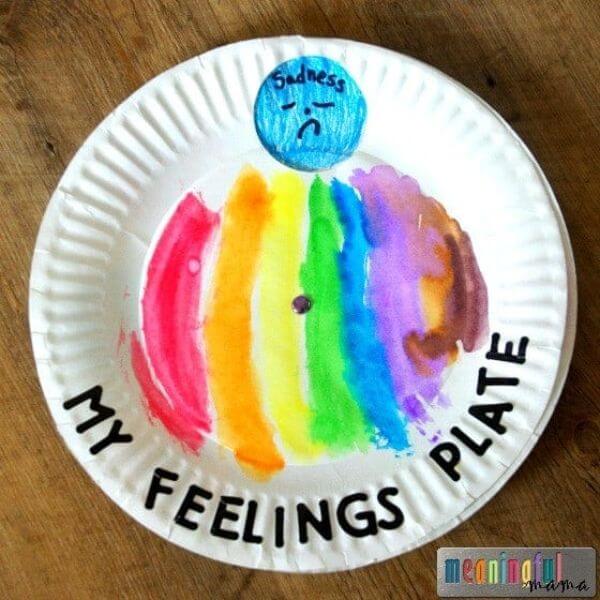
Image Source/Tutorial: Meaningful Mama
Learn to make a paper plate feeling spinner. You need two identical paper plates, a cutter, a Sharpie, watercolors, crayons, a paper fastener, and black alphabet stickers. On one plate, some emotions are drawn using crayons and Sharpie; they are drawn in circles. On the other plate, a circle of the same circumference is cut out and decorated using watercolors, and the black alphabet is pasted to write MY FEELINGS PLATE. The plate having a hole in it is attached to the plate having emotions using a paper fastener. Kids aged 6-9 years of age would enjoy it.
Color By Code: Emotions Craft Activities
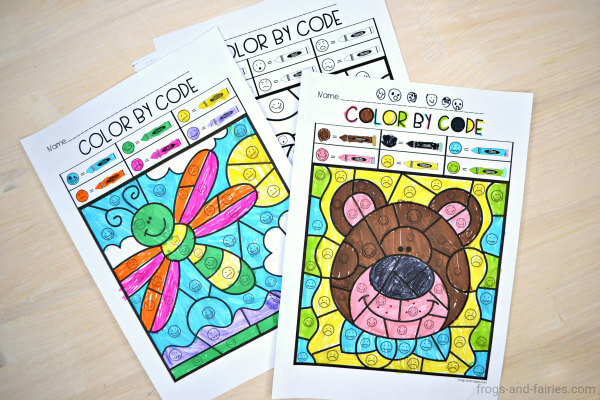
Image Source/Tutorial: Frogs-and-Fairies
Color by code is a very interesting activity. In this, a printable would be provided, and in that, a picture would be there along with facial expressions to indicate which color is required to be filled. You need a printable and a wax color. This activity would teach children about different emotions that they might have felt in the past, and if they want, they may share the incident. Teachers must make kids aware of which emotions are represented on the printable. Kids 5-9 years of age would love doing this activity. Overall, it’s a decent activity to teach emotions.
Social-Emotional Learning Activities For Kids

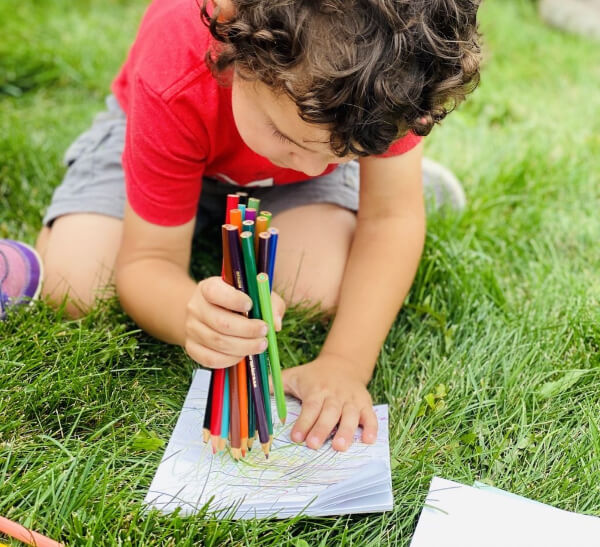
Image Source/Tutorial: The Art Of Education
Social-emotional learning activity, for these children, would be scribbling on a white sheet to let their inner emotions flow out. Here, all kinds of colors and a blank white sheet are required. And, teachers would guide children to hold as many colors as possible to draw on the blank white sheet. This activity is designed to let children put their emotions out with the help of a scribbling process. This activity can also be done by adults to take their emotions out and feel relief. This activity is suitable for all age groups. Just scribble out your emotions.
Simple Emotions Flip Book

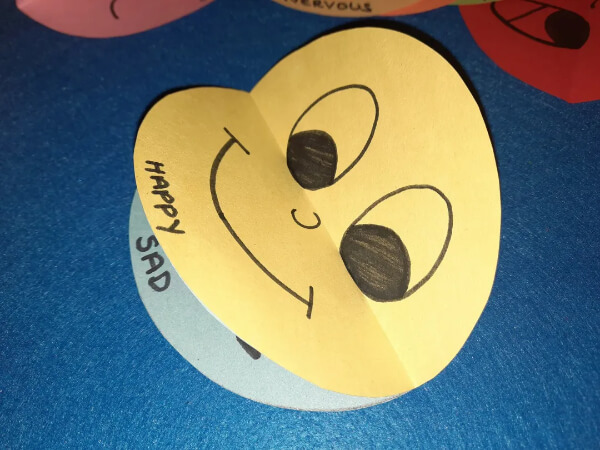
Image Source/Tutorial: This Crafty Family
Learn to make a simple emotion flip book. You need colored paper, sketch pens, a pair of scissors, and glue. The sheets are cut into circles; the size should be similar to a CD. Then, using sketch pens, draw different facial expressions on the colored circular sheets, and make as many as possible. Label the emotion on each sheet. Now, using glue, paste all the sheets together like a book. After assembling, it should be like a foldable book. This book could be used by children to show how they are feeling at the moment. This will help teachers a lot.
Self Portrait Identifying Emotions Activities

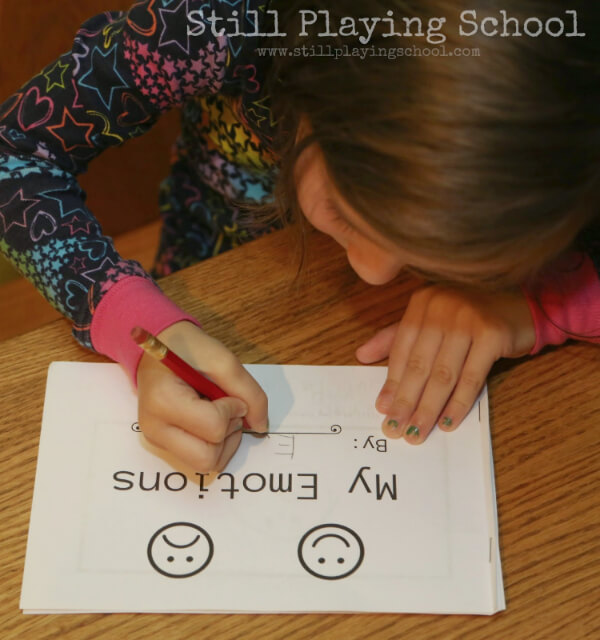
Image Source/Tutorial: Still Playing School
The self-portrait identifies emotions. It is an activity to understand a child’s inner feelings. For this, you need a printable with various emotions, both negative and positive emotions, and a marker or pen to write with. This activity will help teachers and counselors to understand children more clearly. Children will mark the emotion that they will be feeling and name that emotion. This labeling and marking would help teachers, parents, and counselors to understand kids more. Kids don’t know how to express their emotions, but this activity would help them. Kids aged 6-9 years of age would enjoy this.
Feeling Identification Activities For Kindergarten

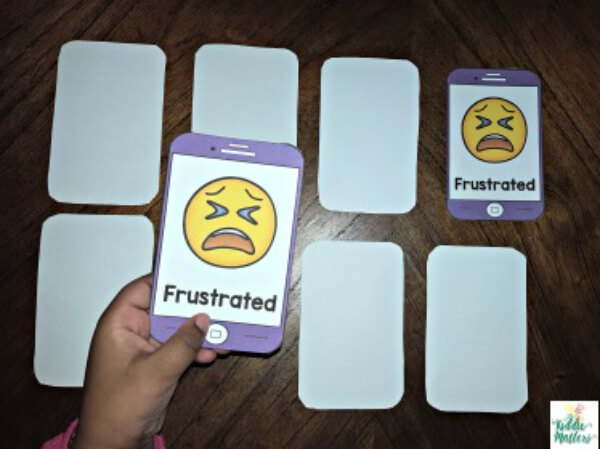
Image Source/Tutorial: Kiddie Matters
Feeling identification activity. It is an activity to understand a child’s inner feelings. Take printables of different emotions, both positive and negative. These printables would be cut out as cards of different emotions and kept on the table, upside down. Kids would turn over an emotion card and name that identifies the emotion. This is an exciting activity to learn about emotions. If they have mastered the identification of emotions, they will be able to express them too. Kids don’t know how to express their emotions, but this activity would train them. Kids of 4-6 years of age would enjoy this.
Thumbs Up! Thumbs Down! Jar Fun Craft Activity
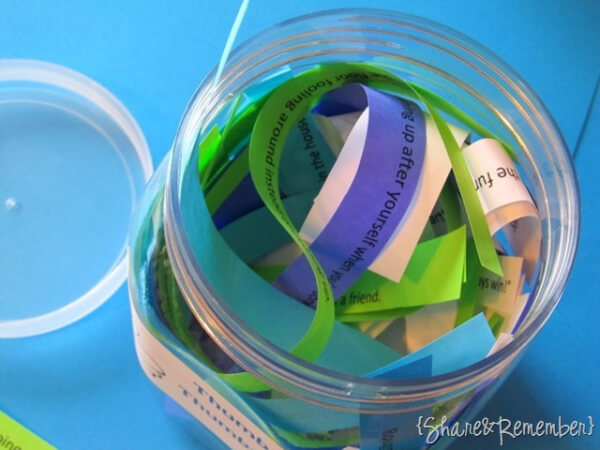
Image Source/Tutorial: Things To Share And Remember
Thumbs up and thumbs down jar activity. This activity is specially designed to let children understand which actions are positive and which are negative in society. There is a jar that is filled with strips, and on each strip, a comment is written. Children will take a strip out of it and give it to their teacher. The teacher would read the sentence and ask whether it is a thumbs-up or a thumbs-down situation. For example, ‘sharing toffee?’, ‘throwing water on your friend or somebody?’, and so on. A suitable activity for 6-9-year-olds.
Step‑by‑Step Social Emotional Learning Activities Tutorial for Kids
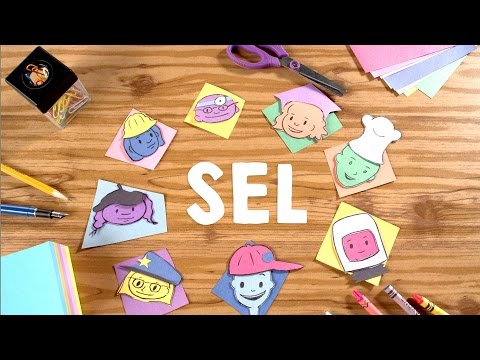
Discover a step‑by‑step tutorial on Social Emotional Learning Activities for Kids! This engaging video guide teaches parents and educators how to help children build emotional skills, empathy, self‑awareness, and social competence with fun, easy activities. Perfect for classrooms, home learning, and SEL development. Boost emotional intelligence today with practical SEL steps!
Why Social Emotional Learning Is Important for Kids
Social Emotional Learning (SEL) helps children understand and manage their emotions, build healthy relationships, make responsible decisions, and develop empathy for others. These skills are essential for success both inside and outside the classroom. Through engaging activities, children learn how to express their feelings appropriately, solve conflicts peacefully, and communicate effectively with peers and adults.
Research has shown that strong social-emotional skills can improve academic performance, emotional well-being, and positive social behavior. By practicing SEL activities regularly, children gain confidence, resilience, and the ability to navigate everyday challenges more effectively.
Key Social Emotional Skills Children Develop
- Self-Awareness: Recognizing and understanding personal emotions and strengths.
- Self-Management: Learning to regulate emotions and behaviors.
- Social Awareness: Developing empathy and understanding others’ perspectives.
- Relationship Skills: Building positive friendships and communication skills.
- Responsible Decision-Making: Making thoughtful and respectful choices.
These five core competencies form the foundation of effective social-emotional learning programs and help children thrive in school, at home, and in their communities.
Tips for Parents and Teachers
- Encourage children to talk openly about their feelings.
- Use books and stories to discuss emotions and empathy.
- Model positive emotional responses and problem-solving skills.
- Create opportunities for teamwork and cooperative play.
- Praise children when they demonstrate kindness, sharing, and self-control.
Consistent practice of social-emotional skills through everyday interactions helps children apply what they learn in real-life situations.
Benefits of Social Emotional Learning Activities
- Improves emotional regulation and self-confidence.
- Strengthens communication and listening skills.
- Encourages empathy and respect for others.
- Supports positive classroom behavior.
- Helps children build strong friendships.
- Develops resilience and problem-solving abilities.
Creative activities such as emotion crafts, storytelling, role-playing, and feeling recognition games provide meaningful opportunities for children to practice these important life skills.
FAQs
Q1. What is social emotional learning for kids?
Answer: Social Emotional Learning (SEL) is the process of helping children develop emotional awareness, self-control, empathy, relationship skills, and responsible decision-making.
Q2. Why are social emotional learning activities important?
Answer: These activities help children understand emotions, build positive relationships, improve communication skills, and develop confidence in social situations.
Q3. What age is appropriate for SEL activities?
Answer: Social-emotional learning activities can be adapted for toddlers, preschoolers, elementary students, and even teenagers, making them valuable for all age groups.
Q4. How can parents support social emotional learning at home?
Answer: Parents can encourage conversations about feelings, read books about emotions, practice kindness, use emotion charts, and participate in SEL games and activities together.
Q5. Can social-emotional learning improve academic success?
Answer: Yes. Studies suggest that strong social-emotional skills can contribute to better classroom behavior, improved focus, stronger relationships, and greater academic achievement.
Social-emotional learning activities provide children with valuable tools for understanding their emotions, building meaningful relationships, and making responsible decisions. Whether through emotion crafts, storytelling, sharing games, or mindfulness activities, these engaging experiences help children develop skills that support lifelong success. By incorporating SEL activities at home and in the classroom, parents and educators can nurture confident, empathetic, and emotionally resilient children.
Follow us on YouTube for art and craft tutorials and much more.
Reviewed by Yash Sharma
More Articles from Kids’ Art & Craft
- DIY Math Crafts and Activities for Kids
- Games To Create For Kids with PVC Pipes
- Math Game Ideas For 3rd Grade
- Outdoor Activities For Healthy Mental And Physical Development Of Kids
- Outdoor Games For Summer