
Math
1-10 Writing numbers worksheets for preschool and kindergarten


Numbers worksheets designed to write numerals, number words, and write equations. These are suitable for preschool, kindergarten, and elementary grades.
Also Read: 1-10 Times Tables Charts
Why Number Writing Worksheets Are Important for Early Learning
Number writing worksheets are more than just tracing activities—they play a crucial role in a child’s
early cognitive and academic development. Research shows that handwriting activities engage multiple areas of the brain responsible for memory, language, and motor coordination, making learning more effective than passive methods like typing or watching.
When children repeatedly practice writing numbers, they build:
- Fine motor skills – strengthening hand muscles and pencil control
- Hand-eye coordination – improving accuracy and spatial awareness
- Memory retention – helping children remember number shapes and sequences
- Early math readiness – forming a strong base for counting and arithmetic
Interesting ways to do the worksheets, Numbers 1-10 worksheets
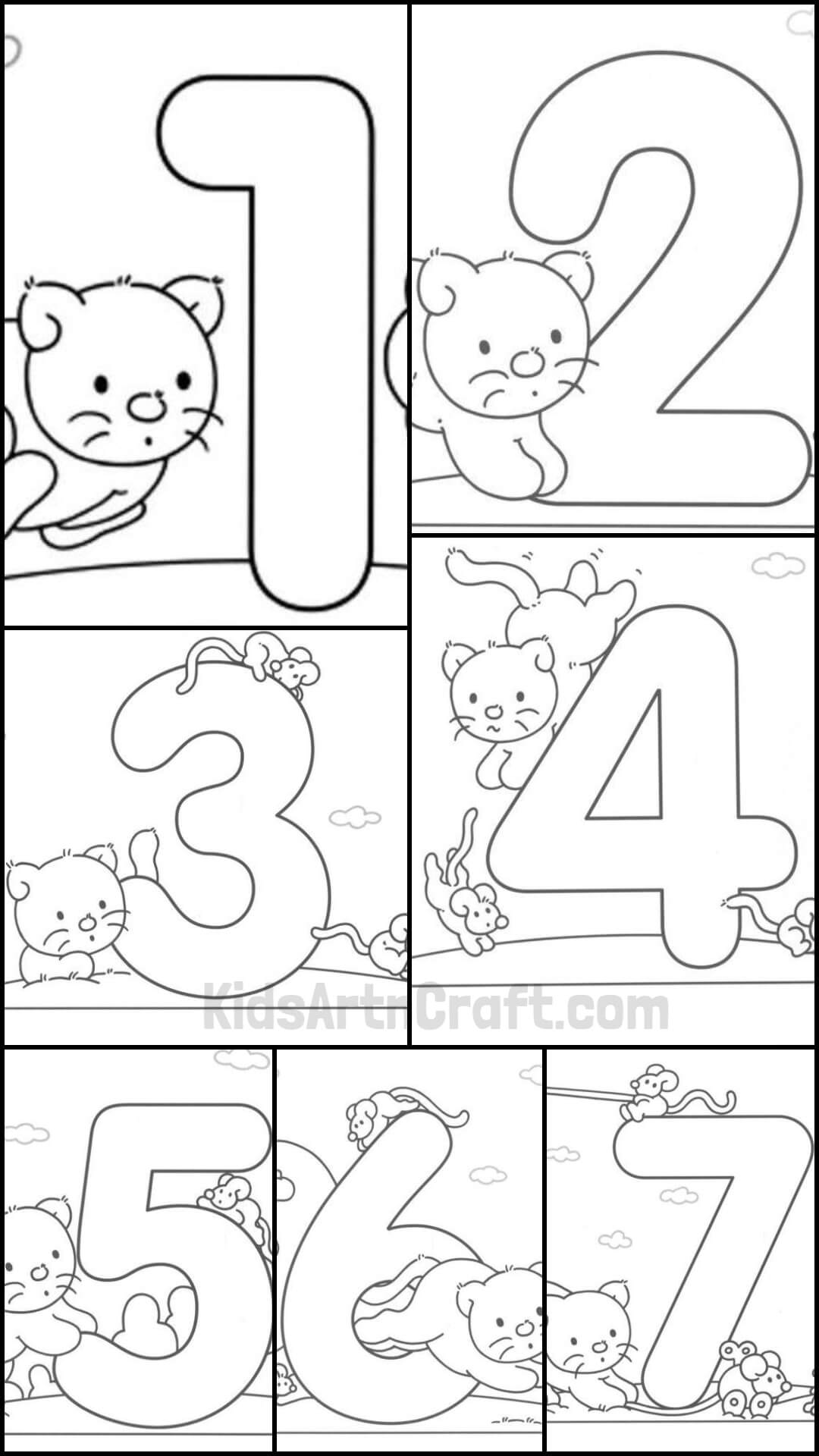
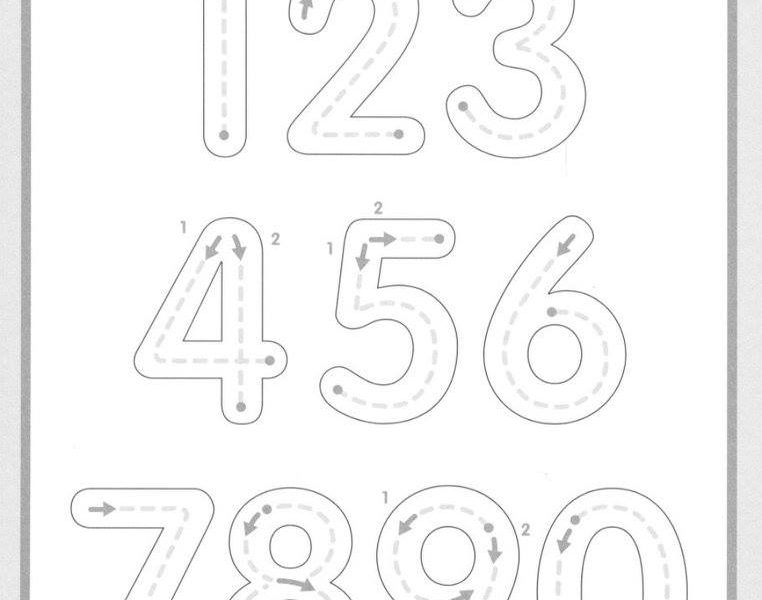
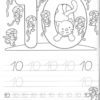
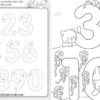
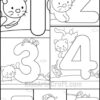
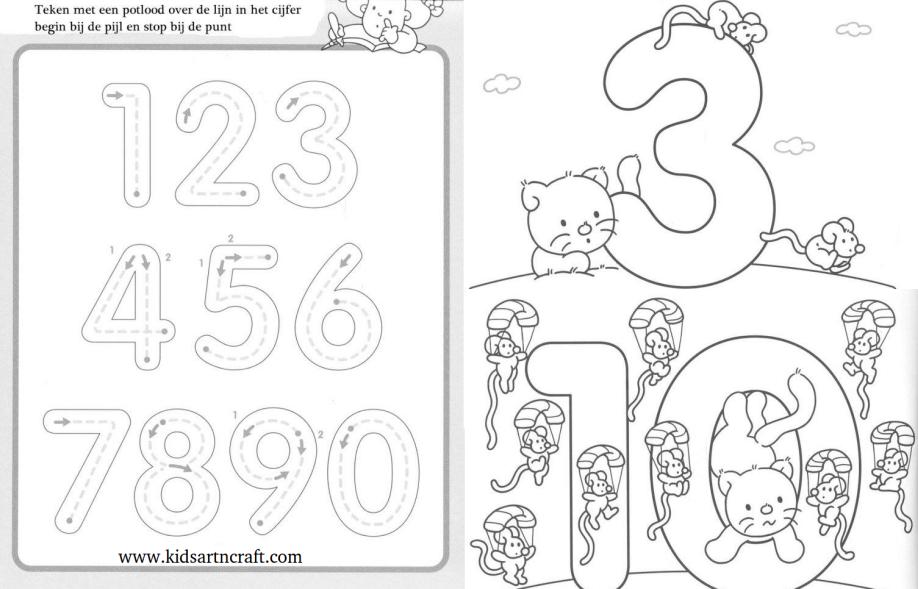
There are a huge number of ideas to help kindergarten kids memorize or write the numbers from 1 to 10. But there are only a few worksheets that teach them both of these. With the help of these worksheets, numbers 1-10, they can learn how to write the numbers and also how to count them. Thus making it fun and easy as they can imagine these worksheets while reciting them for you or in exams. You can get a printout of the images below to help your kid with numbers. First, we have given the worksheet of 1 to 10, and then the individual numbers. There are cats, mice, and clouds that they can count along with completing the worksheet.
The embossed letters with lines worksheets numbers 1-10 worksheets

The first and most important part is to teach them the shape of every number. From where to start and where to end so that they can easily write the number without much effort after a while. The method of writing that they learn now will be used by them throughout their life as it rarely changes. So, we have provided a worksheet with the arrows for every number so that you can teach them how to draw the numbers. The numbers with small 1,2 written along the arrows mean that they will have to pick up the pencil and again keep it in the starting position for the other direction.
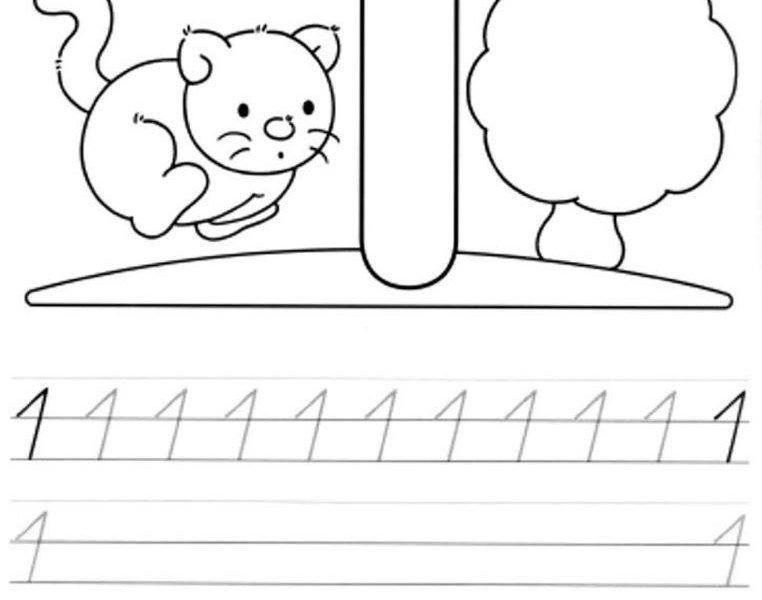
The number 1 worksheet of the worksheets number 1-10 worksheets
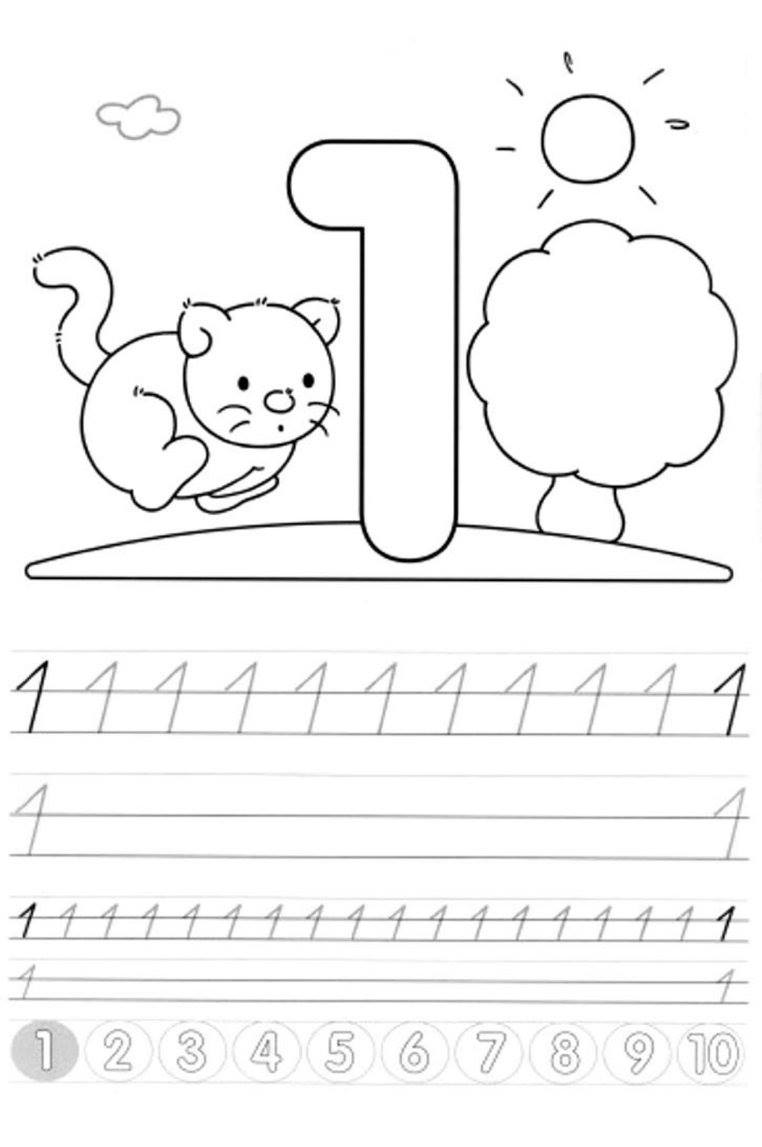
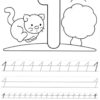
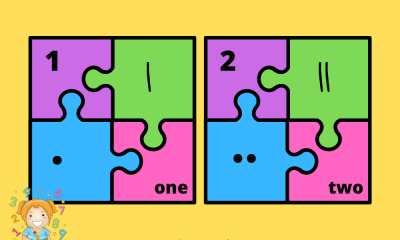
The number 1 can be written in one go as shown. You can ask your kid to write this number again and again in the worksheet so that they know exactly how to write it. Also, you can ask them how many cats are in this picture to help them count and memorize the meaning of the number. You can also add pictures representing the number as well. Like, there is only one moon and one sun.
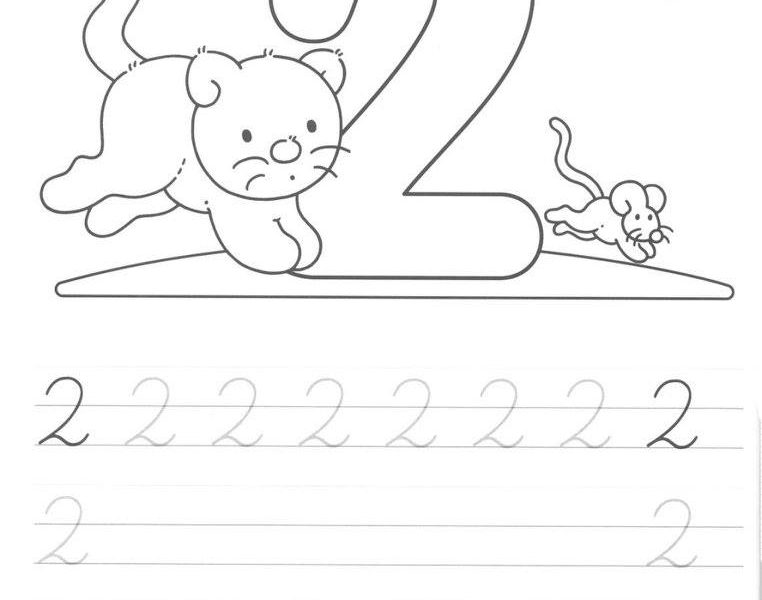
The number 2 worksheet of the worksheets numbered 1-10.
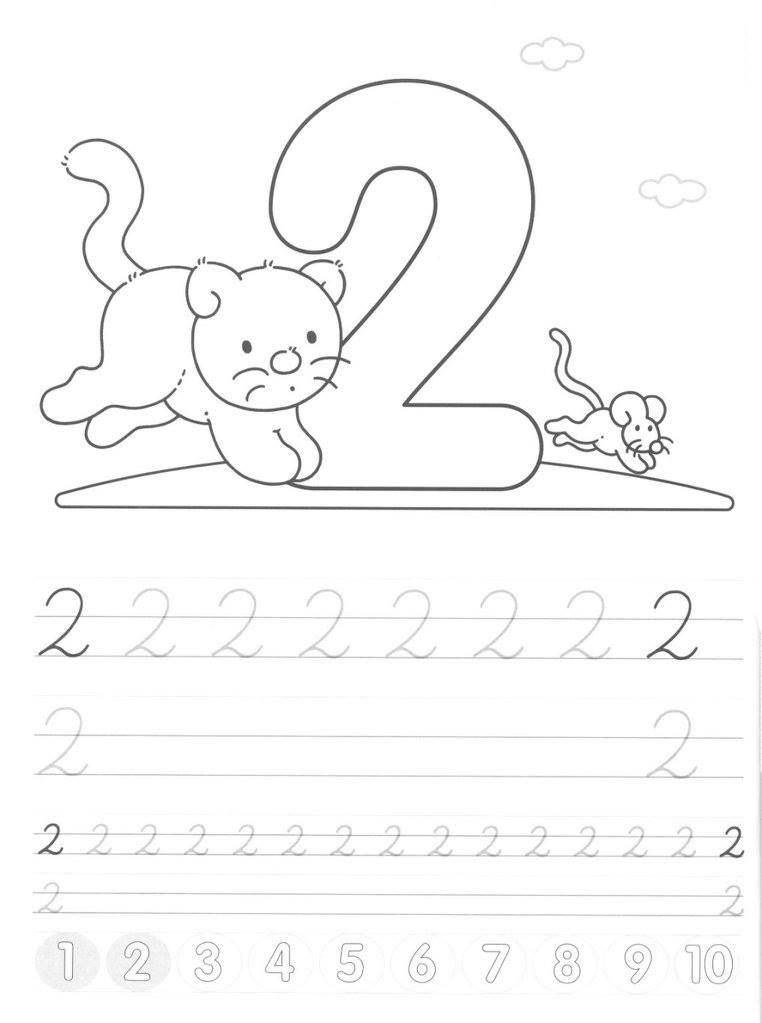
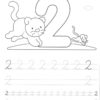
Number two is not so easy to learn to write as one is. You can try to help your child write ‘2’ by helping them to make curves and lines. Your children can start by making the top head and then the bottom piece of the number. You can also make two animals, two balls, two mice, etc. You can start by helping your child make the big number ‘2’. Shift to the normal size of the number slowly to help your child develop beautiful handwriting.
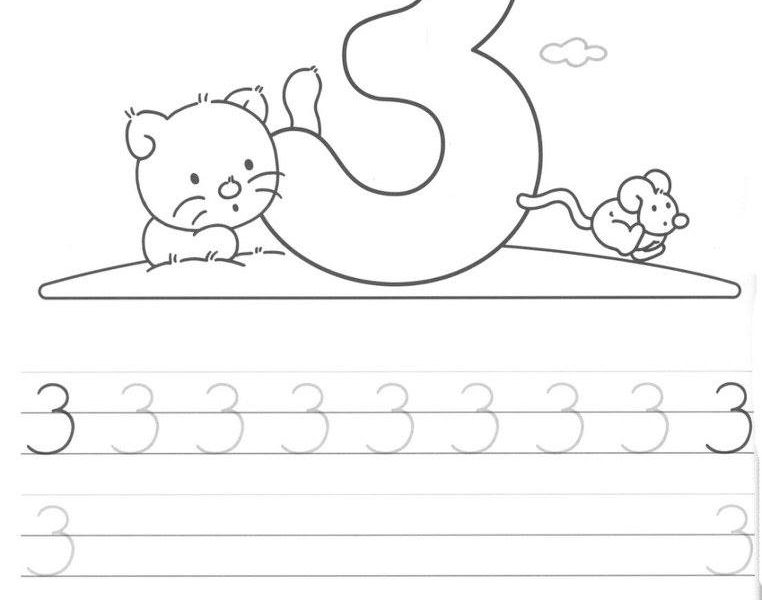
The number 3 worksheet of the worksheets numbered 1-10.
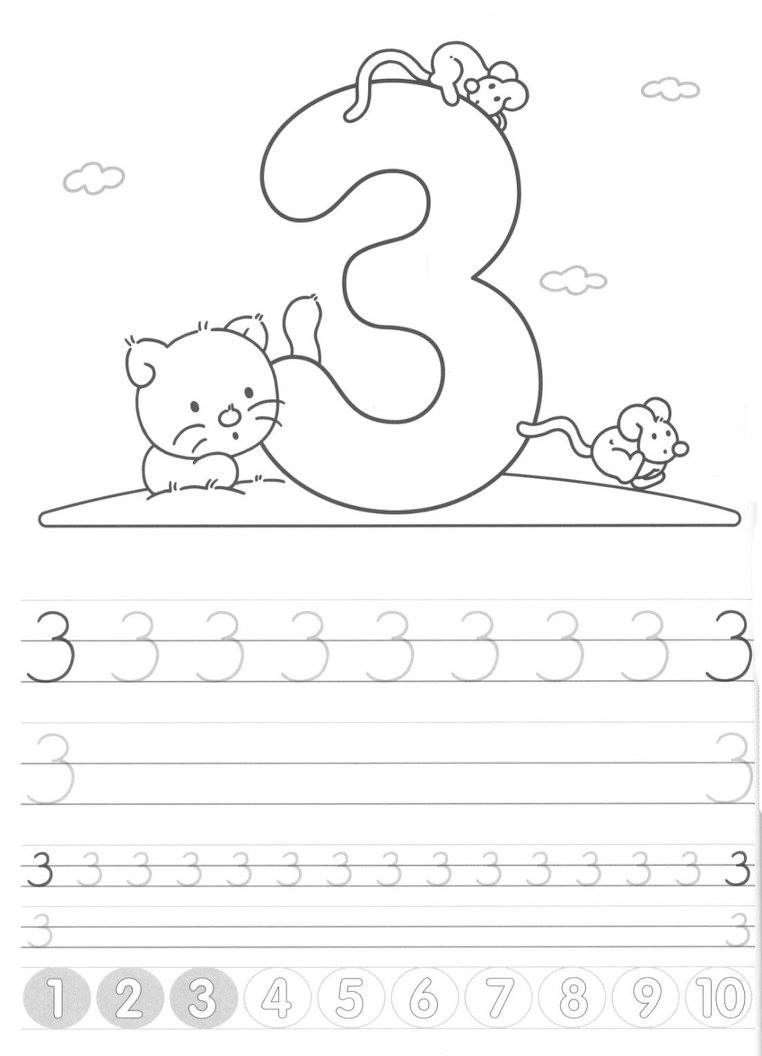
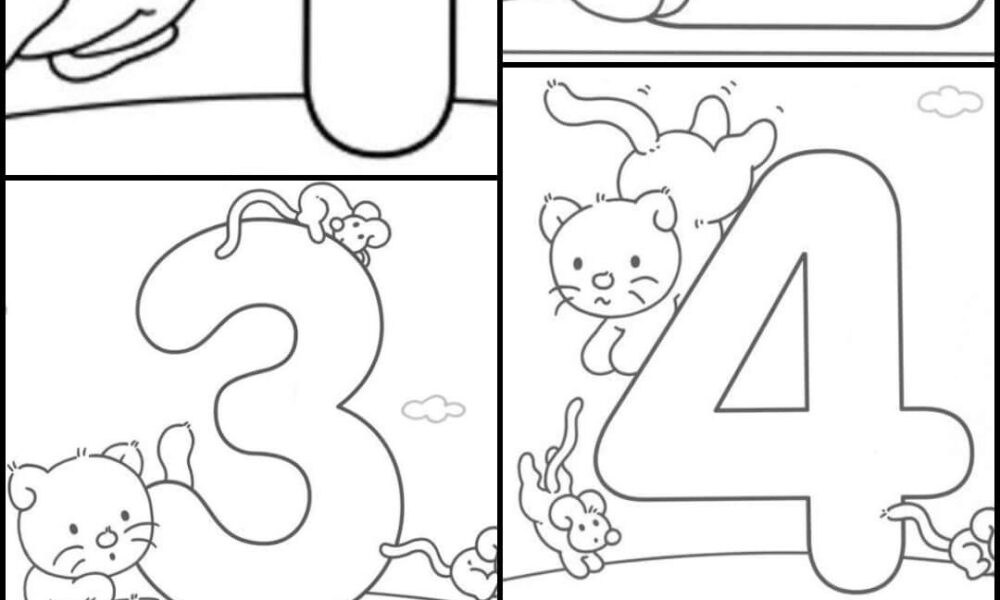
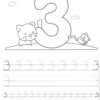
Number ‘3’ is easy to make. You can start by letting your child make circles on a loop. You can start with a large number. The number three can be learnt to make the number ‘3’ by starting with two circles on top of each other. Three is quite easy to make, but to ensure that your child makes a great number ‘3’, you need to ensure that they make it with patience and start with a larger size, moving on to a smaller size of the number ‘3’. You can use lines to define the size of the number ‘3’. Depict the number using three animals like cats, dogs, mice, etc.
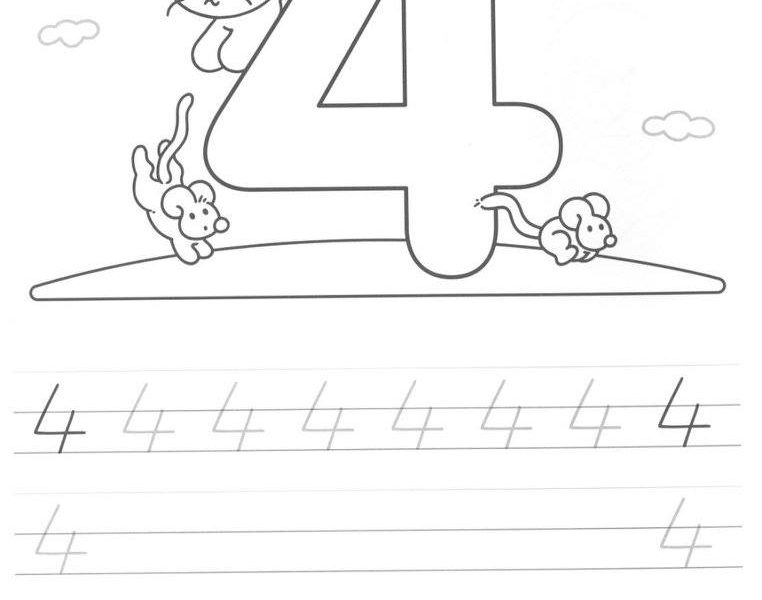
The number 4 worksheet of the worksheets numbered 1-1s.
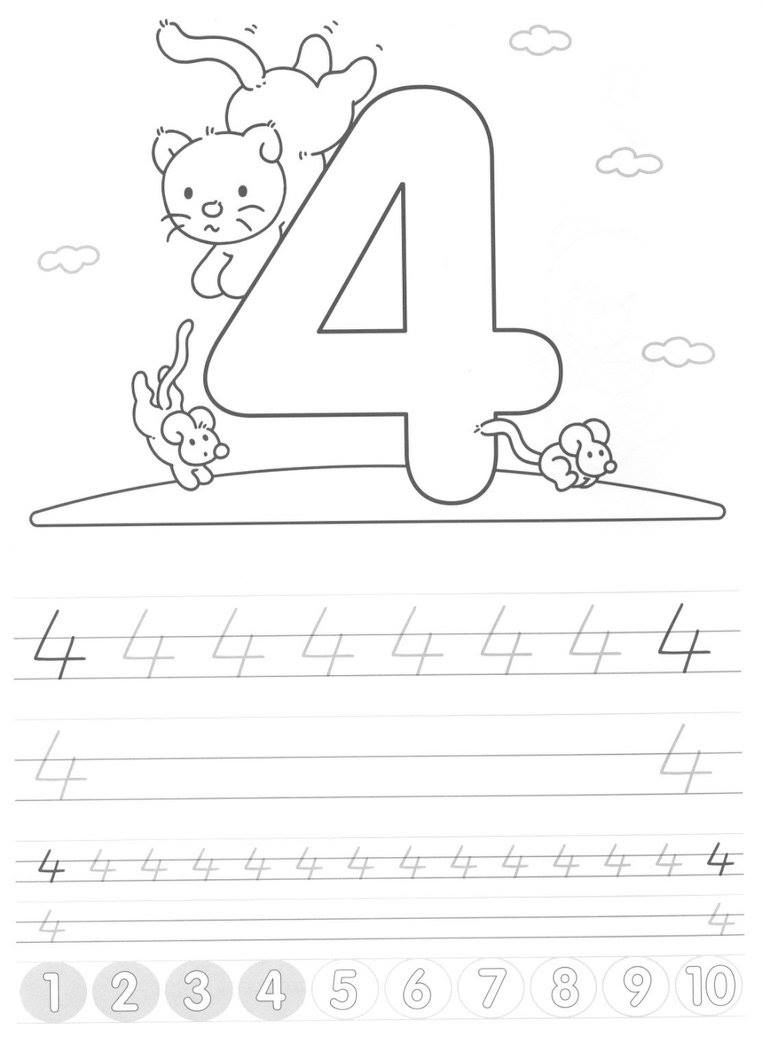
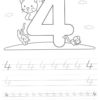
Number ‘4’ consists of straight lines and only needs precision and fine lines. The number ‘4’ will come out to be best if your child practices straight lines and bends. You can help your child to start making the best number ‘4’ by starting with a big-sized number ‘4’, shifting to a smaller size. You can help your child by starting with tracing a large ‘4’. You can show the depiction of the number ‘4’ by drawing four animals or balls, key-chains, marbles, etc.
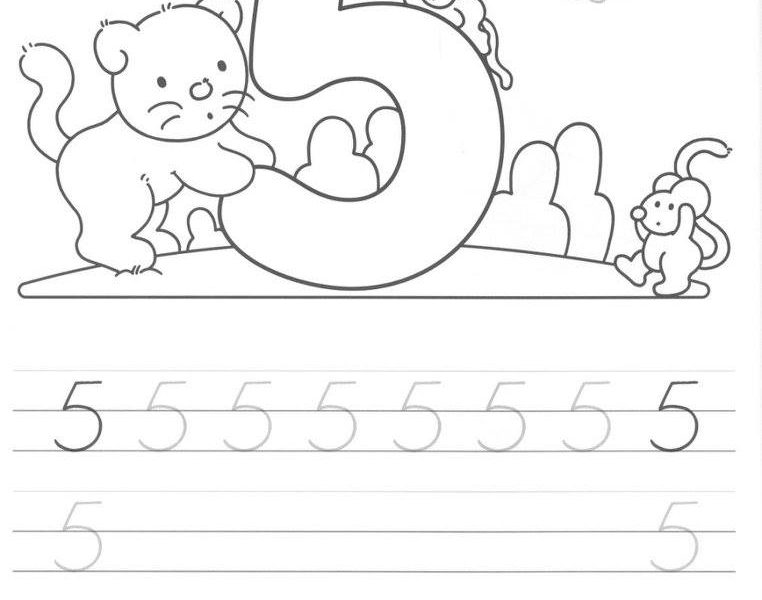
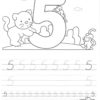
The number 5 worksheet of the worksheets numbered 1-10.
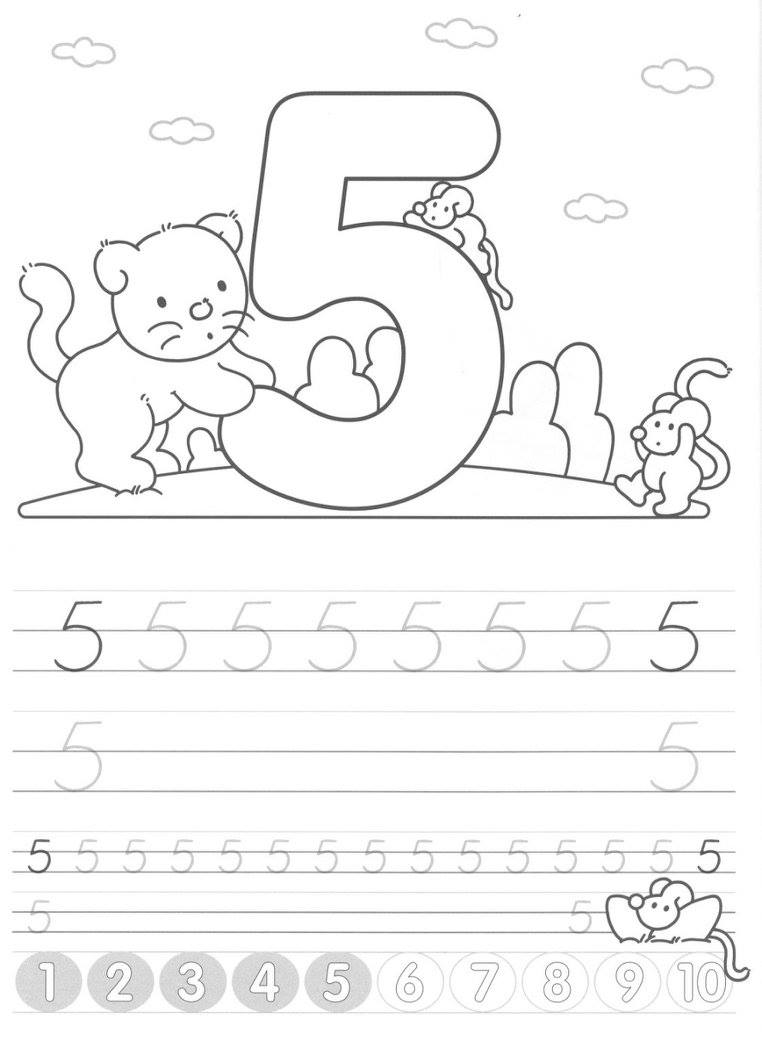
Number ‘5’ is a combination of lines and curves. You can start by helping your child to trace out the number ‘5’ on a large piece of paper. This tracing activity helps your child to understand the form and shape of the number. Now you can help your child to draw number 5 in the prescribed size within the given lines. You can slowly move to a smaller size. You can depict the number ‘5’ using five different animals, toys, cones, balls, etc.
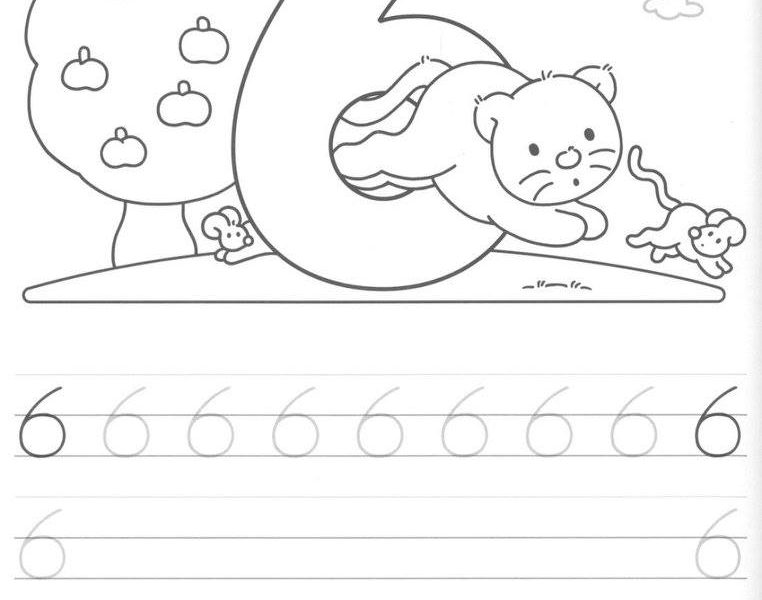
The number 6 worksheet of the worksheets numbered 1-10.
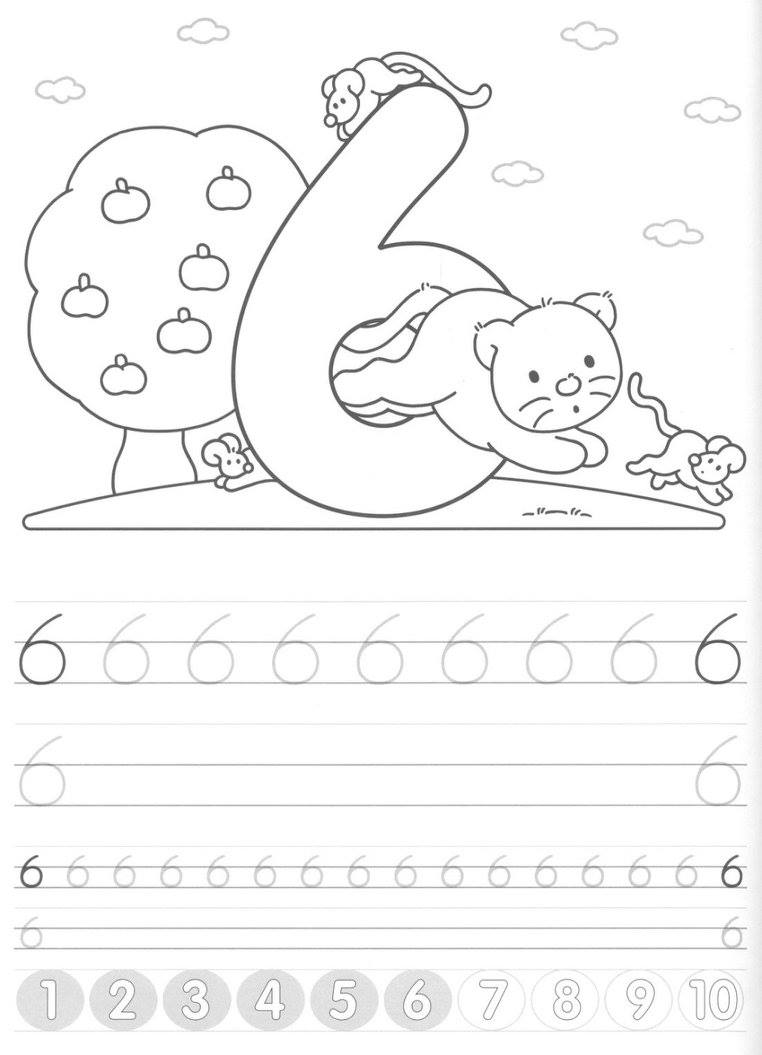
Number ‘6’ is easy to make and can be easily perfected. Start by giving your child a make loop. Now help them to trace around the big number ‘6’. It will be a great activity to perform. You can start by helping them to draw a large-sized number ‘6’, slowly moving on to a smaller size for the numeral ‘6’. Help them decide the size by drawing straight lines within which they need to draw the numeral. You can depict six apples on a tree, bananas, cherries, etc.
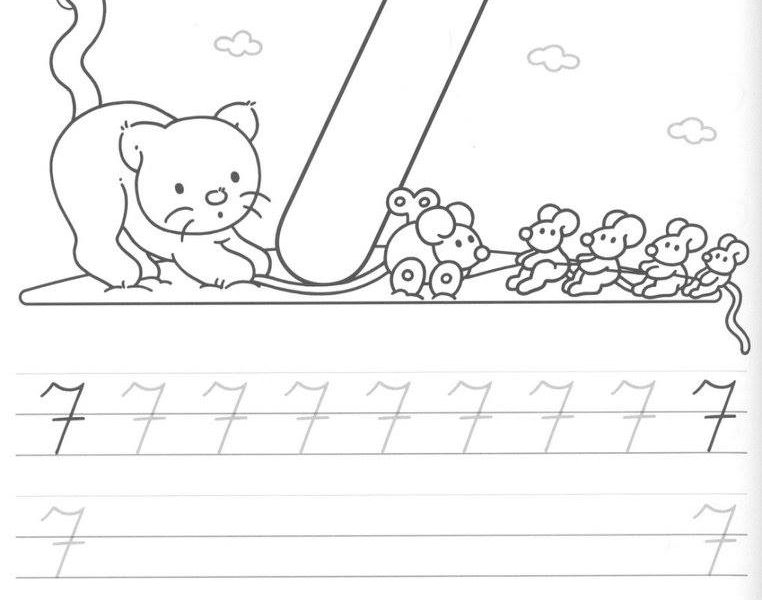
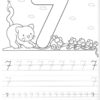
The number 7 worksheet of the worksheets number 1-10 worksheets
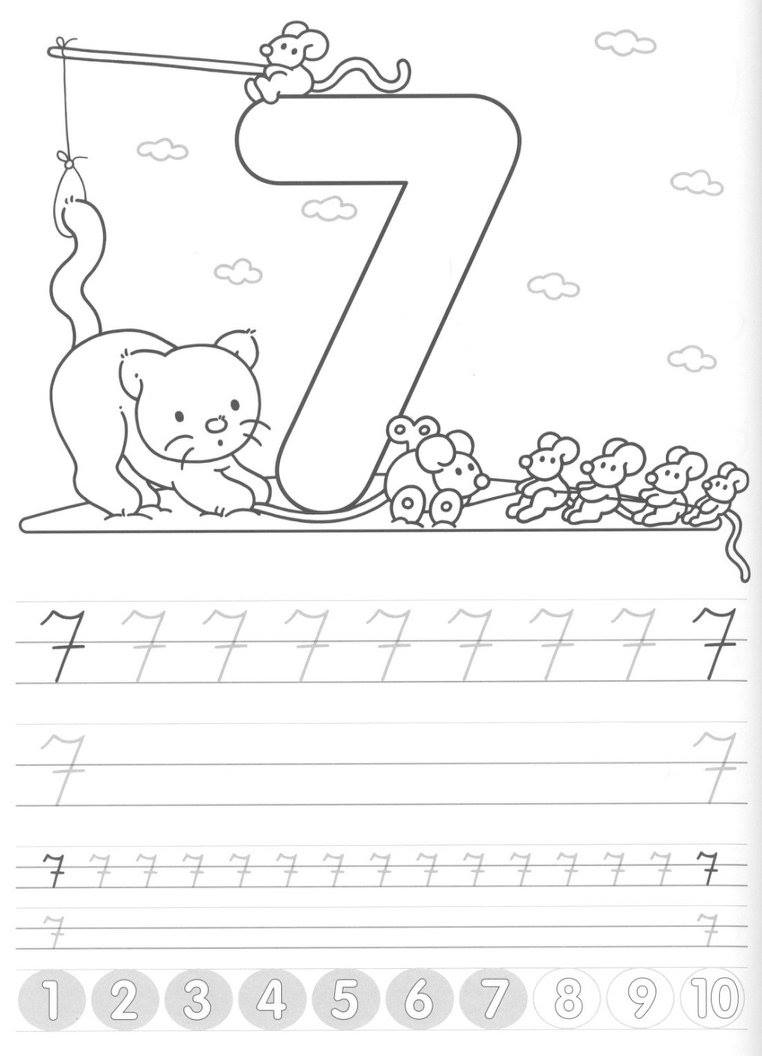
Number ‘7’ is easy to make as it is a combination of straight lines. You can help your child in tracing the large number ‘7’ with fingers to give them an idea of the form and shape of the numeral ‘7’. Now help them draw this number in a big size. Start moving their handwriting into a smaller size, using defining lines to draw within those lines. depict the number seven by drawing six mice with a cat or a herd of six deer with a lion. You can also draw a group of six trees with a giraffe. This will make learning numbers interesting. You can let your children color the drawings you have made.
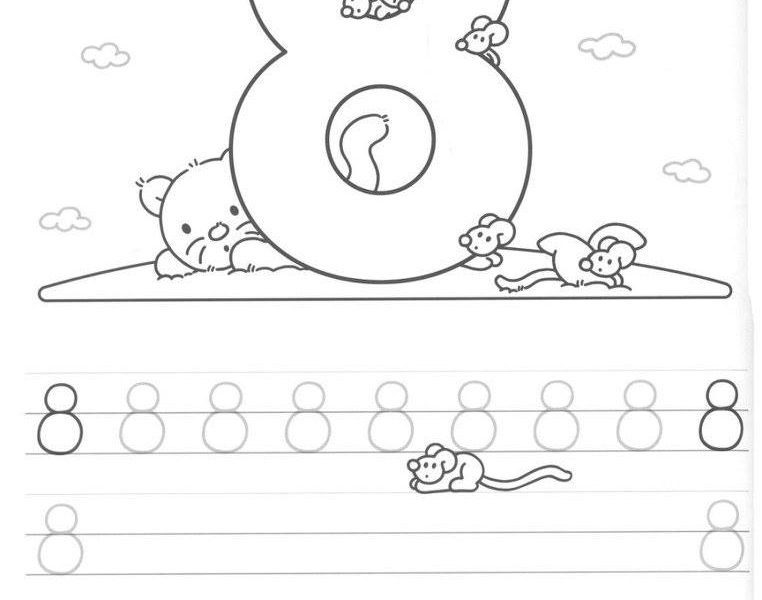
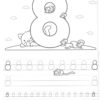
The number 8 worksheet of the worksheets number 1-10 worksheets

The number 8 can be a crucial one. Depending on whether your kid can draw circles easily or not. Some kids face difficulty with circles, and some with straight lines. With practice, this can be eliminated slowly and eventually. For these numbers 1-10 worksheets, it’s a combination of part circle and straight lines. The number 8 contains only one smaller and one larger circle. If you wish, you can also teach them to draw 8 as a combination of semicircles without lifting a pen, that is, by drawing a capital S and then closing the curve from the lower end to the upper.
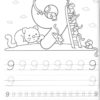
The number 9 worksheet of the worksheets number 1-10 worksheets
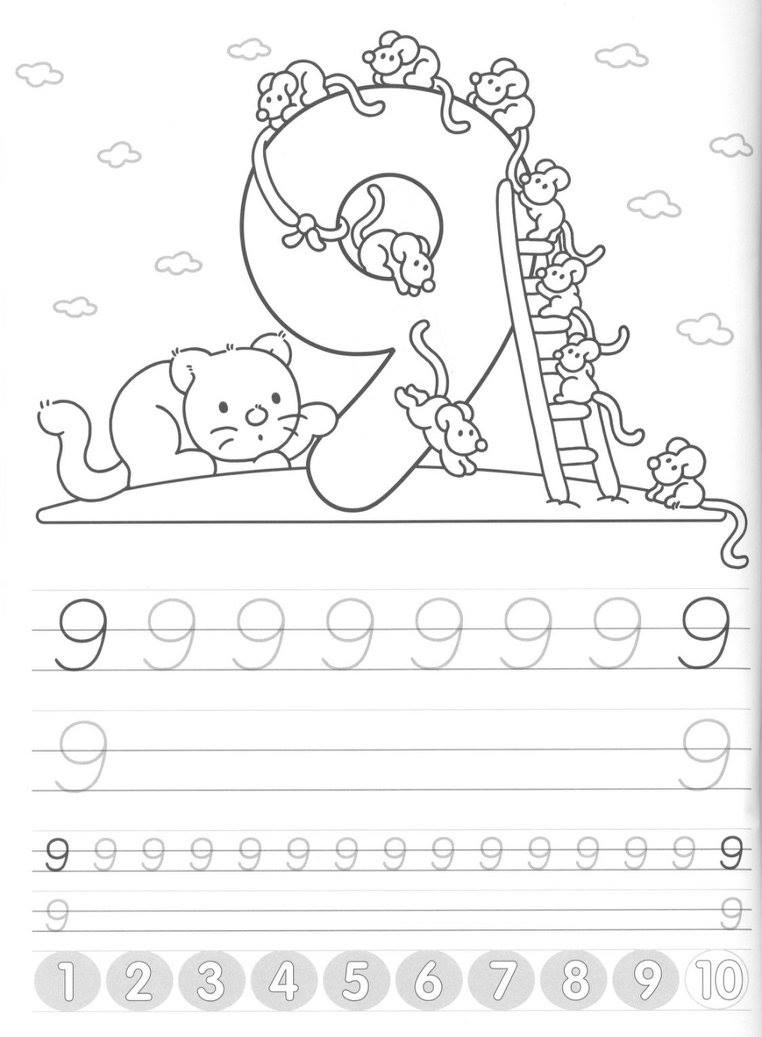
There are various ways to draw the number 9. In all of these numbers, we suggest that you first teach them how to write with a larger font. So that their hands and mind can coordinate between the curves and the turns. The number 9 can be written as one complete circle, and then taking the lower portion of the number 5. The drawing will help them to memorize the meaning of the number as they will count the total mice in the picture.
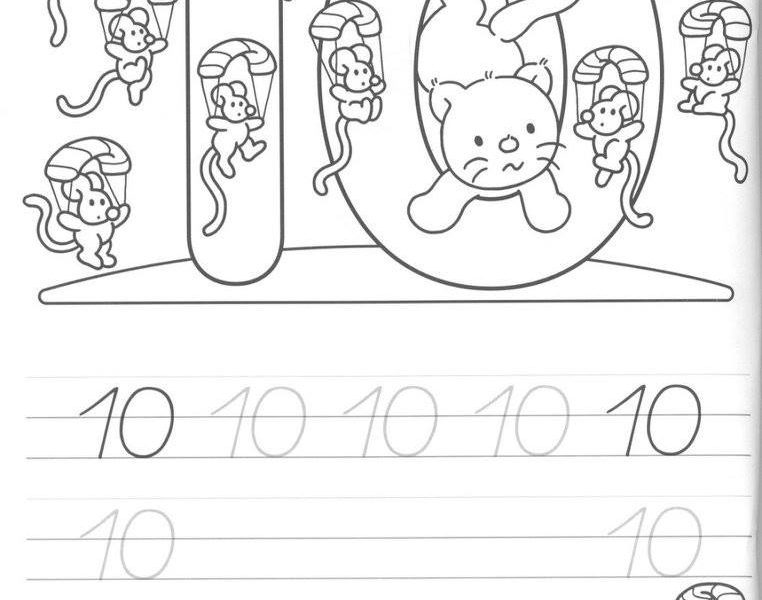
The number 10 worksheet of the worksheets numbered 1-10.
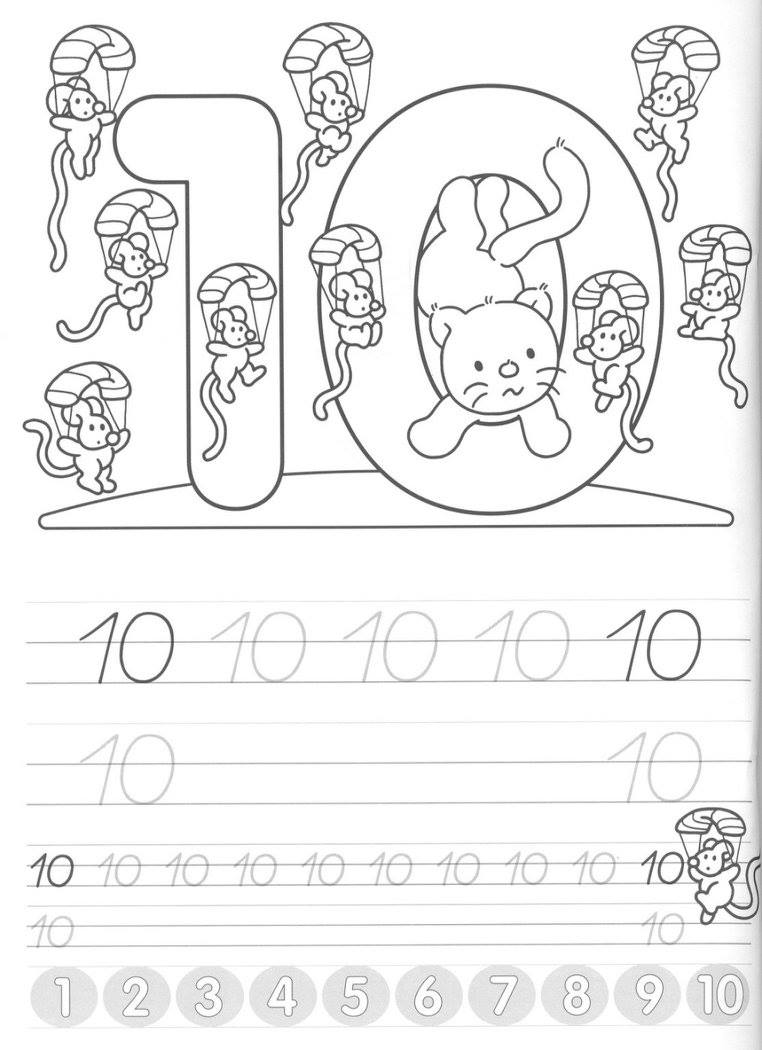
The number 10 in the numbers 1-10 worksheets is the combination of 1 and 0. As we haven’t introduced t0 in the start, we will include it in 10. For zero, start by making a big circle and then slowly ask them to turn it into an oval. You can mark the 4 ends of major and minor diameters and then tell them to pass the curve through these 4 points. Also, with this, you will have to teach them about the gap between 1 and 0. The children will soon learn the way other numbers are written with a combination of two one-digit numbers.
1-10 Writing Numbers Worksheets Step-by-Step Tutorial for Preschool & Kindergarten
Learn writing numbers 1-10 with this step-by-step tutorial using preschool worksheets! This educational video helps kids practice number tracing, number writing, and early math skills in a fun and easy way. Perfect for preschool, kindergarten, homeschooling, and classroom learning. Improve handwriting, counting skills, and number recognition with simple worksheets.
How Number Writing Worksheets Build Strong Numeracy Skills
Learning to write numbers is closely linked with developing number sense—a foundational skill that allows children to understand quantities, patterns, and relationships between numbers.
Number writing worksheets help children:
- Recognize and form numbers correctly
- Understand number order (1–10, 1–20, etc.)
- Connect symbols (like “5”) with actual quantities
- Improve problem-solving skills over time
Benefits of Using Printable Number Writing Worksheets
- Builds Confidence Through Practice: Repeated tracing and writing help children feel more confident and independent in their learning.
- Encourages Independent Learning: Worksheets provide structured guidance, allowing kids to practice even without constant supervision.
- Improves Focus and Discipline: Completing worksheets helps children develop attention span and patience.
- Supports School Readiness: Children who can write numbers easily are better prepared for preschool and kindergarten activities.
- Makes Learning Fun and Engaging: Colorful and themed worksheets turn learning into an enjoyable experience rather than a chore.
Tips for Parents and Teachers
- Start with large, traceable numbers before moving to freehand writing
- Practice for 10–15 minutes daily instead of long sessions
- Use fun tools like crayons, markers, or colored pencils
- Encourage kids with positive feedback and rewards
- Combine worksheets with real-life activities (counting toys, writing numbers in sand, etc.)
When Should Kids Start Writing Numbers?
Most children are ready to begin number writing practice between the ages of 3 to 5, depending on their motor skill development.
Signs your child is ready:
- Can hold a pencil or crayon properly
- Shows interest in numbers or counting
- Can trace simple shapes or lines
Practical Ideas
- Alphabet Tracing Worksheets
- Handwriting Practice Sheets
- Preschool Learning Activities
- Counting Worksheets for Kids
FAQs
Q1. What is the best way to teach a child to write numbers?
Answer: Start with tracing worksheets, use repetition, and gradually move to independent writing while giving positive reinforcement.
Q2. How often should kids practice number writing?
Answer: Short daily practice (10–15 minutes) is more effective than long, infrequent sessions.
Q3. Are number writing worksheets effective?
Answer: Yes, they help improve fine motor skills, memory, and number recognition, all of which are essential for early math learning.
Q4. At what age should a child write numbers 1–10?
Answer: Most children learn to write numbers 1–10 between ages 4 and 5 with consistent practice.
We hope you liked these beautiful, interactive ways to equip your child with all the numerals. May your child practice well and become good at all the numbers, and attain good handwriting. After all, practice makes a child perfect. We hope you liked these insightful articles. Share your feedback with us in the comments section below. Do check out other related articles. We will soon come up with more such articles. Stay updated with our newest content—join our Telegram group today! Don’t forget to follow us on YouTube & Facebook for creative art and craft tutorials, fun ideas, and much more.
Reviewed by Yash Beniwal
Read More:
- Activities To Get Your Preschooler Started On Numbers
- Math and Measurements Worksheets For Kids
- Interactive Number Line Activities for Kids
- First Grade Math Games and Activities
- Hundreds Chart Activities for Kids