Games
Math Card Games for Kids

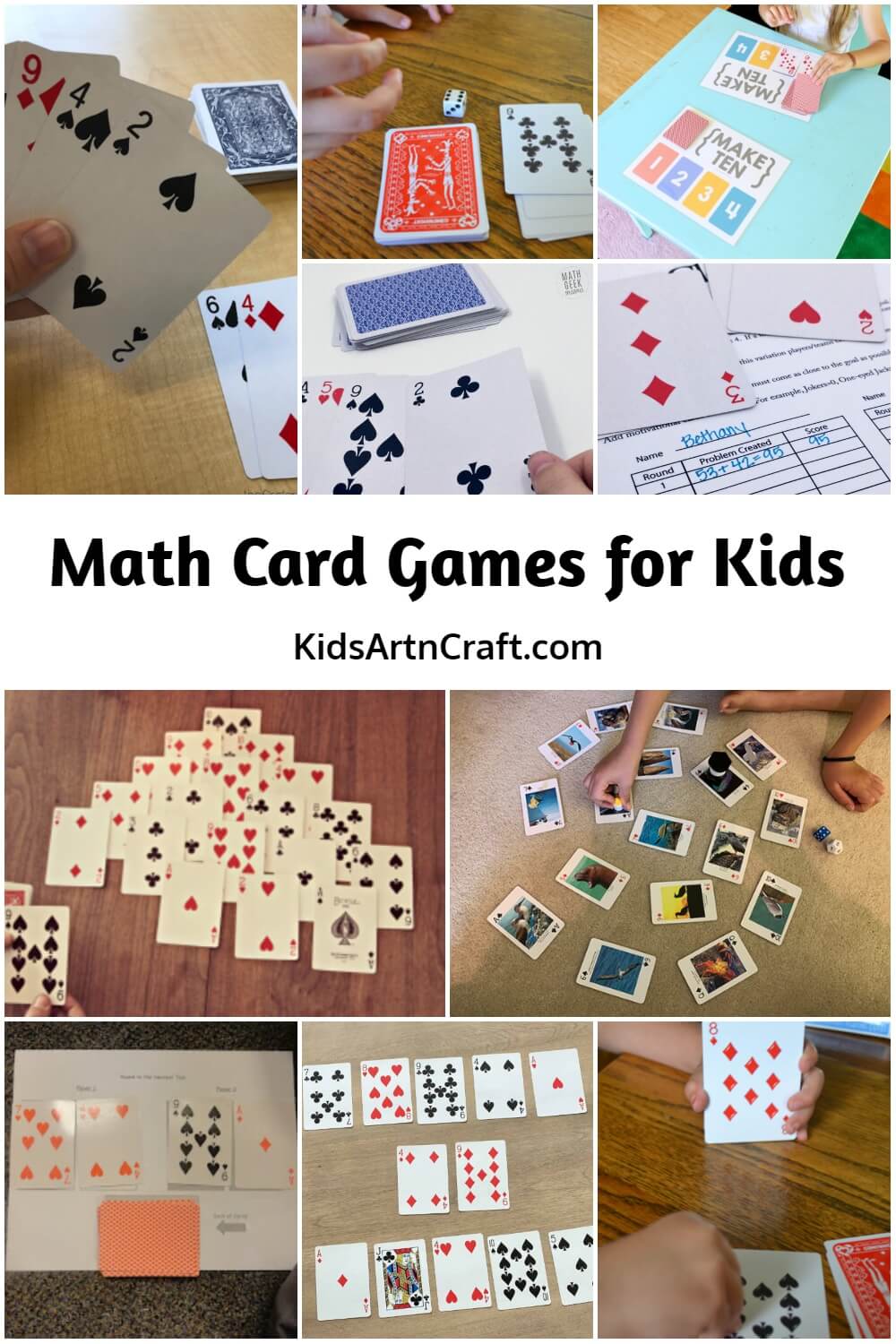
Maths is one of the most difficult subjects for some students, as it requires analytical skills and a lot of practice. Maths card games are really useful to teach small kids basic mathematical skills like addition, subtraction, multiplication, and division in a fun manner. Children love to play games, and what better way to make them learn while playing? A deck of cards can help you to teach your little kids maths, as with cards, you can play countless maths games with them.
Through gameplay, you can reinforce some very important mathematical concepts. These maths games are easy to play, fun, worthwhile, and require little or no or very less preparation; all you need is a deck of cards, a pen, or paper. Kids enjoy these games so much that they don’t realize that they are actually practicing mathematics. These games help to polish many skills and can be played by students of any grade. This educational game helps to improve numeracy practice without pulling out another worksheet. You can easily play these educational math card games while traveling, on vacations, holidays, and on day trips. You can increase the level of complexity over time, so as to ensure your children are learning well, or not, or how much progress they make while playing.
Below is a list of maths card games that you can easily play at home with your little kids and utilize the free time to do some productive and knowledgeable activities. So this summer, make sure to introduce your children to king, queen, joker, and ace cards, and make their holidays more fun and exciting.
Math Card Games for Kids

Read More: Easter Crafts for Adults
Playing Cards Number Matching Grid Activity

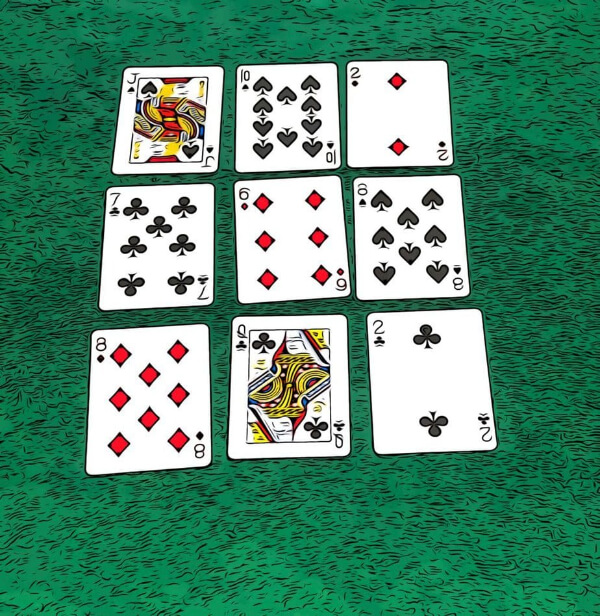
Image Source/Tutorial: Game Rules
Material Required:
Deck of playing cards, flat surface or mat
Procedure:
Lay out the cards in neat rows and columns as shown in the image. Ask children to identify numbers, match cards, or make combinations using the displayed cards.
Playing Card Addition Game for Kids

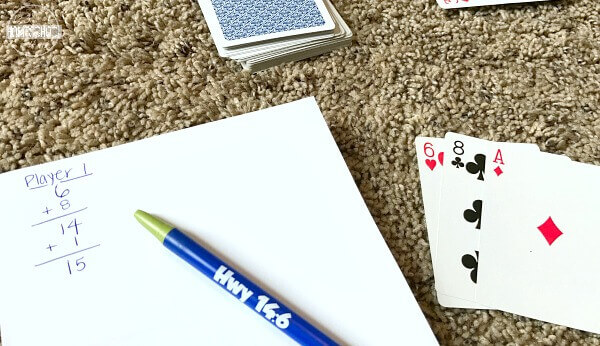
Image Source/Tutorial: 123Homeschool4Me
Material Required:
Playing cards, blank paper, pen, or pencil
Procedure:
Draw a few cards and place them face up beside the paper. Write the card values and add them together to find the final total.
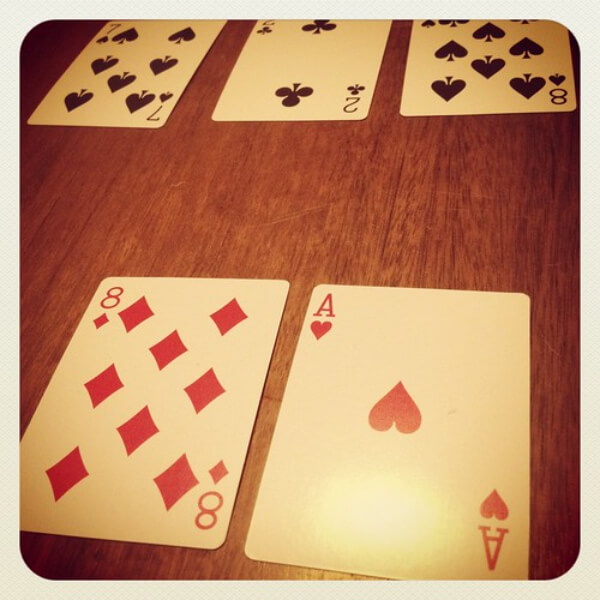
Make 10 with Playing Cards Activity

Material Required:
Deck of playing cards, table, or flat surface
Procedure:
Place several cards face up and let children find two cards that make a total of 10. Remove the matching pair and continue until all possible combinations are found.
Playing Card Pyramid Number Game

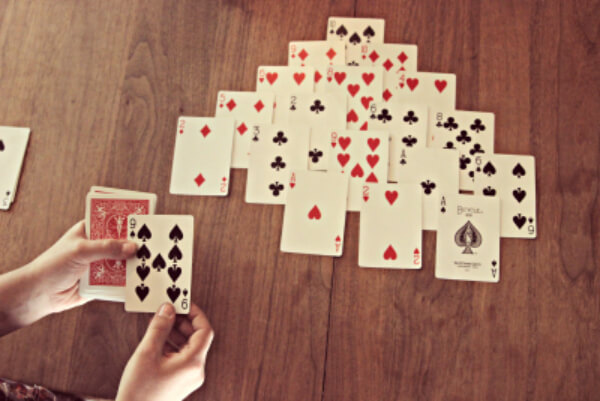
Image Source/Tutorial: Multiplication
Material Required:
Deck of playing cards, table, or floor space
Procedure:
Arrange the cards in a pyramid pattern with some cards overlapping. Have children pick cards or solve number combinations based on the visible card values.
Comparing Numbers with Playing Cards

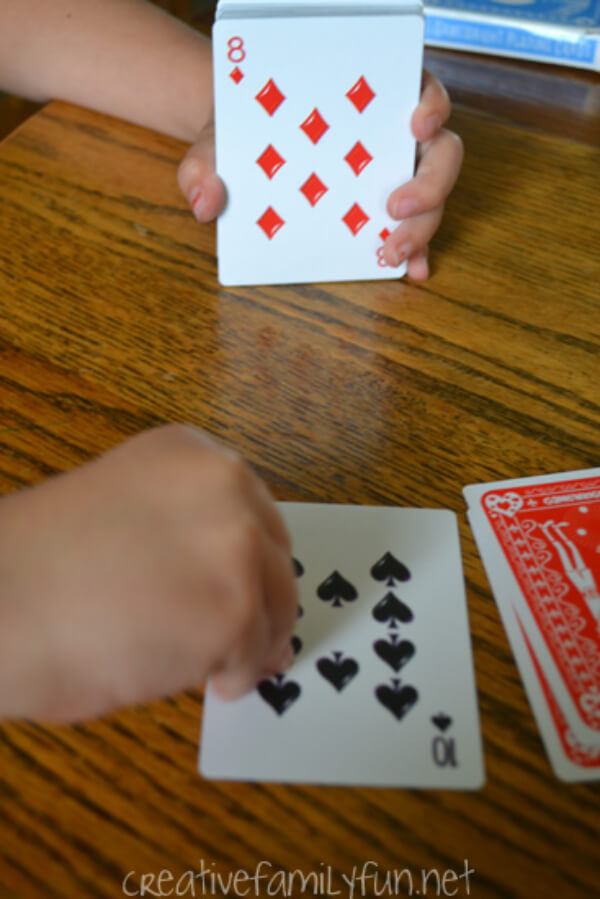
Image Source/Tutorial: Creative Family Fun
Material Required:
Deck of playing cards, table
Procedure:
Each player flips one card from the deck at the same time. The player with the greater number wins the round and keeps the cards.
Read More: Funny Food Decoration Ideas for Kids
Playing Card Number Comparison Game

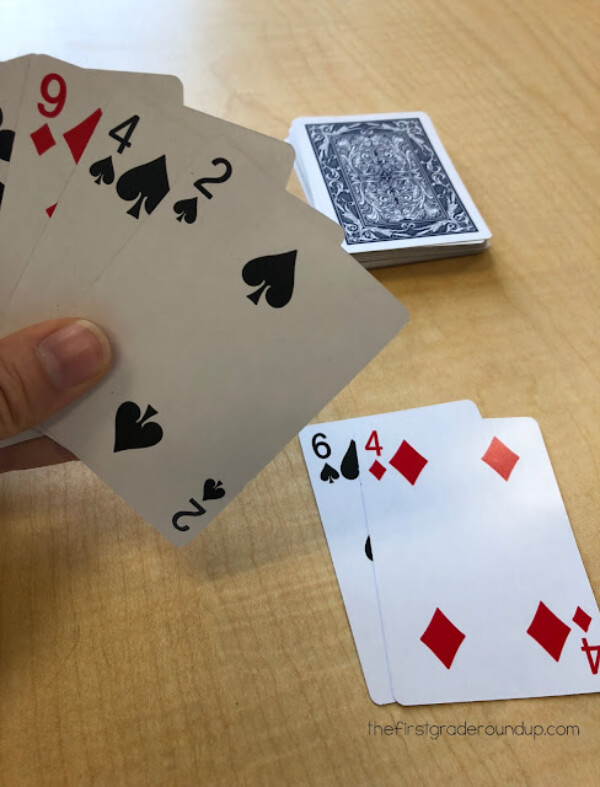
Image Source/Tutorial: The First Grade Roundup
Material Required:
Deck of playing cards, flat surface
Procedure:
Deal cards to players and place one or two cards face up on the table. Ask children to compare the values and decide which card is greater or smaller.
Gain and Loss Playing Card Math Worksheet

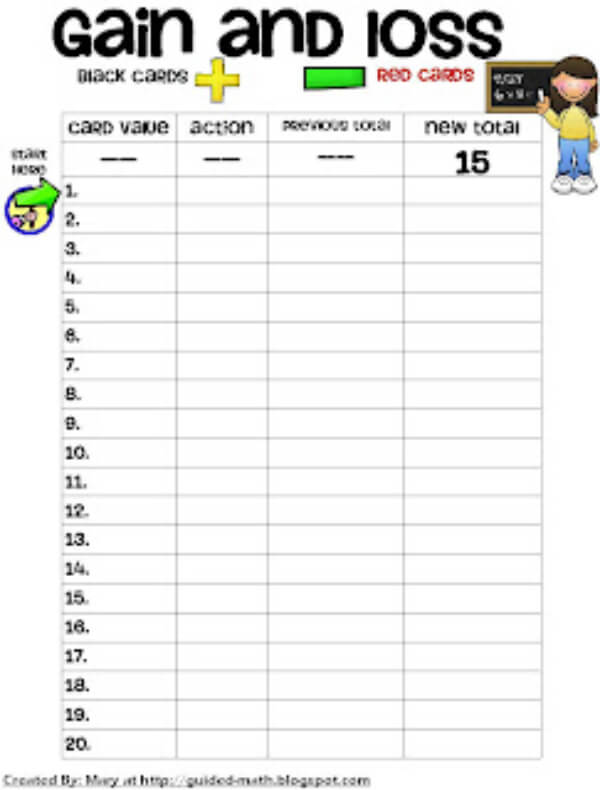
Material Required:
Printed gain and loss worksheet, playing cards, and a pencil
Procedure:
Choose a starting number and draw one card at a time from the deck. Add or subtract based on the card color, then record each step in the chart.
Dice and Playing Card Counting Activity

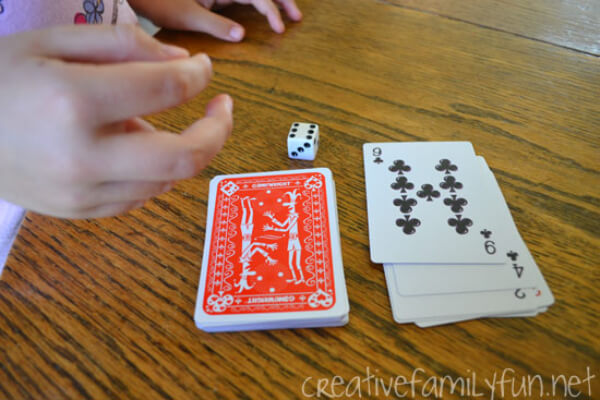
Image Source/Tutorial: Creative Family Fun
Material Required:
A deck of playing cards, one die, and a table
Procedure:
Roll the die and draw a card from the deck. Count, match, or combine the dice number with the card number to complete the turn.
Times Tables Card Game for Kids

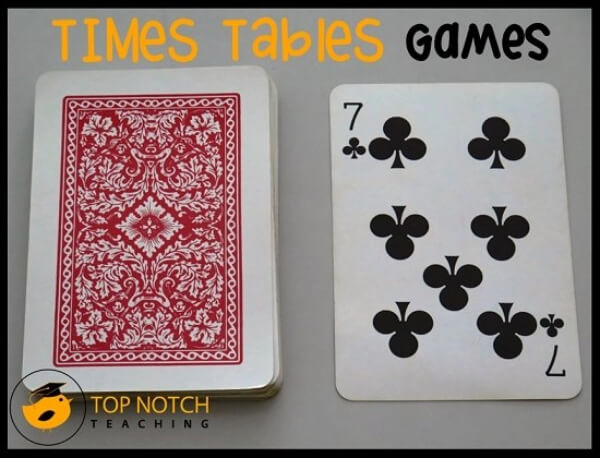
Image Source/Tutorial: Top-Notch Teaching
Material Required:
Deck of playing cards, table, or desk
Procedure:
Draw a card and use its number as the multiplication value for the round. Ask the child to say or solve multiplication facts based on that number.
Row of 7s Playing Card Math Activity

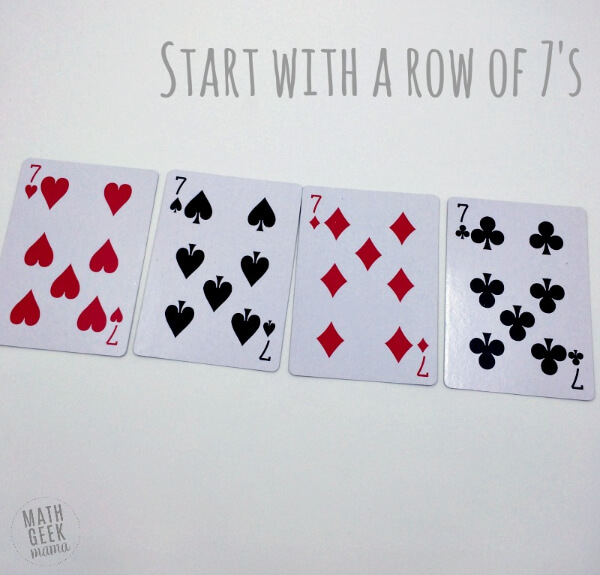
Image Source/Tutorial: Math Geek Mama
Material Required:
Deck of playing cards, flat surface
Procedure:
Place all four 7 cards in a row as the starting base. Add cards before or after them in number order to build sequences in each suit.
Read More: Ideas for Dyeing Easter Eggs
Playing Cards Number Pattern and Sequence Game
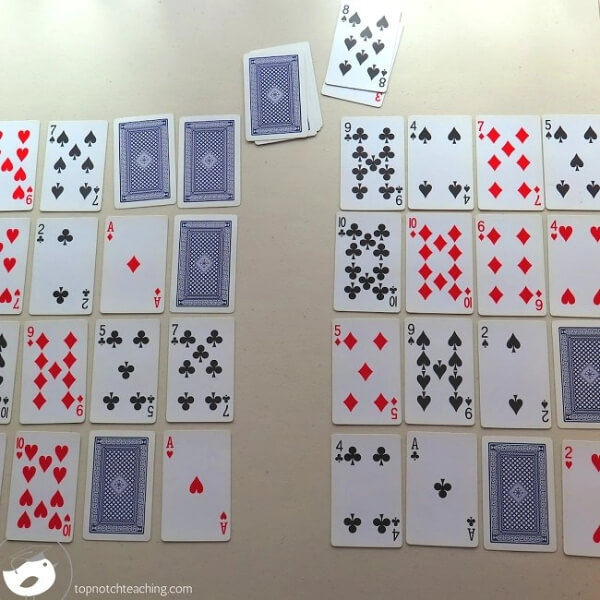
Image Source/Tutorial: Top Notch Teaching
Material Required:
Deck of playing cards, flat surface or table
Procedure:
Arrange the cards in rows and columns with some spaces or hidden cards. Ask children to study the pattern and place the missing cards in the correct spots.
Playing Card Addition Pyramid Math Game

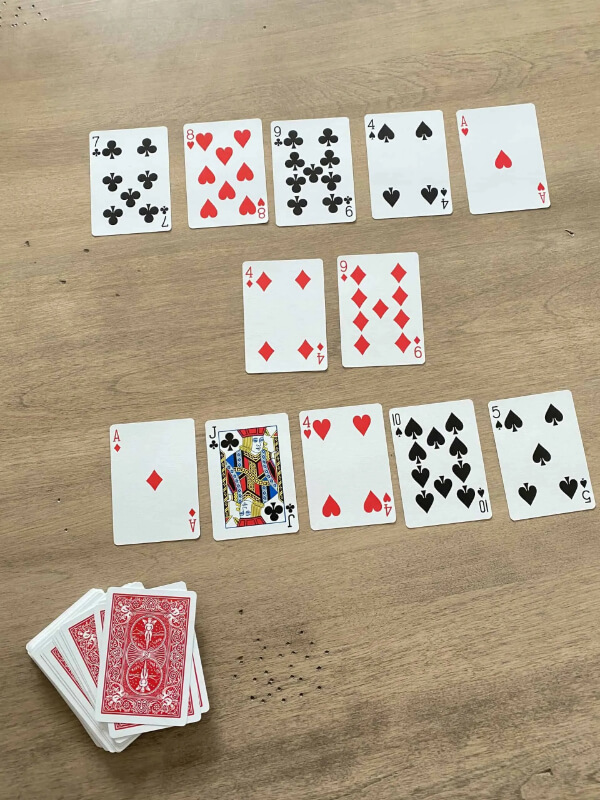
Image Source/Tutorial: Susan Jones’ Teaching
Material Required:
Deck of playing cards, table, or floor space
Procedure:
Place cards in a pyramid-style layout with one or more cards between the rows. Have children add or combine card values to solve the pyramid challenge.
Playing Card Order of Operations Game

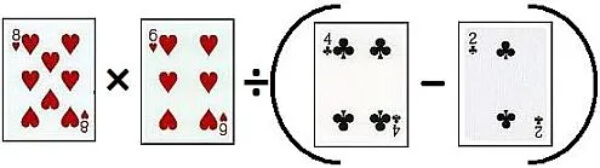
Image Source/Tutorial: Learn With Math Games
Material Required:
Playing cards, a flat surface, optional paper, and a pencil
Procedure:
Choose cards and arrange them into an equation using math symbols between them. Solve the expression step by step while discussing multiplication, division, and subtraction order.
Rounding to the Nearest Ten Card Activity

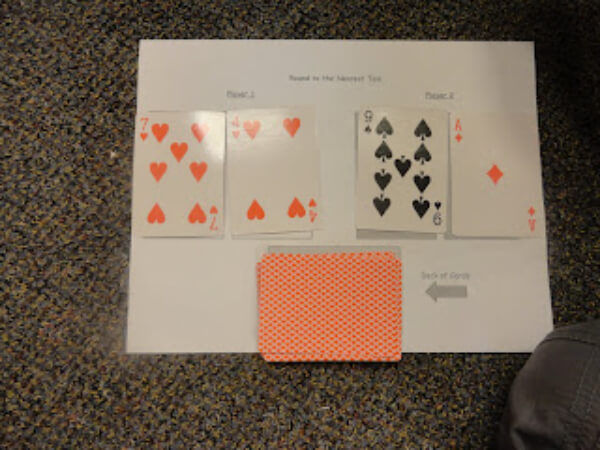
Image Source/Tutorial: Adventures in Third Grade
Material Required:
Deck of playing cards, printed rounding mat, flat surface
Procedure:
Place number cards on the mat to create a two-digit number for each player. Ask children to round the number to the nearest ten and compare their answers.
Make Ten with Playing Cards Table Activity
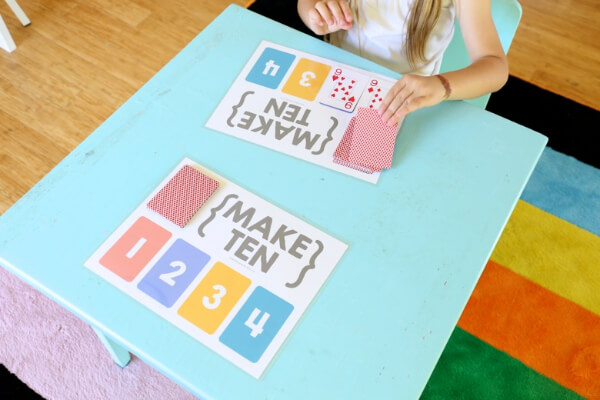
Image Source/Tutorial: Mama Papa Bubba
Material Required:
Deck of playing cards, printable make ten mat, small table
Procedure:
Lay out the make ten mat and give each player a stack of cards. Children flip cards and place them on the mat to find pairs or sets that total ten.
Read More: Twisting Emoji Bogeyman Crafts | Easy DIY for Halloween crafts with kids
Playing Cards Create-a-Problem Math Activity

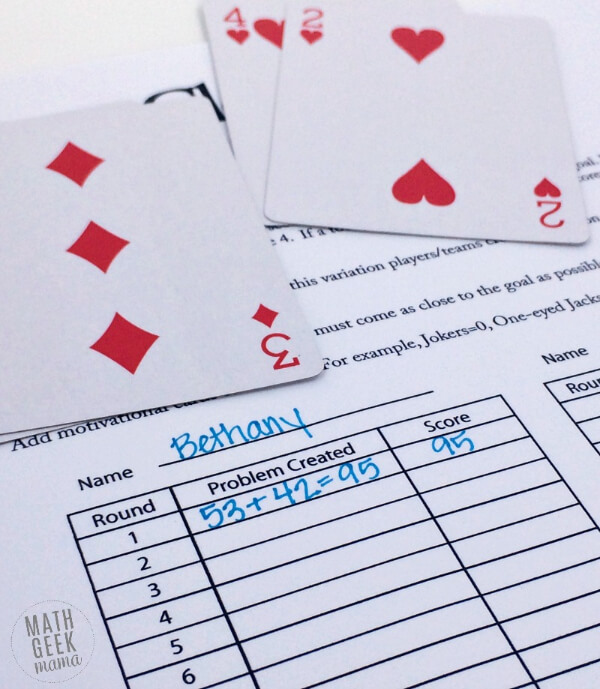
Image Source/Tutorial: Math Geek Mama
Material Required:
Playing cards, worksheet, pencil
Procedure:
Draw several cards and use their values to build an addition, subtraction, or mixed operation problem. Write the equation on the worksheet and solve it to record the score.
Animal Card and Dice Learning Game
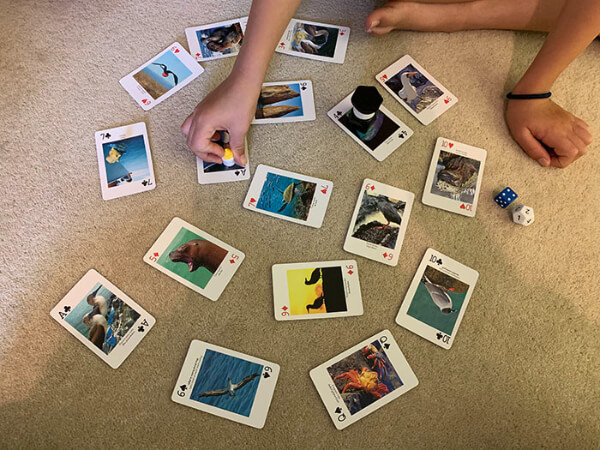
Image Source/Tutorial: My Baba
Material Required:
Animal playing cards, dice, small game pieces or tokens, carpet or floor space
Procedure:
Spread the animal cards in a circle and place the token in the middle or on a starting card. Roll the dice and move the token while identifying animals, counting spaces, or completing a simple task.
Flip and Compare Playing Cards Activity
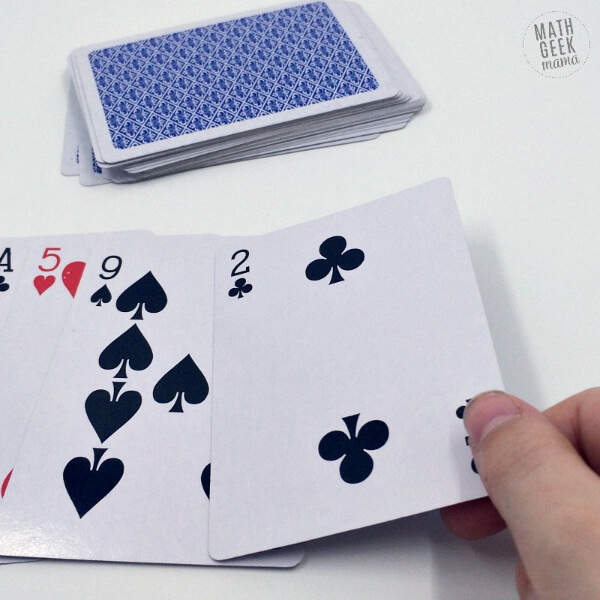
Image Source/Tutorial: Math Geek Mama
Material Required:
Deck of playing cards, flat surface
Procedure:
Place a few cards face up and keep the rest in a draw pile. Flip one new card and ask children to compare it with the visible cards by greater, smaller, odd, or even value.
Step-by-Step Tutorial Fun Learning Activity

Learn how to play easy math card games for kids in this step-by-step tutorial. This fun educational activity helps children practice addition, subtraction, and number skills while playing. Perfect for classrooms, homeschooling, and family game time to make learning math exciting, interactive, and engaging for young learners.
Benefits of Math Card Games for Kids
Math card games are an effective way to help children practice important mathematical concepts while having fun. By combining learning with play, these games reduce math anxiety and encourage children to develop a positive attitude toward numbers. Whether children are practicing counting, addition, subtraction, multiplication, division, or problem-solving skills, card games make learning interactive and engaging.
Playing math card games also strengthens critical thinking, memory, concentration, and decision-making abilities. As children compare numbers, calculate scores, and develop winning strategies, they improve their mental math skills naturally. These activities can be easily adapted for different age groups, making them ideal for classrooms, homeschooling environments, and family game nights. Educational resources frequently recommend game-based learning because it increases student participation and helps reinforce math concepts through hands-on practice.
Skills Children Develop Through Math Card Games
- Number recognition
- Mental math fluency
- Addition and subtraction skills
- Multiplication and division practice
- Logical thinking
- Problem-solving abilities
- Strategic planning
- Memory and concentration
- Quick decision-making
- Confidence in mathematics
Tips for Using Math Card Games in the Classroom
- Choose games appropriate for students’ grade levels.
- Use card games to reinforce recently taught concepts.
- Encourage teamwork through partner or group play.
- Provide visual aids for younger learners when needed.
- Rotate different games to maintain student interest.
- Celebrate participation and effort, not just winning.
FAQs
Q1. What math skills can children learn from card games?
Answer: Math card games can help children practice counting, addition, subtraction, multiplication, division, number comparison, and problem-solving skills.
Q2. Are math card games suitable for all ages?
Answer: Yes. Simple counting and matching games work well for younger children, while older students can enjoy games involving multiplication, fractions, and strategic thinking.
Q3. Can math card games be used in classrooms?
Answer: Absolutely. Teachers often use math card games as engaging learning centers, review activities, and small-group exercises to reinforce mathematical concepts.
Q4. Why are games effective for teaching math?
Answer: Games create a low-stress learning environment where children can practice skills repeatedly while staying motivated and actively engaged in the learning process.
Math card games transform mathematical practice into an enjoyable learning experience. By developing number sense, problem-solving abilities, strategic thinking, and confidence, these engaging activities help children build strong math foundations while having fun with friends, classmates, and family members. Crafts transform simple learning activities into enjoyable creative experiences for kids. Follow us on Telegram, YouTube & Facebook for daily crafts, worksheets, and learning resources.
Reviewed by Yash Sharma
More Articles from Kids’ Art & Craft
- Flower Gift Card – Mother’s Day DIY for Kids
- How to Make a Cute Craft Gift for Valentine’s Day
- How to Make a Gift card on Mother’s day
- Mother’s Day Lovely Gift Card – Easy DIY for Kids
- DIY Vases Gift Ideas Kids Can Make With Their Parents