



Games
Fine Motor Activities for Toddlers


These 15 fun fine motor activities for toddlers are a great way to keep your child entertained while they’re learning!
If you’re looking for a resource of fine motor play ideas, this is it! They’re creative, open-ended, appropriate, and varied with ideas for practising motor skills through art, sensory play, and simple manipulative games, and there are so many to choose from!
According to various developmental theories, the age up to 5 years is crucial for a child’s mental development. It is in these early years that a toddler understands the world around him, which helps him to communicate and interact with the surroundings in later stages. The following motor activities for toddlers have been carefully designed to support your child’s development.
In this modern, fast-paced era, it is not very wise to merely rely upon school education to make your child a champion. Learning is a 360-degree process that should never stop. So parents, switch from meaningless play and futile games to healthy motor activities that are not only entertaining but rich in value as well.
What Are Fine Motor Skills?
Fine motor skills refer to the coordination of small muscles in the hands, fingers, and wrists that allow children to perform precise movements like grasping, writing, buttoning, and cutting. These skills are essential for everyday independence and academic readiness. Unlike gross motor skills (running, jumping), fine motor development focuses on precision, control, and hand-eye coordination, which are critical for tasks such as drawing, using scissors, and holding a pencil correctly.
Why Fine Motor Activities Are Important
- Studies show a strong link between fine motor skills and academic success, especially in reading and math.
- These skills support daily independence, such as dressing, eating, and self-care.
- Regular practice improves hand-eye coordination and cognitive development.
- Motor skill development is closely connected to brain development and learning ability.
Motor Activities For Healthy Mental & Physical Development
Concentration Circles
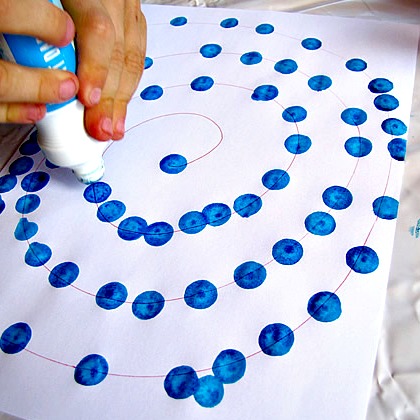
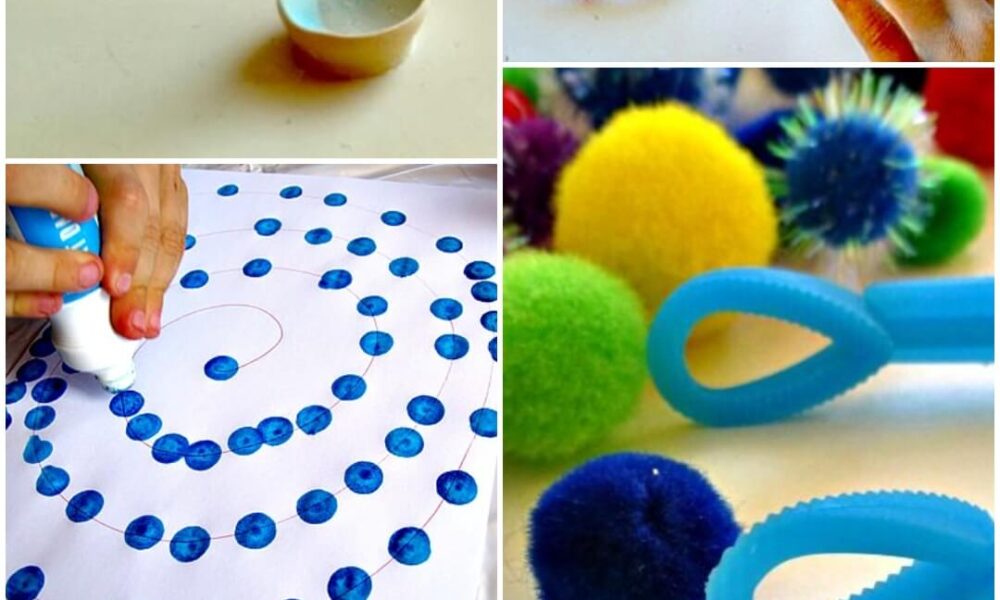
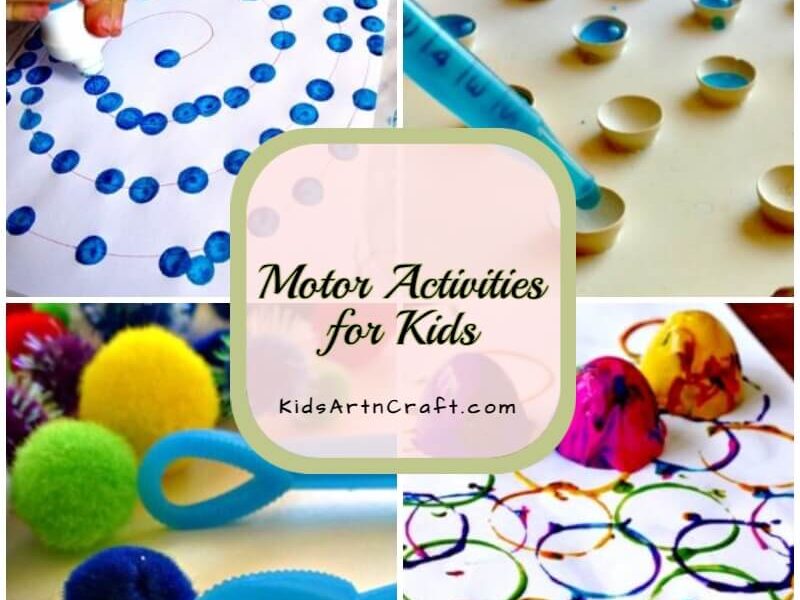
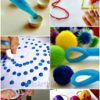
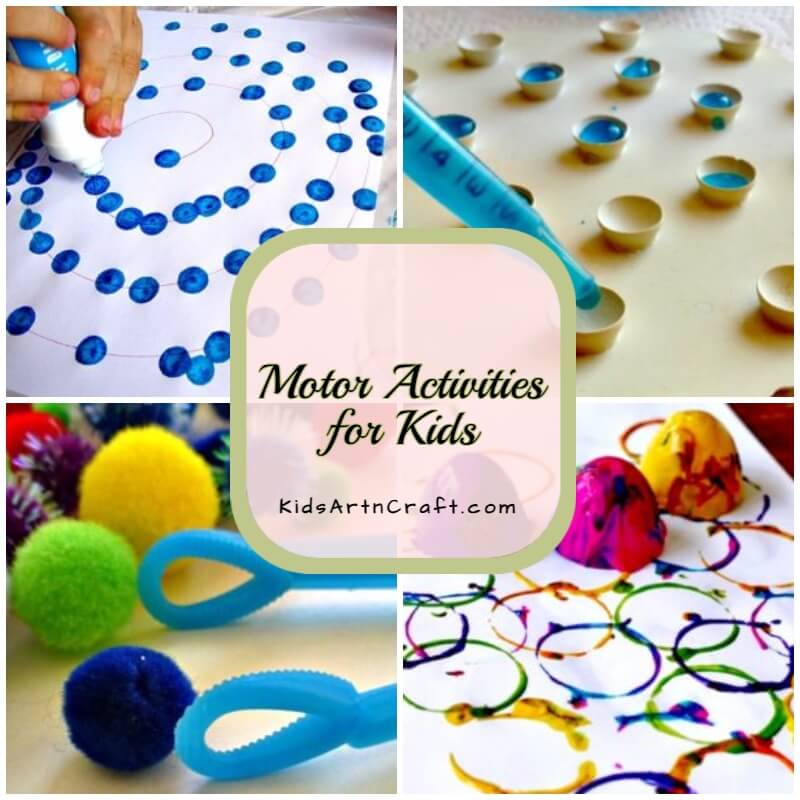
Focus is the key to success in all spheres of life. Unless a child learns to concentrate on a task, it is unlikely that he/she would ever develop an interest in the same. Instill concentration ability in young minds with this simple activity. Draw concentric shapes and let your child place equidistant paint dots on them. It might be hard in the beginning, but soon your kids will be perfect at it. This activity is very helpful for children showing hyperactive traits.
Make A Rainbow
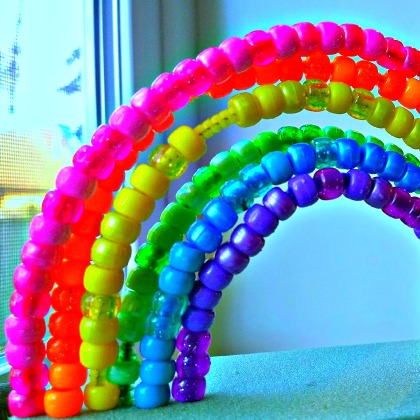
Give your kids a few soft-edged threads and colorful beads. Let them create their own rainbows with it. This activity makes color recognition easier and promotes gross motor skill development.
Button Up
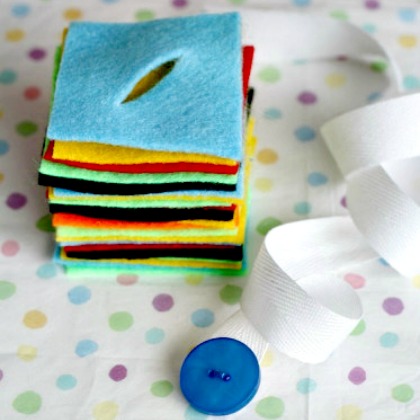
Want your child to dress up independently? Well, this is a gradual learning process, but we are here to make it fun and easy for you. Cut slits in vibrant colored fabrics and let your toddler pull an elastic attached button through it. With repeated trials, errors would become fewer, and the next time they might dress up all by themselves.
Cut It

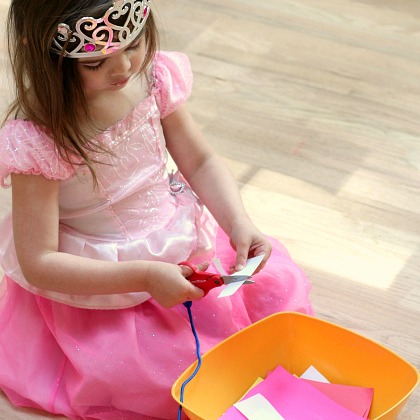
Paper cutting is a great way to develop muscle coordination and control in kids. Be careful to use child-friendly scissors and make the activity colorful to hold the attention.
Potato Painting

Colors are so therapeutic in nature, and to touch them is itself a relaxation of all senses. Introduce your child to the world of colors with potato painting. Shape recognition and muscle control become polished with this one.
Straw Fun
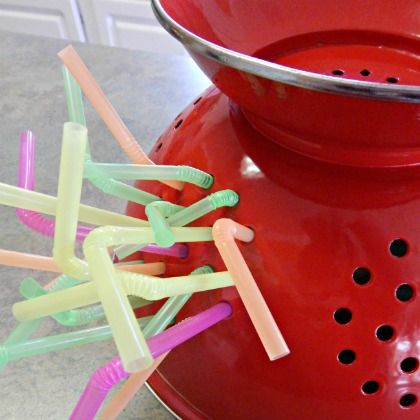
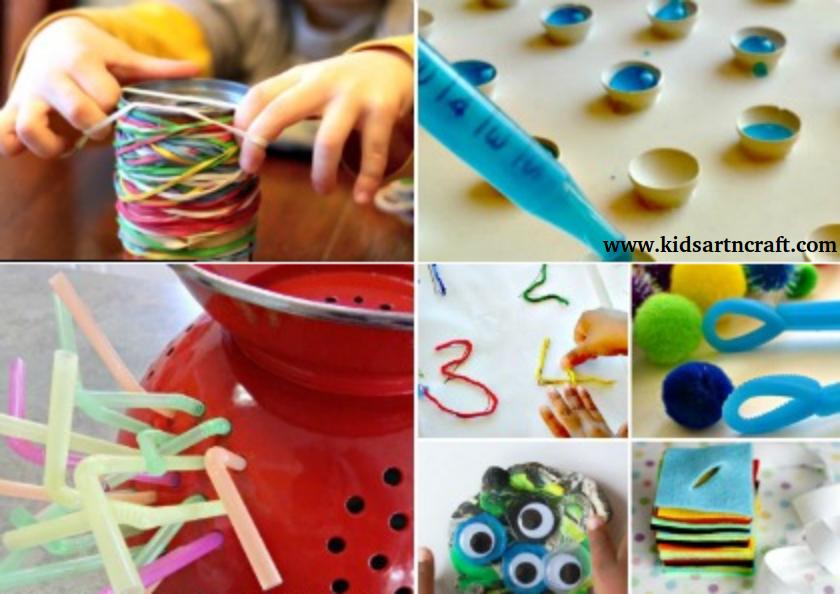
There are multiple learning opportunities in every moment. When it comes to motor development, there is no better way than exploration. Allow your toddler to insert straws in a holed structure to let them learn the art of handling and manipulating objects in accordance with needs.
Sponge Balls
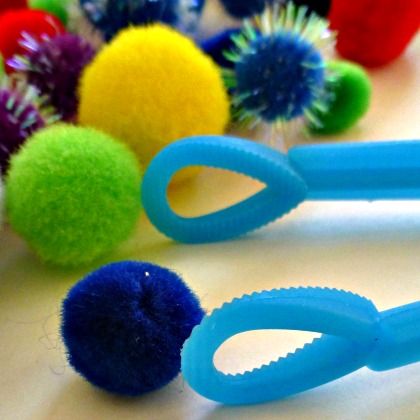
Pushing, pressing, and other such flexes are learnt by kids solely with practice. Check out this activity and contribute to your toddler’s growth in a fun way.
Clayey Stuff

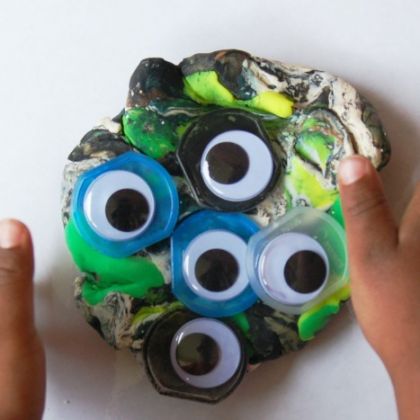
Molding clay is an excellent sport. It provides stimulation to the muscles of the fingers and hand and allows kids to give shape to their dreams. It will enhance the creative aptitude of young minds as your kids simply have fun with it.
Innovative Tubes
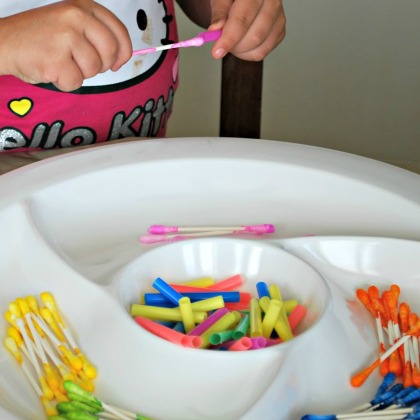
Take some earbuds and a few thin straws. Cut the straws into colorful pieces and ask your kid to cover up the buds using the same. They can further group it by color. This activity is engaging and thrilling for toddlers as they learn new skills.
Stretch It
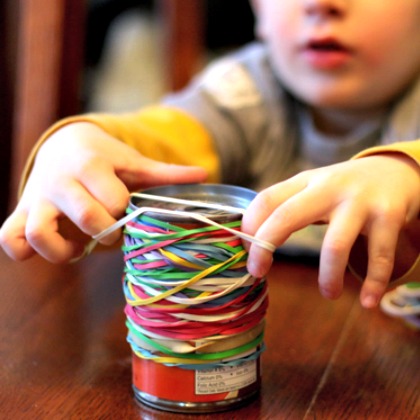
Gross motor skills include the ability to stretch and place objects at a particular place. Hand over an empty can and a few rubber bands to your kids and let them organize them on the can. An amazing exercise, an interesting activity, and a plethora of learning, this one is a complete developmental package.
String of Knowledge
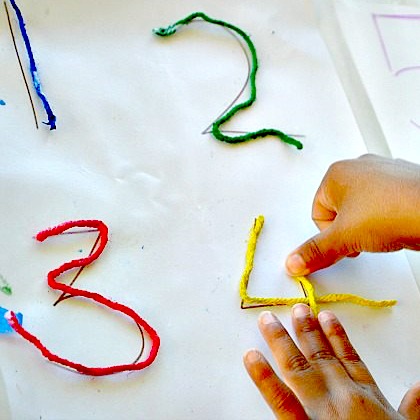
Break free from the monotony of pen-paper learning and introduce your ward to the alphabet and numbers in a fun way with the help of soft strings and glue. Learning made with the use of multiple senses, as in this case, stays in long-term memory for a long time.
Drop By Drop
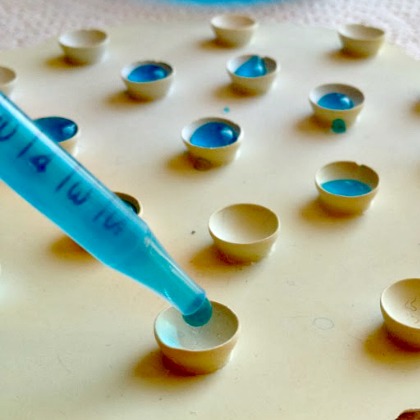
Give your child a dropper and let him/her carefully place just a drop in each bowl. Pressing and concentrating will help develop your child’s motor and mental capabilities.
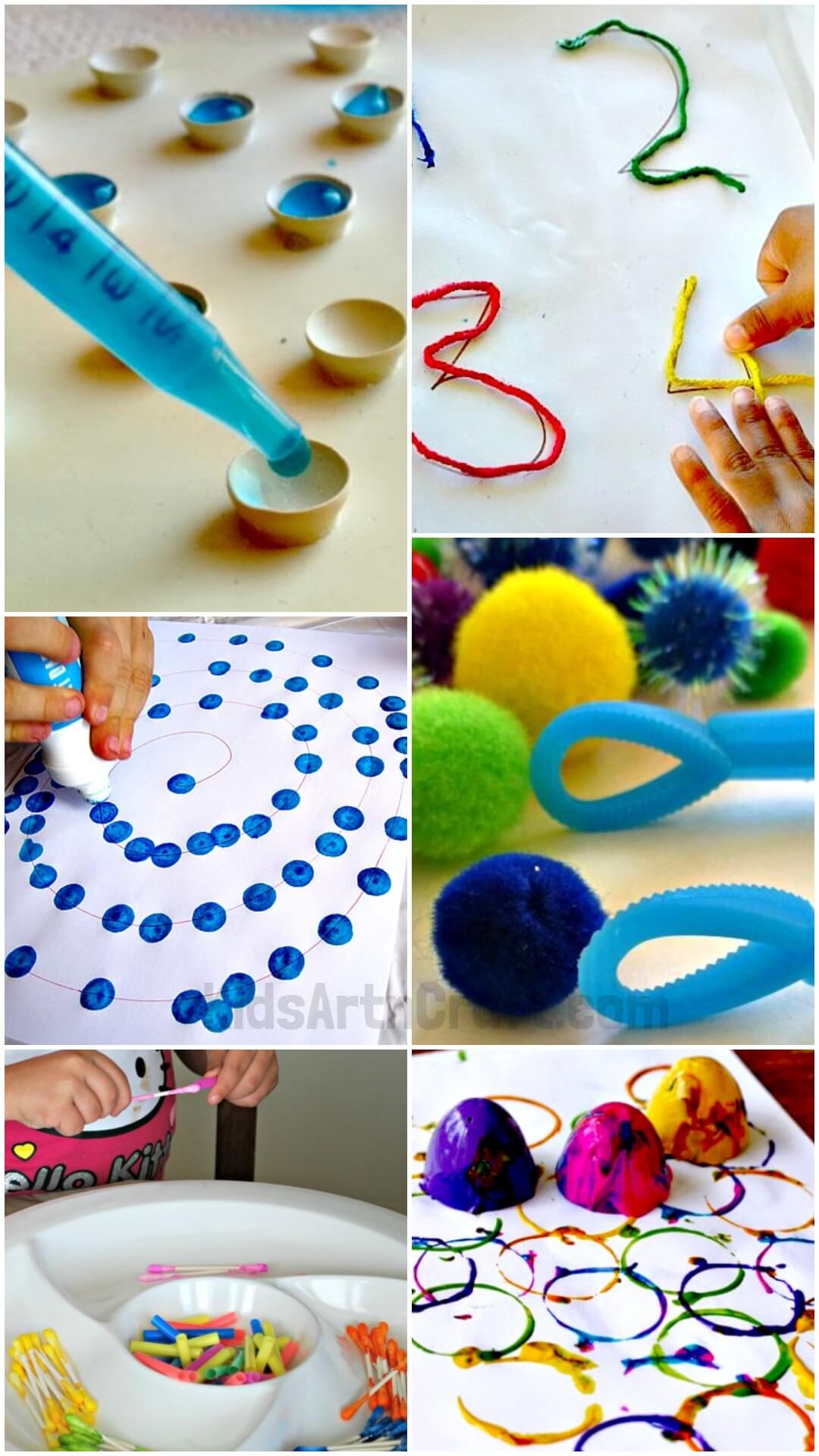
As adults, these activities often appear baseless to us, but to young minds, these activities hold a lot of importance. Not all skills are learned through books, and for such skills, motor activities are the way forward.
Fine Motor Activities for Toddlers: Step-by-Step Tutorial
Learn fun and easy fine motor activities for toddlers in this step-by-step tutorial. These simple hands-on exercises help improve hand strength, coordination, and finger control using everyday materials. Perfect for parents and teachers to support early childhood development through creative play and engaging learning activities for kids.
Expert Tips
- Start with larger objects (big beads, chunky crayons) before moving to smaller ones
- Encourage daily practice through play, not forced learning
- Focus on process over perfection (messy play is okay!)
- Provide a mix of sensory, creative, and practical tasks
- Always supervise activities involving small items
Everyday Activities That Build Fine Motor Skills
- Cooking (mixing, pouring, kneading dough)
- Gardening (digging, picking leaves, planting seeds)
- Threading beads or pasta
- Cutting paper and crafts
- Drawing, coloring, and painting
Signs a Child May Need Extra Support
- Struggle to hold a pencil or crayon
- Avoid drawing, coloring, or crafts
- Have difficulty using scissors
- Cannot button clothes or tie laces
- Show weak grip strength
Age-Wise Fine Motor Milestones
Toddlers (1–3 years):
- Stacking blocks
- Scribbling
- Picking up small objects
Preschoolers (3–5 years):
- Using scissors
- Drawing shapes
- Buttoning clothes
Early School Age (5–7 years):
- Writing letters
- Coloring within lines
- Improved pencil grip
How to Make Activities More Effective
- Repeat activities regularly (skill builds over time)
- Combine fun + learning (games, challenges)
- Use sensory play (clay, sand, water)
- Encourage open-ended creativity
FAQs
Q1. What are fine motor skills?
Answer: Fine motor skills involve small muscle movements in the hands and fingers for tasks like writing and grasping.
Q2. Why are fine motor skills important for kids?
Answer: They help children perform daily tasks, improve coordination, and support academic success.
Q3. At what age do fine motor skills develop?
Answer: Fine motor skills begin in infancy and continue developing through early childhood.
Q4. What are examples of fine motor activities?
Answer: Examples include coloring, cutting with scissors, threading beads, and playing with clay.
Q5. How can I improve my child’s fine motor skills?
Answer: Encourage hands-on activities like drawing, puzzles, and everyday tasks like buttoning clothes.
Q6. Are fine motor skills linked to writing?
Answer: Yes, strong fine motor skills are essential for proper pencil grip and handwriting.
Q7. What toys help develop fine motor skills?
Answer: Building blocks, puzzles, beads, and playdough are great for developing these skills.
Q8. How often should kids practice fine motor activities?
Answer: Daily practice through play is ideal for steady development.
Q9. What are the signs of poor fine motor skills?
Answer: Difficulty holding a pencil, using scissors, or performing small hand movements may indicate delays.
Q10. Can fine motor skills be improved at home?
Answer: Yes, simple activities like drawing, crafting, and playing with small objects can help significantly.
Fine motor activities are a simple yet powerful way to support your child’s development. From improving hand strength to boosting academic readiness, these small movements create a big impact. By incorporating fun, hands-on activities into everyday routines, parents and teachers can help children build confidence, independence, and lifelong skills. Get Inspired Daily with Easy DIY Crafts—Join Our Telegram group! Follow Us on YouTube & Facebook for Tutorials.
Keep learning with us and help us grow, too, by commenting and sharing this further. If you want to see more interesting and creative articles, do not forget to visit our website.
Reviewed by Yash Beniwal
Read More:
- Fine Motor Activities for Kids
- Fine Motor Sand Activities for Kids
- Flex The Brain Muscle: Indoor Activities To Promote Motor Development Of Kids
- DIY Fine Motor Toys For Toddlers
- Creative Activities at Home – Safe for Kids